The ‘Cheap’ Brazilian APC That Made Iran And Iraq Both Pay To Fight Each Other D
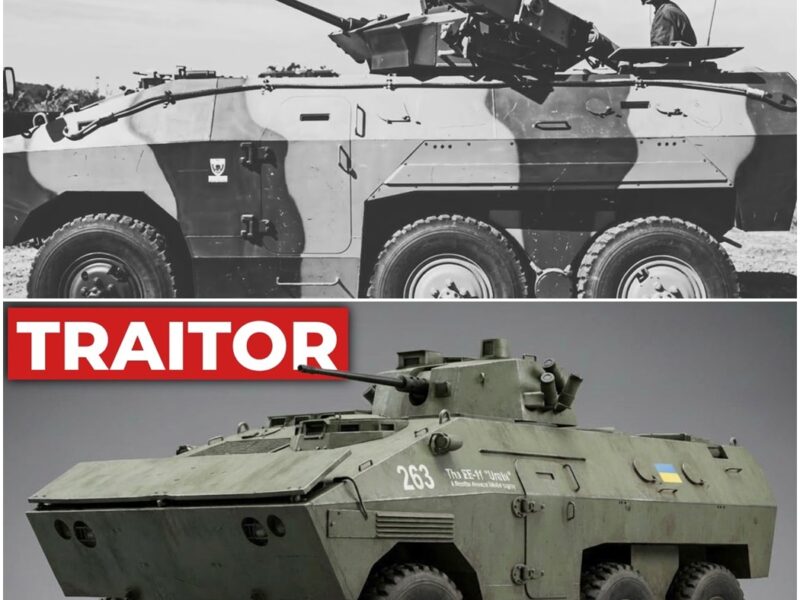
1970, a factory floor in São José dos Campos, Brazil. A six-wheeled steel hull sits under bare workshop lights. Rivets still warm, paint not yet dry. It is not elegant. It is not fast. It does not look like something that will change the fate of armies on three continents. It is boxy. It is angular.
Its nose slopes forward like the prow of a river barge. Its six wheels are spaced wide and low, as if the machine is bracing for a blow it already knows is coming. The engineers who built it named it after a snake. Not a cobra. Not an anaconda. They named it after the urutu, a brown pit viper found in the lowlands of South America.
A snake not known for speed or elegance. Known for one thing only. It kills reliably in conditions where nothing else works. Nobody outside Brazil believed in it. The Americans had the M113. The Soviets had the BTR-60. The French had the VAB. Global defense markets were locked up by the superpowers and their proxies, and no developing nation had ever designed, built, and exported a competitive armored vehicle to more than a handful of customers.
The urutu looked like an expensive mistake. It was not. Over the next two decades, more than 1,700 of these vehicles would roll out of the Engesa factory in São José dos Campos, and onto ships bound for more than 20 nations across South America, Africa, the Arabian Peninsula, and the Middle East.
The urutu would fight in the sands of Chad. It would serve both sides of the Iran-Iraq War simultaneously. It would be captured by American paratroopers in the Kuwaiti desert during Operation Desert Storm and put on display in Kentucky. It would survive the collapse of the company that built it, and it would keep fighting long after that company’s name had been forgotten.
Its factory sold for scrap, and its blueprints lost to bankruptcy. Its full designation was the EE-11 Urutu. It was Brazil’s gift to the world arms market, and the world eventually could not get enough of it. To understand why the urutu existed, you need to understand the problem Brazil faced in the late 1960s. Brazil’s military government had come to power in 1964 and its generals were keenly aware of a strategic vulnerability.
The Brazilian army relied almost entirely on American equipment, including the aging M8 Greyhound armored car and the M3 half-track. The United States, consumed by Vietnam and increasingly reluctant to transfer frontline military technology to developing nations, was not a reliable supplier.
Brazil was a continent-sized country with vast ungoverned frontiers and its army needed vehicles that could operate across enormous distances, survive brutal terrain, and be maintained without a supply chain stretching back to Washington or Detroit. The solution came from a small engineering firm in São Paulo, Engesa, which stood for Engenheiros Especializados Sociedade Anônima.
It had been founded in the late 1950s by a University of São Paulo-trained mechanical engineer named José Luiz Whitaker Ribeiro. The company had started with eight employees, repairing and modifying trucks. By the late 1960s, it had developed a signature suspension system that would define everything it built afterward.
Ribeiro called it the boomerang axle. The boomerang was a double axle walking beam arrangement at the rear of the vehicle where conventional axles held fixed to the frame. The boomerang allowed the rear tandem axles to rock independently, adapting to uneven ground without lifting any wheel off the surface. The result was a vehicle that kept all six wheels in traction almost regardless of what lay beneath them.
It could cross terrain that immobilized heavier, more powerful competitors. And because the wheels never lost contact, the vehicle could cover enormous distances on rough roads without destroying itself. This was the mechanical soul of the Urutu. Everything else was built around it. Design work on the Urutu began in January of 1970, running in parallel with a companion vehicle, the EE-9 Cascavel armored car.
The two machines shared the same chassis, the same suspension, the same drivetrain concept, and many of the same components. This commonality was deliberate. Brazilian army doctrine called for armored cavalry units equipped with both the scout car and the troop carrier operating together, and a shared parts pool meant that a brigade in the field could sustain both types from a single supply chain.
It was a lesson the great powers had often failed to learn. Ribeiro built it into the vehicle from the first drawing. The hull itself was welded from bi-metallic steel, a dual-layer material in Giza developed specifically for armored vehicle production. A hard outer face layer deflected incoming fire. A tougher inner layer absorbed the energy that penetrated.
The combined effect gave protection roughly equivalent to a much thicker single hardness plate at lower weight. The frontal arc stopped 12.7 mm armor-piercing rounds at normal combat ranges. The sides and rear stopped standard rifle calibers at point-blank range. Against blast and fragmentation from artillery rounds landing nearby, the hull provided comprehensive crew protection.
The vehicle was powered in its most common production form by a Detroit Diesel 6V-53T engine, a six-cylinder water-cooled turbo- charged unit producing 212 horsepower. It drove through an Allison automatic transmission with four forward gears, giving the Urutu a road speed of 90 km/h and a range of 850 km on a single fill of fuel.
In most of the theaters where it would eventually serve, that range mattered more than any other specification. 850 km across the Sahara, 850 km across the Iraqi desert, 850 km through the mountains of South America without stopping, without resupply, without support. The amphibious system was simpler than it looked.
A pneumatic trim vane folded down from the bow to deflect bow waves. Twin shrouded propellers at the rear drove the vehicle through water at 8 km/h steered by twin rudders. Electric bilge pumps handled any water that entered the hull. The crew required no preparation beyond lowering the vane and engaging the propeller power take-off.
The vehicle entered the water, crossed it, and climbed the opposite bank. Brazilian army units trained extensively on river crossings using the Urutu, and the exercise that took a tracked vehicle an hour to prepare and execute took an Urutu crew approximately 4 minutes. The standard armament was a 12.
7 mm M2 Browning heavy machine gun on a ring mount above the commander’s position. This was not a weapon designed for tank engagements. It was a weapon designed for the missions the Urutu was actually expected to perform, suppressing infantry positions, covering crossing points, protecting dismounting troops in the open.
Optional armament included a 20-mm Oerlikon autocannon in a full turret, anti-tank guided missile mounts, and an 81-mm mortar firing through the roof for indirect fire support. The base vehicle carried two crew and 11 fully equipped infantry soldiers in the rear compartment. The first production vehicles entered Brazilian army service in 1975, the same year Chile placed the first export order. It would not be the last.
Before we get into where this vehicle actually fought and the wars it survived long after its own maker had gone bankrupt, hit subscribe if you’re enjoying this deep dive into global military engineering. It takes a second, costs nothing, and helps the channel grow. Chile’s order in 1975 was considered so important by Engesa’s leadership that the company temporarily slowed deliveries to the Brazilian army itself to fulfill it on schedule.
By 1976, more Cascavel and Urutu were in service with the Chilean military than with the Brazilian armed forces that had commissioned them. It was an unusual situation for a manufacturer, but it reflected the commercial reality Engesa had built its entire business model around.
Brazil’s domestic military was too small a customer to sustain the factory. Export was not an ambition, it was a survival strategy. The export campaign moved quickly. Libya ordered a large fleet in 1981. Iraq signed a contract covering more than 140 Urutus alongside hundreds of Cascavel armored cars. Jordan, the United Arab Emirates, Ecuador, Uruguay, Venezuela, Tunisia, Angola, Bolivia, Cyprus, Gabon, Suriname, Zimbabwe, and more than a dozen other nations all placed orders through the late 1970s and 1980s.
Engesa’s São José dos Campos facility expanded to accommodate a workforce that eventually reached roughly 9,000 people. The company that had started with eight employees repairing trucks was, by the mid-1980s, one of the larger armored vehicle exporters on Earth. The base price, in equivalent 1993 dollars, was $149,100 per vehicle.
Against the American M113’s significantly higher cost with a far more complex supply chain, or the Soviet BTR-60 with its notoriously dangerous exit arrangements and mediocre reliability, the Urutu offered a compelling proposition. It was fast. It was reliable. It was cheap enough that smaller nations could afford it in meaningful quantities.
And Engesa offered flexible financing arrangements that the American and Soviet defense establishments were unwilling to match. It arrived in combat far sooner than anyone expected. The Chadian-Libyan conflict had been simmering since the 1970s as Muammar Gaddafi’s Libya pursued territorial ambitions in northern Chad, particularly in the uranium-rich Aouzou Strip.
Libya had taken delivery of its Urutu fleet and integrated the vehicles into its mechanized forces. By the early 1980s, Libyan armored columns were operating deep inside Chadian territory. To conceal the scale of direct Libyan involvement, Gaddafi’s military staged some of its Urutus near positions held by the Chadian rebel group known as FROLINAT, presenting them to foreign journalists as rebel-owned vehicles.
The Brazilian armored car serving a Libyan propaganda operation in a Saharan border war was not the future Engesa’s engineers had imagined for their creation, but it was the first of many strange incarnations. The Chadian government, supplied by France and later with American support, fought back with a combination of conventional units and highly mobile Toyota pickup trucks armed with anti-tank missiles and recoilless rifles in the climactic campaigns of 1987, Chadian forces shattered the Libyan mechanized army in a series of engagements across the north. According to American assessments of the campaign, Libya lost approximately 7,500 men killed and the equivalent of 1 and 1/2 billion dollars in military equipment destroyed or captured. Armored vehicles of all types, including Urutaus, were abandoned across the desert. The same year, a far larger war was reaching its most violent phase 1,500 km to the east. Iraq had been fighting Iran since September of 1980.
By the mid-1980s, the conflict had consumed hundreds of thousands of lives and produced one of the most intense periods of armored warfare since the Second World War. Iraq was one of Engesa’s largest customers, with its Urutaus assigned primarily to mechanized brigades of the Republican Guard, which served as the strategic reserve force around Basra in the south.
A 1987 analysis by the Central Intelligence Agency on major weapons deliveries to Iraq confirmed the Urutaus’ presence and its operational role within Iraq’s armored order of battle. Here is the detail that no arms salesman at Engesa’s export office ever planned for. Iran also had Urutaus. Some of Iran’s vehicles were almost certainly captured from Iraq during the early years of the war, when Iranian offensives overran Iraqi positions and seized substantial quantities of equipment. Others, according to the French historian Pierre Razoux in his study of the Iran-Iraq War, appear to have been transferred from Libya, which had exported an estimated 130 Brazilian origin armored vehicles to Iran before 1987. Libya, which had sold its own fleet of Urutaus to support its Chadian adventures, now apparently rerouted some of that fleet to Tehran in violation of the spirit if not the letter of Engesa’s export agreements. The result was that a vehicle designed in São José dos Campos, built in a Brazilian factory by Brazilian workers, was now being used by both sides of the
bloodiest war of the 1980s. Iranian Urutu crews facing Iraqi Urutu crews across the marshes of southern Iraq. The same machine, the same 12.7 mm ring mount, the same boomerang suspension throwing up rooster tails of mud as both vehicles maneuvered for position across the same contested ground.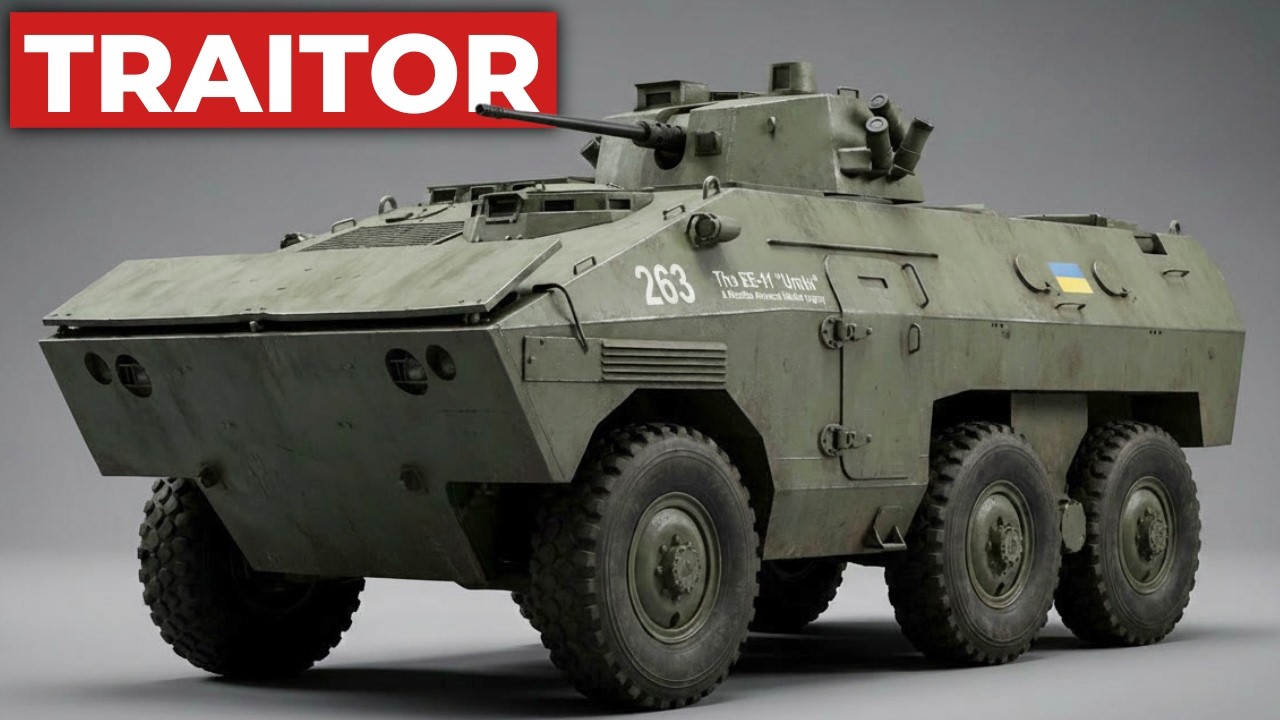
No other vehicle in modern military history had achieved quite this distinction quite so quickly after entering production. In 1990, Saddam Hussein invaded Kuwait. The coalition that assembled in response included the most powerful military forces on earth. And among the Iraqi army’s inventory in Kuwait were its surviving Urutus, now 15 years old and bearing the scars of the Iran war.
When the ground offensive of Operation Desert Storm began on February 24th, 1991, coalition forces moved through Iraqi positions with devastating speed. The 101st Airborne Division, Air Assault, was one of the units that swept through Iraqi armor in the desert north of Kuwait.
Among the Iraqi vehicles it encountered and captured was a single EE-11 Urutu fitted with a 20-mm auto-cannon turret. The vehicle was intact. It was drivable. The division soldiers processed it through the normal captured equipment documentation procedures and eventually shipped it back to the United States. It sits today at Fort Campbell, Kentucky on the grounds of the 101st Airborne Division’s museum complex.
It’s display marker notes its weight as 14 tons, its operational range as 528 miles, and its top speed as 55 mph. It is painted in Iraqi desert camouflage. It is in remarkable condition. A vehicle built by a company that no longer exists, captured by soldiers from a country that never bought it, now preserved in a museum in Tennessee as a monument to a war that ended more than three decades ago.
The Urutu that sat in that Kuwaiti desert in 1991 was more than a combat vehicle. It was the last visible symbol of an empire that was already collapsing. And downfall was spectacular in its speed and brutal in its completeness. Through the 1980s, Ribeiro had bet the company on a project far beyond anything it had attempted before.
The EE-T1 Osório was a domestically designed main battle tank intended to compete directly with the American M1 Abrams and the German Leopard 2 in the global export market. Development costs consumed an estimated 100 to 150 million dollars. The tank was genuinely impressive on paper and in trials. The project counted on a massive Saudi contract, reportedly covering more than 300 vehicles worth over 2 billion dollars.
Saudi Arabia was the prize that would pay for everything. Then Iraq invaded Kuwait. The Gulf crisis of 1990 to 1991 reshuffled every strategic calculation in the Middle East. Saudi Arabia needed American support, and American support came with strong pressure to buy American equipment. The Abrams contract went to the United States, and Engesa’s Saudi deal evaporated.
At the same moment, the Iraqi market, another cornerstone of Engesa’s revenue, was subject to United Nations embargo. Iran had long since stopped buying. The Chadian conflict was over. The Cold War had ended, and surplus Soviet and NATO equipment was flooding onto the global market at prices no Brazilian manufacturer could match.
Engesa had borrowed heavily to finance its expansion. Its short-term debt reached approximately 400 million dollars by the late 1980s. On the 21st of March, 1990, the company suspended payments and filed for judicial reorganization. Attempts to find buyers failed when investigators discovered the true scale of the debt. On the 18th of October, 1993, a court in Barueri declared Engesa bankrupt.
The factory in São José dos Campos was sold to Embraer, the aircraft manufacturer, for 10.4 million reais. The company library was reportedly sold off as shredded paper. The workforce dispersed. The unfinished vehicles were scrapped. A company that had sold armored vehicles to more than 20 nations, that had exported products worth well over a billion dollars, that had employed 9,000 people at its peak, ceased to exist in the same year that the last of its vehicles were still in active combat service around the world. The Urutu outlived its maker by decades. For operators like Colombia, the bankruptcy created an immediate problem. Spare parts would now be scarce. After sales support had vanished, the Brazilian army’s own fleet required an in-house modernization program conducted at the São Paulo War Arsenal, which re-engined and re-transmissioned more than 200 vehicles through the 1990s simply to keep them operational. With no manufacturer to call for technical guidance. In Libya, the Urutu survived into the next century and into the next
war. When the uprising against Muammar Gaddafi began in early 2011, the Libyan army still operated a fleet of Urutus that had been in service for nearly 30 years. As the country fractured, armored vehicles fell into the hands of whichever faction controlled the depot or the base where they were parked.
Libyan rebel forces fielded Urutus against Gaddafi’s loyalist units. Loyalist units fielded Urutus against rebel positions. Photographs from the conflict show Urutus with improvised multiple rocket launcher mounts bolted to the roof. A detail that would have horrified the engineers in São José dos Campos, and also would have impressed them.
The vehicle’s hull was strong enough to support armament configurations its designers had never imagined. The same pattern repeated itself in Iraq after 2003. Surviving Iraqi army Urutus passed through successive governments and eventually into the hands of Kurdish Peshmerga forces.
When the Islamic State swept through northern Iraq in 2014, the Peshmerga fell back on every piece of equipment available. Photographs document Urutu carriers with Peshmerga markings moving through Erbil and across the Nineveh plain. Decades-old Brazilian armored vehicles serving in a 21st century counter-terrorism campaign.
A vehicle named after a pit viper, still biting. To understand what the Urutu actually was, it is worth measuring it against the machines it competed with during its production years. The American M113 was its most direct rival. The M113 was tracked, aluminum hulled, and produced in vastly greater numbers, eventually exceeding 80,000 units across all variants.
Its track system gave it superior mobility in soft ground and jungle terrain, exactly the conditions the American military expected to fight in during the Vietnam era. But its road speed of approximately 61 km per hour was significantly lower than the Urutu’s, and its operational range, while adequate, could not match the Brazilian vehicle’s 850 km reach.
The M113’s tracks required intensive maintenance and were expensive to replace. The Urutu’s six wheels needed no track adjustments, no track replacements, and could be fitted with run-flat inserts that allowed the vehicle to continue operating after tire damage. In the dry terrain of the Middle East and Africa, where most Urutus actually served, the wheeled vehicle consistently outperformed its tracked competitor in operational availability.
The Soviet BTR-60 was the Urutu’s other major competitor in the developing world export market. The BTR-60 was eight-wheeled and fast, reaching similar road speeds to the Urutu, but its troop exit was a persistent tactical problem. Soldiers had to dismount through small roof hatches under fire, an arrangement that cost lives in Afghanistan and other conflicts.
The Urutu provided large side doors and a rear access panel, allowing infantry to dismount rapidly and safely regardless of threat direction. The Soviet vehicle’s two separate gasoline engines were also a maintenance burden in environments where spare parts were difficult to source. The Urutu’s single diesel power plant was simpler, more fuel-efficient, and easier to maintain.
The French VAB, which entered service around the same time as the Urutu, was perhaps its closest philosophical equivalent. Both were wheeled, amphibious armored personnel carriers optimized for road speed and strategic range. The VAB was better supported industrially and benefited from decades of continuous French military investment and upgrade, but the VAB cost more per unit, came with a shorter supply chain, and required French technical support that many of Engesa’s customers could not easily access. The Urutu, cheaper and simpler, filled the market gap that the VAB left open in nations that needed armored transport, but could not afford first world support contracts. None of these comparisons changes what eventually happened to the Urutu’s manufacturer. The vehicle won its market segment. The company still failed, not because the engineering was wrong, but because Ribeiro bet everything on a main battle tank that depended on a single contract that never arrived. It is worth pausing on that detail. The Urutu was a commercial and operational success. The Cascavel that shared its chassis was a
commercial and operational success. Engesa built two vehicles that are still being studied by military historians and still sitting in collections on multiple continents. The company went bankrupt anyway, because success in one product line does not protect a manufacturer from catastrophic losses in another.
That is not a lesson unique to Engesa, but it is a lesson written in the concrete of a factory in São José dos Campos that now belongs to an airplane manufacturer. 1970, a factory floor in São José dos Campos. A six-wheeled steel hull under bare workshop lights, 14 tons of bi-metallic steel, six wheels on a walking beam suspension, twin propellers, a trim vane, and one reliable diesel engine.
It was underpowered for its class in its earliest marks. It had no night vision in its base configuration. Its armor was adequate against rifle calibers and fragments, but offered no protection against heavy cannon fire or anti-tank missiles. It was built by a company with eight employees that grew into a 9,000 person firm and then collapsed into bankruptcy in the span of a single generation.
It had no after-sales support network once that company failed. Its part supply was unreliable for decades after 1993, and yet it fought in the Sahara and kept moving when the sand destroyed everything around it. It served both sides of the deadliest war of the 1980s and worked for both of them. It was captured in Kuwait and ended up in Kentucky.
It was dragged out of Libyan storage depots in 2011 and bolted with rocket launchers it was never designed to carry. It was driven by Kurdish fighters against an enemy its creators could never have imagined. Fighting in a country that had not existed as a modern state when the first prototype was completed more than 20 nations bought it.
Operators on three continents used it in combat. The vehicle that nobody outside Brazil believed in, built by engineers who had started by fixing trucks, outlasted its critics, outlasted its competitors in several of those markets, and outlasted the company that created it by more than three decades. That is not luck.
That is engineering built on the right foundation in a world that rewards simplicity, reliability, and range above almost everything else. The Urutu was not British. It was not American. It was not Soviet. It came from a country that had never built a tank before, designed by an engineer who had never designed an armored vehicle before, built in a factory that had been repairing trucks a decade earlier. It went everywhere.
It fought everyone. It is still there in Fort Campbell in Tennessee. 14 tons of Brazilian steel in desert camouflage in a museum in Kentucky. Proof that the world does not always reward the most powerful. Sometimes it rewards the most practical. That is the difference between what a vehicle looks like on a factory floor and what it becomes on a battlefield.
The Urutu looked like nothing. It became something that armies across three continents could not do without.