The Dark Reason German Tank Crews Feared the British 6-Pounder Gun D
Sergeant Charles Callistan, 27 years old. A gun layer with the second battalion the rifle brigade. The date, 27th October, 1942. The place, a shallow unnamed dip in the Egyptian desert. The maps called Outpost Snype. Three Italian tanks, 200 yards closing. Two rounds left in the gun. The Jeep that had just brought more ammunition forward was already burning, set alight by machine gun fire on the way in.
Lieutenant Colonel Turner and an NCO wrestled around three of it anyway under fire while Callistan held the gun. He hit all three tanks. None of the crews got out. By nightfall, the depression at Snype held between 52 and 57 destroyed or disabled Axis tanks and self-propelled guns, German and Italian both.
One battalion had gone in with 19 guns. One gun came out working. The weapon behind it weighed barely half a ton. It had been in front-line service for less than 6 months. On paper, against the armor the Germans were fielding that autumn, it should not have been able to do what it did that day, in that place, at that range.
It did it anyway. To understand Snype, go back two and a half years to a beach at Dunkirk in May 1940. The British Expeditionary Force came home from France with almost none of its heavy equipment. Anti-tank guns, lorries, artillery pieces abandoned on the sand or left burning on the roads behind the retreat.
What came back across the channel was men. The guns stayed in France, most of them captured intact and turned against their former owners under German designations of their own. At that point, the British Army’s standard anti-tank weapon was the Ordnance QF 2-pounder, a 40-mm gun adopted in 1938, adequate against the tanks of that year, and already looking thin by the time France fell.
Woolwich Arsenal had a successor on the drawing board before the war even started, a heavier 57-mm gun built around naval ordnance the Royal Navy had used since the previous century, with the manufacturing tooling for that caliber already sitting in British factories. It was the beginning of what would become the 6-pounder.
It should have gone straight into production in place of the 2-pounder. It did not. With an invasion fleet massing across the channel and the country’s anti-tank cupboard bare, the War Office made a hard arithmetic decision. Switching the factories over to the new gun meant a gap in output while the tooling changed.
The estimate at the time was blunt. Every 100 6-pounders produced during that changeover would cost the army 602 pounders it could otherwise have had in the meantime. With a German landing a live possibility, the Ministry of Supply chose the gun already in production. The 2-pounder stayed on the lines. The 6-pounder waited its turn.
That decision cost the new gun the best part of 18 months. The carriage design wasn’t finished until 1941. Full production didn’t start until that November. The weapon did not reach fighting units until the spring of 1942 in North Africa, by which point German tank armor had already moved on without it.
When it finally arrived, the improvement was immediate and obvious. Filing a shot of just over 6 lb at roughly 2,700 ft per second, the 57-mm 6-pounder could put a round through 68 mm of armor at 1,000 yd, more than three times the penetration of the gun it replaced. For a short window that spring, it was the most capable anti-tank weapon in the desert on either side of the line.
It arrived on a two-wheeled split trail carriage with rubber tires, low enough to be dragged into a shallow scrape and dug down almost flush with the ground. A very different proposition from the old two-pounders high awkward platform mount, which had been simple to spot at range and slow to reposition once found.
That single change in the carriage would matter more in the end than the extra caliber. A gun that could hide was worth more in the desert than a gun that merely hit harder. Nobody in the war office had much reason to think that far ahead in 1942. They were simply relieved after 18 months of delay to finally have something that could stop a German tank at range.
The German panzer offer had not built its doctrine around static defense and had no reason to. It was built around speed, encirclement, and exploiting an open flank before the enemy had time to react. In France in 1940 and in the opening battles in the desert the year after, that approach had worked exactly as intended.
A dug-in strongpoint was something to be located and driven round, not assaulted head-on, and left to wither once its supply lines were cut. It was a rational way to fight a war. By October 1942, it had carried the Africa Corps 2,000 miles east from Tripoli. The doctrine carried a built-in assumption that a strongpoint, once found, could be handled at a distance or bypassed entirely.
It assumed the guns inside it would be seen coming and that the crews serving them would break under fire long before the armor needed to close the range. Outpost Snipe tested that assumption without either side planning it that way. On the night of 26th to 27th October, 1942, the 2nd Battalion, the Rifle Brigade under Lieutenant Colonel Victor Turner, dug in 19 six-pounders in a shallow depression southwest of Kidney Ridge in support of the wider Eighth Army advance under Operation Lightfoot. In the dark, the battalion had marched half a mile past its intended position and dug in on the wrong patch of desert without realizing the mistake. It made no difference to what followed. At first light, German and Italian armor began moving past the depression, sides and rear exposed, exactly as their tactics assumed, not attacking Snipe directly, but simply passing it on the way to the main British line beyond.
Major Tom Bird’s anti-tank company let them close before opening fire. In the first exchange, in under 2 minutes, a dozen enemy tanks were destroyed. Several of them within seconds of one another, half of them catching fire where they stood. Later that same day, Lieutenant Colonel Turner, wounded in the head, joined a gun crew as loader and helped to count for five more tanks and a self-propelled gun at close range.
When ammunition ran short, Lieutenant J. E. B. Toms drove a jeep through machine gun fire to bring more forward and his fuel tank caught a light in the process. The gun he was resupplying kept firing. A second wave followed the first. Roughly 30 German and 10 Italian tanks pushed south of the depression and the anti-tank gunners knocked out nine of them outright, damaging several more before the rest withdrew.
Later that afternoon, 15 German tanks turned towards the northwest corner of Snipe, where only two guns were still working. A sergeant crawled alone to a third gun with barely 30 armor-piercing rounds left, hit the leading tank twice, then knocked out the two behind it before the attack broke off. By the close of the second day, the ground around the depression held somewhere between 52 and 57 destroyed or disabled Axis tanks and self-propelled guns.
Field Marshal Erwin Rommel drew a specific lesson from the wreckage his own tank crews left behind at Snipe. A well-sited anti-tank position, served by crews who would not break, could not simply be driven past. It had to be treated as a defended strongpoint in its own right, reduced by artillery first or avoided altogether.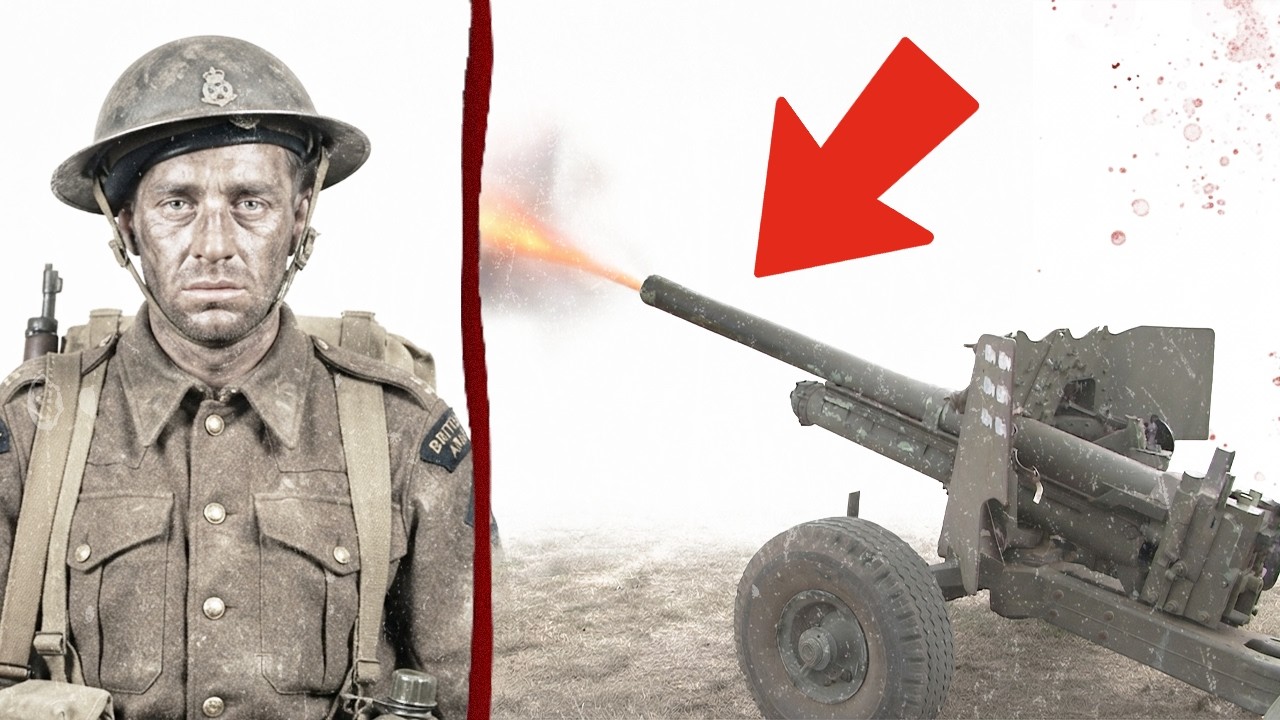
The doctrine that had carried the panzerwaffe across two continents had just met a depression with 19 guns in it and paid a heavy price in armor to learn why. Here is the dark reason, and it was not that the 6-pounder was simply a better gun. Round for round, at long range, against the frontal glacis of a Panzer 4, it very often was not.
It was structural, and it lived inside the tactics themselves, not inside the barrel. German armor tactics were built on the presumption that a strongpoint would announce itself. Reconnaissance would find it, or artillery and air power would suppress it, and the tanks would then either avoid the position or overrun it at speed before its defenders could bring effective fire to bear.
The entire system depended on the enemy’s guns being seen, or at least anticipated, before German armor came within killing range of them. The 6-pounder, dug into soft desert sand and served by crews disciplined enough to hold their fire past 600 yards, defeated that presumption entirely. There was nothing to see.
No muzzle flash gave a position away until the guns had already chosen their own moment to fire. Panzer crews advancing past what looked like empty, undefended ground, found themselves inside a killing zone with interlocking arcs of fire before a single shot had warned them the position existed at all.
This was the one situation German tactics had no answer for, because they had never been built to look for an enemy who refused to be seen coming. Blitzkrieg assumed tempo, The idea that speed itself was a form of protection. That a fast-moving column could outrun the consequences of an undetected position simply by being past it before the guns opened up.
At Snipe, the German tanks were past the guns. It made no difference whatsoever. The guns had been waiting the entire time. And when they fired, they fired into the flank and rear decking that German armor had never been built with the 57-mm shot in mind. The institutional cost is clearest in Rommel’s own words afterwards, not in a rewritten field manual.
He drew a direct conclusion from what his tank crews had lost at Snipe. A prepared anti-tank position could no longer be treated as empty ground simply because it had not yet opened fire. That is a personal judgment from the commander on the spot. Not evidence that the wider panzerwaffe formally rewrote its tactics.
But it is evidence of something just as telling. That the officer who had built his reputation on tempo now understood tempo alone was no longer enough. Position by position against a gun that cost the treasury a few hundred pounds and could be manhandled into a sand dune by six men working in the dark.
That is the dark reason German tank crews came to fear the six-pounder. Not its penetration figures on a data sheet. Its silence. And the discipline of the men behind it. There was a second, quieter failure sitting behind the first. German intelligence in the desert relied heavily on reading the ground.
Dust trails, wheel tracks, the glint of optics to build a picture of where the enemy’s guns were likely to be before an advance began. A six-pounder dug down flush with the sand, its crew motionless and silent until the range closed, left almost nothing for that kind of reconnaissance to find.
There was a name in German planning for positions that couldn’t be located in advance. Acceptable risk. At Snipe, acceptable risk turned out to mean 50-odd burnt-out tanks. The scale of what changed can be read in the numbers left on the ground at Snipe, and in the tanks the Germans went on to build.
19 guns, each weighing around 2,470 lb, roughly the weight of a small family car, and small enough for six men to drag by hand, accounted for somewhere between 52 and 57 Axis tanks and self-propelled guns in a single day and a half of fighting. By the crudest arithmetic, one 6-pounder, correctly sighted, was worth roughly three enemy armored vehicles before it was destroyed itself.
The battalion lost all but one of its own guns achieving it, along with 72 men killed, wounded, or missing. Sergeant Callistus survived the battle. His own gun crew credited him with nine tanks destroyed that day. Three of them with three consecutive shots. His brigade, division, and core commanders recommended him for the Victoria Cross.
The recommendation was downgraded, and he received the Distinguished Conduct Medal instead. He was killed the following year fighting in Italy. The gun’s effective range against German armor told its own story about where the danger actually lay. Head-on against 50 to 80 mm of glacis plate on a Panzer III or Panzer IV, the standard 6-pounder shot was reliable only at close range, and grew marginal as the Germans up-armored their tanks through 1942.
But against the 30-mm side plate most Panzers still carried, the armor a tank presented while maneuvering around a position, rather than driving straight at it, the 6-pounder remained lethal out past 1,000 yd. German tactics had never priced in that geometry. The very maneuver meant to keep a tank safe was the maneuver that put its weakest armor directly in front of the gun.
Whether that judgment was ever formalized into a wider doctrinal change is not something the record settles cleanly. What is clear is the cost of ignoring it. Every hour a column spent probing a suspected position with artillery rather than simply driving past it was an hour Rommel’s supply lines, already stretched along a single coast road 1,000 mi long, could not spare.
There was a heavier cost still to come. When the Tiger I reached North Africa that winter, its frontal armor ran to over 100 mm, thick enough to make the standard 6-pounder shot useless head-on at any practical range. Two of the first Tigers destroyed by the Western Allies fell to towed 6-pounders regardless.
Hit not through the front, but through the side by gunners applying the exact lesson Snipe had already taught them. Let the tank commit to its maneuver, then take the flank. The gun that could not beat the newest German armor on a specification sheet kept beating it on the ground because the contest was never really between one gun and one tank.
It was a contest between a static ambush and a doctrine built entirely around the assumption of movement. By the time the British Army tried to replace the 6-pounder outright, that same institutional pattern repeated itself in reverse. An 8-pounder program, the gun in 1942, aimed to fit a more powerful barrel onto the same light carriage.
The heavier gun proved too much for the mounting it was meant to share. A second attempt with a shorter barrel offered barely any improvement over the weapon already in front-line service, and the whole program was quietly canceled in January 1943. The 6-pounder that the war office had once delayed for 18 months to keep an older and weaker gun in production ended up outlasting its own intended replacement.
Every army plans for the war it expects to fight. The Panzerwaffe planned around the idea that speed was itself a form of armor. And for most of 1939, 1940, and 1941, that plan held. What Outpost Snipers exposed was never a flaw in German tanks. It was a flaw in the assumption that mobility and protection are the same thing.
That being fast enough to get past a threat is the same as being safe from it. The 6-pounder did not out-armor the tanks it destroyed at Snipe, and it did not outrun them. It waited, low in the sand, for the moment the enemy’s own doctrine turned its back, and it was ready the instant that moment arrived.
The gun the war office had nearly delayed out of existence to keep an older, weaker weapon in production ended up teaching the most mobile army in Europe that concealment could beat speed, and that a strong point too quiet to detect was more dangerous than one loud enough to be avoided. That is the pattern worth carrying forward past this one gun and this one depression in the desert.
Military institutions plan for the threats they can see coming, the ones with a name, a doctrine, a fixed place on the order of battle. The soldiers who actually fight the war meet the threats that were never on anyone’s map, dug into ground nobody thought to check, waiting in silence for the enemy to make the one assumption their own manual told them was safe to make.
The best weapons are rarely the loudest. They’re the ones the enemy never sees until it is already too late for it to matter. If you want to see what happened when the Germans finally built a tank the standard 6-pounder could barely touch from the front. That’s next. Subscribe, hit the bell, and I’ll see you there.