
The Dumbest WW2 Armor Myth I’ve Ever Heard D
If you’ve spent any amount of time talking about tanks from the Second World War, you’ve likely come across the claim that American tanks weren’t built to fight other tanks. This has even weaseled its way into museums and other seemingly reputable sources, with many believing that tanks like the Sherman weren’t built for tank-on-tank engagements.
Unfortunately, as with many myths and misconceptions, this topic has a significant amount of nuance to it. And that makes it incredibly hard to properly discuss without it becoming two sides essentially arguing past one another. So, where does this misconception come from? And how do we know it’s incorrect? Well, unfortunately, as with many things in regards to tanks, it requires the horrifying concept we know as reading.
Jokes aside, many of these arguments appear to hinge on the idea that American tank units were not meant to engage tanks with that being the job of the tank destroyers, which is true. However, as I mentioned before, this is where we run into the nuance of this discussion. Let me show you a perfect example with a quote from the book Pershing by R.P Hunnicutt. In the conclusion section he writes: “Army Ground Forces, on the other hand, did not object to the new tanks, but rejected the 90mm gun as tank armament.
AGF opinion was that, if the tanks were equipped with the 90mm gun, they would be encouraged to engage in tank-versus-tank battles and abandon their proper role as a maneuvering element. In the AGF view, all antitank action was the function of the artillery and tank destroyers.” Reading that it would seem pretty conclusive that tanks were not intended to fight tanks with that being the job of the tank destroyers or artillery.
There are two very important things to remember here, though, the first being that a book like this is not a primary source and should not be treated as one. The second is that if you pay close attention to the wording he uses there is more to this than what it may at first seem. Note how he says “they would be encouraged to engage” rather than “they would engage” as well as ending with “and abandon their proper role.
” Nowhere in this statement does he actually say that tanks are not intended to fight tanks, rather the point being made is that it isn’t their “proper role” on the battlefield. As you’ll see in a moment none of this really matters once you read the Field Manuals, but I bring it up to show how easily a statement can be misunderstood or misused. Now despite the fact I cannot recommend Hunnicutt’s books highly enough for anyone interested in American armor, the fact remains that just like other books on topics like this these are what we refer to as either a secondary source or a tertiary source. I won’t bore you with the details of what those are in this video but if you truly want to research a topic such as this you should always strive to trace it back to the original, or primary, source. In this case this is easy because the US Army Field Manuals from the time are freely available online. While I’d recommend you read them yourself rather than just taking my word for it, and I’ll link
them in the description if you wish to do so, as the main one I’ll be quoting is over 300 pages long I know many probably won’t take the time to do so. However, in this case, I think you’ll see that the evidence speaks for itself.
Just the fact that Armored Force FM 17-30 has a section on tank versus tank action makes it pretty clear that US tanks and tankers were indeed intended to fight tanks. “But Cone” I hear you starting to type “That is just meant for when they encounter tanks it doesn’t mean they are intended to fight them.” That argument falls apart pretty quickly when you read US Army Field Manual 100-5.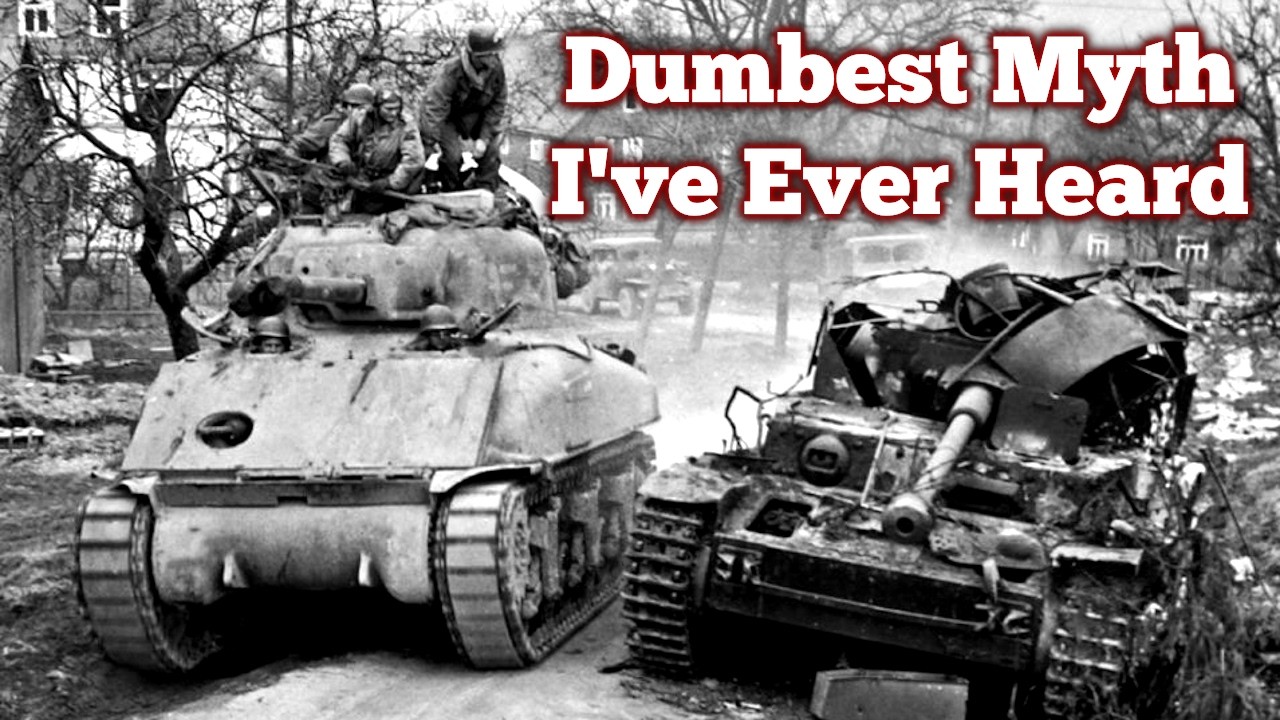
Paragraph 662 and 685 specifically address this topic with them reading: “Tanks are essentially offensive weapons. They are held in reserve in a covered position out of effective artillery range until the situation is favorable for their employment. They constitute a powerful reserve in the hands of the commander either to engage hostile tanks or to support a general counterattack or counteroffensive.
” 685 is more of the same stating: “Large tank units and armored divisions are effective means to counter hostile mechanized and armored forces. They must be used offensively in large groups on definite counterattack missions, usually for maneuver to deliver a surprise blow against the flanks and rear of the hostile mechanized force.
Their employment must be closely coordinated with and supported by ground forces, antimechanized means, and combat aviation.” There are many other examples I could bring up here, but I think you get the idea from those. So where does this misconception come from? The answer to this can be found with one term found in both the quotes I just read, that being “offensive.
” The intent of the American tank doctrine is very clear in the fact that the tank is meant to be a fast moving offensive weapon primarily rather than a more defensive one. In those operations it is entirely likely they may encounter and engage tanks being used either defensively or in counterattacks. The nuance of this comes with the role of the Tank Destroyer Branch who were meant as a reactionary defensive force.
In the event of a tank attack, tank destroyers and artillery were meant to meet and engage the attackers, hence the motto “Seek, Strike, Destroy.” The Armored Forces, on the other hand, operate under the motto of “The Combat Arm of Decision” emphasizing flexibility and decisive action. The most important part of this to understand is the fluid nature of combat which the US Army clearly understood and emphasized within the armored forces.
Their primary job was not to seek out and engage tanks, but they were absolutely built and trained to do so and would be called upon for this role whenever necessary. I want to emphasize this point a bit further because, as I mentioned earlier, this seems to be where a lot of the confusion about this topic comes from. To do so I’ll read one last quote from FM 17-30 the Armored Force Field Manual.
The very first point reads “This manual is written as a guide for the tactical training and combat procedure for the individual tank, the tank section, and the tank platoon, both light and medium. The tactical procedures and methods set forth herein are not to be followed as inflexible rules as such practice would stifle individual initiative.
” and note this final line in particular “The methods of procedure given must be varied to meet the particular situation at hand.” So while this clearly shows that tanks were a more flexible tool for missions we can contrast that with other examples of armored vehicles like the German Nashorn. Similar to other tank destroyers and self-propelled guns these were specifically ordered to NOT be used in place of tanks.
If it were true that American tanks like the Sherman were not meant to be used against armor you would see clear examples of command ordering them not to be used in that role. However, as we’ve seen this was the complete opposite with the manuals making it clear that tanks are a tool that can and should be used against armor if needed. For another example of the multiple roles of a tank on the battlefield consider the fact that often tanks are used as indirect fire support, basically like self-propelled artillery.
It would be silly to argue that tanks weren’t built to be used as artillery simply because it wasn’t their primary purpose. This is part of why vehicles like the tank destroyer have largely been overlooked in favor of main battle tanks as a multi-role vehicle on the battlefield but that is a topic for another time.
So hopefully this video can help finally put this ridiculous argument to bed and I encourage you to share it, or the quotes I showcased in it, if you encounter anyone trying to repeat this misconception. Anyways, I hope this video was educational and I’m going to get back to work on my video on why it took the M26 Pershing so long to reach Europe.
Thanks as always for watching and to all of you who have ordered a model kit from coneofarc.store or support the channel as a member. If you liked this one, consider checking out my previous video on the birth of the American tank corps during the Great War. See you there.