The Enemy Held Every Ridge Into Radfan. The SAS Took Them One by One and Filed Nothing D
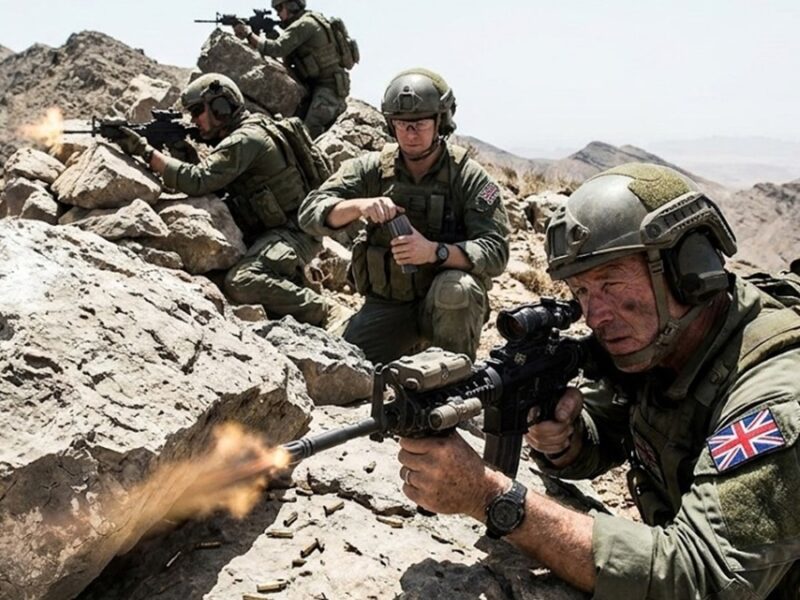
The Radfan, a jumbled mass of volcanic rock and narrow wadis in the Aden Protectorate in what is now Yemen. In 1964, it is the operational environment for one of the most demanding campaigns that British special operations forces have conducted in the post-war period, a campaign against tribal insurgents who know every ridge and every approach route and terrain that has defeated larger forces before.
The enemy holds every ridge into the Radfan. This is not a figure of speech or an intelligence assessment approximation. It is a literal description of the tactical situation. The heights that command the Radfan’s approach routes are held by armed tribesmen who have the advantage of terrain familiarity, the advantage of defensive ground, and the advantage of a population that provides them with intelligence about coalition movements.
The British Army’s response to this situation is a combination of conventional infantry operations and SAS reconnaissance. The foot soldiers pushing through the valleys while the SAS works the ridges, identifying the positions, the routes, and the logistics that keep the tribal forces supplied and capable.
The SAS took the ridges one by one. What they filed was close to nothing. What they achieved was the operational foundation on which the entire Radfan campaign was built. The Aden emergency, the insurgency that ran from 1963 to 1967, and that eventually resulted in British withdrawal from Aden and the establishment of an independent South Yemen, was one of the most complex counterinsurgency environments that British forces operated in during the post-war period.
The specific complexity of the Aden situation derived from the combination of urban terrorism in Aden city, tribal insurgency in the Radfan mountains of the Protectorate interior and the Egyptian backed political pressure that was being applied through the National Liberation Front and the Front for the Liberation of Occupied South Yemen.
The SAS’s operational involvement in Aden was concentrated on the Radfan campaign. The military operation designed to pacify the tribal insurgency in the Radfan mountains that had been disrupting the Dhala road, the main supply route between Aden and the protectorate interior and that had become the focus of British military concern in the spring of 1964.
The specific character of the Aden protectorate as a political entity, a British protected collection of traditional sultanates and tribal territories in which the British presence was based on treaty arrangements rather than direct administration, shaped the political constraints on military operations in ways that the purely military assessment of the Radfan situation did not fully capture.
Military operations had to be conducted in a way that did not permanently alienate the tribal authorities whose cooperation was essential to any lasting stability in the protectorate. The Radfan itself, the specific terrain that the 1964 campaign was fought in, presented challenges to military operations that were qualitatively different from the challenges of jungle warfare or desert warfare in open terrain.
The volcanic rock of the Radfan created a landscape of jagged ridges and narrow valleys in which movement was channeled along specific routes that were visible and vulnerable to observation and fire from the heights that dominated them. The tribesmen who had been living in and fighting over this terrain for generations had an intimate knowledge of every route, every ridge, and every approach that conventional military mapping and aerial reconnaissance could not replicate at the same level of detail. And that knowledge translated directly into tactical advantage for any force defending the high ground against an adversary moving through the valleys below. The Egyptian support for the Yemeni based insurgents who were supplying and advising the Radfan tribal forces, the specific external dimension of the campaign that linked the Radfan fighting to the broader regional conflict between Nasserism and the Western presence in the Arabian Peninsula,
added an intelligence dimension to the campaign that went beyond the tactical intelligence about tribal dispositions and strengths. Understanding the external support networks was as operationally important as understanding the internal tribal forces that those networks sustained. The specific operational task that the SAS was given in the Radfan, the reconnaissance of the ridges and heights that the tribal forces held, the identification of routes that the infantry could use to approach those positions, and the gathering of intelligence about the enemy’s dispositions and strength, was the task that the SAS’s specific capabilities made it uniquely suited to perform, and that conventional reconnaissance units could not perform at the same level in the specific terrain of the Radfan. The key requirement was the ability to move through the Radfan’s terrain undetected to reach positions of observation on or near the enemy held ridges, and to
remain in those positions long enough to gather the intelligence that the operational planning required. These requirements, undetected movement, sustained observation, and the ability to operate in terrain that was denied to larger and less discrete forces, were the specific capabilities that defined the SAS’s operational value in the Radfan context.
The specific requirement that the reconnaissance patrols gather route intelligence, not just the intelligence about where the enemy was, but the intelligence about how British forces could approach those positions without being detected and engaged before they were ready to fight, was a requirement that most intelligence collection systems could not fulfill.
Air reconnaissance could photograph the terrain. It could not determine which of the approach routes the photographs showed were navigable at night and undetected. Only soldiers on the ground could provide that assessment. The intelligence that the SAS was tasked to gather was intelligence of several distinct types.
The tactical intelligence about enemy positions, strengths, and defensive arrangements was the most immediately actionable. The information that infantry commanders needed to plan specific operations against specific objectives. The route intelligence, the identification of approaches to enemy-held positions that conventional forces could use to achieve surprise rather than advancing along the obvious routes that the enemy would cover, was equally critical and in some respects more difficult to gather because it required the SAS patrols to physically reconnoiter the terrain rather than simply observe from a distance. And the logistic intelligence about how the tribal forces were being supplied and sustained in their mountain positions was the strategic intelligence that shaped the broader operational approach to the campaign. The first SAS patrols into the Radfan in the spring of 1964
operated under conditions that made the Malayan and Borneo operations look, in some respects, operationally more forgiving. In Malaya and Borneo, the jungle provided cover that made undetected movement genuinely possible. In the Radfan, the bare volcanic rock provided virtually no natural cover at all, and movement by day in the Radfan’s terrain was movement that could be observed by any watcher on the surrounding heights.
The SAS’s operational response to this constraint, the adoption of exclusively night movement with the patrol reaching its observation position before first light and remaining motionless under whatever cover the terrain provided through the daylight hours, was both the operationally necessary adaptation and the specific technique that made the Radfan reconnaissance possible at all.
Night movement in the Radfan’s terrain was itself technically demanding. The rock was unstable in places, the slopes were steep, and the absence of natural navigational reference points in the darkness made navigation by compass and dead reckoning the only viable technique. The specific noise environment of the Radfan at night was an environment that worked both for and against the reconnaissance patrols.
The sounds that the patrol itself made, equipment, movement, breathing, were sounds that the silence of the Radfan at night made more detectable than they would have been in the noise environment of the jungle. But the sounds that the enemy sentries and observation posts made were equally detectable, and patrols with the training to listen to the night environment could derive as much situational awareness from what they heard as from what they saw.
The first patrols also established the standard for the silence discipline that Radfan operations required. Any sound, equipment noise, loose rock dislodged by a misplaced foot, conversation above a whisper, carried across the Radfan’s terrain in ways that the rock and the silence of the mountain environment amplified.
The patrols that went into the Radfan in 1964 were moving through terrain where the enemy sentries and observation posts were spread across the heights, where the enemy had the advantage of height and the familiarity of a landscape they had lived in and where the margin between an undetected approach and a compromised patrol was measured in the quality of the individual and collective noise discipline that each patrol maintained from the moment it left the British lines until the moment it returned to them. The specific navigational discipline required for night movement in the Radfan, the maintenance of accurate dead reckoning in terrain without landmarks by soldiers who were also managing the noise and security demands of moving through enemy territory was a skill that combined technical compass and pace count navigation with a broader situational awareness that an experienced patrol needed to maintain about the surrounding terrain and the potential positions of enemy observation
posts. It was a skill that took sustained practice to develop to the standard that Radfan operations required. The first major contact, the incident in which a two-man SAS patrol led by Captain Robin Edwards was compromised and both Edwards and his signaler, Trooper Nick Warburton, were killed was one of the defining operational events of the Radfan campaign and one of the incidents that most clearly illustrated the specific dangers of the operational environment that the SAS was working in.
The patrol had been inserted ahead of a planned airborne assault to mark the landing zone and provide the initial reconnaissance of the objective area. It was compromised before dawn on the approach to its objective and both men were killed in the engagement that followed. The specific circumstances of the compromise, the patrol’s detection by a local goat herder before first light, the subsequent engagement with a larger force that the detection brought down on the patrol were circumstances that illustrated both the specific challenge of operating in terrain where the local population was pervasive and the specific cost of operating in an environment where the consequences of detection were immediate and lethal. The deaths of Edwards and Warburton and the subsequent public display of their heads by the tribal forces who had killed them, an act that generated significant British press coverage and political attention, gave the Radfan campaign a public profile that most SAS operations
did not receive and that complicated the operational management of the campaign in ways that the SAS’s institutional preference for operational anonymity was not designed to handle. The operational significance of the incident was that it demonstrated the specific risk level of the reconnaissance operations that the Radfan campaign required and it prompted a review of the operational procedures for SAS reconnaissance patrols in the Radfan that produced adjustments to the insertion methods, the patrol composition, and the communication procedures that the review identified as vulnerabilities in the approach that the Edwards patrol had used. The operational review that followed the Edwards incident was thorough and specific in its findings about the procedures that had been used and the alternatives that the review considered more appropriate for the specific conditions of the Radfan. The review’s findings shaped not just the subsequent SAS operations in the
Radfan, but the broader procedures for reconnaissance patrol insertion in similar environments. The legacy of an operationally costly lesson applied to prevent the same category of loss in subsequent operations. Before we dive in, drop a comment and let us know where you are watching from. If you haven’t already, make sure you hit the subscribe button to not miss any story.
And check out our Patreon in the description. We post full uncensored stories there. Every graphic detail, every brutal moment, nothing redacted, stories YouTube won’t allow. Now, let’s get into it. Chapter 2, the subsequent SAS operations in the Radfan, the reconnaissance patrols that followed the review of the Edwards patrol incident, and that continued across the remaining months of the 1964 campaign, were conducted with the adjustments that the review had produced, and with the specific operational lessons that the Edwards patrol incident had provided about the specific risks of operating in terrain where the local population was alert to the presence of British forces, and where the detection of a patrol could bring a rapid and lethal response. The adjustments included changes to the insertion method, a greater reliance on insertion by helicopter to positions from which the patrol could reach its
objective without crossing the populated lower ground where detection was most likely. And changes to the communication procedures that ensured that a compromised patrol could summon support before its situation became irrecoverable. The intelligence that the subsequent patrols produced, the ridge-by-ridge reconnaissance that identified enemy positions, approach routes, and defensive arrangements across the Radfan, was the raw material from which the operational plan for the systematic reduction of the tribal forces control of the Radfan’s heights was constructed. Each patrol that reached its objective and returned with intelligence added another piece to the operational picture that the infantry commanders needed to plan their operations, and the cumulative intelligence picture that the SAS’s systematic reconnaissance produced was qualitatively more detailed and more operationally useful than anything that air reconnaissance or signals
intelligence could have provided about terrain as complex and as close as the Radfan. The infantry operations that the SAS’s reconnaissance intelligence enabled, the series of operations by regular infantry units that progressively dislodged the tribal forces from the ridgelines they held and extended British control over the Radfan’s terrain were operations that depended on the SAS’s intelligence in a direct and measurable way.
The specific value of knowing the approach route to a position before committing infantry to that approach was the difference between an operation that achieved tactical surprise and an operation that advanced along the route the enemy expected and had prepared to defend. The SAS’s identification of covered approaches to positions that the direct routes to those positions did not reveal was the intelligence contribution that most directly translated into operational advantage in the infantry operations. The specific value of approach route intelligence in the Radfan context was quantifiable in the terms that military commanders use to assess operational risk. The difference in probable casualty rates between an assault that achieved tactical surprise through an unexpected approach and an assault that advanced along an expected route against a prepared defensive position was a difference that the Radfan’s terrain and
the tribal forces defensive skill made large. The SAS’s route reconnaissance was, in this specific sense, a risk reduction investment with a direct and measurable operational return. The relationship between the SAS’s reconnaissance output and the infantry’s operational planning was a relationship of direct dependence, not in the sense that the infantry could not have conducted operations without the SAS’s intelligence, but in the sense that the operations the SAS’s intelligence made possible were significantly more effective than the operations that would have been possible without it. The specific engagement outcomes that followed from operations planned on the basis of SAS reconnaissance intelligence, the frequency of tactical surprise, the reduction in infantry casualties from covered approaches versus exposed ones, and the speed with which specific objectives were taken were the measurable operational outputs of the intelligence investment that the
SAS’s Radfan operations represented. The specific relationship between the SAS’s reconnaissance output and the infantry’s planning was a relationship of translation, the translation of raw reconnaissance observations into the operational planning products that the infantry commanders could use.
The SAS’s patrol reports described what the patrol had observed. The intelligence analysis that translated those observations into assessments of enemy strength, disposable routes, and objective layouts was the process through which the raw reconnaissance became the operational intelligence that the planning required.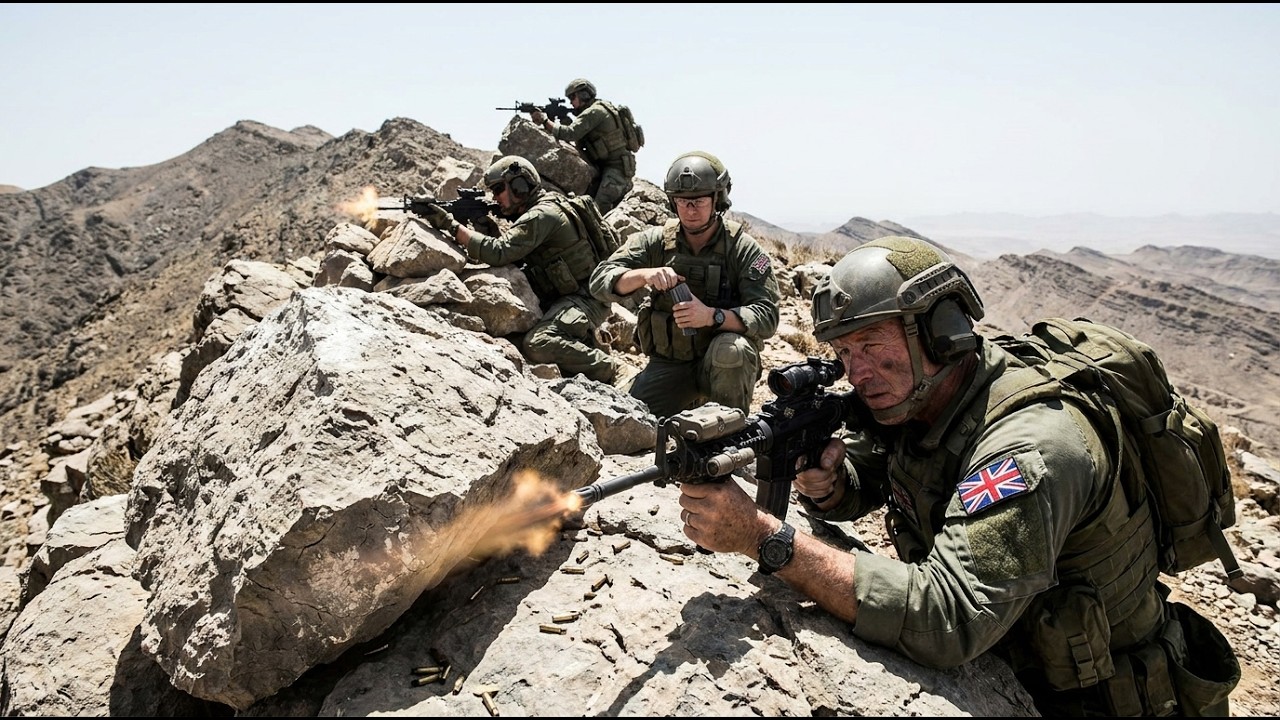
The specific technique of taking the ridges one by one, the systematic progression through the Radfan’s terrain that the campaign’s operational plan envisaged, required the SAS to provide reconnaissance intelligence that stayed ahead of the infantry’s operational tempo. As each ridge was cleared, the next objective needed to be reconnoitered before the infantry moved against it, and the tempo of the campaign required the SAS to maintain a continuous cycle of reconnaissance operations that kept the intelligence picture current across the terrain that the infantry would next be operating in. The demand that this operational tempo placed on the SAS’s relatively small number of available patrol capable soldiers in the Radfan was significant and the specific management of the patrol cycle, the allocation of patrols to objectives, the sequencing of insertions and extractions, and the management of the rest and resupply requirements of patrols returning from
operations was one of the critical operational management tasks of the campaign. The SAS’s ability to maintain the required patrol tempo across the campaign, to sustain the continuous cycle of reconnaissance operations that the infantry’s operational tempo demanded, was a function of the specific qualities that the unit selection and training had produced in its personnel.
The physical demands of operating in the Radfan’s terrain, the night movement in difficult rock, the sustained observation in exposed positions, the movement under fire when compromises occurred, were demands that required soldiers of exceptional physical capability and psychological resilience. And the pace at which the campaign’s operational demands required those qualities to be applied was a pace that the specific characteristics of the personnel that selection and training had identified and produced made possible. The question of what the SAS filed from the Radfan, what the operational record of the campaign contains in terms of formal documentation of SAS activities and findings, is a question whose answer is shaped by the institutional culture that the SAS had developed around the reporting of its operations. The specific culture was one of minimal reporting, of producing the intelligence outputs
that the operational requirement demanded while generating as little formal documentation of its own activities as the operational framework permitted. The intelligence reports that the SAS’s Radfan patrols produced were the formal outputs of the operations, and those reports were detailed and operationally useful.
The documentation of how those reports were generated, the patrol compositions, the approach routes, the specific incidents that occurred during the reconnaissance operations was substantially more limited. The specific challenge of maintaining operational security in a campaign that was being conducted in the full glare of Aden’s political environment, where the British press was present, where the deaths of British soldiers generated immediate public and parliamentary attention, and where the military’s management of the operational narrative was an act of concern was a challenge that made the SAS’s minimal reporting culture operationally valuable in ways that went beyond its standard intelligence security rationale. The minimal reporting culture was not the product of carelessness about the operational record or of institutional indifference to the value of preserving what operational experience had established. It was the product of a specific institutional logic. The SAS’s
operational effectiveness in the environments where it worked depended on its operations being unknown to the adversary, and documentation of those operations was a potential source of operational exposure that the minimal reporting culture was designed to reduce. The operational record of the Radfan campaign therefore reflects the SAS’s contribution primarily through the intelligence products that the reconnaissance patrols generated, the maps, the position reports, the route assessments, rather than through the narrative accounts of the operations that produced them. The intelligence products that the minimal reporting culture preserved, the maps with enemy positions annotated, the route assessments with specific terrain observations recorded, and the strength assessments that the observation periods had generated were products whose operational value was in the information they contained rather than in the narrative of how they had been gathered. The narrative was recoverable from the
memories and the informal accounts of the operators who had gathered the intelligence. The intelligence itself was in the formal products and those products were what the campaign’s operational planning needed. The specific operational achievement of the Radfan campaign, the progressive extension of British control over the Radfan’s terrain through the systematic clearance of the ridgelines that the tribal forces had held, was an achievement that the formal operational record attributed primarily to the infantry units that had conducted the clearance operations and to the conventional military capabilities that those operations had required. The SAS’s contribution to those clearance operations, the intelligence that had made them possible, and the specific route reconnaissance that had made them effective, was acknowledged in the operational assessments of the campaign but was not the primary attribution in the public account of what the Radfan campaign had achieved. The asymmetry
between the SAS’s operational contribution and its public attribution was a feature of the SAS’s operational role that the unit’s institutional culture was designed to produce. The SAS’s contribution was most valuable when it was least visible. When the intelligence it provided appeared to flow from other sources, when the routes it reconnoitered appeared to have been identified by other means, and when the operational successes that its intelligence had enabled appeared to be the product of the infantry commander’s skill rather than the product of the specific intelligence inputs that had made those skills applicable. The operational anonymity that the SAS maintained was not simply a security requirement, it was an operational methodology. The lasting tactical significance of the Radfan campaign for the SAS’s institutional development was the specific set of operational lessons that
the campaign generated about the conduct of reconnaissance operations in terrain where the conventional cover of jungle or urban environments was absent. The Radfan had been a reconnaissance environment without natural cover in terrain where the enemy had the advantages of height, familiarity, and a supporting population.
Operating effectively in those conditions had required specific adaptations: the night movement, the silence discipline, the insertion methods that avoided the populated ground that had not been required in the same form in the jungle reconnaissance operations that the Malayan and Borneo campaigns had produced.
The Radfan lessons were lessons about a specific class of reconnaissance problem that the SA AS would encounter again in subsequent operational contexts. The specific features of the Radfan terrain that made it operationally analogous to the mountain terrain of the Oman campaign, the bare rock, the absent cover, the need for night movement and daylight concealment, and the specific challenge of operating against an adversary with terrain familiarity and the height advantage were features that the SAS’s Radfan experience had produced specific operational solutions for, and those solutions were directly applicable in Oman without the period of costly empirical learning that the early Radfan patrols had required. The subsequent operational contexts where the specific Radfan lessons proved applicable included the Oman campaign of the 1970s, another mountainous terrain environment
in the Arabian Peninsula where the SAS conducted reconnaissance and direct action operations against insurgents with the advantage of terrain familiarity and height. The Oman operations drew directly on the Radfan experience in the specific adaptations they employed for movement in bare mountain terrain, for the management of the local population as both an intelligence source and an intelligence risk, and for the specific communication and support procedures that operations in terrain without natural cover required. The institutional continuity between the Radfan and Oman, the specific carriage of tactical lessons from one mountain campaign to the next, was one of the features of the SAS’s organizational model that produced consistent operational effectiveness across diverse and demanding environments. The Dhofar campaign in Oman, the SAS’s most sustained commitment of the post-war period, running from the late 1960s through 1976,
drew on the Radfan experience in its approach to the mountain terrain of the Dhofar province, and in its management of the hearts and minds operations that were central to the campaign’s success. The specific combination of mountain reconnaissance capability and population engagement that the Radfan had required was the combination that Dhofar demanded, and the Radfan institutional experience was the foundation on which the Dhofar capability was built.
The tribal forces that the SAS was operating against in the Radfan were themselves skilled fighters in their own terrain, and the specific quality of the adversary was one of the factors that made the Radfan campaign’s operational demands as significant as they were. The Radfan tribesmen had been fighting in their mountains for generations and had an approach to mountain warfare that was adapted to the specific terrain and that produced genuine tactical capability.
The British forces in the Radfan were not fighting a poorly equipped or poorly-led adversary who simply needed to be located and engaged. They were fighting an adversary who was difficult to locate, who chose their ground carefully, and who could disengage and disappear into terrain they knew better than any map could represent when the engagement did not develop in their favor.
The specific tactical adaptations that the Radfan tribesmen employed, the use of cover that the rock provided, the exploitation of the light conditions at dawn and dusk that were most dangerous for British movement, and the willingness to engage at close range in terrain where the conventional fire superiority of British forces was least applicable, were adaptations that the SAS’s reconnaissance operations had to account for in the specific way they managed the patrol’s movement and the patrol’s observation of the positions it was tasked to assess. The specific challenges that this adversary’s capabilities created for the SAS’s reconnaissance operations were challenges of detection avoidance and of accurate intelligence assessment. A patrol that was detected before it reached its observation position generated no useful intelligence and incurred significant risk to its personnel.
A patrol that reached its observation position but misread the enemy’s dispositions, underestimating the number of fighters at a position, or missing a secondary position that covered the approaches to the main one, provided intelligence that led to operational plans that the reality of the objective did not match.
The specific quality of the intelligence that the SAS’s Radfan patrols produced was the product of both the physical ability to reach the observation positions undetected and the analytical ability to accurately assess what was observed from them. The operational record of the Radfan campaign, the intelligence reports, the operational orders, and the after-action assessments that the campaign produced, is a record that reflects the contributions of many elements of the British military force that operated in the Radfan in 1964. The SAS’s contribution is present in that record primarily through the intelligence products that the reconnaissance operations generated, rather than through the narrative documentation of those operations themselves. The infantry operations that cleared the Radfan’s ridges are documented in more detail than the reconnaissance operations that made them possible, which means that the public historical
account of the Radfan campaign reflects the relative documentation levels, rather than the relative operational importance of the contributions that the different elements of the force made. The historical accounts that have drawn on participant memoirs and on the fuller records that declassification has made available over subsequent decades give a more accurate picture of the SAS’s contribution to the Radfan campaign than the immediate post-campaign record preserved.
Those accounts make clear that the SAS’s systematic reconnaissance of the Radfan’s terrain, the ridge-by-ridge intelligence collection that identified the positions the infantry would assault, and the routes the infantry would use to approach them, was the operational foundation on which the campaign’s tactical success was built.
The infantry’s skill and courage in conducting the clearance operations was real and considerable. The intelligence that told them where to go and how to get there was the product of the SAS’s work in the ridges, and the two contributions were as inseparable in the operational reality as they were differently documented in the operational record.
The specific detail that the subsequently available accounts add to the immediate record is the detail about what the SAS’s reconnaissance operations involved, the specific patrols, the specific objectives, the specific observations that the immediate record treated as operational security sensitive.
That detail fills in the mechanism between the intelligence that the SAS produced and the infantry operations that the intelligence enabled, and its availability in the historical record allows the nature of the SAS’s contribution to be understood more fully than the immediate record permitted. The enemy held every ridge into the Radfan.
This was the tactical reality at the beginning of the 1964 campaign, and the SAS’s systematic reconnaissance of those ridges, the methodical identification of what each ridge held, who held it, and how it could be approached without giving the defenders the warning that would make the approach costly, was the operational process through which that tactical reality was transformed into the operational opportunity that the infantry could exploit.
The SAS took the ridges one by one in the sense that it reconnoitered each one before the infantry cleared it, producing the intelligence that made the clearance possible at a cost that the alternative, advancing without reconnaissance intelligence across terrain the defenders knew and the attackers did not, would have made significantly higher.
The systematic character of the SAS’s Radfan reconnaissance, the methodical progression from objective to objective that mirrored the infantry’s progression through the Radfan’s terrain, was what distinguished it from the ad hoc reconnaissance that less institutionally prepared forces might have conducted in the same environment.
Each reconnaissance was planned with the same rigor that the first had been, and each produced intelligence of the same quality that the systematic planning and execution of the reconnaissance process was designed to ensure. What the SAS filed from the Radfan was close to nothing in terms of the narrative documentation of its own operations.
What it produced was the intelligence record of the Radfan’s terrain and the enemy that held it. A record specific enough, detailed enough, and accurate enough to serve as the operational foundation for a successful campaign in one of the most demanding counterinsurgency environments that British forces had faced in the post-war period.
The ridges that the enemy held at the beginning of the campaign were not the ridges the enemy held at the end. The reports that documented the transition were the infantry’s reports. The work that made the transition possible had been the SAS’s and the SAS filed it in the way it filed most things as intelligence products without attribution, without ceremony, and without drawing attention to the gap between what the formal record showed and what the operational reality had been. The enemy had held every ridge.
They did not hold them at the end. The operational process by which that change occurred, the SAS’s systematic reconnaissance feeding the infantry’s systematic clearance, was the process that the campaign had been designed to execute and the execution had been what the design required.
The ridges were cleared. The SAS filed close to nothing. What they had done was on the ground in the terrain, in the intelligence products, and in the operational results. That was enough.