The ‘Forbidden’ British Missile That Tore Apart Russia’s Black Sea Fleet Headquarters D
September 22nd, 2023, noon, Sevastopol, Crimea, inside the Black Sea Fleet headquarters building, a limestone command palace constructed in 1958. Russia’s senior naval leadership had gathered for a commanders meeting. Ukrainian intelligence knew the exact time and the exact location. They had assigned the mission a code name, Operation Crab Trap.
Hundreds of kilometers to the north, a pair of Soviet-era SU-24 Fencer bombers lifted from Starokostiantyniv airbase in western Ukraine. Beneath their wings hung gray-green cruise missiles with folded wings and blunt noses concealing infrared seekers. The missiles were British, and until 5 months earlier, every NATO capital had agreed that sending them was forbidden.
The Storm Shadow separated from the Fencers, dropped briefly, then ignited their micro turbo turbojet engines, and ascended to roughly 50 m above the terrain. They crossed occupied territory at Mach 0.8, too low and too small for most Russian radar systems to track. Minutes later, two of them punched through the headquarters roof and detonated inside the building.
The fire burned into the following day. The weapon that did this was conceived in 1994 to replace a retired nuclear bomb. It had been adapted in a matter of weeks to hang from a Soviet airframe nobody designed it for, and it was about to inflict the worst defeat on Russian naval power since the Crimean War of the 1850s.
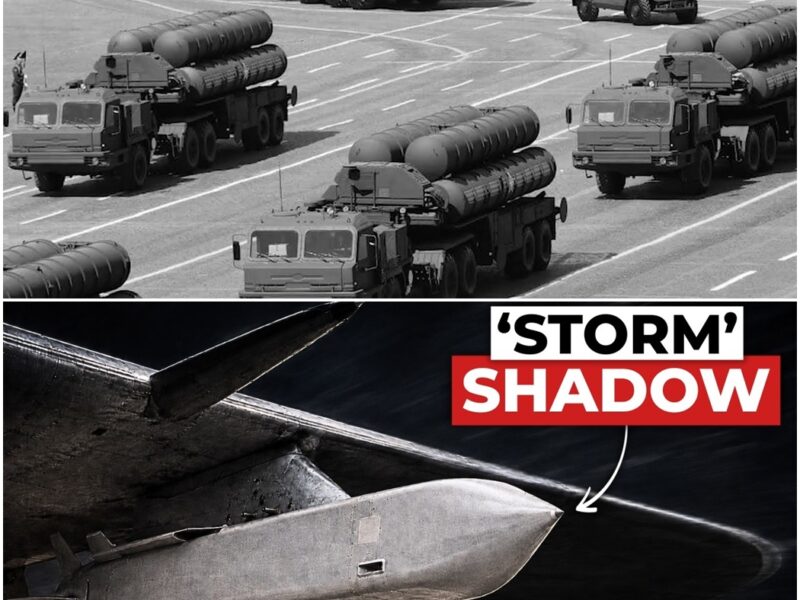
By the spring of 2023, Ukraine could not hit what it needed to hit. Russian forces had fortified occupied Crimea with layered air defenses that ranked among the densest on Earth. S-400 Triumph batteries provided long-range coverage. Pantsir systems defended at close range. Extensive electronic warfare equipment jammed GPS signals across wide swaths of the peninsula.
Behind that shield sat command centers, naval bases, ammunition depots, and the road and rail bridges linking Crimea to the occupied mainland. Ukraine’s HIMARS rockets topped out at roughly 80 km. Sevastopol lay more than 200 km from the nearest safe launch point. Older Ukrainian ballistic missiles like the Tochka-U could theoretically reach, but they flew high, predictable trajectories that S-400 batteries were built to intercept.
None of those warheads could penetrate hardened buildings. Ukraine needed a weapon that could fly below radar coverage, navigate autonomously around air defense zones, and carry a warhead engineered to breach reinforced concrete and detonate inside. Nothing in the Ukrainian inventory met those requirements.
Nothing approved for Western transfer did, either. For 14 months after Russia’s full-scale invasion in February 2022, every NATO capital maintained that long-range cruise missiles crossed a red line. Intelligence assessments warned that providing deep strike weapons could provoke an escalatory Russian response. Capabilities migrated only gradually.
Shoulder-fired air defense came first, then rocket artillery, then Western tanks. Long-range precision strike remained the final threshold. The weapon that would eventually cross it came from a British requirement written 30 years earlier to replace a bomb that no longer existed.
In August 1998, the Royal Air Force retired its last WE.177 tactical nuclear weapon. For decades, RAF Tornado squadrons in Germany had trained to deliver those bombs against Soviet armored columns. With the nuclear capability withdrawn, the RAF needed a conventional alternative that could destroy the same category of targets: hardened aircraft shelters, buried command nodes, and reinforced bunkers at standoff range.
The new requirement was designated staff requirement Air 1236, code named CASOM, which stood for conventionally armed standoff missile. Seven companies submitted competing designs. Among them was a joint Anglo-French entry from Matra and British Aerospace. Derived from the French Apache anti-runway dispenser system.
A separate German entry from Daimler Benz and Bofors would eventually become the Taurus KEPD 350. In July 1996, the Anglo-French design won. The contract worth roughly 700 million pounds was deliberately tied to a broader defense industrial agreement. Paris had blocked the Matra BAE Dynamics joint venture until Britain selected a Franco-British missile.
The joint venture formed in August 1996. It was later absorbed into MBDA, the pan-European missile consortium, in December 2001. France ordered 500 of its own variant, designated SCALPEG. Italy joined the program in 1999. The first fully guided test launch came from a French Mirage 2000N at the Biscarrosse range in December 2000.
The first British launch from a Tornado followed in May 2001. According to a 2011 Ministry of Defense disclosure, total UK program cost for approximately 900 rounds came to 981 million pounds. That put unit cost at roughly 790,000 pounds per missile. With mid-life software upgrades and component refresh, the effective cost has since risen to an estimated 2 million pounds per round.
The missile went to war before it was formally accepted into service. RAF number 617 Squadron, the Dambusters, fired 27 Storm Shadows from Tornado GR4s during Operation Telic in March 2003 against Iraqi airfields and command bunkers. Formal in-service acceptance did not come until October 2004. The weapon proved itself 18 months ahead of the paperwork.
The killing power of Storm Shadow comes from BROACH, which stands for Bomb Royal Ordnance Augmented Charge. This is a 450 kg tandem warhead developed by Royal Ordnance. A precursor shape charge fires first, punching through reinforced concrete, compacted earth, or armor plate. The main follow-through charge enters the breach and detonates inside the target structure.
The fuse is programmable across three modes: air burst, impact, or delayed penetration. This allows operators to configure the same weapon against surface command buildings, aircraft shelters, or deeply buried bunkers. The guidance system is what enables the warhead to reach those targets through modern air defenses. The missile is 5.
1 m long with a 3-m deployable wing and weighs 1,300 kg at launch. It navigates using inertial measurement, GPS midcourse corrections, and a terrain profile matching system called TERPROM, built by BAE Systems. TERPROM compares radar altimeter readings of the ground beneath the missile against a preloaded digital elevation map, allowing the weapon to fly at altitudes as low as 50 m, even when GPS signals are being jammed.
Angular shaping and radar-absorbent treatments reduce the missile signature, but its primary survivability comes from flying so low the terrain masks it from detection. A digital scene matching correlator cross-checks stored reference imagery at designated waypoints. In the final seconds of flight, the nose cone is physically jettisoned, exposing an imaging infrared seeker running autonomous target recognition.
The seeker compares its live image against a stored template of the target. If it cannot confirm a positive match, the missile diverts to a preset crash point and self-destructs rather than risk striking the wrong building. Adapting this weapon to Ukraine’s Soviet-era SU-24 Fencer should have taken years.
According to MBDA Chief Executive Eric Beranger, it took weeks. Decommissioned RAF Tornado pylons were repurposed as adapter mounts and bolted onto the SU-24’s underwing hardpoints. Because Storm Shadow is entirely fire and forget with target coordinates loaded before takeoff and no data link required in flight, the Fencer’s Russian-era avionics never needed to exchange a single byte of data with the missile.
Even the SU-24 MR reconnaissance variant, which has no attack radar at all, was converted to carry and launch it. The 7th Tactical Aviation Brigade at Starokostiantyniv became the primary operator. Now, before we see what Storm Shadow did to the Black Sea Fleet, if you are enjoying this deep dive into British missile engineering, hit subscribe.
It takes a second, costs nothing, and it helps the channel grow. Now, back to Crimea. Britain’s Defense Secretary Ben Wallace announced the transfer to the House of Commons on May 11th, 2023. The UK became the first NATO country to supply long-range cruise missiles to Ukraine. Wallace stated directly that Storm Shadow was a long-range conventional-only precision strike capability provided to help Ukraine defend its sovereign territory.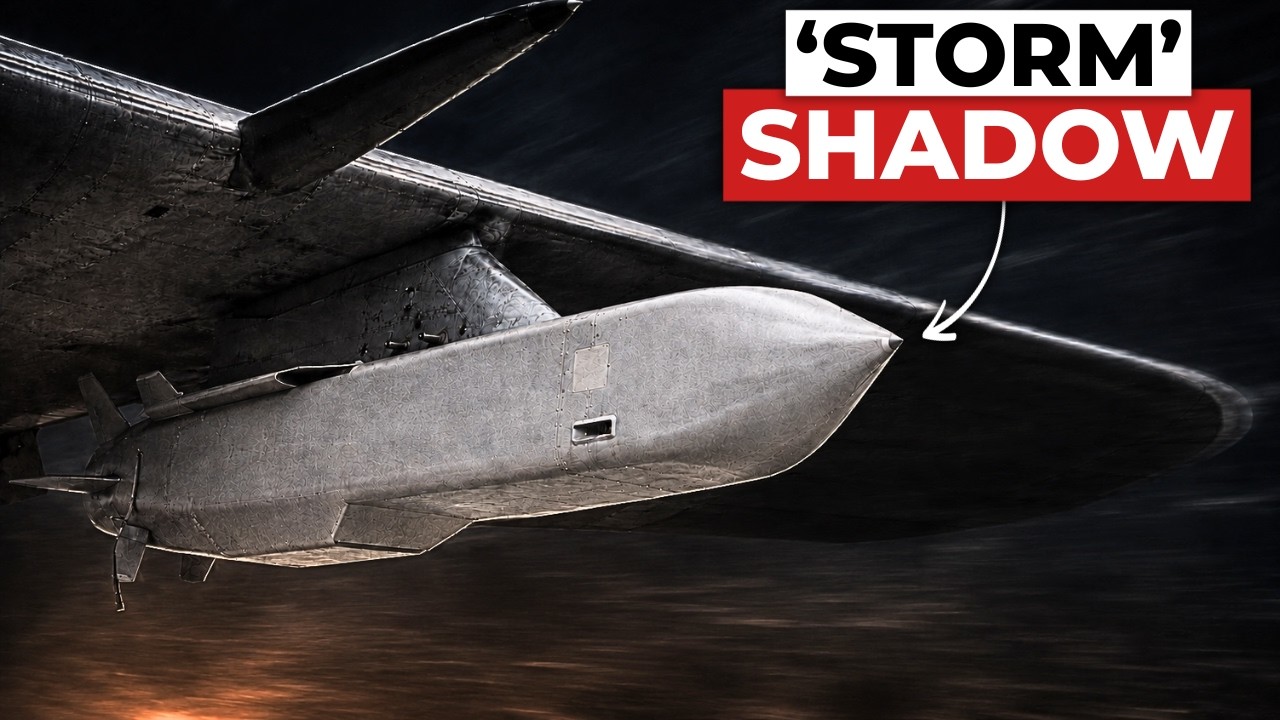
France confirmed its own SCALP-EG deliveries at the NATO Vilnius Summit on July 11th. Germany, which possessed the structurally comparable Taurus KEPD 350, refused to send it throughout the entire war. Chancellor Olaf Scholz cited escalation risk, the need for German personnel to program targets, and limited stockpiles.
In February 2024, a Webex call between Luftwaffe Lieutenant General Ingo Gerhartz and three officers discussing how Taurus missiles could destroy the Kerch Bridge was intercepted by Russian intelligence and published. Berlin confirmed authenticity. It changed nothing. The Taurus never went. Britain and France had already sent theirs.
Results followed within days. On June 12th, 2023, a Storm Shadow killed Major General Sergey Goryachev, Chief of Staff of Russia’s 35th Combined Arms Army, approximately 160 km behind the front line. According to Ukrainian military intelligence, it was the deepest precision kill of the war to that date. On June 22nd at approximately 0500 hours, two Storm Shadows struck the Chonhar Bridge connecting Crimea to the Kherson front.
The Russian installed governor of Crimea later admitted the loss of 70% of all military and civilian traffic across that crossing. On July 11th, a Storm Shadow destroyed the Duna Hotel in Berdiansk, killing Lieutenant General Oleg Tsokov, deputy commander of Russia’s Southern Military District. He was the highest-ranking Russian officer confirmed killed in the war to that point.
On September 13th, at roughly 0200 local time, a salvo struck the Sevmozavod Shipyard in Sevastopol. According to the UK Ministry of Defense, the Rapucha class landing ship Minsk was destroyed beyond repair. The Kilo class submarine Rostov-on-Donu suffered brooch penetrator hits in two places along its hull. Because the Montreux Convention bars warship transit of the Turkish straits during conflict, the submarine could not be towed to Russian repair yards.
It would be struck again the following summer. Nine days later came Operation Crab Trap. Ukrainian Special Operations Forces confirmed the timing of the Black Sea Fleet Commander’s meeting at the Sevastopol headquarters. SU-24s launched and released their Storm Shadows. At noon on September 22nd, at least two missiles struck the headquarters building.
Lieutenant General Kyrylo Budanov, head of Ukrainian military intelligence, publicly confirmed the code name. The Special Operations Forces stated that the strike had hit, in their direct phrasing, on time and spot-on during the meeting. Ukraine initially claimed that Admiral Viktor Sokolov, commander of the Black Sea Fleet, had been killed along with 34 officers and over 100 wounded.
Russia released footage appearing to show Sokolov alive, but open-source investigators traced that video to events dated before the strike. The claim remains officially disputed. Whether he survived or not, Sokolov was quietly removed from command in February 2024 under circumstances Moscow never explained.
The strategic consequences spread far beyond one building. The fleet’s major surface combatants and submarine operations relocated to Novorossiysk, 300 km east, combined with Neptune anti-ship missiles, ATACMS, and Magura V5 surface drones, Storm Shadow contributed to the damage or destruction of roughly a third of the Black Sea Fleet.
By February 2025, Russian forces were demolishing the ruins of the headquarters building, erasing the physical evidence of their most humiliating naval defeat in over a century and a half. Storm Shadow faces three natural comparisons. Against the German Taurus KEPD 350, it is arguably inferior on paper. According to the manufacturer, the Taurus carries a slightly larger 481 kg Mephisto warhead with a programmable layer counting fuse capable of detonating on a specific pre-selected floor of a multi-story building, but the Taurus has never been fired in combat. Germany refused to send it. Against the American AGM-158 JASSM, Storm Shadow has shorter range, roughly 250 to 560 km versus over 900, but the JASSM’s stealth airframe was considered too sensitive for transfer until late 2024, over 18 months after Storm Shadow was
already destroying Russian command infrastructure. Against the Russian Kh-101, the comparison is doctrinal rather than direct. The Kh-101 is a strategic weapon launched from heavy bombers at ranges exceeding 4,000 km. Storm Shadow is an operational level precision tool, terrain-hugging, short-range, designed to kill hardened targets.
Russia built its cruise missile to flatten Ukrainian power grids from safe distances. Britain built Storm Shadow to destroy the buildings where those attacks are planned. In November 2024, the restriction against striking internationally recognized Russian territory was lifted. On November 20th, approximately 12 Storm Shadows hit a hardened command bunker near the village of Marino in Kursk.
According to unverified Ukrainian reports, the strike killed 18 Russian officers and as many as 500 North Korean troops deployed in the region. Russia responded the following day with the first combat launch of the experimental A-100 intermediate-range hypersonic missile. President Putin stated explicitly that Russia considered itself entitled to strike the military facilities of countries that allow their weapons to be used against Russian territory.
In July 2025, the UK and France jointly announced the restart of Storm Shadow production at MBDA’s Stevenage facility after roughly 15 years of dormancy. French Defense Minister Sebastian Lecornu stated that the Franco-British missile had demonstrated its effectiveness in modern high-intensity combat in decisive situations.
The successor program, code-named Stratus, is already in development and expected to field its first variant around 2028. Storm Shadow itself will remain in service into the 2030s. On May 24th, 2023, Ukrainian Defense Minister Oleksii Reznikov published a photograph of Su-24MR Yellow 60 carrying a Storm Shadow beneath its wing.
Defense Secretary Ben Wallace had signed the image. The inscription read, “To all the brave few who risk all for the glory of Ukraine.” It was a deliberate echo of Churchill. The weapon in that photograph was the product of a 1994 staff requirement, a 1996 industrial deal, and a chain of political decisions in 2023 and 2024 that quietly dismantled one Cold War assumption after another about what NATO could and could not provide.
Storm Shadow was designed to replace a nuclear bomb. It ended up replacing something far more difficult to manufacture, the political will to strike deep when striking deep was forbidden. British engineering built the missile. British political courage put it on a Ukrainian bomber’s wing.
And a weapon that everyone agreed must not be sent tore apart the headquarters of a fleet that had ruled the Black Sea for two centuries.