The ‘Harmless’ Australian Van the Taliban Couldn’t Kill That NATO Armies Begged to Borrow D
It looked like a delivery van, someone had welded armor plates onto. 15 tons of flat-sided, slab-roofed Australian steel with no turret, no cannon, and no pretension of being a fighting vehicle. Soldiers who first saw it called it a metal bus. Commanders who were offered it wanted something else.
And the Australian government nearly canceled the entire project in 2001 because it was late, over budget, and 10 times less reliable than the army wanted. Then, it went to war. Over 30 major improvised explosive device strikes in Afghanistan. Every single crew member walked away alive.
Not one Australian soldier was killed inside this vehicle by a roadside bomb across an entire decade of combat. The Dutch bought it in the middle of a war because their own vehicles were getting soldiers killed. The British quietly acquired 24 for their special forces after losing 37 personnel in lightly armored Land Rovers that soldiers had nicknamed mobile coffins.
And Japan, a nation that had built every one of its own armored vehicles for decades, broke with tradition and purchased it because no domestic design could match its blast record. Nine nations, over 1,300 built, more than 1.6 billion dollars in exports. All from a vehicle that began life as a bus for the Australian Outback.
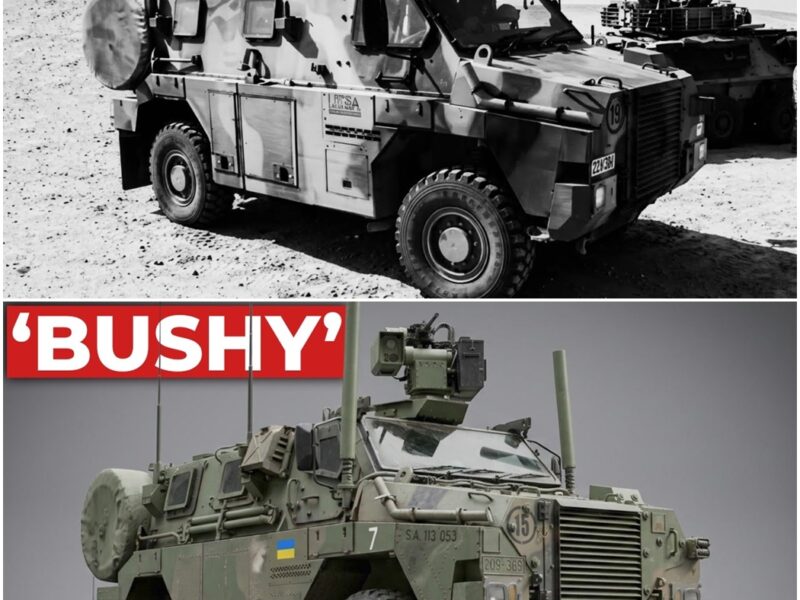
This is the Bushmaster Protected Mobility Vehicle. The tiny Australian van that NATO armies begged to borrow after it survived every IED in Afghanistan. Bendigo, Victoria, a regional city 150 km northwest of Melbourne, better known for gold rush history than for armored vehicle production.
This is where the Bushmaster was born and where it is still built today. To understand why this vehicle exists, you need to understand the problem Australia faced in 1987. The Hawke government published a defense white paper called the defense of Australia. It identified a threat that no other Western nation shared.
Australia had a coastline stretching nearly 26,000 km. Its northern approaches faced Indonesia, Papua New Guinea, and the open Pacific. The scenario was not a European land war. It was small groups of foreign raiders landing in remote northern Australia, and the Australian Defence Force having nothing fast or protected enough to intercept them across thousands of kilometers of unsealed roads and open bushland.
The army needed an infantry mobility vehicle, something that could carry a full nine-man section across vast distances on terrible roads, survive mine strikes from unexploded ordnance left over from World War II training ranges, and do it all without the logistical burden of a tracked armored vehicle.
The requirement became Project Bushranger, designated Land 116. 17 companies submitted proposals in 1994. Two finalists emerged. The Taipan, derived from the South African Mamba mine protected vehicle, drew on decades of Rhodesian and South African bush war experience with V-shaped hulls designed to deflect land mine blasts, and the Bushmaster, designed by Perry Engineering in Adelaide using an Irish Timoney Technology chassis, and American Stewart and Stevenson drivetrain components.
Over 65% of the Bushmaster’s components came from proven foreign systems. A prototype was built in under 7 months in 1996. A 44-week competitive evaluation followed, testing three Bushmasters against three Taipans across Australian terrain. Neither vehicle fully met the army’s requirements, particularly on reliability, but Australian Defence Industries won the contract on March 10, 1999, and redesigned the hull around a single radical idea.
The entire crew compartment would be a V-shaped monocoque shell made from high hardness steel. Not a flat-bottomed hull with armor bolted on top, a hull shaped like the bow of a boat, angled so that the energy from any blast beneath the vehicle would be deflected outward and away from the crew.
The fuel tank sat outside the crew compartment. The engine was a Caterpillar 3126E turbo diesel, producing 300 horsepower, mounted at the front to absorb blast energy before it reached the occupants. The wheels were fitted with run-flat inserts and a central tire inflation system, so the vehicle could keep moving even after an explosion shredded the tires.
It weighed roughly 15.4 tons at full combat load. It could carry a driver, a commander, and up to nine troops in the rear compartment. Top speed was 100 km per hour on sealed roads. Range was 800 km. It could sustain its crew for 3 days without resupply. None of that mattered to the skeptics. In December 2001, the Defense Capability and Investment Committee recommended abandoning the project entirely.
The prototypes were unreliable. The program was years behind schedule and millions of dollars over budget. The vehicle that would later save hundreds of lives came within a single bureaucratic decision of never being built. It survived because of one man, Lieutenant General Peter Cosgrove, then Chief of Army, argued that Australian soldiers deploying into future conflicts would need a level of protection that no vehicle in the existing fleet could provide.
Defense Minister Robert Hill agreed. The project continued. The first production Bushmaster rolled out of the Bendigo factory on December 23, 2004. Deliveries to operational units began in 2005. Before we get into where this vehicle actually fought and why it earned the reputation that made nine countries buy it, if you are enjoying this deep dive into military history, hit subscribe.
It takes a second and it helps this channel cover more vehicles like this one. The Bushmaster deployed to Iraq first. Australian troops in Al Muthanna province received the vehicle in mid-2005, but it was Afghanistan that made the Bushmaster famous. From 2006 onward, Australian mentoring task forces operated in Uruzgan province, one of the most heavily mined regions in the country.
The Taliban had industrialized improvised explosive device production. Homemade explosives packed into pressure cookers, plastic containers, and old artillery shells lined every route the coalition used. Vehicles that could survive small arms fire were being torn apart from below. The Bushmaster was not torn apart. On March 17th, 2010, a Bushmaster carrying five soldiers from the first mentoring task force struck a massive roadside bomb in the Kura Valley.
The blast was severe enough to disable the vehicle completely. All five soldiers were wounded, three of them seriously. Every single one survived. On Route Walyan in the Mirabad Valley in 2011, Trooper David Nicholson of B Squadron, 3rd/4th Cavalry Regiment, survived four separate IED strikes during a single 9-month deployment. Four explosions.
Four times the V-shaped hull deflected the blast. Four times Nicholson and his crew climbed out alive. He later had the Bushmaster tattooed on his arm. The most famous incident involved a vehicle the crew had named Debby. On July 10, 2012, in De Rawud District, Bushmaster Echo 21 Alpha struck a stacked homemade explosive device, likely initiated by an Italian TC-6 anti-tank mine.
The blast destroyed the vehicle. Private Matthew Clark, the driver, suffered approximately 14 broken bones. All six soldiers inside survived. The Australian War Memorial later recovered Debby and placed it on permanent display. Former director Dr. Brendan Nelson stood beside the shattered hull and said plainly that no Australian had been killed in a Bushmaster.
He called it a truly great Australian success story. The numbers supported him. Australia lost 41 personnel in Afghanistan across two decades. 34 of those deaths came from enemy action. Soldiers died from gunfire in firefights. They died from IEDs while dismounted and on foot. Private Thomas Dale was killed on August 20, 2010 by an IED after stepping out of a Bushmaster into an Overwatch position.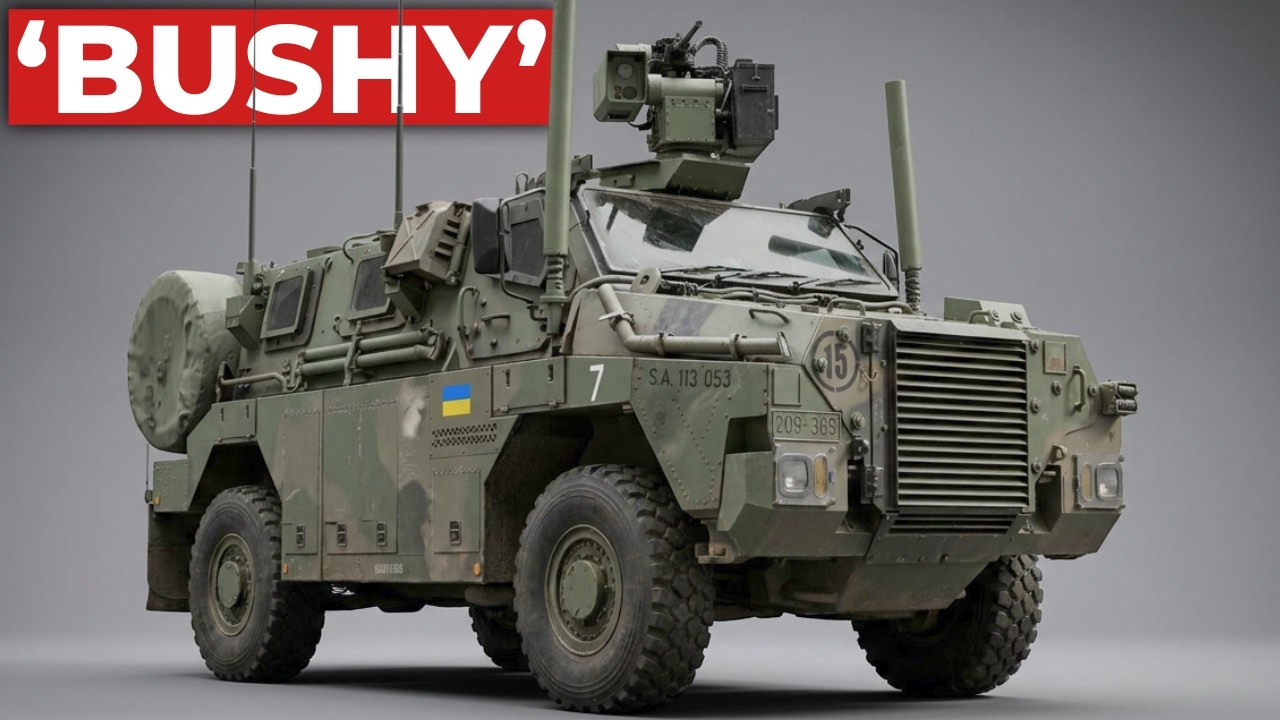
The vehicle could not protect soldiers who were outside it, but the claim that no Australian died inside a Bushmaster during an IED strike holds. The Australian War Memorial attributes this record to more than 30 serious blasts with zero crew fatalities. The Dutch were watching, and the Dutch were losing soldiers.
Sergeant First Class Robert Donkers was killed on April 6, 2007 when his Patria armored vehicle rolled off to the road beneath it collapsed, Lieutenant Dennis van Uhm, the son of the incoming Dutch Chief of Defense, was killed on April 18th, 2008, when his unprotected Mercedes-Benz struck an IED. Other Dutch personnel died in Fenek and YPR armored vehicles that could not withstand the blast tearing through Uruzgan.
In July 2006, the Royal Netherlands Army announced an emergency purchase of 25 Bushmasters, taken directly from Australian Army stock to equip units deploying to Uruzgan province. It was one of the fastest armored vehicle procurements in Dutch military history. The Dutch Ministry of Defense stated plainly that the Bushmaster resisted far heavier explosives than the Patria or the Mercedes, thanks in part to the V-shaped bottom that deflected the pressure of an explosion.
The Dutch kept buying 10 more in November 2007, 13 in June 2008. The fleet eventually approached 100 vehicles. No Dutch soldier was killed inside a Bushmaster in Afghanistan, not by IED, not by rollover, not by any cause. Dutch special forces later took Bushmasters to Mali in 2014, where one struck an IED near Kidal with no injuries.
The British followed. In April 2008, the British Army acquired 24 Bushmasters in a modified Escapade variant for United Kingdom special forces operating around Basra in Iraq. These vehicles carried enhanced armor, electronic countermeasures, and a remote weapon station mounting a .50 caliber heavy machine gun.
The backdrop was devastating. 37 British personnel had been killed in the lightly armored Snatch Land Rover in Iraq and Afghanistan. Bereaved families fought a 12-year legal battle that ended with Defense Secretary Sir Michael Fallon apologizing for the delay in providing protected vehicles that could have saved lives.
And then there was Japan. In 2014, the Japan Ground Self-Defense Force ordered four Bushmasters for its Central Readiness Regiment, followed by four more in 2018. This was among the first significant foreign sourced armored land vehicle acquisitions Japan had made in decades. A nation that relied almost exclusively on Komatsu and Mitsubishi for its military vehicles broke with a post-war tradition because no Japanese design offered comparable blast survivability.
The Bushmaster’s nearest rivals tell the story through contrast. The American Cougar and the British Mastiff were both heavier, both more expensive, and both designed specifically as mine resistant ambush protected vehicles for Iraq and Afghanistan. The Mastiff weighed over 20 tons as a six-wheeled platform.
The Cougar family required enormous logistical support. Both offered excellent blast protection, but at the cost of mobility, transportability, and simplicity. The South African RG-31 Nyala, a vehicle this channel has already covered, sat in a similar weight class at around 17 tons. It used a V-hull derived from decades of South African Bush War experience and performed well against mines, but the Bushmaster matched its protection in a package that was simpler to maintain, easier to transport by air, and could carry more troops. The RG-31 held a crew of 10. The Bushmaster held 11. The RG-31 required specialist maintenance that most coalition workshops were not equipped to provide. The Bushmaster used a commercial Caterpillar diesel engine and a commercial automatic transmission that any competent military mechanic could service in the field. That was the paradox at the center of the Bushmaster’s success. It was not designed as a counterinsurgency vehicle. It was designed to drive infantry across the Australian outback. The requirement
demanded simplicity, range, and survivability against mines, not against sophisticated military threats. And that requirement, written for a war that never happened in a country that was never invaded, turned out to be the perfect specification for the roads of Uruzgan and the streets of Basra. The Bushmaster was not the most heavily armored. It was not the fastest.
It was not the most heavily armed. Its baseline ballistic protection stopped only rifle caliber rounds. Its height made it vulnerable to rollovers, and training incidents in Australia confirmed this risk. It could not survive a direct hit from a modern anti-tank missile. Ukraine proved this after 2022 when Australia donated 90 Bushmasters to Ukrainian forces fighting at Bakhmut and in the Kharkiv counteroffensive.
Open-source tracking documented at least 14 destroyed by Russian anti-tank weapons and drones that attacked from angles the V-hull was never designed to defeat, but none of those limitations change what the Bushmaster actually did. It was not built to fight tanks. It was not built to win firefights.
It was built to move soldiers from one place to another and bring them home alive when the road beneath them exploded. At that single task, no vehicle of its generation compiled a longer or cleaner survival record. Over 1,300 Bushmasters have been manufactured at the Bendigo factory, making it the most successful Australian armored vehicle export program since the Sentinel tank of World War II. Nine nations operate them today.
Australia, the Netherlands, the United Kingdom, Japan, New Zealand, Indonesia, Fiji, Jamaica, and Ukraine. Indonesia began license producing its own variant through the state manufacturer Pindad. Fiji deployed refurbished Bushmasters on United Nations peacekeeping duties on the Golan Heights.
A $750 million order for 268 next generation vehicles was placed in April 2026, guaranteeing that the production line will run into the 2030s. More than 60 Australian small and medium enterprises feed the supply chain. The steel comes from Bisalloy in Wollongong. The assembly happens in a regional Victorian city that most Australians could not find on a map. It was too heavy.
It was too tall. It looked like something that should be delivering furniture, not surviving explosions. Commanders nearly scrapped it before it ever reached a battlefield. And when it did reach a battlefield, it did the one thing that mattered more than speed, more than firepower, more than aesthetics.
It brought soldiers home in the deserts of Uruzgan, on the roads outside Basra, in the red dust of Timor, on the frozen rubble of Bakhmut. Over 30 IED strikes, zero crew killed. That is not luck. That is the gap between what a vehicle looks like and what it can do.