The Mysterious History Of The Rothschild Family D
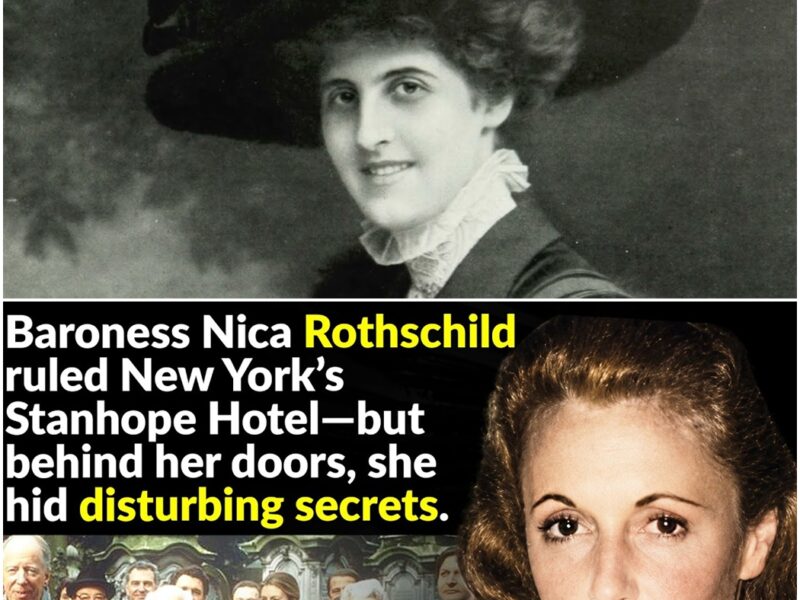
Baroness Nica Rothschild ruled over the Stanhope Hotel in New York City, but people didn’t realize she kept disturbing secrets locked up in her rooms. One rainy night in 1955, a troubled man showed up at her door, and within hours all her secrets were out. The Rothschilds have been a prominent banking family for centuries in Europe, yet they remain mysteriously secretive.
From humble beginnings in a Jewish ghetto, they rose to the status of nobles and amassed unimaginable wealth and power. But their rise happened alongside a wave of escalating prejudices against Jews, making them perfect scapegoats for conspiracy theories. The Rothschilds, today one of the wealthiest families on Earth, have Ashkenazi Jewish heritage, and for most of their prominence were thought of alongside the most noble of European royalty.
Originating in Frankfurt, Germany, the first known use of the name popped up nearly 450 years ago. The first ever Rothschild, that is the first member of the family ever to use the name, was born in 1577. Though the family wouldn’t rise to prominence for another 200 years or so, Isaac Elchanan Rothschild was the first to adopt the moniker.
1744 saw the birth of Mayer Amschel Rothschild in Frankfurt, and though no one knew it yet, he would be responsible for the family’s glorious ascent. The son of a money changer, Mayer decided to expand his father’s business into banking in the 1760s, but it wasn’t an easy beginning.
Mayer’s origins were humble. He was born in the Judengasse, a poverty-stricken Jewish ghetto in Frankfurt, where many Jewish people had sought refuge after anti-Semitic pogroms a few centuries earlier. It was from this very ghetto that he established a finance house. After some success, he secured a position as a court factor, a banker who handled the finances of and lent money to royalty and nobility.
This made him wealthy, and unlike previous court factors who had their wealth seized after their deaths, Mayer hatched an ingenious plan to expand his family’s influence. Passing wealth to his five sons, he instructed each of them to travel to the five main European financial centers and conduct business there, establishing the Rothschilds as the first international banking family.
This strategy planted seeds that would yield golden harvests for generations to come. Taking inspiration from royal intermarriage, Mayer Rothschild also ensured his family’s fortune remained in their hands by strategically arranging marriages. Many of these matches brought together first or second cousins. This practice would last until around the late 19th century, after which most Rothschilds began marrying beyond the family circle.
The family were systematic about protecting their assets, and they changed the very practices of banking in order to hold on to them. They chose to safeguard their assets through financial instruments, moving them around the globe through bonds, stocks, and debts. This proved incredibly effective in protecting their wealth from political upheavals, mobs, and monarchs.
Soon they were on equal footing with some of the most powerful families in the world. From humble beginnings serving nobility, the family members were eventually elevated to noble ranks in Austria, the United Kingdom, and even the waning Roman Empire. By the 1800s, their domination was unmatched. Though they were secretive about the exact figure of their wealth, by the 19th century no one could deny it.
The Rothschilds possessed the largest private fortune in the world, and indeed the largest in modern history. With such vast and unimaginable wealth, inevitably the powers that be would approach the family with their hands out. By the outbreak of the Napoleonic Wars in 1803, the Rothschild wealth was common knowledge, and they received appeals for financial assistance in the conflict from the highest halls of power.
The family came to the aid of Britain, assisting in funding the conflict. Between the 1820s and the 1870s, the Rothschilds had achieved complete dominance over European finance. This network comprised all manner of elements, from gold transportation between their branches to their widespread connections, which supplied the family with political and financial information before anyone else.
After the British victory in the Battle of Waterloo, the Rothschild network sent word back to Nathan Rothschild, information he received a full day before British government officials. After this information went public, Nathan saw his opportunity. He predicted that government bonds were due to bounce after the stabilization brought about by the new peace, and audaciously he purchased the entire government bond market, selling the bonds two years later for a massive profit.
This payload would serve the family well as the world rapidly industrialized. With the dawn of the Industrial Revolution, the Rothschilds once again saw a golden opportunity to make more money. They pioneered international high finance, setting up the financial globalization we see today, and invested in countless ventures across the old world, starting with trade.
They were instrumental in the funding of railway systems and even backed complicated government projects like the Suez Canal. The Rothschilds were so powerful that they even engaged in a little colonialism. They funded mining magnate Cecil Rhodes in his creation of the African colony of Rhodesia, eventually taking over control of the Rio Tinto mining company and its operations there, doubtlessly at the cost of hundreds of African lives.
Because of their immense wealth, the Rothschilds lived lavishly and became known for more than just their banking. They gained reputations as collectors of fine art, owned many palaces across the European continent, and engaged in large-scale philanthropy. By the late 1800s, with Europe rocked by revolution in country after country, the Rothschilds’ fortune began a period of relative decline.
The Naples bank was the first to shut its doors with the reunification of Italy and the resulting political turbulence. The German branch would follow in 1901 after the demise of the Rothschild patriarch there, who had no male heirs. Changes in the world of finance altered the playing field, too. The hegemony over banking that the family had previously enjoyed for centuries began to crumble in the late 19th century with the emergence of joint-stock banks, meaning several sources of finance could pool together to rival even the Rothschilds’ wealth. By the 20th century, the family’s wealth began steadily declining. They were still incredibly rich, but with the rise of finance capital, they were no longer exceptional. Furthermore, there were now so many descendants that the wealth was split among more inheritors. The family never truly established a presence in America, never recognizing the fruitful opportunities there, and with the post-war boom, this left them
in the dust. And while they don’t occupy the perch they once did, the family is still incredibly influential. Today, the family’s assets cover a diverse range of sectors, including agriculture, energy, financial services, mining, and real estate. After the closure of significant amounts of their banking operations, today the only subsisting branches of the Rothschild family banks are those in France and Britain.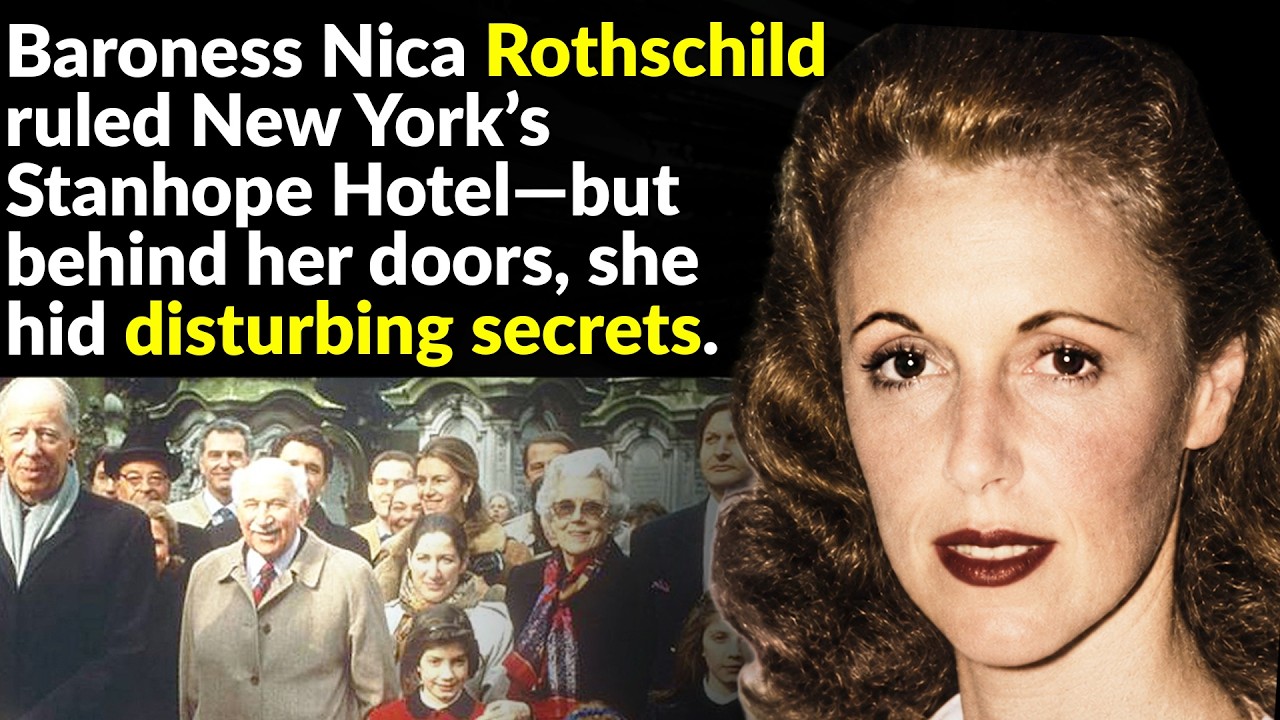
Though the Rothschild family story is at an ebb, there have been plenty of interesting individual family members. Baroness Kathleen Annie Pannonica Nica de Koenigswarter, a Rothschild by birth who gave up her name upon getting married, was known for her hedonistic lifestyle in early 20th century America.
Her patronage of jazz music earned her the nickname the Bebop Baroness. Quite scandalously, she abandoned her five children and husband to chase her new passions in New York City, and in doing so, she began rubbing elbows with some of the true greats. Nica wasn’t just known as a faceless money woman.
She became a patron to some of her famous friends, such as Charlie Parker and Thelonious Monk, and she would do anything for them. In 1955, Nica was staying in her suite at the Stanhope Hotel when she heard a desperate knock at the door. It was jazz legend Charlie Parker, and he was in a state. Suffering from several health issues like liver damage and stomach ulcers, the musician had nowhere else to seek refuge.
Tragically, he died in Nica’s apartment. In the wake of his sudden death, the press went wild and painted Nica in a negative light. Conspiracy theories erupted, with some wondering whether she had actually covered up Parker’s murder. In 1958, while accompanying Thelonious Monk on tour, the pair were charged with drug possession by authorities in Delaware.
Nica’s insistence that Monk’s show must go on was so strong that she took the fall and spent a few nights behind bars. They later sentenced her to 3 years in prison, but she had the case dismissed after her family bankrolled a 2-year legal battle. It wasn’t the first time the baroness had gotten her hands dirty.
Despite being born in London, she traveled to occupied France during World War II where she joined the French Free Army, the clandestine resistance group fighting the occupation. At the conflict’s end, she received decoration as a lieutenant, but not all Rothschilds were as impressive. Sir Evelyn Robert Adrian de Rothschild spent his 20s as a classic spoiled rich kid, traveling, socializing, driving cars, and betting on horses.
At 26, he finally joined the family banking business and over time accrued some big clients. He served as the financial advisor for some big names. Chief among them was Queen Elizabeth II, and like many members of the royal family, Evelyn had a scandalous private life. He married Jeannette Bishop in 1966 and then divorced her 5 years later, but that wasn’t the end of Jeannette’s story.
In 1980, while in Italy, she disappeared into the snowy Sibillini Mountains with another woman, Gabriella Guerin. No one knows why the women decided to venture into such treacherous conditions, and they were never heard from again. The women’s bodies were found over a year later, and while the authorities’ initial determination was that they had died from hypothermia, the cause was later ruled to be more sinister, likely at the hands of unidentified assailants with an unknown motive.
And while Evelyn was never a suspect, he certainly had something to hide. As early as 2004 and as recently as 2025, Evelyn has had multiple credible allegations made against him of misconduct, harassment, and assault with most of the incidents occurring in the 1990s. I’m just saying a coincidence is possible.
And I say it’s With such prominence, it was inevitable that a Rothschild would eventually end up involved with a Hollywood star, and that Rothschild was Afdera Franchetti. She was a socialite who rubbed shoulders with the likes of Truman Capote, John and Jackie Kennedy, Warren Beatty, and Audrey Hepburn.
Hepburn introduced her to Henry Fonda, and the two were married when he was 51 and she was only 25. Amschel Mayor James Rothschild, a businessman from the British branch of the family, had many interesting hobbies. Among them were farming and motor racing, the latter of which he became a keen patron of.
Despite his lavish and leisure-filled lifestyle, Amschel couldn’t escape his demons. The man suffered from lifelong and untreated depression. He was especially close to his widowed mother, and her death proved too much for him. In July 1996, he was found in a hotel room in Paris where he had taken his own life.
But for all we know about these individual Rothschilds, our knowledge of the family overall is surprisingly limited. And while much has been written about them, hardly any of it is revealing or even in many cases true. One writer who had planned a book about them abandoned the project saying about her research on the family, it was relatively easy to spot the lies, but it proved impossible to find out the truth.
Due to their elusive nature and unimaginable wealth, the Rothschilds have become the subject of countless prejudiced conspiracy theories over the years. Because of their Jewish roots, the Rothschilds are often mentioned as the prime example from those touting conspiracy theories that Jews control global finance.
The origin of such theories can be traced back to 1846 when a pamphlet began circulating around Europe pushing a false narrative about the family and its influence. Written by a man using the pseudonym Satan, the text is full of anti-Semitic propaganda. With the rise of fascism in Germany, these kinds of narratives were inevitably picked up and deployed against the Jewish population, being used as justification for the Holocaust.
Indeed, as the tide of public opinion turned sharply against them, the German Rothschilds have fled the country entirely, and the Führer’s government seized many of their assets. Unfortunately, the conspiracy theories have found new life in the 21st century. Wielding such great power and wealth, it’s no wonder that the story of the Rothschild family has been subject to so much public scrutiny.
And though conspiracy theories and criticism punctuate their legacy, so much mystery remains. Thanks for watching History X Z. If you love uncovering the best stories in history, hit like and subscribe to keep exploring with us. If you enjoyed this video, check out the others on screen for more amazing history content.