The Real William Wallace and Hollywood’s Biggest Blunder D
Pop culture has taken William Wallace’s legacy and turned it into a powerful reminder of how important the underdogs are. But there’s one part of his story Hollywood got wrong, and it changes everything. Before he was a legend, William Wallace was a man with nothing to lose and everything to fight for.
In a time when Scotland was buckling under English rule, Wallace exploded onto the scene with blood, fire, and an unshakable cry for freedom. He didn’t just battle an empire. He ignited a movement that reshaped history. From guerrilla warfare to gruesome martyrdom, Wallace’s life reads like a myth because much of it became one.
But behind every legend is a real story, and we’re about to uncover the man beneath the war paint. William Wallace’s origins remain unclear and hotly debated. He wasn’t necessarily a nobleman, at least not in the way Hollywood likes to pretend. Wallace came from the lesser Scottish gentry, possibly even a commoner with just enough status to get an education.
He wasn’t born into grand castles or royal courts. But he knew Latin, which set him apart. Wallace’s rise wasn’t about birthright, but boldness, brains, and battlefield grit. The man didn’t inherit power. He took it. Wallace was born sometime in the early 1270s. Historians guess between 1270 and 1272. The records are a mess.
What is clear is that he entered a world already on fire. And that chaos didn’t just shape him, it forged him. And soon he’d strike back. In 1286, tragedy struck when King Alexander III died in a freak accident. His horse fell off a cliff during a storm. His only surviving heir was his three-year-old granddaughter, Margaret, the maid of Norway.
When she died on route to Scotland in 1290, the throne was suddenly up for grabs. With no clear successor, 13 nobles laid claim, plunging the kingdom into chaos and making it ripe for outside interference. With Scotland leaderless, the nobles asked Edward I of England to mediate this succession crisis.
Edward agreed, but only if Scotland acknowledged him as overlord. Desperate to avoid civil war, many nobles caved. That decision gave Edward a foothold in Scottish politics, and he took full advantage. He wasn’t just settling a dispute, but setting the stage for domination. The Scots didn’t know it yet, but they’d handed Edward the keys to their kingdom.
Edward selected John Baleol as king in 1292, but it wasn’t a gift, it was a leash. Baleol had the crown, but Edward called the shots. He demanded feelalty, summoned Baleol to English court, and overruled his decisions. Edward reduced the once proud kingdom to a glorified province, and the Scots began calling him empty coat for his lack of real power.
Scottish independence hadn’t just slipped away, it was being erased piece by piece with English boots on Scottish soil. Edward’s heavy-handed rule didn’t sit well with the Scots. English officials collected taxes, enforced harsh laws, and occupied key strongholds. The nobility grumbled. The people suffered. Resentment simmered across villages and castles alike.
Some tried to resist quietly through minor sabotage and whispered rebellion. Others bided their time, waiting for someone bold enough to strike back. Scotland wasn’t at peace. It was holding its breath, teetering on the edge of revolt. Fed up with Edward’s control, the Scottish nobles finally snapped.
In 1295, they formed the old Alliance with France. A direct slap in Edward’s face. England responded with fury. In 1296, Edward launched a brutal invasion, capturing Berwick and slaughtering thousands. He forced John Bale to abdicate the throne, looted the Scottish crown jewels, and hauled off the Stone of Destiny.
Scotland was leaderless, humiliated, and occupied. But in the ashes of defeat, the rebellion was about to ignite. In 1297, William Wallace emerged from the shadows of occupation and struck back. After years of watching his homeland buckle under English rule, Wallace led a surprise attack on the sheriff of Larch, marking the start of open rebellion.
His bold strike electrified the Scots. Whether driven by patriotism or personal vengeance, no royal blood, no official title, just fury, strategy, and a sword, Wallace wasn’t following orders, making history on his terms. Wallace’s attack at Lannarch wasn’t an isolated outburst, but a spark that lit the nation.
As news of his defiance spread, ordinary Scots rallied to his cause. Farmers, laborers, and minor nobles joined the rebellion. Tired of English taxes, violence, and control. Wallace wasn’t a king or a noble general. He was one of them. His boldness gave Scotland something it hadn’t had in years.
A leader willing to fight back no matter the odds. Wallace wasn’t the only one putting up a fight. Sir Andrew Mo shared Wallace’s passion against Edward I. The Moes of Petty were a powerful and influential family who owned vast lands and castles in northeastern Scotland. and they actively fought against English rule. Unfortunately, Sir Andrew Moray and his son, also named Andrew, were captured in battle.
While the senior Moray didn’t make it, younger Andrew managed to escape and continue his father’s legacy, eventually crossing paths with Wallace. Two rebels, one goal. As William Wallace’s rebellion spread in the South, Andrew Mor led a fierce uprising in the north. In 1297, the two freedom fighters united, creating a powerful, coordinated resistance against English occupation.
Their partnership wasn’t about titles or politics, but shared fury and strategy. Together, they built an army of farmers and fighters ready to take on a vastly superior foe. Their first big test, Sterling Bridge. On September 11th, 1297, Wallace and Mor faced a massive English army at Sterling Bridge and rewrote the rules of war.
While the English began crossing the narrow bridge, the Scots waited. Then, in a sudden assault, they trapped and slaughtered the soldiers who’d crossed, cutting them off from reinforcements. It was brutal, brilliant, devastating. Against all odds, the underdogs crushed one of the most powerful armies in Europe.
Scotland didn’t just win, it roared back to life. Victory at Sterling Bridge came at a cost. Though the Scots had triumphed, Andrew Moore suffered wounds during the battle and never recovered. He later died in 1297, robbing the rebellion of one of its sharpest minds and most dedicated leaders. His death left Wallace to carry the cause alone.
Moray may not be as famous today, but Scotland’s resistance might have never stood a chance without him. He was a co-architect of a national awakening. The English leader didn’t just fall. He met a gruesome end. Following the clash at Sterling Bridge, Huda Cressingham, Edward I’s top official and battlefield commander in Scotland was slain amid the fighting.
But Wallace’s forces went even further. Chilling reports suggest his enemies desecrated his remains, using parts of his body to fashion items on their weapons. True or not, the story sent a brutal message. Wallace’s uprising wasn’t just political, but fueled by vengeance. Wallace rose to the top. Moray was gone, and Scotland was riding high after Sterling.
In late 1297, the nobles named him Guardian of Scotland, a wartime leader acting in the king’s absence. A commoner turned commander, Wallace now spoke on behalf of the nation. He wasn’t just leading troops. He was shaping policy, forging alliances, and defending Scotland’s fragile independence.
For a brief, shining moment, a rebel without a title became the most powerful man in the kingdom. Edward I wasn’t called the hammer of the Scots for nothing. And in 1298, he brought that hammer down hard. Furious over Wallace’s raids, Edward launched a massive invasion, leading his army personally into Scotland.
The two sides clashed at the Battle of Falerkerk. Though Wallace’s forces fought bravely, English cavalry and archers overwhelmed the Scots. It was a brutal defeat. Wallace escaped with his life, but the tide turned and Scotland’s hero was on the run. After the crushing loss at Falerk, Wallace made a fateful choice. He stepped down.
In 1298, he resigned as guardian of Scotland, passing leadership to nobles like Robert the Bruce and John Common. It wasn’t surrender, it was strategy. Wallace knew the fight had to continue, even if he wasn’t the one leading it. He faded from the political stage, but not from the struggle.
His sword may have quieted, but his legend had only begun. After stepping down as guardian, Wallace didn’t retire. He vanished into the shadows. For years, his movements were unclear. Some say he traveled to France to plead Scotland’s case to King Philip IV. Others believe he continued guerilla warfare at home, striking where he could.
Whatever the truth, Wallace became more of a symbol than a soldier, a living legend whispered about in both hope and fear. He was no longer at Scotland’s head, but still in its heart. With Wallace gone from leadership, Scotland’s unity began to crack. Rival nobles Robert the Bruce and John Common took over as co-guardians.
But the alliance was uneasy. Personal ambition, conflicting loyalties, and old grudges dragged the resistance into infighting. While Edward I regrouped and pressed forward, Scotland’s leaders were too divided to strike back effectively. Wallace had left the battlefield, but the cause began to drift dangerously off course without him.
In 1305, after years in hiding and exile, William Wallace was finally betrayed. Sir John Monteth, a Scottish knight loyal to Edward, captured Wallace near Glasgow. The betrayal stung even deeper because he came from one of his compatriots. Wallace had risked everything for Scotland’s freedom, only to be handed over by a fellow Scot.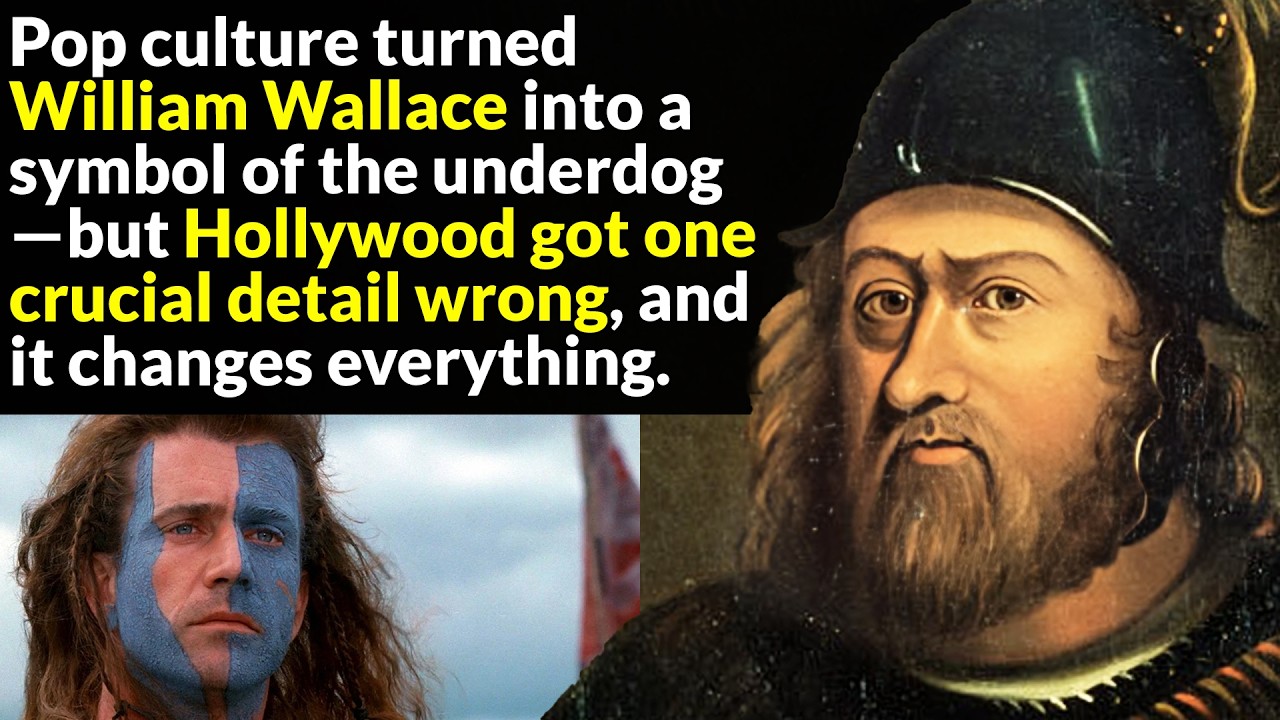
It was a grim reminder that not all enemies wore English armor. Some wore Tardan. Wallace’s arrest marked the end of his long resistance. After evading capture for nearly a decade, he was seized and sent to London under heavy guard. To Edward I, Wallace wasn’t a prisoner of war, but a traitor.
The crown wanted a spectacle, and Wallace’s fate would be a brutal warning to future rebels. But even in chains, Wallace refused to bow. His defiance would echo louder than any English verdict. Wallace’s trial in London wasn’t about justice. It was pure theater. Hauled before a hostile court in 1305, the English accused Wallace of treason against the English crown, the court decided the verdict before he even had a chance to speak.
The trial wasn’t about proving guilt, but making an example, and the punishment would be as brutal as possible. When accused of treason during his trial, Wallace delivered a line that echoed through history. I could not be a traitor, for I never owed him allegiance. With those words, he didn’t just defend himself, but challenge the legitimacy of English rule in Scotland.
It was bold, unapologetic, and pure Wallace. He knew he’d die, but he wasn’t about to die quietly. Even in chains, he spoke like a free man. On August 23rd, 1305, William Wallace met a horrifying end. The English dragged his battered body through the streets of London. He was hanged, drawn, and quartered, a punishment reserved for the worst traitors.
But instead of silencing rebellion, his execution turned him into a martyr. Wallace died in agony, but the cause he fought for lived on. Wallace’s end wasn’t enough for Edward I. He wanted to erase the man and the message. After Wallace’s brutal execution, the English dismembered his body. His head was displayed on a spike at top London Bridge while the English sent his arms and legs to Newcastle, Burick, Sterling, and Perth as a warning.
But instead of fear, it stirred fury. The English scattered his remains to silence rebellion. Yet all they did was scatter the seeds of a legend. Edward I, the hammer of the Scots, spent years trying to crush Wallace in the rebellion he sparked. But despite his victories, Edward never lived to see the outcome. He died in 1307 while leading a march north and requested that his men carry his bones into battle against the Scots.
It never happened. Scotland endured and Edward’s great enemy’s legacy outlasted his own. Wallace fell first, but history remembered who kept fighting. After Wallace became an enemy of the crown, the English didn’t just target him, they reportedly turned on his family. Some sources claim his father and brothers were executed or killed during the conflict.
Whether out of vengeance or strategy, Edward I made sure no part of Wallace’s life escaped the consequences of rebellion. William Wallace may have died a traitor in the eyes of England. But to Scotland, he became a legend. His courage, defiance, and refusal to submit inspired generations. Songs, poems, and stories kept his memory alive, turning a rebel into a national symbol of freedom.
Centuries later, his legacy would echo in the Declaration of Arroth and beyond. Wallace didn’t live to see Scotland free, but he lit the fire that never truly went out. After Wallace’s death, the fight didn’t end. It evolved. Robert the Bruce, once Wallace’s political rival, took up the cause. In 1306, Bruce crowned himself king of Scots and began a brutal campaign to reclaim Scotland’s independence.
Unlike Wallace, Bruce played the long game, fighting battles, making alliances, and building momentum. His defining victory came in 1314 at Banickburn. What Wallace started in blood and fire, Bruce carried forward with strategy and finally success. In 1320, Scotland made his boldest statement yet. The Declaration of Arroth, a letter to Pope John I 12th, declared Scotland’s independence and defeated Robert the Bruce’s right to rule.
More than just politics, it spoke of freedom as a god-given right. For it is not glory, it is not riches. It is not honors, but freedom alone that we fight for. Wallace’s spirit echoed through every line. His rebellion laid the foundation. This was Scotland’s voice. After decades of war, bloodshed, and rebellion, Scotland finally earned its freedom on paper.
In 1328, the Treaty of Edinburgh and Northampton marked a huge victory. England formally recognized Robert the Bruce of King of Scots and acknowledged Scotland’s independence. It was the moment Wallace had dreamed of, though he never lived to see it. The battles were brutal, the politics messy, but Scotland had reclaimed its crown and proved it could stand on its own.
William Wallace’s defiance didn’t stop at the Scottish border. His story of a man rising against tyranny echoed through history and across continents. Enlightenment thinkers, revolutionaries, and freedom fighters saw in Wallace a timeless symbol of resistance. From the American Revolution to modern independence movements, his legend inspired those who believed liberty was worth any cost.
He isn’t just a Scottish hero. He became an icon for anyone willing to fight for freedom against the odds. Centuries after his death, Scotland continued to ensure the world will never forget William Wallace. In 1814, Scotland built a large sandstone statue of Wallace. And then they went on to build another and another and another, eventually embellishing Scottish soil with over 20 Wallace monuments.
Wallace’s story lives on in more than monuments. It is woven into Scotland’s identity. School children learn his name, artists depict his battles, and political movements invoke his courage. Though time is blurred fact and myth, Wallace endures a symbol of what Scotland values most, independence, resilience, and fierce pride.
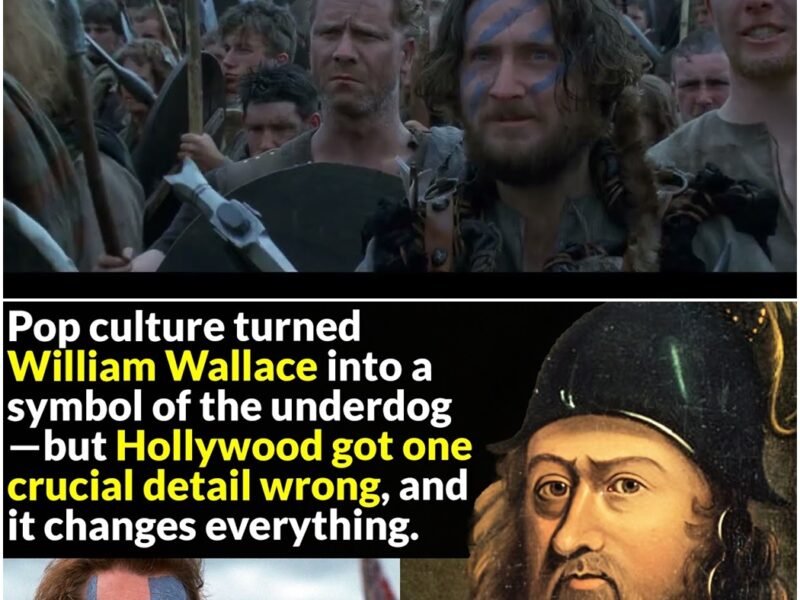
From the battlefield to the ballot box, his legacy still shapes the spirit of a nation that remembers and refuses to kneel. In fact, even America felt compelled to tell his story. In 1995, Mel Gibson’s Braveheart stormed into theaters and turned William Wallace into a global icon. The film portrayed him as a fearless warrior in face paint, screaming for freedom while leading Scotland into battle.
Historical accuracy, not so much, but emotional impact, off the charts. The film had a much bigger impact than anyone would have imagined. After Braveheart, Wallace wasn’t just a historical figure. He was a national brand. Scottish tourism exploded as fans flocked to castles, battlefields, and the Wallace monument.
Souvenirs, statues, and slogans all helped to capture the newfound hype. But amongst all the knickknacks and novelties, there’s one genuine artifact left directly linked to Wallace himself, and it’s absolutely priceless. Incredibly, Wallace left behind a physical trace, a wax seal attached to a letter he co-signed in 1297.
The seal shows a bow and arrow, unusual for a noble, but fitting for a gorilla fighter. It’s one of the few surviving artifacts directly linked to Wallace himself. He made it clear Scotland was still in the game. As exciting as the seal is to historians, the public found something else claimed by Wallace that blows everything else out of the water.
Legend says Wallace once hid in the branches of a massive tree, the Wallace oak, to escape English pursuers. By the 1800s, it was so famous that people took chunks as souvenirs. Though the original oak fell in the 1850s, its roots and myth remain strong. Wallace wasn’t just muscle. He was reportedly fluent in Latin and well educated for his time.
Some historians believe monks may have taught him, possibly a paisley abbey. That education gave him the tools to lead, negotiate, and write letters that still survive. The sword made him feared, but the pen gave his cause legitimacy. But there’s one major thing Hollywood’s version of his story fails to portray correctly.
Sadly, there’s no record of Wallace shouting freedom before his execution. That was Hollywood. But the myth stuck because it felt true. Whether he said it or not, his entire life screamed it. He gave Scotland something England couldn’t take in death, a rallying cry. And over 700 years later, people still haven’t stopped shouting it.
William Wallace began as a shadowy figure, possibly a commoner, certainly an outsider, but he changed the course of Scottish history through courage, cunning, and relentless defiance. Wallace didn’t fight for power or titles. He fought for freedom. Though he died brutally, his spirit lived on in battles, declarations, and legends.
Wallace wasn’t just a warrior. He became a symbol. And centuries later, Scotland still remembers the man who wouldn’t kneel. Thanks for watching History Expose. If you love uncovering the best stories in history, hit like and subscribe to keep exploring with us. Don’t forget to visit our main page, Factnate, for more incredible facts about everything.