The ‘Strange’ British Armoured Carrier That Swam a River and Destroyed a Taliban Fortress at Dawn D
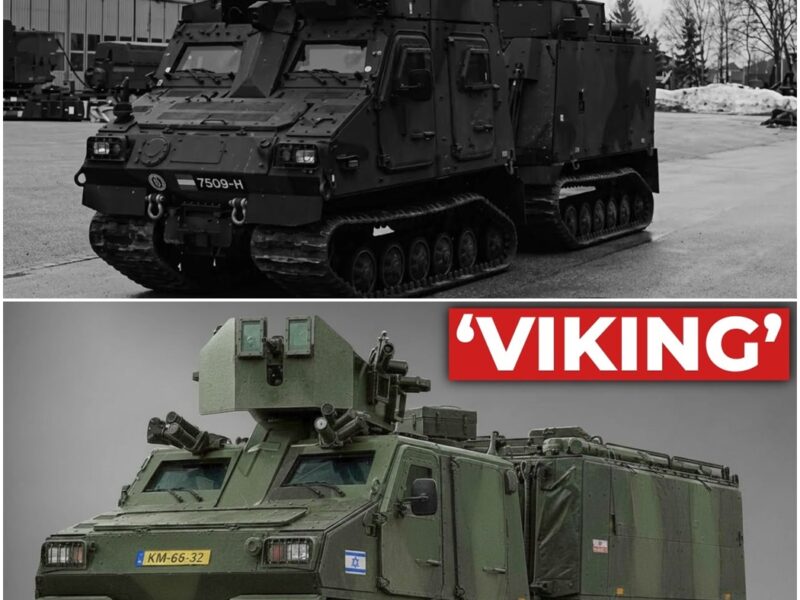
2006, the Hagglunds factory on Sskoltsvik, northern Sweden. A vehicle rolls out of the production bay and into the pale Arctic light. It moves in two pieces, two armored boxes joined at the middle by a steel coupling that twists and bends as the vehicle crawls forward like a snake feeling its way across ice.
It has four rubber tracks, not two, no wheels at all. The front section carries the engine and the crew. The rear section carries the passengers. Between them, the joint flexes in three directions at once, pivoting left and right, tilting up and down, rolling sideways, so that both halves of the vehicle stay in contact with the ground no matter what the ground decides to do.
It looks like something built for a different planet. It looks wrong for a war. It looks wrong for a desert. And yet within weeks, 33 of these machines would be loaded onto transport aircraft and flown to southern Afghanistan into one of the most violent corners of Helmand province, where wheeled armored vehicles were being destroyed on roads that offered no alternative route, where helicopters could not reach in sufficient numbers to supply isolated outposts, and where the terrain itself, canals, irrigation ditches, soft plowed fields, wide rivers, and drifting dunes of talcum fine dust was killing the mission before the Taliban fired a single shot. The vehicle that changed that was built for Norwegian snow. It would open Helmand province to the Royal Marines. It would carry Marines across a river under fire to assault a Taliban fortress at dawn. It would go where nothing else could go. Several would be destroyed. The men who drove them would not forget them. Its designation was the BvS 10, and the Royal Marines called it the Viking. To understand why the Viking existed, you need to understand the problem the
Royal Marines faced in the 1990s. The Corps is Britain’s amphibious assault force. Its job is to land on contested coastlines, move through Arctic terrain in Norway, fight in conditions that would stop conventional infantry, and get to places that wheeled vehicles cannot reach.
For decades, the Corps relied on the unarmored Bandvagn 206, a Swedish-built articulated carrier that could cross snow, bog, and water and was used across exercises in northern Norway. It was brilliant at mobility. It was completely unprotected. A rifle round could kill the men inside. The Bandvagn 206, known simply as the BV206, was itself a second-generation design.
It descended from the Bandvagn 202, a post-war over-snow carrier developed for the Swedish Army in the 1960s, built by Hägglunds and Söner of Örnsköldsvik, a factory town on the Gulf of Bothnia, deep inside the Swedish Arctic Zone. The BV206 entered Swedish service in 1981 and was adopted by over 40 nations.
More than 11,000 were built. Britain bought hundreds. The articulated twin unit concept, two tracked bodies joined at a flexible coupling, was proven. What the Royal Marines needed was the same concept with armor around the crew. The British Ministry of Defence and Hägglunds began co-developing an armored variant in the late 1990s.
Hägglunds had by then passed through the hands of Alvis before being absorbed by BAE Systems, making the resulting vehicle a Swedish-engineered, British-funded, BAE Systems-produced machine. The development program ran from 2001, with prototype deliveries to the Royal Marines in June of that year. Major Jez Hermer of the Royal Marines led the trials program.
The vehicles were tested in Norway at -46° C, in Britain, in Sweden, and in Oman during Exercise Saif Sareea 2 in September 2001, where they were driven through the sand and heat of the Gulf to check whether a machine designed for Arctic ice could function in desert conditions. It could. The Ministry of Defence accepted the vehicle into service in February 2004.
The Royal Marines called it the Viking. The official designation was All Terrain Vehicle Protected. The name Bandvagn Skidat 10, BVS10, tells you what it is. Bandvagn is Swedish for track-laying vehicle. Skidat means protected, as in armored. 10 is the vehicle class. It was a a tracked carrier for a force that always needed one and had never had one.
The machine itself is unlike anything in conventional armored vehicle design. Two separate tracked bodies, each on its own pair of rubber band tracks, 620 mm wide, built by Sisu International of Canada. The tracks do not grip and shred the ground the way steel tracks do. They spread and float.
The front body carries the Cummins 5.9 L turbocharged diesel engine, producing 250 brake horsepower, and delivered through an Allison automatic gearbox. Two crew sit in the front, a driver and a commander. The rear body carries up to eight fully equipped Marines, a medic, ammunition, a mortar, or stores, depending on the mission.
Above the rear compartment, a weapon station mounts a 7.62 mm general purpose machine gun, or on later variants, a 12.7 mm heavy machine gun. What makes this vehicle extraordinary is not the engine, not the weapons, and not the armor. It is the joint. Between the two bodies sits a hydraulic articulation coupling that allows movement in three planes simultaneously.
The vehicle steers by pivoting the two halves relative to each other, not by braking one track against the other as a conventional tracked vehicle does. This means all four tracks drive continuously. No track ever loses traction to force a turn. The joint also allows the front body to tilt up while the rear tilts down, and both halves to roll independently, so that the vehicle can climb into a ditch and out the other side without any track leaving the ground.
On a steep slope, the front body goes up while the rear body has not yet begun to climb. The vehicle snakes across the terrain rather than riding over it. The result of spreading 10 tons across four wide rubber tracks with a continuously articulated center is a ground pressure roughly equivalent to a human being standing still. The Viking’s ground pressure was comparable to the unarmored BV206, a vehicle 4 tons lighter.
This figure, so low it seems implausible for an armored carrier, is the reason the Viking survived Helmand when heavier vehicles could not. The vehicle is also fully amphibious. Within 2 minutes of preparation, without additional flotation gear, the Viking enters water and swims at 5 km/h, driven by its tracks paddling against the current.
It can forward 1 and 1/2 m of water unprepared. It operates in temperatures from -46°C to +46°C. It can be carried by a Chinook helicopter under-slung beneath the airframe, or split into its two bodies and loaded into a Merlin. It fits inside a Hercules transport aircraft and a C-17 Globemaster.
By 2005, the Royal Marines had taken delivery of 108 Vikings. They were the first armored vehicles operated by the core in over 50 years, and they were built for Norwegian fjords, Arctic ice, and Scottish bog. Then, Helmand happened. October 2006, 3 Commando Brigade deployed to Helmand Province on Operation Herrick 5, relieving the paratroopers of 16 Air Assault Brigade.
They brought 33 Vikings, fitted with bar armor on the outer hulls to defeat rocket-propelled grenades. No one in the planning chain was entirely certain what an Arctic articulated carrier would do in the Afghan desert. The ground pressure numbers suggested it would float across soft soil that swallowed wheeled vehicles.
The articulation suggested it would cross irrigation ditches and wadis that stopped single-hulled carriers cold. The amphibious capability suggested it could swim the Helmand River. Everything suggested the Viking was, by accident of engineering rather than design, the perfect vehicle for the terrain it was about to enter.
The first test was Operation Zena, 31st of October 2006. 33 Vikings drove in convoy from Kandahar airfield into Helmand Province, through Kandahar City, and on through Gereshk. The route took 10 hours. Royal Navy Harriers flew top cover. Danish and Estonian armor moved in support. The Vikings crossed ground no wheeled convoy would have attempted.
They arrived intact. The Taliban fought from the green zone, the strip of agricultural land running along the Helmand River, a lattice of canals, ditches, mud-walled compounds, and irrigated fields. The ground was soft. In places, it was waterlogged. The roads through the green zone were few and known, and the Taliban had mined them.
Mastiff armored vehicles, the six-wheel drive protected trucks that formed the backbone of British road movement, were effective on routes but had no answer for a mine track with no bypass. The Viking simply drove around it. It crossed the ditch beside the road. It floated across the canal on the other side.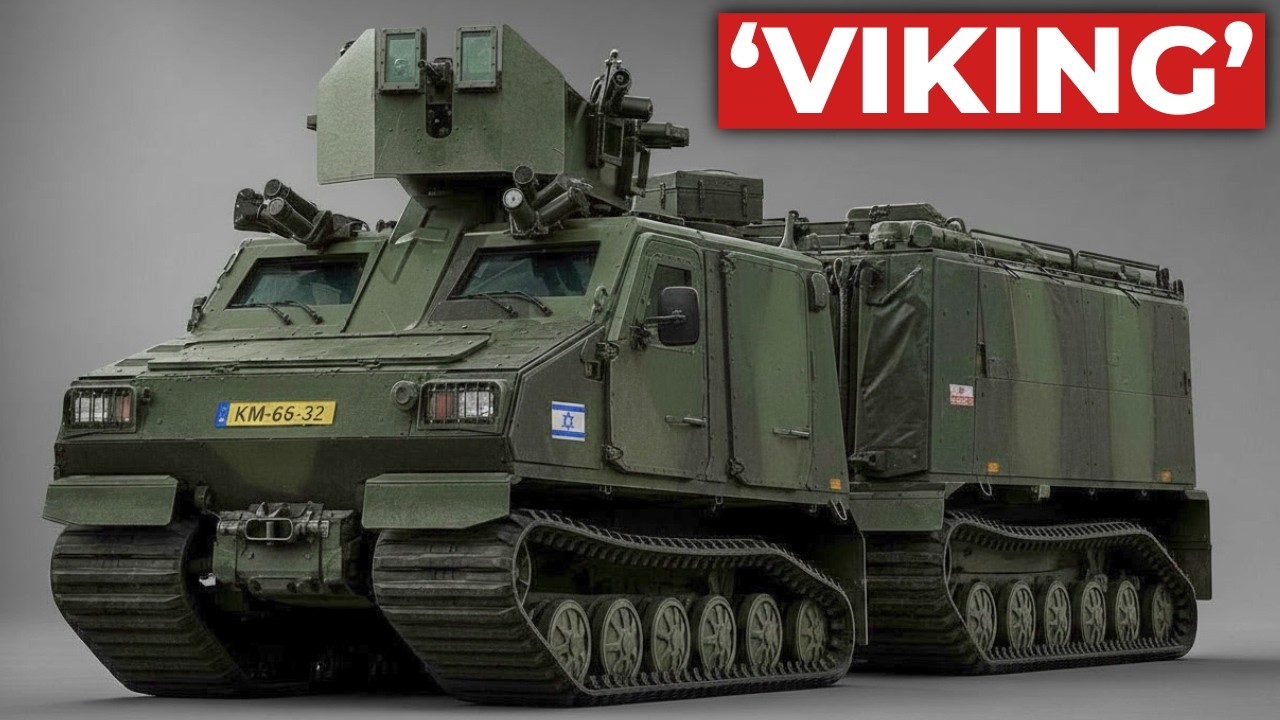
It emerged where the Taliban had not placed a mine because no vehicle had ever gone there before. Major Jez Stemp, officer commanding the armored support company, described it plainly. The Taliban mined known routes. The Viking could maneuver around them and go off-road. Marine Tom Aylett, a Viking driver, said it would go up a hill and never got bogged down the way other vehicles did. It was very reliable.
Those two sentences are the entire operational advantage of the vehicle in Helmand compressed into one observation. The moment that demonstrated what the Viking could do came on the 15th of January 2007, Operation Glacier. The target was Jugroom Fort, a Taliban stronghold near Gamsir in the far south of Helmand Province.
The plan required Zulu Company, 45 Commando, to cross the Helmand River before dawn, assault the fort under cover of darkness, and withdraw before daylight made the position untenable. The Helmand River at that point was a wide, cold, fast-moving obstacle. There was no bridge. No wheeled vehicle could cross it. Helicopters would have announced the assault before it began.
The Vikings swam the river in the early hours of the 15th. The Vikings entered the water with Zulu Company aboard, crossed the Helmand under Apache helicopter escort, and landed on the far bank. The assault went in. The fighting was violent and close. Lance Corporal Matthew Ford was separated from his unit during the withdrawal.
By the time the force reassembled on the near bank, Ford was missing. Four volunteers returned to the objective strapped to the weapon pylons of two Army Air Corps Apache attack helicopters. Captain Dave Rigg, Warrant Officer Class 1 Colin Hearn, Marine Chris Fraser Perry, and Marine Gary Robinson flew back into the fort on the outside of the aircraft.
Lance Corporal Ford was found and recovered. He had died of his wounds. The Apache pilots, Major Edward Macy and Captain Tom O’Malley, received the Military Cross and the Distinguished Flying Cross respectively. The rescue was one of the most remarkable individual actions of the entire Afghan campaign.
The crossing that made the assault possible had been done by Vikings. The cost came later. As the insurgency in Helmand devolved through 2007 and 2008, the Taliban shifted their main weapon from the ambush to the buried improvised explosive device. Charges of 20, 30, 50 kg of homemade explosive buried beneath tracks and crossing points in the approaches to patrol bases.
The Viking had been designed to evade the standard anti-personnel mine, a device triggered by a few kilograms of pressure. Its ground pressure was too low, its footprint too dispersed to reliably trigger them. It was not designed to survive a purpose-built anti-tank charge the size of a suitcase. On the 25th of May, 2008, Marine Dale Gostick of 3 Troop Armoured Support Company drove his Viking to the Sangin crossing of the Helmand River to support a resupply operation for the 2nd Battalion Parachute Regiment. On the return crossing, the vehicle struck a suspected mine. Marine Gostick was killed. Two other Marines were injured. On the 21st of April, 2008, Trooper Robert Pearson of the Queen’s Royal Lancers, attached to the Armoured Support Company, was killed when the Viking he was driving struck a mine while escorting a resupply convoy toward Camp Bastion. On the 14th of May, 2009, Marine Jason Mackie of 3rd Armoured Support Troop struck an improvised explosive device in Basharan in central
Helmand while supporting the Welsh Guards. He was killed instantly. On the 22nd of May, 2009, Lance Corporal Robert Richards was mortally wounded when his Viking struck an improvised explosive device in the Nad-e Ali district. He died 5 days later. Four men. The Vikings had saved far more than four, but the vehicle that could go anywhere could not stop a 50 kg buried charge.
Now, before we reach the end of this story, if you are getting value from this deep dive into Royal Marines history and British military engineering, hit subscribe. It costs nothing and it keeps this channel producing this kind of content. The Ministry of Defense responded in December 2008 with an urgent operational requirement worth 150 million pounds.
The contract went to ST Kinetics of Singapore for a vehicle called the Warthog, a heavier articulated carrier based on the Singapore Technologies Bronco platform. 115 Warthogs were delivered between 2010 and 2011 crewed by the Royal Armored Corps. One Warthog survived a 50 kg charge, saving the life of Lance Corporal William Reeks.
The Warthog was heavier, better protected, and non-amphibious in its early form. It was retired in October 2015 when the campaign ended. The Viking outlasted it. The comparison with the vehicles the Viking worked alongside in Helmand makes the design philosophy clear. The Mastiff, based on the Force Protection Cougar, was a six-wheel drive armored truck with a V-shaped hull for blast deflection, excellent crew protection, and a diesel engine large enough to push through most obstacles at speed. It was a road vehicle. It needed a road. Without one, it was channeled, predictable, and vulnerable. The Jackal, a Supacat high mobility wheeled platform, was fast across open desert, mounted a heavy machine gun, and had the V-hull the Viking lacked. It was open-topped, offered no protection from blast or small arms for the men inside, and could not swim. The Pinzgauer Vector, a light protected patrol vehicle, was thin-skinned, road-dependent, and repeatedly destroyed by mines and roadside bombs. Each of those vehicles excelled in its designed
role. None could cross the Helmand River, none could drive through an irrigation system without tracks, none could carry eight Marines through soft ground that had swallowed wheeled vehicles to their axles. The Viking could do all of those things. In doing them, it had a limitation the others did not share.
It was a machine engineered for weight distribution and terrain crossing, not for surviving the concentrated energy of a deeply buried explosive charge. In the green zone of Helmand province in 2008 and 2009, that limitation cost four lives. In Britain, the Ministry of Defense spent 38 million pounds between 2012 and 2016 rebuilding 99 of the surviving Mark 1 Vikings to a new standard.
The rebuilt vehicles, designated Viking Mark 2, received new armored hulls with shallow V-shaped undersides to deflect blast, a larger, more powerful engine, upgraded brakes, strengthened suspension, and protected weapon stations. 19 were fitted for the direct fire weapon station. Nine were configured to fire the 81-mm mortar from the rear body.
The certified gross weight rose to 14 tons. The amphibious capability was retained. The vehicle that came back from Afghanistan worse than it went in came back from the rebuild better than it had ever been. The Royal Marines Armored Support Group, formed on the 10th of December 2007 from the Armored Support Company and the Viking Training Squadron at Bovington, was renamed the Viking Squadron in 2018.
It sits today within the Commando Logistic Regiment at Stanley Barracks, Bovington. As the armored element of the United Kingdom Commando Force, its primary role has returned to the purpose the vehicle was built for, Arctic warfare, amphibious assault, terrain that stops everything else. In February 2026, Viking and BvS10 vehicles carried Royal Marines mortar troops more than 200 miles inside the Arctic Circle near the village of Moen in Norway, firing 81-mm mortars in temperatures of minus 20° C.
Exercising for cold response 26, the largest Arctic military drill NATO would stage that year, involving 25,000 troops from 14 nations. The vehicle has spread beyond Britain. The Netherlands Marine Corps ordered 74. France ordered 129 in 2009, the first French purchase of a British military vehicle in decades.
Sweden reordered its own variant. Austria bought 32. The United States Army selected the unarmored BvS 10 variant under 278 million-dollar contract in 2022. In December 2022, Sweden, Germany, and the United Kingdom signed a joint contract with BAE Systems for 436 new BvS 10 vehicles worth 760 million dollars.
The United Kingdom’s share was 60 new vehicles at 140 million pounds, with engines built by Cummins at their factory in Darlington. The program will keep Viking variants in British service until 2058. In 2023, the United Kingdom donated 20 Vikings to Ukraine. The Netherlands had donated 28. Ukrainian Marine Brigades have operated them in combat. Some have been lost.
At the Tank Museum in Bovington, the second pre-production prototype of the BvS 10 sits on display, fitted with bar armor and a weapon station to represent an Afghanistan era Mark 1. It is on loan from the Viking Squadron. The men who drove the originals know what the difference is between a prototype and a combat vehicle feel like.
They drove the combat vehicles across rivers and through ditches in the dark with Marines in the back who were going to fight for their lives at the end of the crossing. The prototype in a museum is the clean version. The war version is the one that still matters. October 2006, 33 vehicles rolled out of Kandahar airfield into southern Afghanistan.
They were too light to stop a large bomb. They were too strange-looking to seem like serious machines of war. They were designed for a country of snow and fjords, not a country of dust and irrigation channels and Taliban. They were underpowered for road work. They were under-armored for the war the insurgency became.
They could overheat in sustained desert operations. They were strange to look at, snake-like, two-bodied, built in Sweden, named for a Scandinavian warrior legend, crewed by men from Taunton and Plymouth and Portsmouth, who had trained in the Arctic and were now driving through the flat hot fields of Helmand province.
And yet they opened the province. In the ditches between Sangin and Gamsir, on the far bank of the Helmand River at Jugroom Fort, in the soft ground around Nad-e Ali where wheeled vehicles could not move, on resupply runs through the green zone in temperatures of 40° C, the Viking went where nothing else could go and brought the men back who needed to come back.
Four Britons died driving them. Hundreds of Marines who survived were carried by them across ground that would have stopped their mission cold. The Viking was not elegant. It was not fast. It was not designed for the war it fought. It was designed for Norway, and it was sent to Afghanistan. Between those two facts, in the gap between what a machine was built for and what a machine was asked to do, it found something that no other vehicle in the British fleet could offer.
It could go anywhere. It could swim any river. It could cross any ditch. It could carry Marines into places the Taliban had decided were unreachable. That is not luck. That is what happens when a machine built to beat terrain is put into a war where terrain is the enemy.