The ‘Swedish’ British Missile Truck Killing Russian Cruise Missiles Over Ukraine D
Eastern Poland, a morning in the spring of 2022. The ground is still hard from the winter and there is a haze over the tree line that has not burned off yet. A convoy of trucks sits in a field near the town. To the farmer watching from the road, they are unremarkable. Big, boxy, olive drab, the kind of eight-wheeled logistics vehicle that has hauled fuel and rations and bridging gear across Europe for 40 years. He has seen a thousand like them.
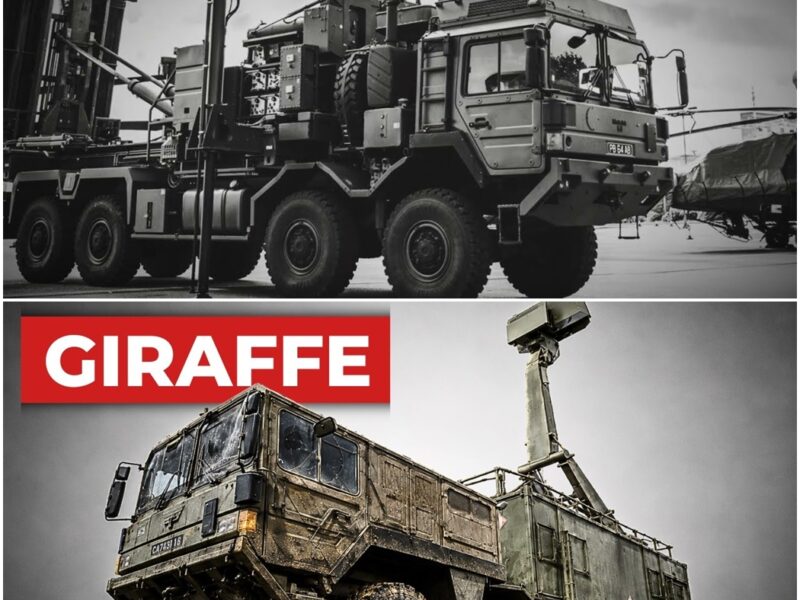
Nothing about them says weapon. There is no long gun. There is no turret. There is nothing that looks like it could reach the sky. But the farmer notices one thing he cannot explain. On the largest of the trucks, a mast is rising. It climbs on its own section over section until a flat panel sits nearly 40 ft in the air and then it begins to turn.
Slowly, steadily, a full circle every second. It is looking at something. He follows its gaze up past the haze into the empty blue and there is nothing there. Nothing he can see. He does not know that the panel is Swedish. He does not know that the brain reading what it finds was designed in Israel. He does not know that the missiles waiting in the truck behind it are British and that they can catch a target the size of a tennis ball moving at the speed of sound.
He knows only that an ordinary truck has grown an eye and the eye is watching a sky he thinks is empty. The sky is not empty. Roughly 150 miles to the east, across a border, a war has begun that will fire more cruise missiles at cities than any conflict since the Second World War. And this plain convoy in a Polish field has been sent to stand at the edge of it.
This is not a story about a truck. This is a story about an argument. An argument over what air defense is for in the 21st century and whether a nation can win that argument by refusing to build the weapon everyone expected. Part one. To understand why the truck matters, you have to understand the idea it was built to defeat.
And that idea did not belong to an enemy. It belonged to the calendar. For 50 years, the British Army pointed at the sky with a system called Rapier. Rapier entered service in 1971. Think about that date. Men who joined the regiment as teenagers to operate it were collecting their pensions before it was retired.
It guarded the beachhead in the Falklands. It guarded the skies over London during the 2012 Olympic Games. It was for half a century the answer to the question, what stops an aircraft coming in low and fast? And on its own terms, the logic of Rapier was sound. In the 1970s, the threat was a manned jet, a pilot flying a machine worth millions, coming in at a few hundred feet to drop bombs on a bridge or a column.
Against that threat, you needed a missile that could be aimed at the thing you could see. Rapier did that. Its operators tracked the jet, held it in the sight, and guided the missile onto it. One threat, one shot, one line of sight. The reasoning was not foolish. It was correct for the war it was designed to fight. His assessment was not insane.
It was based on the data he had. The problem was that the data was 3 weeks out of date. And in this case, the 3 weeks lasted 50 years because the sky changed. By the 2010s, the thing coming in low and fast was rarely a pilot. It was a cruise missile flying a pre-programmed path at treetop height. It was a swarm of them, arriving from different directions at the same moment.
And behind them, cheapest of all, came the drones. Propeller-driven, lawnmower loud, worth a few tens of thousands of dollars each, sent in their dozens to soak up whatever defended the target. The old model assumed one expensive attacker at a time. The new reality was many cheap attackers all at once.
Read that line again. The old model assumed one attacker. The new reality was many. A system built to hold a single jet in a single sight had nowhere to put the second threat, or the fifth, or the 20th. Rapier could not turn fast enough. It could not see far enough. It could not hold more than a few tracks at once.
It had not become a bad system. The world had walked out from under it. That was the worldview that was wrong. Not wrong in 1971. Wrong by the time the missile started flying at Kyiv. The model worked until it didn’t. Part two, here is the tool that broke the model. And the first thing to understand is that it does not look like a tool at all.
The British called the whole system Sky Sabre. The land-based launcher and its missiles carry the name Land Ceptor. But the heart of it is a missile called CAMM, the Common Anti-air Modular Missile, built by the company MBDA in Britain. And CAMM does something Rapier never could. It does not need to be aimed.
When a target is detected, CAMM is ejected straight up out of its launcher by a cold gas piston, a soft launch, before its rocket motor even lights. It leaps into the air, turns over in the direction it needs to go, and only then fires. And here is the part that matters. It does not need the operator to hold the enemy in a sight.
Each missile carries its own active radar in its nose. It finds its own target in the final moments, which means one launcher can throw missiles at threats coming from any direction at once. 360°, no turret to slew, no single line of sight. CAMM flies at around Mach 3, roughly 2,300 mph. It reaches out to about 28 km, some 17 mi, more than three times the reach of the Rapier it replaced.
And the British Army makes a claim about the full Sky Sabre system that is worth stating carefully because it is the whole argument in one sentence. A single Sky Sabre battery, they say, can control 24 missiles in flight at the same time and guide each one to a separate target. 24. Pause on that sentence. The system that came before it could barely manage one engagement at time.
This one can fight 24 at once. That is not an improvement. That is a different category of thing. Now, the eye, the panel the farmer watched rise on its mast is a radar called the Giraffe, and it is made by Saab in Sweden. This is the Swedish part of the Swedish missile truck, and it earns the billing. The Giraffe climbs a mast nearly 40 ft tall so it can see over hills and buildings, turns a full circle every second, and scans out to 120 km, around 75 mi.
It is the thing that finds the tennis ball in the empty blue, and the brain that decides what to do about it, the command system that takes the Swedish radar’s picture and assigns each British missile to each target that was built by Rafael in Israel from the same family of technology as the Iron Dome. British missile, Swedish eyes, Israeli brain, and every piece of it riding on heavy trucks built in Germany.
The most British thing about this weapon is that almost none of it is British, and that the British bought the best of each and made it speak as one. The men who operate it belong to the 16th Regiment Royal Artillery. On the 27th of January 2022, that regiment did something quietly extraordinary at their barracks on the south coast of England.
They drove their Rapier’s off the parade ground for the last time, 50 years of service rolling away, and took up Sky Sabre in their place. One era handed to the next in an afternoon. Men like the gunners of the 16th, who traded a weapon older than their fathers for one that can fight the sky 24 ways at once, deserve to be remembered doing it.
If this deep dive into British engineering is holding you, a subscribe costs nothing and helps this channel keep telling these stories. Now, back to the record, part three. Here is the deeper question. Not what the machine does, but why Britain was able to build it this way, and why the country it was sent to watch could not answer it in kind.
The answer is an idea, and the idea is modularity. The clue is in the missile’s own name, the Common Anti-air Modular Missile. Common, because Britain built one missile to serve everywhere. The very same CAMM round that sits in the truck in Poland also sits inside the Royal Navy’s warships, launched from the deck to defend a frigate at sea.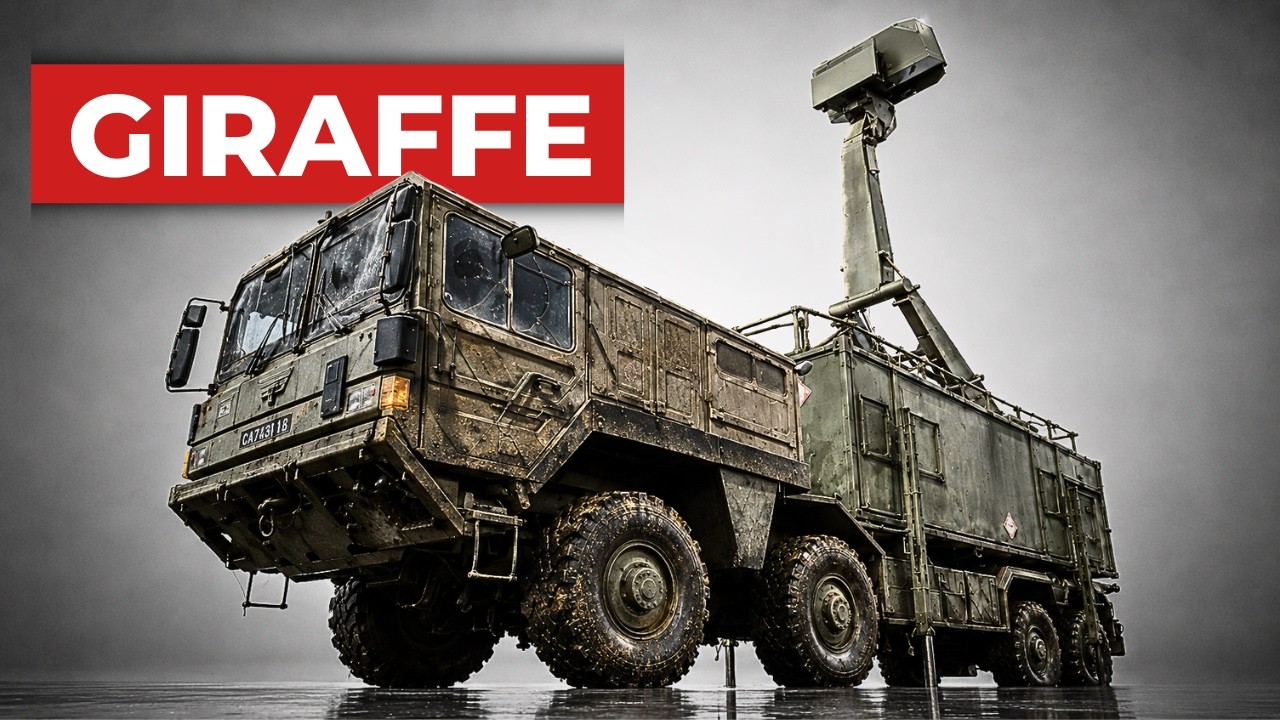
The same missile on land and at water from one production line. When you build one weapon for the whole force instead of a separate weapon for each job, every unit you make is cheaper, and every factory hour goes further. And that is where the real number lives. Look at what Britain’s neighbor did with this missile.
Poland, sitting on the front line of the new Cold War, chose CAMM as the backbone of its own air defense. And in the space of a few years, it signed contract after contract. One of them, in the spring of 2023, was worth $1.9 billion for dozens of launchers and hundreds of missiles. Another, months later, was worth over $4 billion for more than 1,000 of the extended range rounds, with Poland building them under license on its own soil.
Over $4 billion for one missile family, from one neighbor, in one year. That is the money number, and it tells you something a specification sheet cannot. It tells you that when a nation genuinely fears the sky, when it lives next to the war, and has to choose where to put its survival, it did not chase the most exotic interceptor money could buy.
It bought the modular one, the one it could afford in quantity, make itself, and stack deep. Because against a threat that comes in numbers, the answer has to come in numbers, too. A perfect missile you own three of will not save a city. A very good missile you own a thousand of might.
This is the thing the old model could never grasp, and the thing Russia’s arithmetic keeps running into. The attacker’s plan was cheap mass. Send more drones than there are missiles to stop them. The counter is not a cleverer single shot. It is a defense that can also be made in mass, cheaply enough, and commonly enough to meet the wave with a wave.
That is what modularity buys. That is why the neighbor spent billions on it rather than on something rarer. If your father, your grandfather, or someone you loved served in air defense, on the guns or the radars, in any army and any era, I would be glad to read their name and their unit in the comments below.
This is one of the ways the memory stays alive. Part four. Now, the harder truth, and the place where I have to be most careful with you. Watch the sky over Ukraine, and you will see British missiles killing Russian ones. That part is real. Cruise missiles knocked down, drones broken apart in the dark, a British air-to-air missile pulled from the stores of retired fighter jets and bolted onto the back of a truck in a hurry.
Improvised system the crews nicknamed Raven has run more than 400 engagements against Russian drones and cruise missiles with a success rate its commander put at better than 70%. Some months the hit rate was reported as high as 90%. That missile, the one doing the killing, is the ancestor of the one in Sky Sabre.
The same bloodline, the same country, the same idea that a smaller, cleverer missile fired in numbers beats a bigger one hoarded. But here is what I have to tell you because the comments will check it and they will be right, too. The truck in the Polish field, the full Sky Sabre, the Swedish eye and the Israeli brain and the British missile all speaking as one, that system has not been confirmed firing a shot inside Ukraine.
It went to Poland to stand on NATO’s edge and hold the airspace along the border. It guards the Falkland Islands far out in the South Atlantic. Its cousins and its ancestors fight. It stands watch. And you might think that makes it the lesser story. It does not. Because the whole point of a shield is the war it prevents from crossing the line it guards.
The Russian strikes stopped at the border. Not because they could not physically fly further, but because on the other side of that line stood an alliance. And along that line stood systems exactly like this one. With a Swedish radar turning once a second and a magazine of missiles that could fight two dozen threats at once.
Deterrence leaves no wreckage and photographs badly. It is all the same, the thing that worked. They were right. The planners who built the cheap mass attack that a war of drones can overwhelm a defense built around the single perfect shot. They were right that expensive interceptors run out before cheap drones do.
What they were wrong about was the assumption that Britain and its allies would answer with the single perfect shot at all. The answer was the modular one. Made in common, stacked deep, handed to the neighbor by the thousand. There is a second person in this story worth naming, Lieutenant Colonel James Bootle, who commanded the 16th Regiment as it carried this system into its new era.
His gunners are the ones who stripped 50 years of habit out of their hands and learned to fight a sky that no longer comes at you one target at a time. They are the reason the eye on the mast means anything at all. Part five. So, was it ever really a story about a truck? No. It was a story about an argument, and the argument is now settled by the way the money moved and the way the border held.
The old world had one missile for the pilot it could see. The new world has one missile made in common for every threat it cannot. Their doctrine was mass, cheap, and overwhelming. The British answer was mass of a different kind, a single good missile made in such numbers and shared so widely that the wave could be met with a wave.
Their bet was that the defender would always be too expensive to win. The defender changed what defense costs. Let me be honest about the limits, because the honesty is the point. Sky Sabre has never been confirmed firing in anger. Its magazine, like every magazine, is finite. And a truck with a mast is only as good as the network it plugs into and the missiles stacked behind it.
This is not a wonder weapon. There are no wonder weapons. There is only the right idea, built well and fielded in time. But look at what the right idea did. It took a 50-year-old system, older than the men firing it, and replaced it not with a bigger version of the same mistake, but with something that had learned the shape of the new war.
It gathered the best radar in Sweden, the best command brain in Israel, the best small missile in Britain, and put them on German wheels, and it asked them to speak as one, and they did. And when the largest missile war since 1945 broke out across the border, this plain convoy of trucks was what an alliance chose to park at the edge of it and trust with the line.
The farmer on the road saw an ordinary truck grow an eye and watch an empty sky. He was wrong about two things. The truck was not ordinary, and the sky was never empty. It was full of an argument about the future of war being decided quietly, one turn of a Swedish radar every second in a field in Poland where nothing seemed to be happening at all.
That is the story, not the truck, the idea it was carrying and the war it was built in the end to keep from ever arriving.