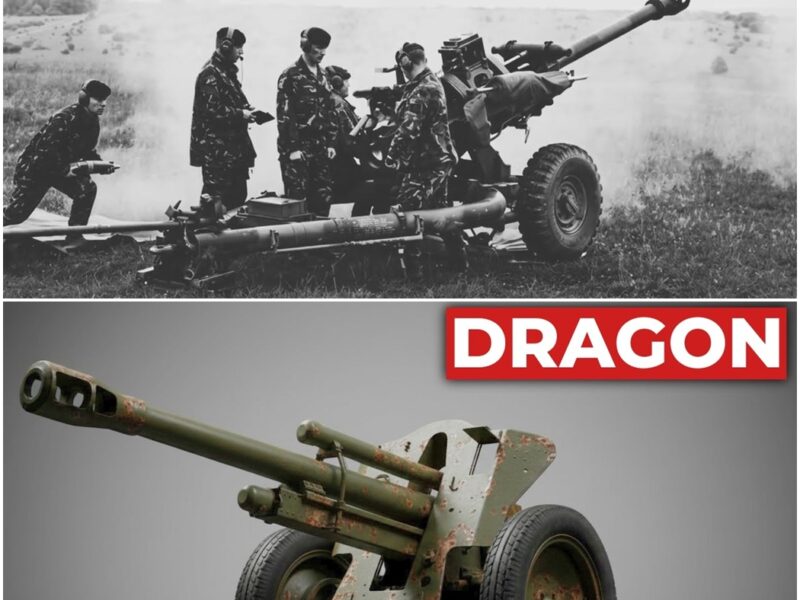
The ‘Tiny’ British Field Gun That Made The Taliban Name It A Dragon And Fear It For A Decade D
1982, the peat bogs east of Goose Green, the Falkland Islands. Sea King helicopters thunder low over the moorland, each one carrying a steel tube slung beneath its belly on a cargo strap. The load swings gently as the aircraft descends. Soldiers wade through freezing bog water to guide it down. Within minutes, the gun is unhooked, spread, and laid.
It weighs less than 2 tons. Six men can lift sections of it by hand. It has no armor. It has no engine of its own. It looks like something a museum would display next to a cannon from a much older war. It looked too small to matter. It looked too light to survive the Falklands winter. Too fragile for a campaign fought across some of the most hostile terrain British soldiers had faced since Korea.
And yet, within weeks, this gun would help break an Argentine garrison at Goose Green, soften an entrenched position on Mount Longdon, and fire roughly 6,000 rounds in a single night at Wireless Ridge. It would go on to fight in the Gulf, in the Balkans, in Sierra Leone, in Iraq, and across more than a decade of combat in Afghanistan, where Taliban fighters gave one particular gun a nickname of its own.
It is still in British Army service today, more than 50 years after it first entered service. Its designation was the L118 Light Gun, and it is the longest-serving field artillery piece in modern British history. To understand why the Light Gun existed, you need to understand the problem Britain faced in the 1960s. Since 1961, British gunners had relied on an Italian design, the OTO Melara Mod 56, known in British service as the L5 Pack Howitzer. It was light.
It could be broken into loads small enough for mules. It could be lifted by helicopter, but it had a short reach, barely past 11 km, which meant enemy guns could often hit it before it could hit them. Its sights were poor. Its rate of fire was unimpressive. And in an army that was reorganizing around helicopter mobility and rapid deployment to colonial trouble spots and NATO’s northern flank, a gun that could be outranged was a gun that could get its crew killed.
In April 1965, the British Army issued General Staff Requirement 3038. The demand was specific: a new field gun light enough to be slung beneath the new Chinook helicopter, light enough to fit inside an Andover transport aircraft, capable of full 360° traverse, operated by a single soldier, weighing no more than around 1,600 kg, and able to fire the same standard ammunition already used by the Army’s Abbot self-propelled gun.
The brief was effectively asking engineers to build a weapon that obeyed two contradictory laws of physics at once. It needed to be light enough to fly. It needed to hit hard enough to matter. The design work fell to the Royal Armament Research and Development Establishment at Fort Halstead in Kent. The engineers did not start from nothing.
They borrowed proven ideas from the Second World War era 25-pounder, including its vertical sliding block breech and its box trail layout, technology that had already been tested under fire and trusted by generations of British gunners. Prototypes were built and tested from 1968 onward. Early trials exposed a hard truth. The gun needed to be heavier than the original brief allowed, or it would not survive sustained firing.
Engineers reinforced the carriage, redesigned several major assemblies, and accepted a small weight increase as the price of durability. That increase looked, on paper, like a failure to meet the requirement. It was not. By the time the design was finalized, Britain’s helicopter fleet had grown more capable. The Puma and the Sea King could now lift loads the planners of 1965 had not anticipated.
The delay that seemed to threaten the program had quietly solved itself. The gun was accepted into service. The first production examples were handed over at the Royal Ordnance Factory in Nottingham in October 1974, and the L118 entered full British Army service in 1976. The vehicle itself was a masterpiece of practical engineering, even if it barely qualifies as a vehicle at all.
In firing configuration, it weighs close to 1,858 kg, light enough that a crew of six can manhandle it into position without a tractor or truck. It can be towed behind a Land Rover or in later years a Pinzgauer all-terrain vehicle. In Arctic conditions, it can be mounted on skis and dragged behind a tracked BV206. And critically, it can be lifted whole, slung beneath a Puma, a Sea King, a Chinook, or a Merlin helicopter and dropped directly into a firing position that no truck could ever reach.
Once on the ground, the gun can be unlimbered, spread, and ready to fire in around 30 seconds. A figure made possible by an automatic pointing system fitted from the early 2000s, which uses laser gyroscopes and satellite positioning to lay the gun without a soldier squinting through an optical sight.
A trained crew can fire six to eight rounds a minute. Its standard high explosive shell can reach out to roughly 17.2 km, more than half again the range of the Italian pack howitzer it replaced. That extra range meant British gunners could now hit the enemy before the enemy could hit them. The entire strategic purpose the 1965 requirement had demanded.
Every part of that specification mattered because every part solved a problem soldiers had bled over before. Lightweight meant helicopter mobility, which meant artillery support could reach paratroopers and commandos in terrain no road would ever cross. 360° traverse meant a single gun could respond to a threat from any direction without being repositioned.
A 30-second readiness time meant batteries could shift position constantly, firing and moving before enemy counter-battery radar could plot a response. This was not a gun designed to refight the last war. It was designed to be carried into the next one. The ammunition itself was built around the same philosophy.
Unlike a fixed shell, the light gun fires separate loading rounds. The projectile is rammed by hand first, and the propellant charge is loaded behind it as a second action. This sounds slower than a single-cased round, but it bought the crew something far more valuable, flexibility. The same gun could fire a high explosive shell carrying around 2 and 1/2 kg of explosive to destroy bunkers and dug-in in infantry, a smoke round to blind an enemy position, an illuminating round to turn night into day over a battlefield, or a target marking round in red or orange to call in air strikes with total precision. A single weapon, six different jobs, and every one of them deliverable within seconds of a radio call from the infantry it was supporting. The gun’s lineage to the wartime 25-pounder was no accident, either. British gunnery doctrine had been built for decades around a culture of speed and trust between infantry and artillery. The belief that a forward observer’s call for fire should be answered in minutes, not hours. The light gun was engineered specifically to
preserve that culture inside a much smaller, much lighter package. Where other nations were building bigger guns to win an arms race of range and explosive weight, Britain built a smaller gun to win a different race entirely. The race to be in position, laid, and firing before the enemy even knew artillery had arrived.
Now, before we get into where this weapon actually fought, if you are enjoying this deep dive into British military engineering, hit subscribe. It takes a second, costs nothing, and helps the channel keep producing videos exactly like this one. The light gun’s defining moment came in 1982 in the South Atlantic.
Britain sent 30 of these guns to retake the Falkland Islands, organized into five batteries drawn from 29 Commando Regiment Royal Artillery and the Fourth Field Regiment Royal Artillery. The terrain should have made the gun useless. Soft, waterlogged peat bog swallowed wheeled vehicles whole. But a gun light enough to be manhandled by its own crew, and light enough to be slung beneath a helicopter, thrived exactly where heavier equipment became stuck.
The bog that should have crippled British artillery instead became the light gun’s natural habitat. The first major land battle of the campaign came at Goose Green on the 28th and 29th of May. Second Battalion, the Parachute Regiment, under Lieutenant Colonel H. Jones, advanced against a dug in Argentine garrison with only three light guns from Alma Battery in support, firing close to 960 rounds combined.
High winds blew shells off their intended path. The guns were pushed forward dangerously close behind the advancing infantry just to keep rounds landing accurately. By dawn, Alma battery was almost out of ammunition. Lieutenant Colonel Jones was killed leading an assault on an enemy position and was posthumously awarded the Victoria Cross.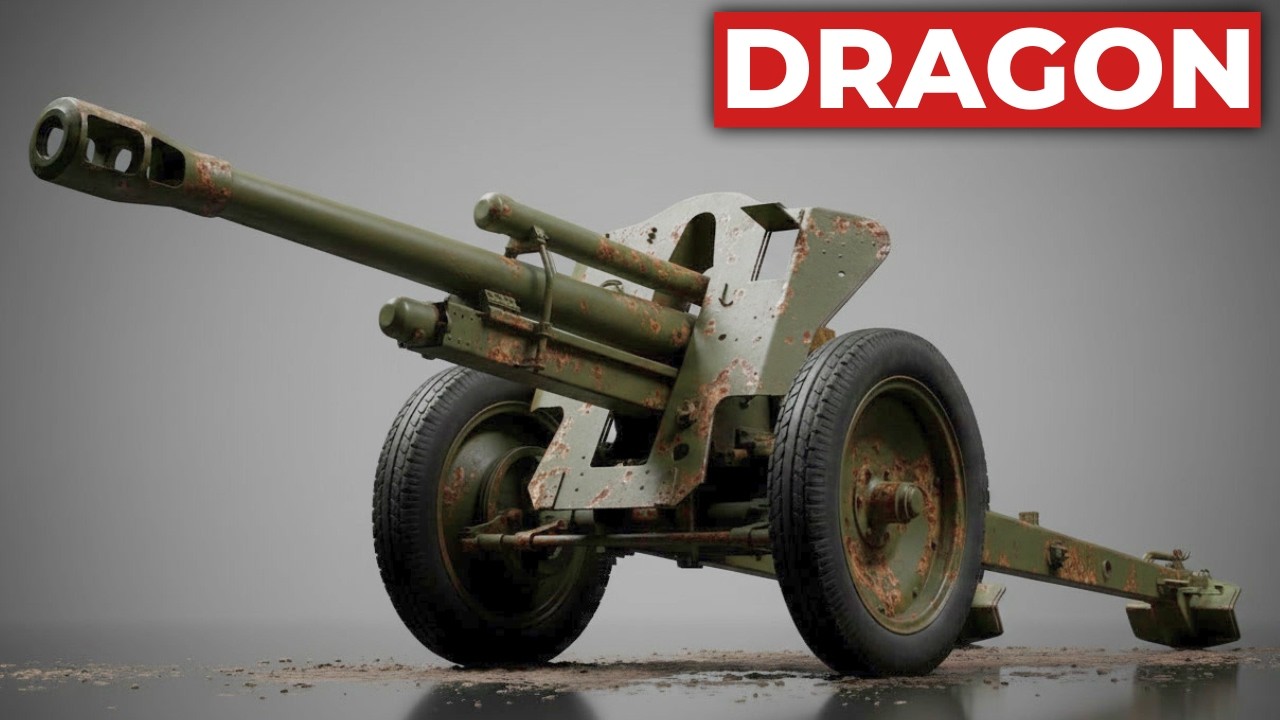
The battle was won, the garrison surrendered. Among the captured Argentine equipment were three OTO Melara pack howitzers, the very gun the light gun had been designed to replace, now sitting silent on the losing side of the battlefield. The irony ran deeper than the captured guns themselves. Argentine gunners had trusted the same pack howitzers Britain had abandoned nearly two decades earlier for being too short-ranged and too fragile for modern war.
At Goose Green, that judgment was proven correct twice over. Once by the engineers at Fort Halstead who had redesigned the weapon out of British service and again on the battlefield itself, where the newer, longer-range light gun outfought the older design that it had replaced. Two weeks later came Mount Longdon, the costliest single battle the British fought in the entire campaign.
Third Battalion, the Parachute Regiment, attacked the feature on the night of the 11th and 12th of June, supported by six light guns of Kirk battery. 23 British soldiers were killed and more than 40 wounded. Sergeant Ian McKay was killed leading a grenade assault on an enemy machine gun position and was posthumously awarded the Victoria Cross.
For the following day and a half, the paratroopers held the captured mountain under continuous artillery fire with the light guns providing the counterfire that kept them alive. Two nights later, at Wireless Ridge, the lesson of Goose Green was applied in full. Second Battalion, the Parachute Regiment, now under Lieutenant Colonel David Chandler, who had vowed never again to attack without guaranteed artillery support, advanced behind a bombardment from 12 light guns, two full batteries, alongside naval gunfire and light tanks. Roughly 6,000 rounds were fired in the softening up barrage alone. The Argentine 7th Infantry Regiment broke and withdrew under the weight of fire. British casualties were a fraction of what they had been at Goose Green. The doctrine had been proven. Assured artillery support saved lives. At Tumbledown, the Scots Guards fought their own brutal night battle. Backed by as many as five batteries of light guns firing in support, across the whole campaign, Alma Battery alone, the first British artillery unit ashore and the first to fire in anger, fired more than
2,200 rounds. The gun that looked too small for the job had carried British infantry to victory across every major battle of the war. The Falklands made the light gun’s reputation, but it did not retire afterward. In the Gulf War of 1991, it served alongside Britain’s heavier artillery, supporting the First Armoured Division as it advanced into Iraqi-held territory.
Through the 1990s, it deployed into the Balkans, packed into steel shipping containers for the peacekeeping missions in Bosnia and Kosovo. A small but telling detail that showed just how compact this weapon really was. A heavier gun would have needed a flatbed and an escort. The light gun could travel like cargo.
In the year 2000, it was flown ashore by helicopter during the British intervention in Sierra Leone, supporting paratroopers and Royal Marines as they stabilized the capital against rebel forces. In 2003, it crossed into Iraq with 7 Para Royal Horse Artillery. The regiment’s first live-fire missions since the Suez crisis nearly 50 years earlier.
A gap of almost half a century finally closed by the same kind of gun that had once been designed to replace an aging Italian howitzer. It was in Afghanistan, though, that the light gun earned a reputation that bordered on legend. From 2006, as British forces pushed into Helmand Province, the light gun became the backbone of the artillery line, supporting infantry through some of the most intense close combat British soldiers had faced since Korea.
Batteries fired in support of besieged outposts across the province, often within earshot of the very positions they were defending. In January of 2009 at Musa Qala, gunners from Alma Battery, 29 Commando Regiment, hauled a single light gun onto a rock outcrop 40 m above the surrounding desert.
They called it the dragon. The battery commander, Major James Veen, later described its accuracy in stark terms, saying the gun could achieve first round hits on individual targets at up to 3 km, and that it had become, in his words, the most feared weapon in the area. With Taliban fighters genuinely frightened by it, a field gun designed in the 1960s to be light enough for a helicopter had become, four decades later, a precision weapon terrifying enough to earn its own name from the enemy.
Through the years that followed, light guns fired in support of British troops at forward operating bases across Helmand. Gunners from Chestnut Troop, Royal Horse Artillery, manned a light gun at Forward Operating Base Inkerman near Sangin in 2009, one of the most fiercely contested patches of ground in the entire campaign.
Supporting infantry through near constant ambush and small arms fire, crews mentored Afghan National Army gun teams on captured Soviet equipment near Gereshk, passing on the same fire discipline that had been drilled into British gunners since the Falklands. As the campaign matured, rules of engagement tightened to limit civilian casualties, and the volume of fire fell sharply from the early years, with dedicated personnel assigned simply to track and record every round leaving the barrel.
The light gun’s final mission in Afghanistan came from Patrol Base Sterga, where it fired illumination rounds to light the night sky for British troops before being airlifted out as the base closed in 2014. By then, the gun had been in continuous front-line use for nearly four decades. On paper, modern 55-mm howitzers like the M777 look far superior to the light gun.
They reach out to roughly 24 to 30 km, more than half again the light gun’s range, and their shells carry nearly three times the explosive payload. In practice, the light gun offers something those bigger guns cannot. At under two tons, it weighs less than half what a 55-mm gun weighs, meaning twice as many guns can be lifted by the same number of helicopters.
It’s lighter ammunition means a far greater volume of fire can be sustained from the same airlift, and its crews can fire the first rounds within 30 seconds of landing, faster into action than almost any towed system in the world. The Soviet-built D-30, long used by adversaries and allies alike, fires a heavier 122-mm with greater destructive power, but at more than three tons, it cannot be slung beneath a helicopter the way the light gun can.
For airborne and commando forces operating at the very end of a supply line, that difference between mobility and raw power has always mattered more than maximum range. The design proved so effective that the United States Army licensed it directly. In 1987, after a competition to replace its aging M102 howitzer, the Pentagon selected the British design, built it under license as the M119, and fielded it from December 1989.
It has since served with American paratroopers and mountain infantry through the Gulf War, Iraq, and Afghanistan. Australia and New Zealand built their own licensed version, known locally as the Hamel gun. In total, variants of this single British design have been sold to roughly 20 nations, with total production estimated at well over 1,000 guns.
The gun story has not ended. In July of 2022, Britain announced the donation of three dozen light guns to Ukraine, joining American-supplied M119s already in Ukrainian service. Ukrainian gun crews have praised the weapon for exactly the qualities that made it famous in the Falklands 40 years earlier, its light logistical footprint, its mobility, and its accuracy, qualities that matter enormously on a battlefield where slow, heavy artillery is increasingly hunted by drones.
As of the mid-2020s, the British Army still operates roughly 126 light guns, with an official out-of-service date set for March of 2030. A planned successor known as the light fires platform has stalled leaving the 50-year-old design without a confirmed replacement on the horizon. The regiments that carried it into the Falklands, 29 Commando Regiment and 7 Para Royal Horse Artillery, still operate it today and in 2025 Britain’s newly formed Gurkha Artillery Regiment began training on the very same gun. 1982, the peat bogs east of Goose Green as seeking descends through the wind a steel tube swinging beneath it. It looks too small. It looks too light. It has no armor and no engine of its own and yet it worked. It worked at Goose Green where three guns helped break a garrison and a Victoria Cross was earned beside them. It worked at Mount Longdon where it held a mountain under fire through a brutal night. It worked at Wireless Ridge where 6,000 rounds broke an enemy
regiment before British soldiers ever closed the distance. It worked on a rock outcrop in Helmand province where Afghan fighters gave a single gun a name out of fear. And it is working today in the hands of Ukrainian gunners defending their own peat bogs and farmland against a different enemy in a different century.
The engineering philosophy behind it was simple from the start. Build a gun light enough to go anywhere a helicopter can fly and accurate enough to make every flight worth the risk. That is not luck. That is 50 years of British engineering proving that the smallest gun in the inventory can still decide the biggest battles.