The Tragic Story Of Nancy Mitford’s Affair D
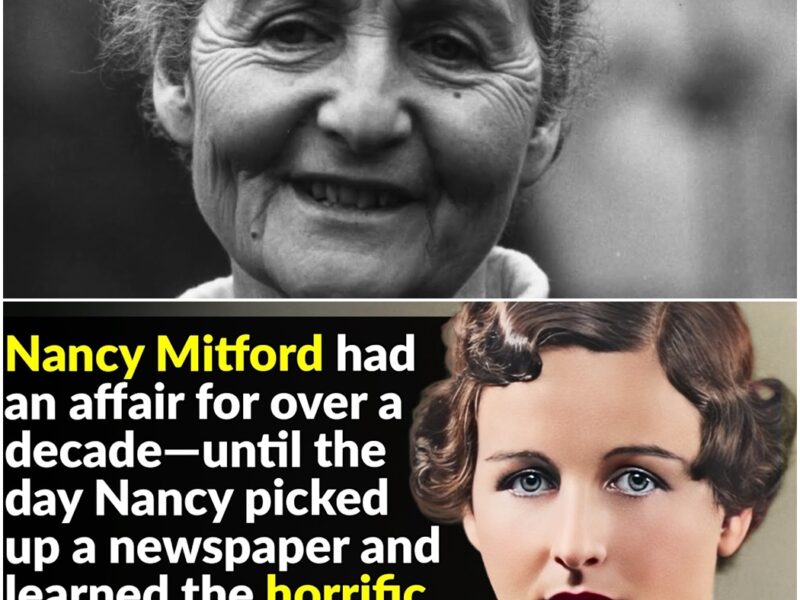
Socialite Nancy Mitford was desperately in love with Gaston Palewski, a French officer. They had an affair that lasted over a decade until the day Nancy picked up a newspaper and learned the horrific truth about her lover. Nancy Mitford was the darling of the bright young things running around London in between World War I and World War II.
Beautiful, moneyed, and intelligent, Nancy looked like she had it all. But behind her perfect manners and her polite writing, Mitford’s life and family were going to shambles. Soon enough, the whole world would know about her troubles. In early 20th century Britain, there were blue bloods and then there was Nancy Mitford’s family.
Her parents, David Mitford and Sydney Bowles, were well-to-do in the extreme with David in particular having descended from a line of barons who had been influential since the Norman invasion of England in 1066. So when they had Nancy, their first child, on November 28th, 1904, the world was her oyster.
Or so it looked from the outside. Having grown up sheltered themselves, Nancy’s parents barely knew what to do with her. The Mitfords would go on to have an impressive seven children and bratty little Nancy did not like that the attention was off her. Within a few short years, Nancy was far from alone with her brother Tom plus sisters like Diana, Unity, and Jessica.
But the next years of her life brought a different kind of upheaval. With the outbreak of World War I, the Mitfords had a stunning change of fortune after their uncle died on the front and their grandfather died at home, turning Nancy’s own father into a baron. In November 1922, Nancy turned 18 and had an official coming out ball to introduce her into society at large.
Then, half a year later, she had a formal presentation to King George V and his court. Yes, that’s how blue-blooded her family was. She got to meet the King of England as a matter of course. But, it didn’t take long for all this pomp and circumstance to turn to infamy. Nancy knew her worth, and she knew she didn’t want to hang around with the fusty, conservative men and women her father and mother approved of.
So, the minute she could, she began socializing with the infamous bright young things of London. A group of young aristocrats who certainly didn’t care about being good little boys and girls. Nancy was about to walk across the threshold into adulthood, and it just wasn’t a pretty crossing. With the bright young things, Nancy was soon caught up in a world of all-night costume parties, midnight scavenger hunts romping through the public transit systems, and lots of drinking.
As Nancy said herself of this time in her life, “We hardly saw the light of day except at dawn.” Nancy was meeting scads of suitors during this reveling, but her eye fell on very much the wrong ones. As Nancy grew into a young woman, it became clear she had a romantic type: snobbish aesthetes who were more frivolous than serious.
In 1928, Nancy met Hamish St. Clair Erskine, a man who ticked all her boxes. As one friend described him, “Hamish was slight of build, well-dressed, always snobbish, and terribly conscious of his nobility.” Nancy, needless to say, fell head over heels for the good-looking dandy, while her father had steam coming out his ears about it.
Except when it came to Hamish, there were a whole host of other issues besides his taste in dress. Hamish was uh tricky proposition even by Nancy’s not great standards. Not only was he 4 years younger than her, but he was immature for his age to boot and by most accounts just not a stand-up guy. One commenter called him the most shimmering and narcissistic of men.
And Nancy’s own friends urged her to dump Hamish and then dress better and catch a better man. Except that was just the beginning. Hamish might have been self-absorbed, but there were worse incompatibilities. Chief among them, he was very certainly gay. It’s possible Nancy never even realized where his proclivities lay and she almost certainly never came to accept the truth.
But Nancy’s lover was hiding an even bigger secret. Incredibly enough, Nancy wasn’t the first Mitford Hamish had dallied with. While he and Nancy’s brother Tom were at school in Eton together, they had a romantic relationship. A fact that Nancy likely never found out. Still, none of this stopped Hamish from becoming formally engaged to Nancy.
And no, it wasn’t going to end well. The fuel was poured and the fire was about to be lit. The next years of Nancy’s life were heartbreaking and dismal. Hamish didn’t or rather couldn’t love her the way that she loved him. And while she understood this on some level, she also clung to him like a life raft.
It was in this state that Nancy brought the first, but far from the last, scandal to her family. Nancy had dabbled in writing here and there throughout her life so far. But in 1931, she published her first novel, Highland Fling, which contained thinly veiled characterizations of her friends and their raucous lifestyles, with Hamish appearing as Bobby Bobbin.
The publication shocked her polite parents, who couldn’t believe Nancy had aired aristocrats’ dirty laundry, especially when she did it under her own name. But if the Mitfords thought that was as bad as it was going to get, they were in for a very disturbing surprise. In 1932, just a year after Highland Fling came out, Nancy’s sister outdid her in infamy by a mile.
Diana, one of the middle sisters, had married Bryan Walter Guinness in 1929 and quickly had two young sons with him. They were one of high society’s power couples, until that is, Diana abandoned her family to become the mistress of the also married Sir Oswald Mosley, the leader of the nefarious British Union of Fascists.
And this is where Nancy made some questionable decisions. Most of the Mitfords censured Diana’s immorality in running away with a married man, though they were less concerned with her choice of lover or his disgusting politics. Nancy took a different tack. Cementing a moderate peacekeeper role she would exhibit for the rest of her life, Nancy acted as a go-between for Diana, still visiting with her and giving her family gossip.
This, however, was dangerous territory. For a short time, Nancy became interested in Mosley’s politics as well, though she did quickly turn against them. Besides, she had her own new disgrace to deal with. In the middle of her family’s disgrace, Nancy’s fiance Hamish decided to twist the knife in a little more. In a completely heartless move, he coolly informed her that they were done for good because he was now going to marry a banker’s daughter.
Reeling from Hamish’s rejection, Nancy made a quick decision that turned into a fatal mistake. She announced to her family that she was engaged to a man named Peter Rodd, the son of a politician. While some called Rodd a young man of boundless promise, others found him shifty and lazy. Can you guess who was right about him in the end? Once more, Nancy’s friends weren’t very happy with her choice of partner, and they were about to get a whole lot unhappier.
Nancy never did have good taste in men. So, while she went through with the engagement and wed Peter Rodd in December 1933, the wheels started falling off soon after. Nancy’s bliss at finally being a married woman quickly gave away to the sneaking suspicion that her husband was, in fact, a dud.
Then, as they slowly grew apart, the messy Mitford family dynamics rose again with a vengeance. Although Nancy’s sister Diana brought shame on the family by marrying a bigoted idiot, the other middle sister, Unity, really took it up another level. As the 1930s dawned, Unity became obsessed with the Third Reich and everything it stood for.
Nancy’s conservative parents weren’t doing a whole lot to stop their two girls. So, Nancy, as usual, took it into her own hands. In 1934, she published another novel, Wigs on the Green, which lambasted Mosley and his ideology, and started another raging family feud. Diana resented her for it for years, but Unity was so upset she never reconciled with her again.
Not that this was anywhere near the end of the Mitford family drama. In 1937, the second youngest Mitford daughter, Jessica, caused yet another scandal. But this time it was in the complete opposite political direction to her older sisters. At the tender age of 19, Jessica eloped with her own cousin, Esmond Romilly, who was a card-carrying communist.
Indeed, political discussions at the Mitford table must have been anything but boring. Once more though, Nancy didn’t have much energy to devote to her family drama because her personal life was falling apart again. By 1938, Nancy’s marriage to Peter Rodd had gone from quietly depressing to fully disturbing. Rodd had been having an open secret affair with the wife of his friend for nearly a year, all while resenting every waking minute that Nancy wasn’t with him and throwing him adoring glances.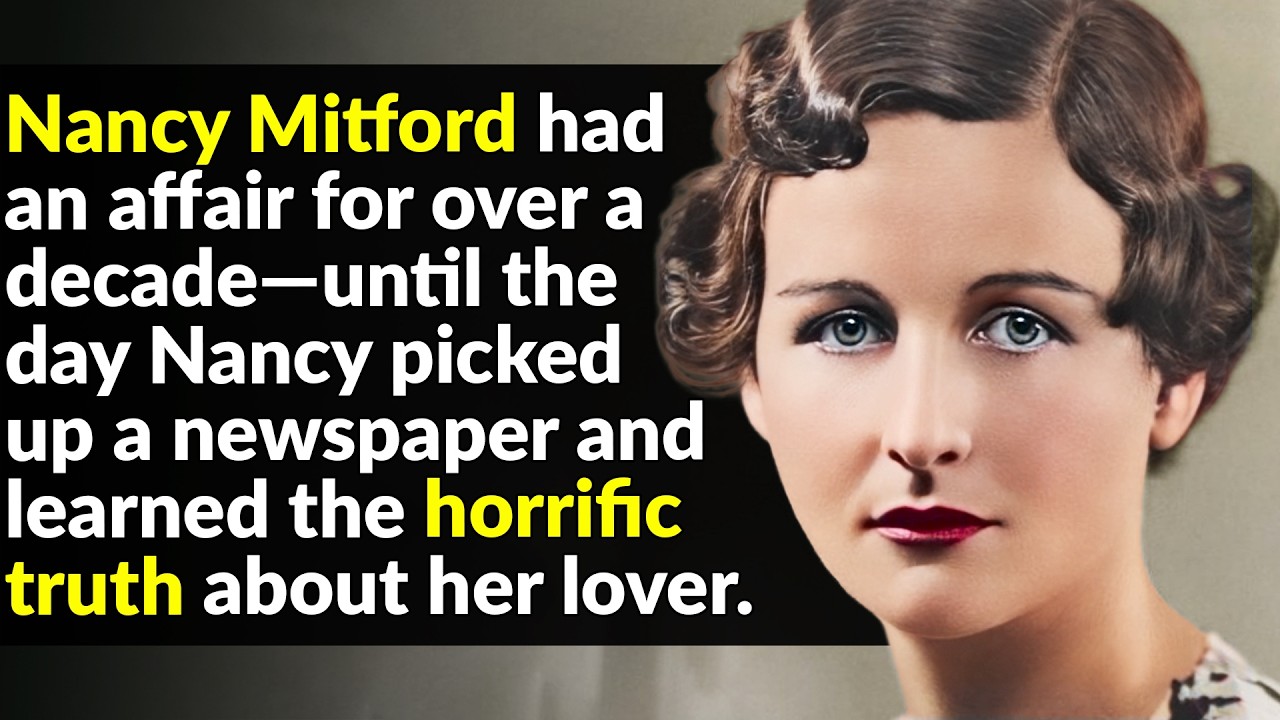
Nancy inexplicably still stayed. And then, of course, the inevitable happened. Just as the weather turned warm in 1938, Nancy made a chilling discovery. She was pregnant with Peter Rodd’s child, and it looked like they were going to be miserably bound together for life. But, that September, after all her worrying over the child, Nancy suffered a miscarriage.
And that was just the beginning of her increasingly chaotic life. In September of 1939, the quiet country life the Mitfords once knew fell apart once and for all. With the onset of World War II, the various factions of the family self-destructed. While Nancy and her husband supported the Allies, it wasn’t as easy for her siblings to be on the right side of history.
Her sister Diana, who Nancy called a ruthless and shrewd egotist, had just gone from mistress to wife of Oswald Mosley, while her sister Unity was now close personal friends with the Führer himself. It was a pressure cooker, so is it any wonder it exploded? The very moment that Great Britain declared war against Germany, a near fatal crisis hit the Mitfords.
Nancy’s sister Unity was so beside herself that her home country was attacking her spiritual homeland of Germany that she shot herself in the head while living in Munich. Incredibly, she survived, though with the mental capacity of a 10-year-old child. Her family took care of her for the rest of her life.
Meanwhile, Nancy spent World War helping Jewish families in the London Blitz and even reporting on her right-wing sisters to the government. In 1940, Nancy experienced yet another miscarriage followed by a cold abandonment. Even as she was still convalescing, her husband Peter Rodd took leave to go serve overseas. He would spend the rest of World War II away from home.
As Nancy recovered, she worked a humble job at a bookshop hoping to reset her life and her habits. But then another whirlwind came and knocked her off her feet. In 1942, she met a French officer, Gaston Palewski, a colonel who was in Charles de Gaulle’s inner circle. Mitford was instantly smitten in a way she hadn’t been since Hamish St.
Clair Erskine all those years ago. It felt like a new beginning. But it was really the same old nightmare. Gaston Palewski was dashing, brave, and utterly fascinating to Nancy. But he was also carrying some serious red flags. For one, his rampant and constant womanizing was so bad he had permanently hurt his chances at a successful political career, which, given that we’re talking about a Frenchman in the 1940s, probably means he was doing a lot of womanizing.
Only that was the least of Nancy’s worries. Everyone’s allowed to have a little fun now and then, and perhaps Polowski could be forgiven for wanting to gather those rosebuds while he could in the midst of fighting in World War II. Except, the real problem was that, as per usual, Nancy was far more in love with her beau than he was with her.
She considered him the love of her life, while he, well, you’ll see. Nancy had a reputation to uphold in her snooty aristocratic circles, and she and Polowski had to keep their affair strictly hush-hush for more than half a year while they both lived in London. When Polowski left to serve in Algeria that coming May, they continued their tryst through correspondence that Nancy mostly kept alive and Polowski tolerated.
Still, Nancy was virtually alone again and needed some distraction, but what she got was much more than she bargained for. The Mitford siblings weren’t the only ones tearing themselves apart during World War II. Nancy’s parents were also coming apart at the seams. Her father, David, after dallying with more right-wing ideas, became staunchly anti-German and patriotic after the start of the conflict.
Meanwhile, her mother, Sydney, decided to stand behind Diana, Unity, and their horrible obsessions. By 1943, the strain was too much and the couple separated. The Mitfords, in one sense, were no more. And then came yet another blow. In 1945, Nancy got horrific news. Her brother, Tom, was, like his sisters, Diana and Unity, staunchly pro-German.
Because of this, he had refused to fight in the Rhineland, but did agree to fight for Britain against Imperial Japan. It didn’t go well, as Tom died in action while serving in Burma just weeks before the end of World War II. The Mitfords had just lost their son and heir, but Nancy was about to lose even more.
With World War II wrapping up, Nancy ended up publishing one of her most famous novels, The Pursuit of Love, which was partially inspired by her illicit relationship with Gaston Palewski. In a traumatized world, this little slice of warm British living energized the people, and the novel was a critical and financial success, but it also made the next phase of Nancy’s life incredibly awkward.
In 1945, Nancy’s long-gone husband, Peter Rodd, returned at last from World War II for good, but he met a very different woman than the one he’d left. Nancy and Peter had to reach an uncomfortable truth. Their marriage was now over in all but name, and it was time to live separate lives. Without further ado, Nancy left England for good and moved to Paris, France, but her reasons were hardly liberating.
She was there, at least in large part, because of her lover, Gaston. Shortly after moving to Paris, she settled in on the Left Bank, conveniently close to Palewski’s residence. To be fair to Nancy, these next years were likely some of the happiest of her life, but on paper, they were also the most pitiful.
While in Paris, Nancy got busy writing, producing Love in a Cold Climate as a sequel to The Pursuit of Love. It was another professional achievement, with her friends and critics all praising her work, but her personal life left much to be desired. Namely, her whole downtime revolved around Gaston Palewski’s busy schedule.
Unfortunately, he repaid her with betrayal. Palewski loved Nancy in his own way, but he didn’t think this meant he had to stop seeing other women. By 1957, life threw another wrench in Nancy Mitford’s plans. Although she’d gone to France partially for Polowski, his superiors soon stationed him in Italy. Their meetings now grew almost nonexistent as he busied himself with his job and she with hers.
Indeed, he deigned to visit her only once a year. The toll this took on Nancy was quiet, but mighty. Nancy tried to adopt a laissez-faire attitude about her dire romantic situation, pretending she didn’t really care if she saw Polowski or not. Her friends, however, saw right through this. Her teasing of them turned sharp and savage, even as Nancy refused to confess her woes to them.
In truth, it’s not entirely fair to portray Nancy as a weak lover always waiting for Polowski’s call. In her two main novels about their relationship, The Pursuit of Love and Love in a Cold Climate, she uses him as a character and blatantly portrays him as a womanizer incapable of being faithful to his girlfriends.
But Polowski, for his part, had one more surprise in store. Around the time that Nancy was pining for him long distance, Polowski got together with Henriette de Kerillis, yet another blue blood aristocrat. But this was far more than a fling. Henriette was married, but she and Polowski engaged in a years-long affair that even produced a love child.
And then, the love of Nancy’s life gave her a final parting insult. In 1969, Nancy read a bone-chilling piece of news in the paper. Henriette had just divorced her husband, and she and Polowski were now married. He hadn’t even had the decency to inform Nancy about his wedding, and she was stuck once more acting like she didn’t care.
Meanwhile, her whole inner world was falling apart. Perhaps the grossest part? Polowski still didn’t entirely cut ties with Nancy and kept stringing her along for the next half decade. By the 1970s, Mitford was just 68 but suffering from ill physical and mental health. Eventually, doctors diagnosed her with Hodgkin’s lymphoma, a fatal diagnosis she took with the classic Mitford stiff and wry upper lip.
As she wrote to one friend, “It’s very curious, dying, and would have many an amusing and charming side were it not for the pain.” On June 30th, 1973, she passed in her home in France. While there’s no denying the emotional turbulence Nancy Mitford endured throughout her life, her true legacy was cemented through her literary success.
Considering her chaotic love life, however, her passing would contain one final storybook twist. Ironically enough, with the dedication he should have given her in life, Gaston Palewski was by her side at the very end. Thanks for watching History Exposed. If you love uncovering the best stories in history, hit like and subscribe to keep exploring with us.
If you enjoyed this video, check out the videos on screen for more amazing history content.