The ‘Ugly’ South African Truck That Survived Landmines Americans Copied Its Design 30 Years Later D
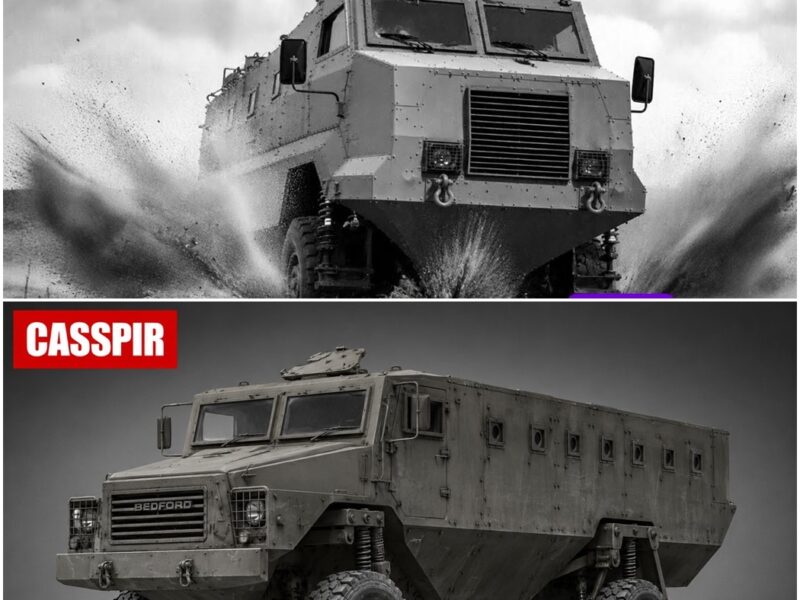
April 1979, the TFM plant outside Johannesburg. A new vehicle rolls off the line. It is enormous, high-sided, ugly. The hole sits on wheels so tall that a grown man can stand beneath the chassis and still not touch the underside. The body is a single steel capsule angled into a sharp V at the bottom, as if the designer had been trying to build a boat and lost his nerve halfway through.
To the officers watching, it looked wrong. It looked topheavy. It looked like a truck that would roll over the first time a driver took a corner too fast. One observer called it a monster that belonged in a scrapyard, not a war zone. It had been designed on a budget of 80,000 rand, less than the price of the luxury cars parked outside the factory.
It was assembled from Bedford truck components with the suspension deliberately bolted to the outside of the armored hole so that any wheel blown off by a landmine could be unbolted and replaced in the field in under two hours. Over the next 47 years, vehicles built on this design would serve in more than 20 nations, fight across deserts, jungles, and mountains from Namibia to Kashmir, and become the direct engineering blueprint for a $45 billion United States defense program that saved thousands of American lives in Iraq and Afghanistan. The man who designed it would eventually cross the Atlantic to build its American children himself. Its name was the Casper. It was the first vehicle in history purpose-built to survive a landmine. To understand why the Caspar existed, you need to understand what Suapo decided at a consultative congress in Tanzania in the early 1970s. They
could not defeat the South African Defense Force in open battle, so they would bleed the roads instead. Every dirt track in Oambaland would become a graveyard. The tools were Soviet TM46 and TM57 anti-tank mines shipped through Angola. Stake mines to catch anyone who stopped to help the wounded.
Yuguslav fragmentation mines that could cut a man in half at 40 paces. In a single year, Portuguese forces in neighboring Angola lost 355 dead and 1,242 injured to landmines alone. The South African police and army were losing trucks. They were losing men. They were losing faster than they could replace either.
The answer came from a workshop in Ptoria. The Council for Scientific and Industrial Research had been working on mine protected vehicles since 1972. The lead engineer was Dr. Vernon Joint. His team tried sandbags. They tried water-filled tires. They tried bolt-on steel plates. Nothing worked reliably. Then Joint did the mathematics on a V-shaped hull.
In November 1973, his team detonated a 21 kg TNT charge under a prototype called the Hyena. Two men sat inside when the fuse went off. They walked out with cuts and a perforated eard drum. The Vhull had channeled the blast wave outward at the angle of incidence, venting almost all of the energy sideways and up into the air.
The physics were proven. Now came the vehicle. The South African police placed the order in 1978. The first Casper prototype rolled out in April 1979. The name was an anagram CSIR plus SAP. The South African police scrambled together by a researcher named Eddie Kumba. The numbers were uncompromising. 12 1/2 tons of combat weight, 6.
87 m long, over 400 mm of ground clearance beneath the axles. A turbocharged diesel engine producing 170 horsepower, top speed of 90 km per hour, range of 850 km without refueling, crew of 2 + 10 to 12 troops in the back. But the numbers that mattered were the survivability ratings. The Mark 2 and later Caspers were certified to survive a triple TM57 detonation under any wheel.
That is 21 kg of TNT going off directly beneath the vehicle. The crew would be shaken. The vehicle would be driven home. Every feature was an answer to the landmine. The hull was a single monoke steel capsule, no bolted seams for a blast wave to prize open. The Vangle was steep enough to reflect pressure outward, shallow enough to keep the vehicle stable.
The suspension modules were mounted deliberately outside the armor envelope so that when a wheel was destroyed, the crew compartment remained intact. The driver sat in the tip of the V above the axles twice as far from the blast as he would have been in a conventional truck. The windows were 52 mm of ballistic glass.
The fuel tanks were protected. The floor was raised. It looked ridiculous. Every line of the design had been drawn by a man who had already watched the alternative bury his friends. On January 11th, 1979, just weeks before the first Casper rolled off the production line, a new South African counterinsurgency unit was founded at Oshikati in northern Southwest Africa.
Its official designation was Operation K. Its nickname was Kovote, the African’s word for crowbar. Kovote was commanded by Brigadier Johan Drier, a veteran police officer with a reputation for ruthlessness. The unit was modeled on Rodishia’s Cellu scouts. At full strength, it fielded about 42 combat teams, each built around four Caspers and one Blessbach logistics vehicle.
Each team was commanded by white South African officers and manned mostly by Ovambo constables, many of whom had tracked animals since childhood. Their method was simple and merciless. Trackers on foot would read the spore left by insurgents crossing the border from Angola. The Caspers would follow, leapfrogging ahead when the trail hardened, encircling when contact was made.
Engagements could last for days. One spore was followed for 185 km without interruption. The Casper was the reason it worked. A Kovote team could chase an insurgent column through minefields that would have stopped any conventional vehicle dead. Over 50 months between January 1978 and March 1988, South African mine protected vehicles endured 533 recorded mine detonations.
90 of those involved multiple stacked mines. The total South African death toll from those 533 detonations was 33 men. a casualty rate under 6% in a war that was still killing conventional truck crews by the dozen. One man who lived through it was Arn Durand. He served with Kovat from 1981 to 1987.
His unit made separate contacts with Swapo across six years. Three of those contacts involved direct anti-tank mine strikes on his vehicle. Duran walked away from all three. He later wrote the book Zulu Zulu Foxtrot about it. Another was Cecini Kamongo, a Kavango tracker, six years in Kovod, 50 confirmed firefights.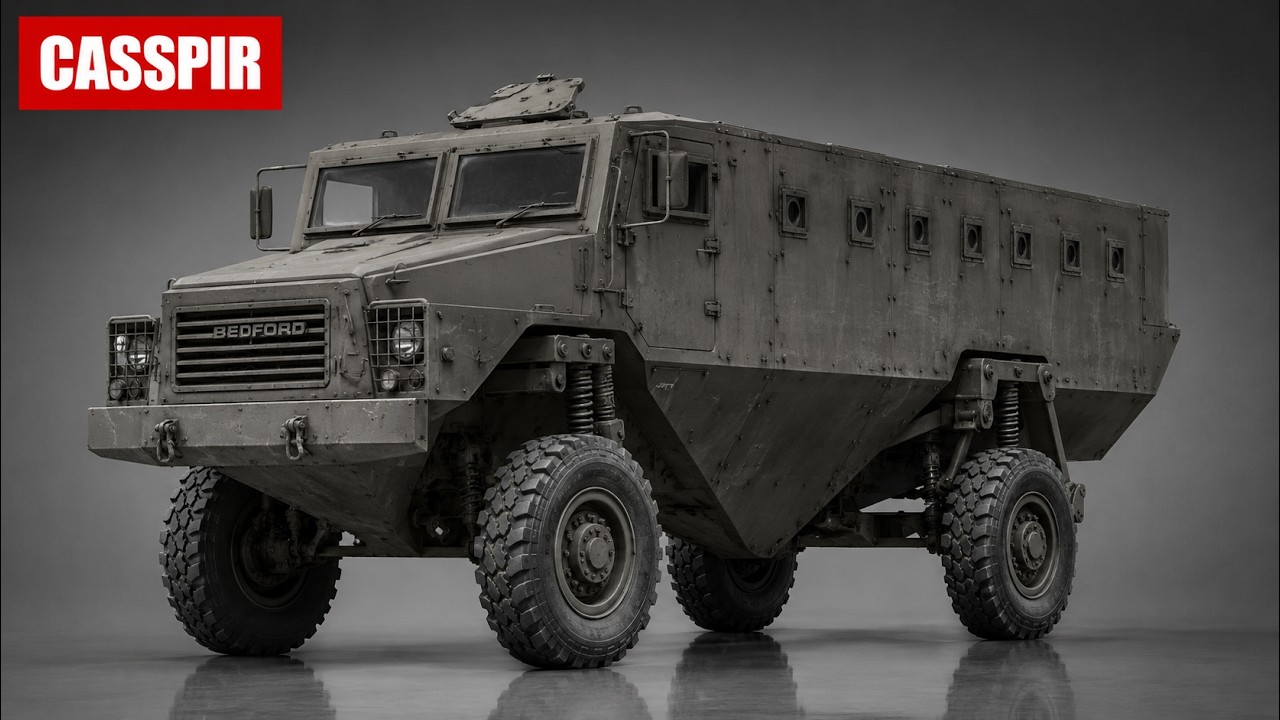
He survived five anti-personnel mine blasts and one direct rocket propelled grenade hit on his Casper. He lived to co-author his memoir and to walk free into an independent Namibia. By the unit’s own records, Kovodit fought 1,615 engagements and was responsible for roughly 3,225 enemy fighters killed or captured, about 80% of all SWAPO casualties in the theater.
Their own losses were around 151 dead in a force that never exceeded 3,000 men. It was the most effective counterinsurgency unit of the border war and it fought almost exclusively from the back of Caspers. The defining engagement came in April 1989. Sappo fighters launched a final crossber incursion. Kovote Caspers already mobilizing for demobilization under the Namibian independence agreement were the first units to make contact.
They held the line for 9 days until South African Defense Force battalions could reinforce. It was the last battle of the border war. Then came 1994. Apartheid ended. The Casper’s war did not. The vehicles were transferred to the new South African Police Service. Export orders rolled in. Namibia bought 20. Peru bought 20 for its special operations police.
India bought approximately 200 and deployed them against Mauist insurgents. and across the disputed Kashmir frontier. Angola bought 61 United Nations peacekeepers began using them on mineinfested missions in Angola, Bosnia, Mosambique, Sudan, the Democratic Republic of the Congo, Somalia, Western Sahara, and Mali. And then came Iraq.
In 2003, United States forces invaded. Within months, the insurgency had discovered the improvised explosive device buried in culverts wired to cell phones packed with artillery shells. Roughly half of all United States combat deaths in Iraq came from IEDs. American troops were riding in Humvees, flatbottomed, thinly armored.
The survival rate for a Humvey crew hit by a buried artillery shell was catastrophic. In February 2005, a United States Marine Corps Brigadier General submitted an urgent request for 1,169 mine protected vehicles. The request was frozen inside the Pentagon bureaucracy. It sat there while men died. In December 2006, Robert Gates became Secretary of Defense.
In May 2007, he declared the mine resistant program the highest priority Department of Defense acquisition program. At a press conference in June that year, Gates delivered the line that defined it. For every month we delay, scores of young Americans are going to die. When the Pentagon finally moved, it did not reinvent the wheel.
It bought South African designs. A small defense company in North Charleston, South Carolina called Force Protection had been working on mine resistant vehicles since the early 2000s. Its founder was a Rhdesian special forces veteran who had worked alongside Dr. for Vernon Joint at CSIR decades earlier.
In 2004, Joint himself crossed the Atlantic. He became chief technology officer at Force Protection. The South African who had designed the Casper now designed its American successors personally. The Cougar was derived from the Lion family of vehicles built by Mechham in South Africa. The Buffalo came from the same bloodline and the most produced American mine resistant vehicle of all.
The Navastar Max Pro was designed by engineers who by their own admission began by studying the Caspier, the Mamba, and the Hippo. Approximately 28,000 mine resistant vehicles were built for United States forces between 2007 and 2012. The total program cost was around $45 billion. Secretary Gates stated flatly in 2011 that thousands of American troops were alive because they had been riding in them.
Deputy Secretary of Defense Ashton Carter said the vehicles had made troops as much as 14 times more likely to survive an IED blast than they would have been in a Humvee. Every one of those American vehicles traced its Vhull in a direct unbroken engineering line back to the prototype that had been detonated in the South African bush in November 1973.
The ugly truck from Johannesburg had just saved thousands of American lives, 30 years after it rolled off the line looking like a monster that belonged in a scrapyard. April 1979, the TFM plant outside Johannesburg. It was ugly. It was topheavy. It was slow. Its suspension was bolted to the outside of the hull.
It had no night vision, no nuclear or chemical protection. It was built on a budget smaller than the luxury cars in the officer’s car park from parts borrowed from a Bedford Lori. And yet it worked. It worked in Oambbleand where Kovote chased spore through minefields for 185 kummel meters. It worked in Kashmir and the jungles of India.
It worked for United Nations peacekeepers in Mali and Mosmbique. And it worked for an American defense program in Iraq and Afghanistan, built by the same man on the same principles with the same V at the bottom. The Casper was not elegant. It was simply the first vehicle in history that a man could drive over a Soviet anti-tank mine and climb out of afterward.
28,000 American vehicles and $45 billion later, the world finally caught up with what a few engineers in a Ptoria workshop had already built in 1979. Nine.