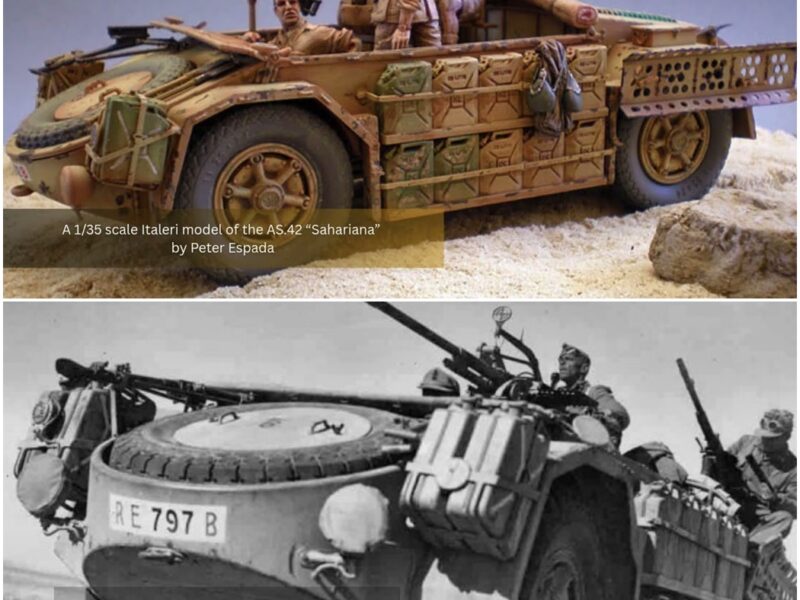
The Vehicle the LRDG Feared – AS.42 “Sahariana” D
Desert warfare in North Africa was a very different kind of conflict. Out in the empty spaces of the Libyan Egyptian borders, speed, range, observation, and surprise mattered just as much as firepower. And that led to the rise of highly mobile raiding and reconnaissance units. For Italy, that role fell to the Auto Saharan companies.
First formed in Libya in 1923 from converted desert patrol troops, they were reorganized in 1938 into a specialized motorized force based in southern Libya built to operate deep in the desert away from normal supply lines. Their job was to patrol, scout, gather intelligence on enemy movements, raid convoys, and intercept enemy raids aimed at Italian positions.
They were also supported by an aircraft section including reconnaissance aircraft such as the Caproni Ca. 309 Ghibli, which helped extend their reach and improve their ability to find and track the enemy. In effect, these companies were Italy’s answer to long-range desert warfare, a blend of mobility, local knowledge, and airborne observation.
Then came a British rival that would sharpen the competition in the desert. The Long Range Desert Group was formed in 1940, and its success helped create a tense cat-and-mouse struggle across North Africa with each side trying to out-scout, out-maneuver, and out-raid the other. The Italians were watching those British operations closely, and that pressure helped drive the need for a vehicle capable of surviving and thriving in the same kind of warfare.
That is where the Camionetta AS.42 enters the story. Developed as a desert reconnaissance vehicle, it was Italy’s attempt to build something purpose-made for long-range patrols, reconnaissance, and raiding in the difficult conditions of North Africa. The AS.42 grew out of a very practical need. Italy needed a better desert vehicle.
By 1942, the Italians had seen how effective British long-range patrol methods could be, especially in the hands of the LRDG, and they wanted a machine that could perform the same kind of missions behind enemy lines. The Auto Saharan companies already had experience operating in the desert, and they were not starting from zero.
One of their commonly used vehicles was the SPA AS.37, and their crews had learned how to make it work in harsh conditions by improving range, lowering their visibility, and adapting it for desert travel. The trucks were modified to carry armaments like 20/65 anti-aircraft auto cannons or 47/32 anti-tank guns, giving the companies firepower as well as mobility.
That experience mattered because long-range intelligence gathering was vital in North Africa, where knowing where the enemy was and where it was moving could shape entire operations. And at times it had its dangers where raids were necessary and interception operations on enemy threats. The new vehicle was meant to take that idea further.
It needed to combine mobility and range in a form that could operate far from established bases while still carrying enough weaponry and equipment to support patrol and raid work. In other words, the AS.42 was not just about moving fast. It was about staying out in the desert for long periods and still being useful when it found the enemy.
SPA-Viberti had already proposed the concept before the pressure of wartime accelerated everything. The new reconnaissance car was originally to be unarmed, but the Royal Italian Army insisted that it received heavy armaments. That makes the AS.42 best understood as Italy’s answer to the kind of deep desert warfare the LRDG was carrying out in vehicles like the Chevrolet 30 CWT, a vehicle in British service that had different armament options.
Italy’s AS.42 would be a purpose-built reconnaissance vehicle for a very specific kind of war, one fought across enormous distances where surprise, endurance, and intelligence mattered as much as firepower. But it would also provide the Auto Saharan companies a balance in weaponry, whether for anti-tank, anti-infantry, or anti-aircraft.
The design was pushed into rapid development in early 1942, and it was built from the proposed SPA-Viberti project using the AB.41 armored car chassis, which itself came from the Fiat SPA TM.40 artillery tractor. The Camionetta AS.42 prototype was completed and presented to the Italian Army in July 1942, where it underwent a series of successful trials.
Impressed by its performance, the army approved the vehicle for production, which began the following month at the SPA-Viberti factory in August 1942. In terms of design, the AS.42 retained much of the AB.41 chassis, but its external layout was radically reworked. The heavy armored car silhouette was stripped away and reshaped into a lighter, more agile vehicle that visually resembled a conventional car rather than a traditional armored platform.
At the front, the hull was tilted incorporating a circular recess designed to carry a spare wheel. The bonnet itself was fitted with practical field tools with two spades mounted along the left side. The mudguards were also redesigned at the front. Each side carried two jerrycans specifically allocated for drinking water clearly marked with white crosses.
Toward the rear, additional toolboxes were mounted on the mudguards, while the exhaust muffler was positioned behind the right mudguard. On the left side, a simple plate with a stoplight was fitted. Unlike the fully enclosed AB.41, the AS.42 featured an open central combat compartment with only minimal side armor.
This compartment measured approximately 3.2 m in length and 1.7 m in width, providing space for crew and equipment while maintaining a low silhouette. Armor protection across the vehicle was relatively light with a maximum thickness of 70 mm. The vehicle was equipped with a foldable windshield fitted with bullet-resistant glass panels around 12 mm thick along with rearview mirrors for improved visibility.
Its low profile combined with a ground clearance of 0.35 m enhanced concealment across desert terrain, while it was capable of fording water up to a depth of 0.7 m. Weight reduction was a key feature of the design. Compared to the AB.41’s 7.5 tons, the AS.42 weighed just 4 tons when empty. Even when fully loaded and equipped for combat, it reached only around 6.
5 tons, contributing significantly to its speed and operational flexibility. Beneath its redesigned exterior, the AS.42’s running gear was based on the original TM.40 artillery tractor utilizing a 4×4 configuration. However, unlike the AB.41 armored car, it did not feature all-wheel steering. Instead, steering was limited to the front wheels, simplifying the system while maintaining adequate maneuverability for desert operations.
The vehicle’s tires were supplied by Pirelli with several types available depending on the terrain and theater of combat. For operations in North Africa, the wide Libya tires were commonly used designed to provide better traction on soft desert sand. In European conditions, the more rugged Artiglio pattern was preferred, offering improved grip on firmer ground.
In practice, however, supply limitations often dictated what was fitted. Crews frequently had to make do with whatever tires were available, and it was not uncommon to see AS.42 vehicles operating with a mix of different tire types, reflecting the logistical challenges faced in the field. To support its long-range role, the AS.
42 carried a substantial external fuel supply. Up to 20 jerrycans could be mounted along the sides of the vehicle arranged in two rows of five on each side with each can holding 20 L of fuel. This significantly extended the vehicle’s operational range and made it well suited for deep desert patrols. For crew comfort and protection, tarpaulins could be erected over the open fighting compartment to provide cover from the harsh elements.
When not in use, these were rolled up and secured neatly at the rear of the compartment. Power was provided by the six-cylinder petrol Fiat SPA ABM 2 engine producing 88 horsepower, the same unit used in the AB.41. Despite its relatively modest output, the AS.42 achieved an impressive top speed of 84 km/h on roads and up to 50 km/h off-road, making it exceptionally fast for its class.
The internal fuel tank had a capacity of 145 L, already granting a considerable range of around 535 km. However, when supplemented by the external jerrycans, the total range could reach up to 2,000 km, making the AS42 a truly long-range reconnaissance and raiding vehicle. Internally, the fuel tank was positioned above the engine with two water tanks mounted on either side to assist with cooling.
A 3-L oil tank was located to the left of the engine, while an additional engine cooling water tank was installed above and toward the front of the engine compartment. Armor protection around the engine itself was minimal with plating of just 5 mm, reflecting the vehicle’s emphasis on speed and range over protection.
The AS42’s armament was highly flexible, designed to engage a range of targets from soft-skin vehicles to light armor. The primary weapon options included the Breda 20/65 mod 35 autocannon, effective against aircraft, trucks, and light tanks, the Cannone da 47/32 mod 35 gun for antitank work with armor-piercing rounds or high-explosive shells against infantry, or the Solothurn S-18/1000 antitank rifle for precision long-range engagements.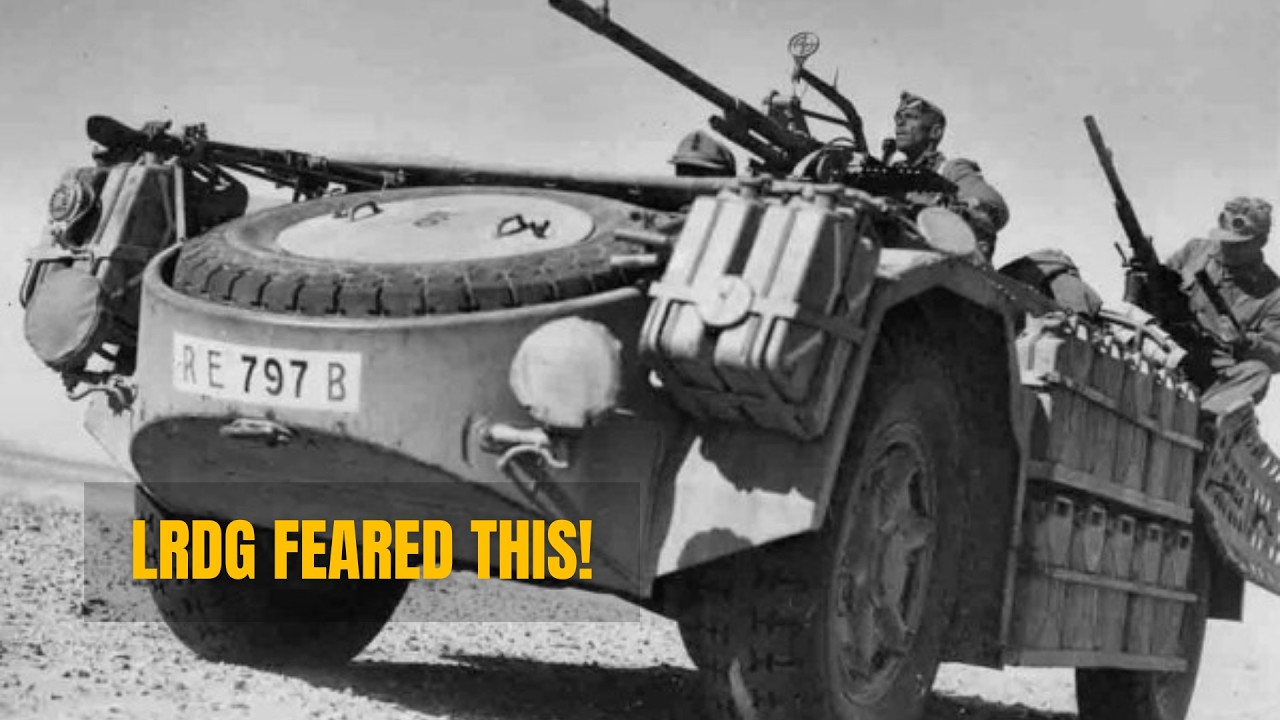
Secondary armament consisted of Breda Modello 38 or 37 machine guns, which could be mounted on pintles around the open fighting compartment for all-round fire support. One to the right of the driver, and two to the left and right sides of the rear section of the fighting compartment. Captured British Vickers K machine guns used by the LRDG were sometimes fitted instead, adding a touch of irony to Axis patrols.
All weapon mounts, both main and secondary, featured 360° rotation for maximum flexibility in combat. The crew layout reflected the vehicle’s reconnaissance role, typically accommodating up to five men, sometimes six. The driver sat at the front left with the commander or vehicle leader positioned nearby for oversight. Gunners and loaders occupied the open central compartment, allowing quick access to weapons and jerrycans while maintaining a low profile during operations.
The vehicle had no ammunition racks, and ammunition was carried in boxes scattered within the fighting compartment. Ammunition quantity on board varied by mission. Production of the Camionetta AS42 began in August 1942 at the SPA Via Betti factory in Turin. Following the successful army trials of the prototype, initially it was planned to manufacture around 350 vehicles to equip specialized reconnaissance units, but wartime disruptions and shifting priorities limited output to approximately 200 units by mid-1943. Most disruptions came in the form of Allied bombing on the SPA Via Betti factory. The 200 built were distributed primarily to units in North Africa and other elite formations, where they proved their worth despite
the small numbers produced. Later in 1943, as the North African campaign wound down and urban combat became more relevant on the Italian mainland, a specialized variant emerged, the Fiat SPA AS42 Metropolitana. Adapted for city streets and mountainous terrain, this version had several changes. The external jerrycans on the sides were replaced with large boxes to hold ammunition.
The perforated unditching plates over the rear wheels were no longer required. Larger toolboxes were added on the upper part of the rear fenders. This version had new tire types available from Pirelli, including a new Artiglio size. The S-18/1000 antitank rifle was not an option for this vehicle.
Entering service amid Italy’s increasingly desperate defensive struggles, the Metropolitana represented a practical evolution of the AS42’s versatile chassis for the next phase of the war. The first batch of Italy’s new reconnaissance vehicle entered service in late 1942, primarily equipping the elite Auto-Saharan companies, as well as newly formed Arditi units during the final phases of the Libyan campaign and throughout the entire Tunisian campaign in North Africa.
These vast long-range vehicles quickly proved their worth, leveraging their low profile to conceal themselves among the dunes, lying in wait to ambush unsuspecting enemy columns before vanishing into the desert. Their crews excelled at hit-and-run tactics, pursuing enemy raiders over vast distances while reporting positions and movements deep behind enemy lines back to Italian garrisons.
The AS42 achieved a formidable claimed kill ratio of 1:5, capturing dozens of British armed jeeps and transport vehicles in the process. Even the seasoned LRDG treated them with caution, launching attacks only when no significant of these new Italian AS42 vehicles was spotted in the area. As the Tunisian campaign drew to its brutal conclusion in May 1943, however, all surviving AS42s of the Auto-Saharan companies were lost amid the desperate final fighting, marking the end of their North African service. Back in Italy, very specialized Arditi companies were formed throughout 1942 and 1943, equipped with the versatile Camionetta AS42 for rapid strike and reconnaissance roles. Following the Italian armistice announcement in September 1943, many of these units avoided direct clashes with German forces,
instead fracturing along divided loyalties. Some crews joined the Allies on the Italian front, while others rallied to Mussolini’s puppet regime in northern Italy. After the fall of Rome to German troops, captured AS42s in the hands of Italian fascists of the X units were reorganized into an elite group later in early 1944.
This formation was attached to the 2nd Fallschirmjäger Division Ramcke and unexpectedly deployed to the vast Eastern Front, battling across the Russian steppe. As the campaign collapsed, the unit conducted a grueling retreat through Romania and into Germany by spring 1944. Meanwhile, other Arditi units equipped with AS42s were rushed to fight in Europe, including the Normandy sector against advancing Allied forces.
Surviving elements eventually returned to Italy in late 1944, continuing the bitter struggle for Mussolini’s Salò Republic until the final collapse in 1945. Battalion Barbarigo of the 10th Flottiglia MAS also used AS42 vehicles and continued fighting against Allied troops in the Anzio region. Remarkably, a handful of Camionetta AS42s survived the chaos of war and were repurposed for peacetime duties.
These rugged vehicles entered service with the Italian State Police, continuing to patrol and provide rapid response capabilities until they were finally retired in 1954. In reflection, the Camionetta AS42 stood out as one of Italy’s most effective and innovative military vehicles of the Second World War.
Its blistering speed of 84 km/h on roads and exceptional 2,000 km range with external fuel made it a predator of the desert. While its ultra-low profile allowed instilling caution even the battle-hardened LRDG patrols that prowled the same desert lands. The vehicle’s flexible armament from Breda 20-mm cannons to 47-mm antitank guns and open design permitted rapid adaptation to any threat with camouflage schemes blending seamlessly into dunes, steppes, or Italian hillsides.
From scorching Libyan dunes to the Russian steppes and the streets of Salò, Italy, the AS42 proved astonishingly versatile across theaters. Its only real flaw was its limited production, only around 200 units built, hampered by Italy’s financial and material constraints and the relentless Allied bombing campaigns that crippled factories during wartime.
Ultimately, it felt like a vehicle ahead of its time, a blueprint for modern technical warfare that prioritized mobility, stealth, positioning, observation, endurance, and firepower over heavy armor. Its postwar service with the Italian State Police until 1954 only underscores this timeless effectiveness.
Mhm.