USS Cavalla Fired 6 Torpedoes—Then Japan’s Shokaku Exploded D
June 19th, 1944 11:22 hours, Philippine Sea, 140 miles north of Yap Island. The pencil shook in Lieutenant Junior Grade Jack Kiefer’s hand as he recorded the bearing in the conning tower log. His writing barely legible as the submarine USS Cavalla prepared to complete the most consequential attack in her brief history.
Six fish away, all hot, straight, and normal. Through the periscope, Lieutenant Commander Herman J. Kossler watched his torpedoes streak toward their target. The 25,675 ton Japanese aircraft carrier Shokaku, one of the six carriers that had attacked Pearl Harbor 30 months earlier. In seconds, those torpedoes would either cement Cavalla’s place in naval history or doom her crew to a crushing depth charge retaliation from the carrier’s escorts.
What Kossler couldn’t know was that his attack would trigger not just the destruction of a single ship, but would contribute to the complete annihilation of Japanese naval aviation in what would become known as the Marianas Turkey Shoot. The outcome of the Pacific War was being determined not in grand strategy sessions, but in the precise mechanics of submarine warfare, approach angles, torpedo spreads, and the split-second decisions of men operating at the absolute limits of their training.
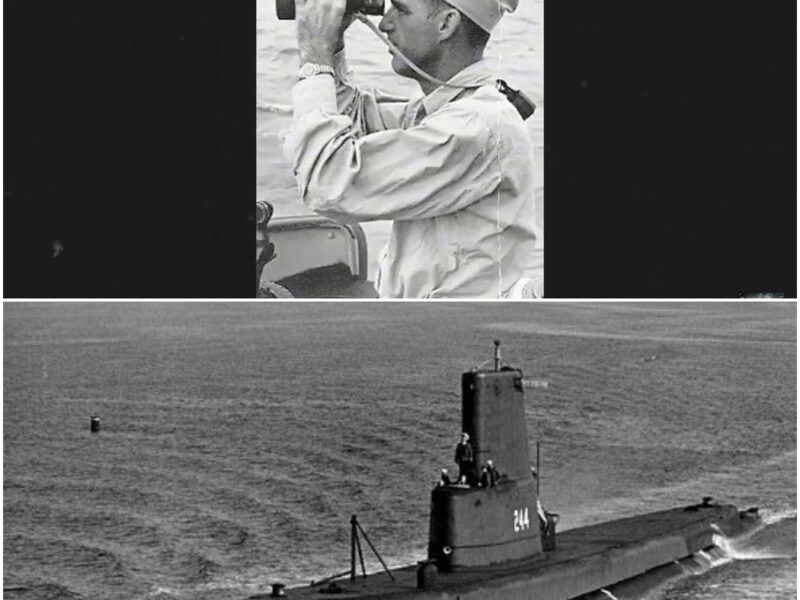
The journey to this moment had begun 4 months earlier on February 29th, 1944, when USS Cavalla was commissioned at Electric Boat Company in Groton, Connecticut. Among the 73 Gato-class submarines that would serve in the Pacific War, Cavalla was fresh, untested. Her crew were a mixture of veteran submariners and young sailors who had never seen combat.
Commander Herman Joseph Kossler, Naval Academy class of 1934, had already proven himself aboard USS Guardfish, where he’d helped sink over 51,000 tons of Japanese shipping. Now commanding his own boat, 311 ft of steel and determination, armed with 24 torpedoes and the hopes of turning the tide in the Pacific.
The statistics of American submarine production told a story that would have staggered Japanese naval planners had they known the full scope. By June 1944, American shipyards were launching a new submarine every 17 days. Each boat required 1.5 million man-hours to construct, assembled from 75,000 individual components manufactured in 23 states.
The industrial symphony that produced Cavalla was being repeated continuously across six major shipyards. But on May 31st, 1944, as Cavalla departed Pearl Harbor for her first war patrol, she was just another untested boat heading into harm’s way. Her orders, patrol the eastern Philippines, relieve USS Flying Fish on station at San Bernardino Strait.
June 15th, 1944. Three days out from Midway, Cavalla’s radio crackled with an urgent message from Commander Submarines Pacific, ComSubPac. Admiral Charles Lockwood’s operations staff had decoded intelligence that would redirect the submarine’s entire mission. The Japanese mobile fleet, missing from action since the Battle of Santa Cruz in October 1942, had been spotted by USS Flying Fish moving toward the Marianas.
The implications were staggering. Operation Forager, the American invasion of Saipan, had begun that very morning. If the Japanese carrier fleet reached the Marianas, they could devastate the invasion force. Cavalla was ordered to take position 350 mi east of San Bernardino Strait and intercept.
The Philippine Sea covered 1.5 million square miles. Finding a carrier task force in that expanse was like locating a particular car on all the highways of Texas. While submerged, limited to periscope observations and primitive radar, June 17th, 1944, 1950 hours. After 2 days of empty ocean, Cavalla’s SD radar operator detected a contact at 30,000 yd.
The pip on the radar screen was faint, intermittent, appearing and disappearing like a ghost in the electronic noise. Cosler ordered four engines ahead full. Cavalla surged forward at 20 kn, her diesels roaring as she closed the distance. At 22,000 yd, more contacts appeared on the radar screen, multiple ships in formation.
What Cavalla had found was Vice Admiral Jisaburo Ozawa’s First Mobile Fleet, the main striking force of the Imperial Japanese Navy. Nine carriers, five battleships, 13 cruisers, and 28 destroyers, the largest concentration of Japanese naval power assembled since Midway. Executive Officer Lieutenant Commander Robert Kister calculated the tactical problem.
The Japanese force was zigzagging at 19 kn, course 290°. To achieve an attack position, Cavalla would need to race ahead on the surface, submerge in the enemy’s path, and hope the formation passed within torpedo range. Cosler faced an agonizing choice. Standing orders required him to report the contact immediately, intelligence that could save thousands of American lives.
But transmitting would reveal Cavalla’s position, likely ending any chance of attack. He could see through the periscope that one of the carriers was recovering aircraft, vulnerable and distracted. At 2200 hours, Cosgrove chose duty over glory. Cavalla surfaced and transmitted. Large enemy task force latitude 1200 north, longitude 13500 east course 290, speed 19, many large and small ships.
The message reached Admiral Raymond Spruance aboard USS Indianapolis within minutes. The fifth fleet commander now knew exactly where the Japanese were and could position task force 58’s 15 carriers accordingly. The intelligence would prove decisive in the coming battle. But transmission came with a price.
Japanese radio direction finders immediately detected the signal. Two destroyers peeled off from the formation and charged toward Cavalla’s position. Cavalla crash dived to 300 ft as depth charges exploded above. The submarine’s hull groaned under the pressure. Each depth charge generated 23,000 lbs of pressure per square inch at the point of detonation.
Close explosions could crush a submarine like an empty beer can. For 3 hours, the destroyers circled above, dropping patterns of depth charges. Cavalla’s crew counted 42 explosions, each one rattling the boat, breaking light bulbs, creating small leaks in the hull glands. The temperature inside rose to 110° F.
Men stripped to their underwear, breathing shallow to conserve oxygen. At 1:00 on June 18th, the destroyers departed. Cavalla surfaced into an empty The task force had escaped, but Cosler wasn’t ready to give up. He ordered a high-speed pursuit on the estimated base course, gambling that the carriers would need to launch aircraft at dawn.
June 19th, 1944, 0800 hours. After a night of fruitless searching, Cavalla’s luck changed. Aircraft began appearing overhead, dozens of them, all heading east toward the American fleet. The Japanese had launched their morning strike against Task Force 58. Sound operator reported high-speed screws approaching from the northwest.
Through the periscope, Cosler saw them, a Japanese carrier task group racing to recover aircraft. Target angle, 90° starboard. Range, 5,000 yd and closing. Speed, 24 kn. Three carriers visible, the nearest one massive with a distinctive island structure. Lieutenant David McClung, the recognition officer, checked his identification cards.
That’s Shokaku, Captain. Pearl Harbor veteran. 29,000 tons displacement. What followed was a master class in submarine approach tactics. Cosler ordered Cavalla to periscope depth, balancing the need to remain hidden with the requirement to maintain visual contact. Every 60 seconds, he raised the periscope for a 3-second observation, just enough to update the target’s bearing and range.
The approach party worked with mechanical precision. The torpedo data computer, TDC, an analog computer that calculated firing solutions, clicked and whirred as operators input the target’s course, speed, and range. The TDC was was of engineering, solving trigonometric equations in real time, accounting for the submarine’s motion, the target’s motion, and the torpedo’s speed.
The tension in the conning tower was palpable. Every man knew they were approaching one of Japan’s most powerful warships, protected by destroyers whose sole purpose was to kill submarines. One mistake, one periscope spotted, one torpedo wake seen too soon, and Cavalla would join the 52 American submarines already lost in the Pacific war.
11:00 hours, Shokaku turned into the wind to recover aircraft, presenting her starboard side to Cavalla. The carrier was now broadside at 1,200 yd, point-blank range for a torpedo attack. Through the periscope, Cosgrove could see Japanese pilots climbing out of their aircraft on the flight deck. But as Cavalla prepared to fire, disaster nearly struck.
A Japanese destroyer, later identified as Urakaze, suddenly appeared on an attack course, having spotted Cavalla’s periscope or torpedo tube doors opening. Cosgrove had maybe 10 seconds to make a decision. Dive and lose the shot, or fire and risk getting rammed. He made his choice. Fire one. At 8-second intervals, six Mark 14 torpedoes left Cavalla’s forward tubes.
Three were standard Mark 14 with magnetic exploders, three were Mark 23 with contact exploders. Each torpedo weighed 3,280 lb, carried 668 lb of Torpex explosive, and traveled at 46 kn. 11:22 hours. Through the periscope, Cosgrove watched his torpedoes race toward Shokaku. The first torpedo passed ahead of the bow.
The second struck just forward of the island structure. The third hit amidships. The fourth impacted near the stern. The fifth and sixth passed astern. On Shokaku’s bridge, Captain Matsubara Hiroshi had just ordered evasive action when the lookout’s warning came. Torpedo starboard. It was too late. The first torpedo that hit, striking at frame 103, ruptured aviation fuel tanks and started an immediate fire.
The second torpedo, hitting at frame 144, destroyed the forward engine room and ruptured the hull across three compartments. The third torpedo, impacting at frame 201, demolished the after aviation fuel system and started secondary fires throughout the hangar deck. On Cavalla, there was no time for celebration.
The destroyer Yūrakaze was charging their position, already within 1,000 yd. Cosler ordered an emergency dive to 400 ft. Beyond the submarine’s test depth of 300 ft. As Cavalla plunged toward the depths, her crew could hear the sounds of Shokaku dying above them. The carrier’s bulkheads groaned and collapsed.
Ammunition magazines exploded. Steam lines ruptured with screaming hisses that carried through the water. The depth charging began immediately. Yūrakaze and two other destroyers dropped patterns of type 95 depth charges around Cavalla’s estimated position. In the next 3 hours, they would drop 106 depth charges, each one containing 220 lb of type 88 explosive.
Inside Cavalla, conditions deteriorated rapidly. The air conditioning had been secured to reduce noise. Temperature climbed to 120° Fahrenheit. Humidity reached 100%. Men fainted from heat exhaustion. Carbon dioxide levels rose dangerously as the crew tried to breathe shallowly to conserve oxygen. Depth charges exploded all around them.
At 11:45, a close explosion ruptured a seal in the forward torpedo room, starting a leak that would eventually flood the compartment with 2,000 gallons of seawater. At 12:10, another near miss knocked out the sound gear, leaving Cavalla blind to the destroyers hunting them. At 12:30, the submarine’s ventilation supply trunk flooded, filling with 400 gallons of seawater that had to be pumped out by hand.
The crew formed a bucket brigade in 120° heat, passing buckets of water from hand to hand in the narrow passageways. At 14:10, 2 hours and 48 minutes after Cavalla’s torpedoes hit, the crew heard a sound that would haunt them forever. Four massive explosions from the direction of Shokaku. They were hearing Shokaku’s death throes.
The carrier’s aviation fuel vapor had built up between decks despite damage control efforts to ventilate the spaces. When the concentration reached critical levels, a spark, possibly from damaged electrical equipment, ignited the vapor cloud. The explosion was catastrophic. Shokaku’s flight deck buckled upward. Her hull split along the keel.
The forward was blown completely off the ship, rising 200 ft into the air before crashing back into the sea. The carrier broke in half and sank in less than 4 minutes. Above Cavalla, as she cowered at 400 ft, one of the Pacific War’s great tragedies was unfolding. Of Shokaku’s crew of 1,660 officers and men, only 570 would survive.
Lost were 887 ships company and 376 members of Air Group 601, including some of Japan’s most experienced naval aviators. Among the dead was Commander Takahashi Kakuiti, leader of Air Group 601, who had led strikes at Pearl Harbor, Ceylon, and Santa Cruz. His loss and the loss of his experienced pilots represented damage to Japanese naval aviation from which it would never recover.
Captain Matsubara survived, pulled from the water after being washed overboard when Shokaku capsized. In the Japanese tradition, he had attempted to go down with his ship, but was saved against his will by his crew. He would never command another vessel, spending the rest of the war in shore assignments, tormented by the loss of his ship and men.
Back aboard Cavalla, the depth charging finally ended at 14:30. The submarine had endured 106 depth charges over 3 hours and 6 minutes. Cosler waited another hour before ordering Cavalla up to periscope depth. The sea was empty except for oil slicks and debris. In the distance, smoke columns marked where Shokaku had been.
Japanese destroyers were picking up survivors, too focused on rescue operations to continue hunting the submarine that had killed their charge. At 1900, Cavalla surfaced into the gathering dusk. The crew emerged onto the deck gasping in the fresh air after 9 hours submerged. Many collapsed from exhaustion.
The submarine’s hull showed the scars of her ordeal, dents from near misses, paint stripped by blast pressure, and dozens of small leaks that would require emergency repairs. Cosler transmitted his report to Pearl Harbor. Hit Shokaku class carrier with three out of six torpedoes. Received 105 depth charges during 3-hour period.
Heard four terrific explosions in direction of target 2 and 1/2 hours after attack. Believe that baby sank. What Cavalla’s crew didn’t know was that they had contributed to one of the most decisive naval victories in history. While they were attacking Shokaku, USS Albacore had torpedoed the carrier Taiho, Ozawa’s flagship.
Though Taiho took only one torpedo hit, poor damage control led to a massive vapor explosion that sank her with the loss of 1,650 officers and men. In the air, the Marianas Turkey Shoot was reaching its climax. American F6F Hellcat fighters, guided by radar and superior tactics, shot down 315 Japanese aircraft while losing only 23.
The Japanese lost 445 carrier aircraft in total, along with their irreplaceable pilots. Japan had begun the war with 3,500 highly trained naval aviators. By June 19th, 1944, fewer than 500 remained. The aircraft could be replaced. Japan would build 2,045 carrier aircraft in 1944. The pilots could not.
Training a carrier pilot required 700 flight hours minimum. Japan no longer had the fuel, the time, or the instructors. Cavalla’s successful attack represented more than tactical victory. It showcased the revolution in American submarine warfare. The Mark 14 torpedo, after 2 years of failures, had finally been debugged.
The magnetic exploder problems had been identified and fixed. The depth settings had been corrected. Contact exploders had been redesigned. The torpedo data computer that calculated Cavalla’s firing solution was a masterpiece of analog computing, performing real-time trigonometric calculations that would have required teams of mathematicians just years before.
Each submarine carried two TDC’s for redundancy, representing $60,000 worth of precision engineering, the cost of 12 average American homes in 1944. American industrial capacity had produced torpedoes in staggering quantities. By June 1944, the Newport torpedo station was producing 300 Mark 14 torpedoes monthly.
Each torpedo required 2,000 man-hours to manufacture, involving 1,500 individual parts manufactured to tolerances of 0.001 inches. The presence of Cavalla and other American submarines in exactly the right positions to intercept the Japanese fleet was no accident. American code breakers had been reading Japanese naval messages since 1942.
The JN 25 code system, despite Japanese confidence in its security, had been systematically penetrated. Commander Joseph Rochefort’s team at Station Hypo in Pearl Harbor could decode and translate Japanese fleet messages within hours of transmission. They knew Ozawa’s planned route, his fuel status, even the names of his ship captains.
This intelligence, distributed to submarine commanders as ultra messages, positioned American submarines along Japanese transit routes with deadly precision. The Japanese never suspected their codes were compromised. Post-war interrogations revealed they attributed American submarine success to superior radar and lucky positioning.
The truth, that Americans were reading their most secret communications, remained classified until the 1970s. By the time Cavalla sank Shokaku, American submarines had evolved into the most effective naval weapon in the Pacific. The statistics were staggering. 288 submarines would serve in the Pacific war.
They would sink 1,314 Japanese vessels totaling 5.3 million tons, 55% of all Japanese losses. The human cost was severe. 52 American submarines were lost with 3,506 officers and men, a 22% casualty rate, the highest of any American service branch. But their impact was decisive. Japan, an island nation dependent on imports, was slowly strangled by submarine warfare.
Vice Admiral Takagi Sakichi, postwar, admitted, “The American submarine campaign was the single most decisive factor in our defeat. We could replace ships. We could find new sources of oil. We could train more sailors. But we could not protect our merchant fleet from submarines. They destroyed our ability to wage war.
” July 1st, 1944. After 11 more days of fruitless patrol, Cavalla received orders to proceed to Saipan. As the submarine approached the embattled island, the crew witnessed the massive scale of American operations. Cosgrove wrote in his patrol report, “The site was beyond description. Every type of ship in the Navy appeared to be present.
Battleships bombarding the island, carriers launching strikes, transports unloading supplies. Smoke and explosions covered half the island. This was American power unleashed.” Cavalla was escorted into port by USS Philip, a destroyer whose crew lined the rails to cheer the submarine that had sunk Shokaku.
Word of Cavalla’s success had spread throughout the fleet. As she tied up to submarine tender USS Holland, sailors from other boats came to see the submarine that had killed a Pearl Harbor attacker. August 3rd, 1944. Cavalla arrived at Majuro Atoll for official debriefing. Vice Admiral Charles Lockwood, Commander Submarine Force Pacific, personally came aboard to congratulate the crew.
The submarine would receive a presidential unit citation for her first patrol, an honor reserved for extraordinary heroism in action. In Japan, the loss of Shokaku was initially hidden from the public. The Imperial Navy listed her as damaged and under repair until October 1944, when her loss was quietly acknowledged.
The psychological impact on the Navy was profound. Shokaku had seemed invincible, surviving damage at Coral Sea and Santa Cruz that would have sunk lesser ships. Commander Fuchida Mitsuo, who had led the Pearl Harbor attack from Akagi, wrote after the war, “When we learned Shokaku was gone, we knew the war was lost.
She was more than a ship. She was a symbol of our naval power. Her loss and Taiho’s in a single day broke the spirit of the carrier force.” The technical failure was equally devastating. Japanese damage control, once considered superior, had failed catastrophically. The aviation fuel vapor explosion that destroyed Shokaku could have been prevented with proper ventilation procedures.
American carriers had suffered similar torpedo damage, but survived through superior damage control. Captain Omai Toshikazu, Ozawa’s chief of staff, testified, “We learned the wrong lessons from our early victories. We thought spirit and training could overcome material disadvantages. But you cannot fight radar with courage.
You cannot stop torpedoes with determination. The Americans had built a war machine we could not match. The sinking of Shokaku demonstrated American technological advantages that went beyond submarines and torpedoes. The SJ surface search radar on Cavalla could detect ships at 15 mi in darkness or fog.
Japanese radar installed on only a few ships had a maximum range of 8 mi and frequently malfunctioned. American communications were equally superior. Cavalla’s radio could reach Pearl Harbor from anywhere in the Pacific using high-frequency bands and sophisticated encryption. Japanese submarines often had to surface near island bases to relay messages, exposing themselves to attack.
The preservation systems on American submarines represented another crucial advantage. Cavalla’s air conditioning not only provided crew comfort, but prevented electrical systems from corroding in tropical humidity. Her water distillation plant produced 1,000 gallons of fresh water daily. Japanese submarines, lacking these systems, suffered from equipment failures and crew health problems on extended patrols.
The men who served on Cavalla were representative of American submarine crews. Volunteers all, intensively trained and remarkably young. The average age was 23. Most had never been to sea before the war. Yet they operated one of the most complex weapon systems ever created with remarkable skill. Their training was extraordinary.
Each crew member cross-trained in multiple specialties. An electrician could operate the diving planes. A torpedo man could run the diesel engines. This redundancy meant that battle casualties rarely mission killed an American submarine. Moral was maintained through amenities unthinkable on other warships.
Cavalla had an ice cream machine, washing machines, and individual bunks for most crew members. The food was the best in the Navy, steaks, fresh vegetables when available, and bread baked daily. These seeming luxuries had military purpose maintaining crew effectiveness on 60-day patrols. The destruction of Shokaku and Taiho triggered cascading failures throughout Japanese naval aviation.
Air Group 601, split between the two carriers, lost 80% of its aircraft and pilots. These were not just losses. They were irreplaceable veterans who could have trained the next generation. The Japanese pilot training program, already strained, collapsed completely after the Philippine Sea battle. Before the war, Japanese naval aviators received 700 hours of flight training.
By late 1944, new pilots received less than 100 hours. They were unable to perform basic carrier operations, much less combat. American pilot training, by contrast, was expanding exponentially. By June 1944, the United States was training 100,000 pilots annually. Each received 600 hours of flight time before deployment.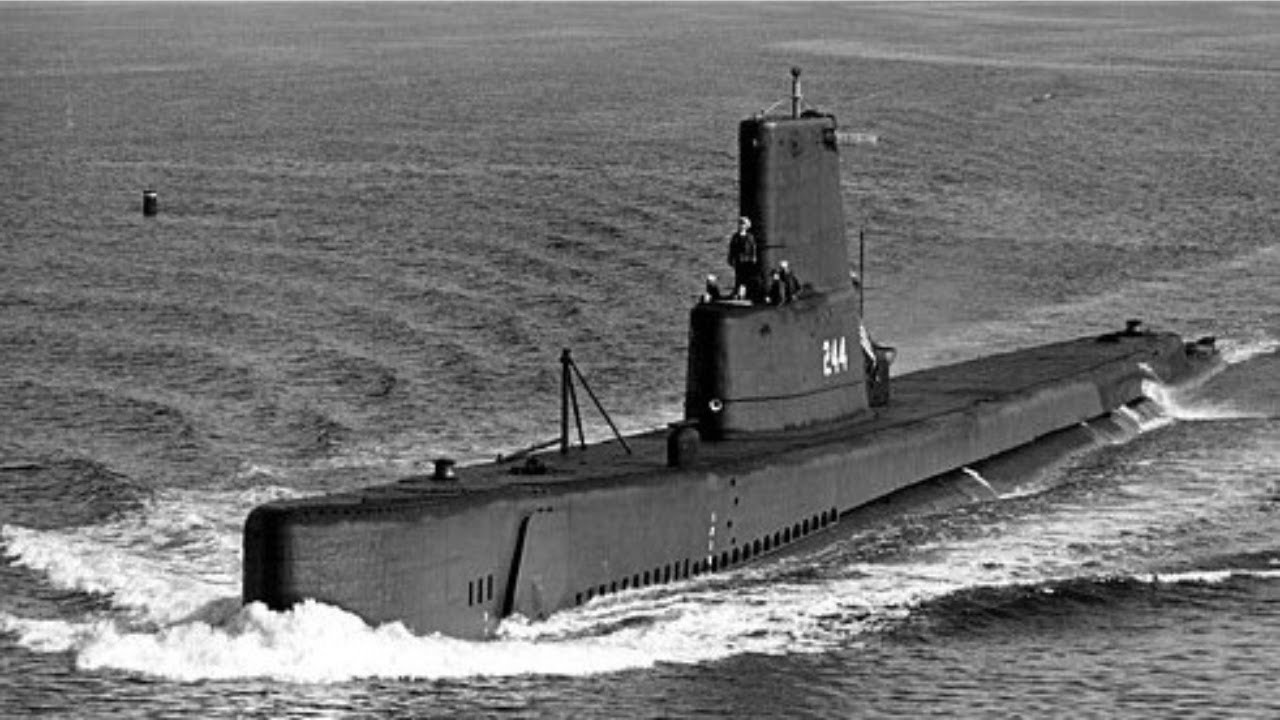
The training infrastructure, 139 air stations, 40,000 training aircraft, 100,000 instructors, represented industrial mobilization on an unprecedented scale. The Battle of the Philippine Sea, enabled by Cavalla’s intelligence gathering and punctuated by her sinking of Shokaku, effectively ended Japanese carrier aviation as an offensive force.
The Imperial Navy would never again launch a major carrier strike against American forces. Admiral Toyoda Soemu, commander-in-chief of the Combined Fleet, recognized the implications immediately. The loss of our air groups means the loss of the war. We can build new carriers, but we cannot create experienced pilots.
The American submarines have not just sunk our ships, they have destroyed our capability to fight. Japan had lost 476 carrier aircraft and 445 pilots in 2 days. The United States had lost 130 aircraft and 76 pilots, but America was producing 500 new naval aircraft weekly and training 2,000 new naval aviators monthly.
Japan was producing 100 aircraft weekly and training 200 pilots monthly, most of whom would never survive their first combat mission. Cavalla’s success inspired intensified submarine operations. By July 1944, 140 American submarines were operating in the Pacific, organized into wolf packs that devastated Japanese shipping.
The Japanese merchant fleet, which had totaled 6.4 million tons in December 1941, had been reduced to 2.8 million tons. Japan required 3 million tons of shipping to maintain minimal civilian economy. Military operations required another 3 million tons. With less than 3 million tons total available, both the economy and military were starving.
Rice imports fell from 1.4 million tons in 1941 to 200,000 tons in 1944. Oil imports dropped from 5 million tons to 600,000 tons. By late 1944, Japanese destroyers were making suicide runs from Singapore to Japan carrying drums of aviation fuel on their decks because tankers could no longer survive the submarine gauntlet.
The success of submarines like Cavalla drove continuous innovation. The Mark 18 electric torpedo introduced in late 1944 left no wake for destroyers to track. The Mark 27 homing torpedo could chase enemy ships acoustically. Radar technology advanced rapidly. The SJ radar that had helped Cavalla find the Japanese fleet was replaced by the ST radar with twice the range and resolution.
By war’s end, American submarines had radar capabilities exceeding those of most surface ships. Communication security reached new heights. The ECM Mark 2 cipher machine on Cavalla encoded messages with 150 million possible combinations. Japanese code breakers never decrypted a single American submarine operational message during the entire war.
Cavalla would complete five more war patrols after sinking Shokaku. On her third patrol, she sank the destroyer Shimotsuki on November 25th, 1944 killing the commander of Destroyer Squadron 31 and his entire staff. On January 5th, 1945, she destroyed two net tenders in a night surface attack. Each patrol demonstrated growing American dominance.
By 1945, Cavalla and her sisters operated in the Sea of Japan itself, previously considered a Japanese lake. They surfaced in daylight challenging any Japanese vessel to come out and fight. Few did. The statistics of Cavalla’s war were impressive but not unique. Six war patrols, 34,180 tons of shipping sunk.
Zero crew members lost to enemy action. This record, multiplied across nearly 300 submarines, spelled doom for the Japanese Empire. August 15th, 1945. Cavalla was on lifeguard duty off Japan when Emperor Hirohito’s surrender broadcast was transmitted. Minutes later, as if in denial of reality, a Japanese aircraft attacked the submarine, dropping two bombs that missed by 100 yards.
It was the last attack by Japanese forces on an American submarine. September 2nd, 1945. Cavalla entered Tokyo Bay for the surrender ceremony. From her deck, crew members could see USS Missouri, where General MacArthur was accepting Japan’s capitulation. Among the Allied Fleet were 12 American carriers, none of them seriously damaged during the war.
Of Japan’s 25 fleet and light carriers, 20 had been sunk, including Shokaku. Commander Cosler, promoted to captain, stood on Cavalla’s bridge watching the ceremony. He would later write, “We started this war with obsolete torpedoes and peacetime training. We ended it as the most effective naval force in history.
Every man who served in submarines can be proud that we strangled an empire.” The numbers told the story of submarine warfare’s decisive impact. Japanese losses to US submarines, 1,314 vessels sunk. 5.3 million tons of shipping destroyed. Eight battleships sunk or damaged. 11 aircraft carriers sunk.
30 cruisers sunk or damaged. 127 destroyers and escorts sunk. 60% of Japanese merchant marine destroyed. American submarine losses, 52 submarines lost, 3,506 officers and men killed. 22% casualty rate. Seven submarines lost to operational accidents, 45 lost to enemy action. Cavalla’s record, six war patrols, four vessels sunk, 34,180 tons destroyed, one presidential unit citation, four battle stars, zero crew casualties from enemy action.
Behind the statistics lay human tragedy on an enormous scale. The 1,272 men who died on Shokaku left behind families who would never know their fate. Japanese naval records were destroyed in bombing raids, leaving only partial crew lists. Many families received only a terse notification, “Died for the emperor in the southern seas.
” American submariners who survived carried psychological scars. The sounds of dying ships, the knowledge that hundreds of enemies were drowning above them, the constant fear of depth charging, these memories haunted veterans for decades. Post-traumatic stress disorder, not recognized or treated during the war, afflicted unknown thousands.
December 30th, 1969. After 25 years of service, including conversion to a hunter-killer submarine during the Cold War, Cavalla was decommissioned. Rather than scrapping, the Navy transferred her to the Texas submarine veterans of World War II. Today, Cavalla rests at Seawolf Park in Galveston, Texas, preserved as a memorial and museum.
Visitors can walk through the same compartments where Cosler and his crew made history. The torpedo room where the weapons that killed Shokaku were loaded. The conning tower, where the approach was calculated. The control room, where Cavalla dove to escape destruction. The preservation required extraordinary effort.
Volunteers, many of them submarine veterans, spent 10,000 hours restoring Cavalla to her 1944 configuration. Original equipment was located and reinstalled. The torpedo data computer, found in a Navy warehouse, was rebuilt to working condition. For decades after the war, Cavalla veterans held annual reunions. They gathered to remember shipmates, share stories, and maintain the bonds forged in combat.
As age claimed more veterans each year, the reunions grew smaller, but more poignant. At the 1994 reunion, marking the 50th anniversary of sinking Shokaku, only 47 of Cavalla’s original 80-man crew remained alive. Commander Cosler, now 82 and retired as a rear admiral, delivered the keynote address.
We were young men given an impossible task. Find and sink the enemy fleet with one small submarine. We succeeded through training, courage, and luck. But we must remember that our enemies were also brave men doing their duty. We honor our victory without celebrating their deaths. In a remarkable gesture of reconciliation, the reunion committee invited Japanese survivors to attend.
The meeting was emotional. Former enemies, now old men, sharing memories of a day that changed both their lives. Naval historians consider the sinking of Shokaku one of the most significant submarine attacks of World War II. The elimination of a Pearl Harbor veteran had symbolic importance, but the tactical impact was even greater.
Shokaku’s air group represented irreplaceable expertise that could have trained new pilots and prolonged Japanese resistance. Dr. Samuel Eliot Morison, the Navy’s official historian, wrote, “Cavalla’s sinking of Shokaku was perfectly timed and executed. Coming during the Philippine Sea Battle, it contributed to the virtual annihilation of Japanese carrier aviation.
The submarine force, more than any other element, brought Japan into submission.” Japanese historians agree. Professor Tanaka Hiroaki of the Japanese Defense University concluded, “The loss of Shokaku and Taiho in one day broke the backbone of our carrier force. Not just the ships, but the experienced crews, the maintenance specialists, the institutional knowledge.
Cavalla’s torpedoes destroyed more than a ship. They destroyed a capability we could never rebuild.” The lesson of Shokaku’s destruction resonates in modern naval planning. Aircraft carriers, despite their power, remain vulnerable to submarine attack. The vulnerability of capital ships to asymmetric threats, first demonstrated by submarines like Cavalla, continues to shape naval doctrine.
Modern carriers employ multiple escorts specifically tasked with anti-submarine warfare. Helicopters with dipping sonar patrol continuously. Nuclear attack submarines scout ahead of carrier groups. Yet submarine technology advances as rapidly as anti-submarine warfare. The cat and mouse game that began with Cavalla and Shokaku continues beneath the world’s oceans.
On July 1st, 1988, Rear Admiral Herman J. Kossler died at age 76, surrounded by family at his home in Virginia. His final public statement, delivered at the 1987 Cavalla reunion captured the essence of the submarine war. We did what had to be done. We sank ships and killed men because our nation asked it of us.
We took no pleasure in death, but we took pride in duty performed. Shokaku was our enemy, but her crew were sailors like us, brave men serving their country. We defeated them not because we were better men, but because we had better tools and used them well. The lesson of our war is not that submarines are powerful, though they are.
It’s not that technology wins wars, though it helps. The lesson is that free peoples, when threatened, can mobilize resources and determination that authoritarian regimes cannot match. We didn’t just outproduce our enemies. We outthought them, outinnovated them, and ultimately outlasted them. Cavalla sits now in Galveston, teaching new generations what we did and why.
When young people walk through her compartments, I hope they understand that ordinary Americans, farmers, factory workers, students, came together to operate these complex machines and win an impossible war. That’s the real victory, not the sinking of one ship, but the proof that democracy, when tested, prevails.
Today in the USS Cavalla Museum in Galveston, a plaque lists the 52 American submarines lost in World War II. Boats that remain on eternal patrol. Their crews, totaling 3,506 officers and men, made the ultimate sacrifice in the same waters where Cavalla triumphed. Visitors to Cavalla can see the battle flag that flew when she sank Shokaku.
Six small Japanese flags, each representing a confirmed kill. But more moving is the submarine’s memorial room, where photographs of every American submarine lost in the war remind visitors that victory came at terrible cost. The story of USS Cavalla and the sinking of Shokaku ultimately transcends national boundaries and wartime enmities.
It demonstrates how technological innovation, industrial mobilization, and human courage can combine to achieve the impossible. A single submarine, manned by 80 young Americans, destroyed one of the most powerful warships in the Japanese navy and contributed to ending the Pacific War. As the last veterans of World War II pass into history, vessels like Cavalla become our tangible links to their sacrifice and achievement.
Walking through her narrow passages, touching the instruments of war, reading the names of those who served, these experiences connect us to a time when ordinary people accomplished extraordinary things. USS Cavalla’s successful attack on June 19th, 1944 stands as testament to American submarine warfare’s decisive contribution to victory in the Pacific.
The submarine that emerged from Electric Boat Company’s shipyard as just another fleet boat became a symbol of how technology, training, and courage could overcome a determined enemy defending their homeland. The destruction of Shokaku was not just a tactical victory or strategic success. It was the physical manifestation of American industrial supremacy, technological innovation, and the skill of citizen sailors who mastered complex weapons to defeat totalitarian aggression.
In the end, that may be the most important lesson from that day in June 1944 when USS Cavalla’s torpedoes found their mark and changed the course of history forever.