Why Argentines Couldn’t Explain How British Paras Fought Without Orders D
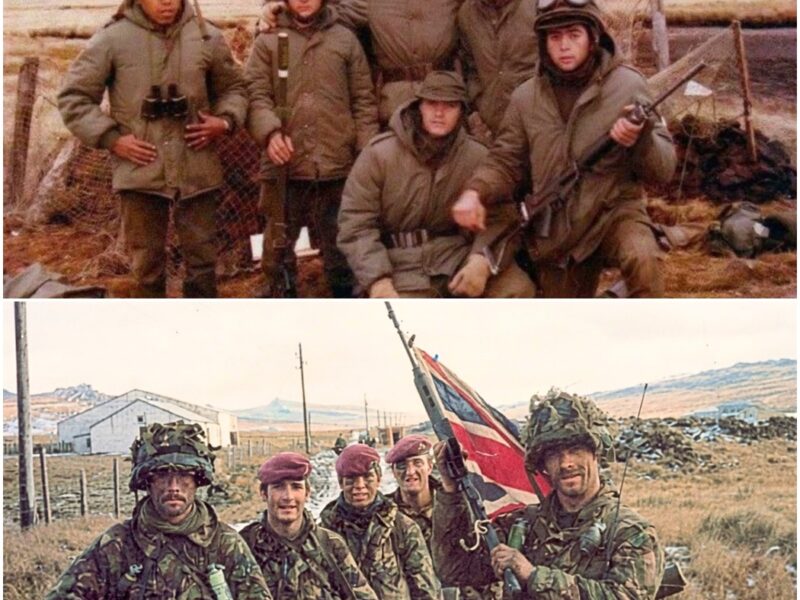
May 28th, 1982. Darwin Ridge, East Falkland. Lieutenant Colonel H. Jones lies dying in a peat gully, and by every military rulebook on Earth, the attack on Goose Green should now collapse. Yet, 450 exhausted British paratroopers keep advancing against 1,200 dug-in Argentines with no commanding officer, no fresh orders, and no clear plan.
Argentine generals would spend the next 40 years trying to explain what they saw that morning because how the hell does an army keep fighting and winning after you’ve killed the man giving the orders? It is half past 9:00 in the morning on the 28th of May, 1982. The place is Darwin Ridge, a cold, wet slope on East Falkland deep in the South Atlantic.
A shallow gully cuts across the hillside full of dark peat water and tufts of yellow grass. The wind smells of wet earth, gunsmoke, and the sharp sting of cordite. Lying in that gully is Lieutenant Colonel H. Jones, the commanding officer of the 2nd Battalion, the Parachute Regiment.
He has just charged an Argentine trench on his own. Now, he is dying on the slope, his blood soaking into the black peat. A radio crackles in the wind. A voice says four words that should, by every rule in every army’s book, end this battle. Sunray is down. Sunray means the boss. The boss is gone. And yet, across this freezing hillside, the attack does not stop.
It does not even slow. And this is the story of why the Argentines, for the next 40 years, could not explain what they were seeing. To understand how strange this was, you need the numbers. 2 Para had about 450 men on this wind-battered strip of land between Darwin and Goose Green. Facing them were roughly 1,200 Argentine soldiers.
The defenders were dug deep into trenches, hidden in gorse and rock. They had 35 mm anti-aircraft guns, big ones, turned flat and pointed straight at the British. They had 105 mm pack howitzers. They had Pucará ground attack planes buzzing overhead. Every military teacher in the world will tell you the same thing.
To attack a dug-in enemy, you need three times as many men as the defenders. Two Para had the opposite. The odds were three to one against them. 13 hours of hard fighting had already passed. Men were wet to the skin. Fingers were white with cold. Rifle magazines were running low. There were only three British guns in support, and the shells for them were being counted out one by one like coins in a thin purse.
The attack should never really have happened like this. Brigadier Julian Thompson, the officer in charge of the whole land force, had first canceled the Goose Green attack. He thought it was too costly for too little gain. But back in London, the politicians wanted a win. They wanted a flag on a map. So the order was sent back.
Go. Take Goose Green. The Argentines, for their part, were not worried. Their army had been trained for years by teachers who followed an old Prussian idea from Europe. The idea was simple. The officers do the thinking, the soldiers do the shooting. If you want to break an attacking army, you kill its officers.
Cut off the head and the body falls. That was the plan of Lieutenant Colonel Italo Piaggi, the Argentine commander inside Goose Green. His defense was built around it. Kill the leaders and the British soldiers, he believed, would drop into the grass and stop. And for one long, terrible moment, it looked like he might be right. H.
Jones was a huge character, a loud, brave, fiery man who filled every room he walked into. He had shouted his battalion forward all night. Now, he was gone. Across the world, defense reporters in London were already writing sad stories for the next day’s papers. Military watchers from the Soviet Union and from the United States, reading the early reports, shook their heads.
No textbook they had ever read told them what should come next. No plan from NATO, no plan from the Warsaw Pact covered this moment. A small British battalion, outnumbered almost three to one, without its commander, low on bullets, low on shells, pinned down in the freezing wet. The rule book said, “This was the end.
” But the rule book had never met Major Chris Keeble. Keeble was the second in command of two Para. He was ginger-haired. He spoke softly. He was a devout Roman Catholic who carried a small prayer, folded into a square, inside the pocket of his smock. He was not a showman. He was not a thrusting, shouting sort of officer.
Before the war, people had overlooked him. He had been passed over for command. Next to H. Jones with his fire and his roar, Keeble almost faded into the gray Falklands sky. Now, at half past nine on this cold morning, the battle had landed in his quiet hands. A battle he had not planned against an enemy twice his strength in weather that could kill a man all by itself.
With his best friend’s body being dragged back through the sharp hooked gorse, Keeble went down on one knee behind a low bush. Bullets snapped through the leaves above his head making small, sharp cracking sounds like dry sticks breaking. He looked down the slope. He looked at the thin lines of his men.
He listened to his radio. And something strange began to reach him through the noise. The attack was still moving. Corporals were pushing sections forward. Sergeants were shouting orders he had not given. Private soldiers were crawling up to bunkers with grenades in their cold, red hands. Nobody was waiting for him.
Nobody was waiting for anyone. The battle, somehow, was fighting itself. Far away in Stanley, Argentine headquarters was already sending worried radio messages sure that Goose Green was about to be retaken. They were wrong. The opposite was about to happen. And Keeble, crouched in the wet grass, saw the truth of it before anyone else in the world.
He did not need to give orders to win this fight. His corporals were giving them for him. That was not luck. That was not accident. That was 30 quiet years of British Army training hidden away in barracks in Aldershot and on wet Welsh hills, and it was about to step out of the shadows in front of the whole watching world on a freezing morning above Goose Green.
The secret that Chris Keeble saw on that cold hillside had a name, though most of the men fighting for it had never heard the word. The British Army called it mission command. The idea had been borrowed quietly from the Germans. The Germans had a word for it, Auftragstaktik, which simply meant task tactics.
The rule was short and almost too simple. A commander does not tell his men how to do a job. He tells them what the job is and why it matters. Then he steps back and lets them work it out. If the plan falls apart, as plans always do, every soldier already knows the goal. He does not need to wait for a new order.
He just keeps moving towards the goal any way he can. The British Army had been slowly building this idea into its bones for about 30 years. The painful lessons of the Second World War had shown that battles were chaotic things full of smoke and broken radios and dead officers. The lessons of the British Army of the Rhine sitting in cold German forests through the 1970s staring across the Iron Curtain at waves of Soviet tanks had made it stronger.
The reformers said it plainly, “If the Russians come, our radios will be jammed. Our generals will be cut off. Our soldiers will have to fight on their own. So let us train them to do it now.” Inside 2 Para, this idea had soaked in deeper than anywhere else. Every single man from the youngest Tom with peach fuzz on his chin up to the company commanders had been briefed on the whole plan for Goose Green.
Not just his little piece of it, the whole thing. Every corporal knew where every company was meant to be. Every private knew what would happen if his platoon sergeant went down. In theory, any one of them could finish the battle alone. That was not just a nice idea. It was training. The men of two para had come through P company, a 23-week course that had broken lesser men into tears.
The average Argentine soldier at Goose Green had been in uniform for perhaps 6 to 12 weeks. Many were conscripts, boys pulled from farms and city streets, taught to shoot, taught to salute, and told to wait for orders. On the British side, the corporals and sergeants were trusted like nowhere else on Earth.
British sergeants had been running sections of Wellington’s army against Napoleon, and the habit had never quite left. The NCO was the backbone. The officer gave the idea. The corporal made it happen. On that freezing morning at Goose Green, the idea stepped out of the training manuals and into the peat.
Corporal Dave Abbots of D company saw a line of Argentine bunkers pinning down most of a platoon. Men were dying behind clumps of gorse. Abbots did not wait for an order. He picked up a 66-mm rocket launcher, ran forward across open ground, and blew the bunkers apart. Nobody had told him to do it. He had seen the problem and he had solved it.
A few hundred yards away, Sergeant Barry Norman was pulling together lost men from different sections, men who had become separated in the smoke, and leading them forward as a new mixed group. Company sergeant majors, big men with years of service, were running ammunition forward under fire, not waiting for runners from headquarters to come and ask.
Everywhere on that hillside, small knots of men were fighting their way forward, and the attack was growing, not shrinking, even though the top of the chain of command had been shot away. But the cost was real. By the late morning of the 29th of May, the numbers looked grim. Many sections of two para were down to one magazine of bullets per man.
20 rounds, maybe 30. Faces were gray with no sleep. Hands shook with cold and hunger. There had been no hot food for 36 hours. Frostbite was eating at toes inside soaked boots. Three British guns were still firing, but their shells were almost gone. It was now that Keeble made a choice that some of his own officers did not like.
He decided, before launching one last costly charge, to offer the Argentines a chance to surrender. To some, this felt soft. To some, it felt wrong. Paras were meant to attack, not to talk. But Keeble was not soft. He was something else. He was a thinking man and a praying man, and he believed that a commander’s job was to win with the smallest number of dead on either side.
Up at Brigade headquarters, far from the battle, Brigadier Julian Thompson heard what Keeble planned to do. Thompson did not step in. He did not order Keeble to charge. He did not ask for a report every 5 minutes. He trusted his man. That was mission command flowing the other way from the top down.
It was one of the quiet, pivotal moments of the whole war. And most people have never heard of it. Keeble found a small sheep pen out of the wind. He knelt in it. He said his prayer, the one from his pocket, the one that had traveled across the world with him. Then he walked back out into the cold. He found two Argentine prisoners of war, both senior sergeants.
He wrote a short note. He told them that if the garrison laid down its arms, they would be treated with honor. Their dead would be buried. Their wounded would be cared for. He gave the two sergeants a white flag and sent them back across the lines into Goose Green carrying his message. The results of that walk were extraordinary.
At 10 to 3:00 in the afternoon on the 29th of May, 1982, the Argentine garrison of Goose Green marched out in full parade order. They formed up on the airstrip. They laid down their rifles in neat lines as if on a drill square. By the end of the day, 1,083 prisoners had been counted, far more than anyone had expected.
Inside the settlement, the doors of the community hall were opened and 114 Falkland Islanders who had been locked inside for almost a month stumbled out blinking into the light, weeping and hugging the paratroopers. A tired, thin British battalion with three guns, rationed shells, no hot food, and no air cover over the fight had beaten a reinforced Argentine regiment at odds of nearly one to three.
The world did not yet understand why, but the Argentines, watching their men march out, were already beginning to ask the question that would haunt them for the rest of their lives. The change that Goose Green worked on the war was not just a matter of one lost settlement. Before the battle, Argentine commanders in Stanley still believed they could hold the line.
They thought the British landing at San Carlos was a toehold, nothing more. A few hard knocks, they said among themselves, and the Tommies would be pushed back into the sea. After Goose Green, that belief cracked. Radio messages out of Stanley, later read by Western intelligence, changed their tone almost overnight.
The talk stopped being about pushing the British back. It became about holding what was left. Across the Argentine 10th Mechanized Infantry Brigade, morale began to slide. Deserters started turning up on the edges of Stanley, thin and scared, telling stories about an enemy that did not behave like any enemy they had ever been told about.
Boys who had joined up believing the war would be short and glorious began to write home asking for warm socks, dry food, and the names of priests who could pray for them. General Mario Menendez, the Argentine commander on the islands, began to plan for a long defense, not a counterattack. The war’s center of gravity had shifted, and it had shifted because 450 paratroopers had kept fighting after their boss fell.
Two weeks later, on a different hill, on a darker night, the same lesson was written again in blood. The date was the 11th of June, 1982, going into the 12th. The place was Mount Longdon, a long, rocky ridge about 600 m in length, black against the sky, west of Stanley. The job fell to 3 Para, about 450 men, attacking 287 Argentine soldiers of the 7th Infantry Regiment.
The Argentines were dug in among huge rocks that looked like broken teeth. They had heavy machine guns, night sights, and the support of 155-mm guns firing from Stanley. The temperature was about -7° C. Sleet came in sideways. Peat bogs froze over and then cracked under boots. This was not a battle you would wish on anyone.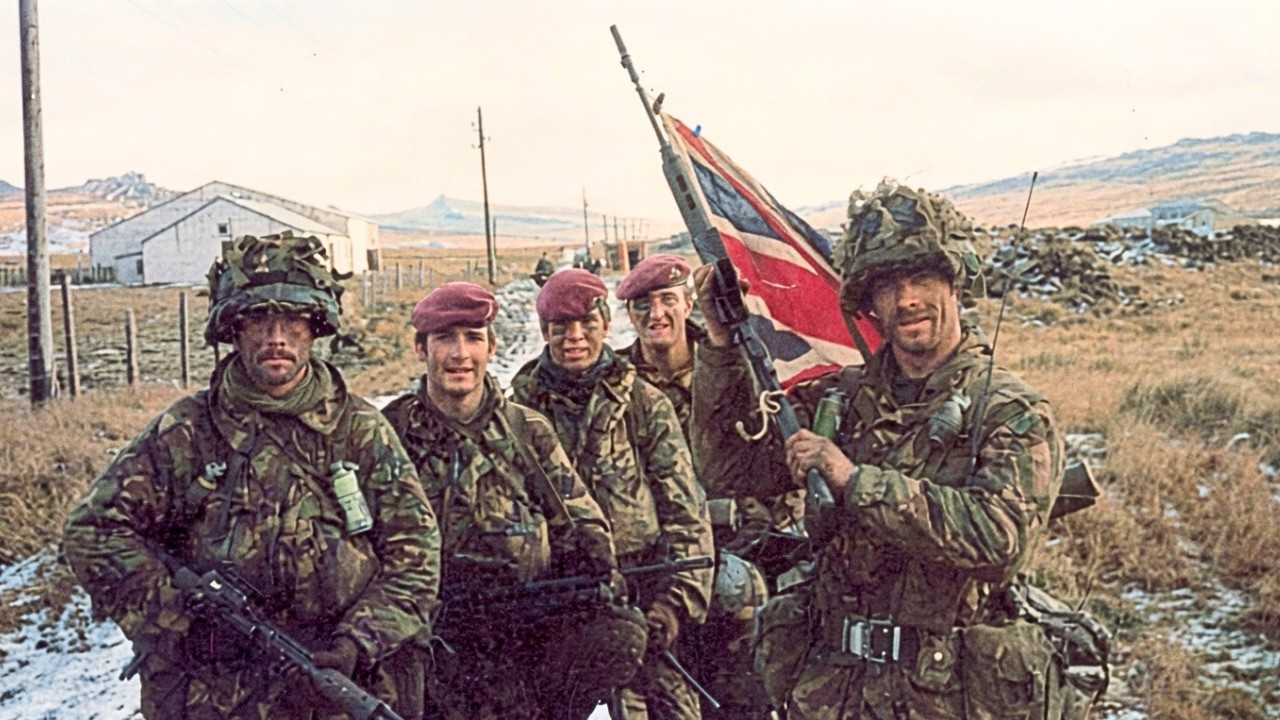
And on this cold mountain, the British idea of mission command was about to produce one of the most famous single acts of the whole war. Sergeant Ian McKay of 4 Platoon, B Company, 3 Para, was a quiet, fit, respected NCO from Yorkshire. His platoon commander, Lieutenant Andrew Bickerdike, was hit and badly wounded.
McKay’s section was pinned down by fire from an Argentine bunker at very close range. Rounds were chipping chunks off the rocks around them. The machine gun had to be silenced or the whole platoon would be wiped out. McKay did not wait for orders. He did not wait for permission. He did not call for the company commander.
He gathered three men around him. He stood up. He led them in a charge across open ground throwing grenades. The bunker fell silent. In the same moment, Sergeant McKay was killed. For that act, he was given the Victoria Cross, the highest award for bravery in the British military. It was gazetted on the 8th of October, 1982.
But Ian McKay was not alone on that mountain. Corporal Stuart McLaughlin ran a fighting withdrawal under fire. Junior NCOs, boys really, took charge of whole platoons after their officers went down. The pattern was the same as Goose Green. Kill the officer and the corporal finishes the job. On the other side of the ridge, Argentine soldiers were trying to make sense of it.
A young Argentine officer, later captured and quoted in a Buenos Aires report, said that his men kept reporting the same thing. They shot the British soldier who was pointing. Another British soldier started pointing. They shot him, too. Another stood up. It made no sense to them. Captain Roberto Herrera of the 7th Regiment, speaking years later, said that his men had told him the British kept coming forward even when we shot the ones pointing.
He did not know how to fight an enemy like that. After the war, the Argentine press offered strange explanations. The British, they said, must have been on drugs, or they were hired mercenaries, or they were secretly Gurkhas, the famous Nepalese fighters, hidden under paratrooper helmets. None of it was true.
The real answer was not in the blood of the soldiers, but in the years of training behind them. It was cultural, not chemical. It is important to be fair here. The Argentines were not cowards, not even close. At Mount Tumbledown, later in the war, the 5th Marine Infantry Battalion, a professional unit of Argentine Marines, held off the Scots Guards for hours of close, cold, brutal fighting.
Their training included decentralized initiative. Their corporals were trusted, and they fought the British almost to a standstill. This is the proof of what the war really teaches. The difference at Goose Green and Longdon was not about being Argentine or British. It was about doctrine, about training, about trust.
Close your eyes for a moment and stand on Longdon at 3:00 in the morning. Green and red tracer rounds arc across the ridge, crossing each other in slow, beautiful, deadly lines. Bullets smack into the rock outcroppings with a sharp, metallic clang, sending white sparks into the dark. The air smells sweet and sickly, peat smoke mixing with cordite.
From one shadow comes a Spanish voice crying out. From another, a Yorkshire accent shouts to keep moving. Stretcher-bearers slip on icy scree, falling, getting up, falling again. British 81-mm mortar rounds crump somewhere ahead, walking forward with the attack, lifting fountains of frozen earth. Men whisper to each other through clenched teeth, too cold to shiver.
This is where doctrine turns into flesh. Back at Brigade, and later in his writings, Chris Keeble spoke of this strange handover of command. The weight, he said, had not felt like a sudden burden. It had felt like a handover that every man in the battalion had quietly been ready to take. The Argentine lieutenant, captured on Longdon, quoted in a 1983 Argentine commission report, put it from the other side.
His men, he said, could not understand an enemy who did not need to be told what to do. The scale of what this doctrine achieved is hard to hold in your head. On the 14th of June, 1982, the Argentine garrison of Stanley surrendered. The number of men who laid down their arms reached 11,313. The British land force had never, at any moment, put more than about 10,000 combat troops ashore.
The two paratrooper battalions alone, 2 Para and 3 Para, had cost about 40 killed and about 100 wounded between them. Their enemies at Goose Green and Longdon combined had lost around 80 dead and given up more than 1,200 prisoners. The numbers were impossible by any textbook in the world. And yet there they were, marching out in long gray columns, laying down their rifles on wet Falklands grass.
The British had not just won battles. They had answered a question nobody had quite known how to ask. What is an army without its officers? The Argentines, standing in line to surrender, were learning the answer. The war ended, but the question did not. In quiet rooms across the world, serious men in uniform began to study what had happened on those cold hills.
By the late 1980s, the United States Army was building a new way of fighting called Air-Land Battle. Inside its teaching papers, the name Falklands kept appearing. Later, the American field manual on command, known as FM 6-0, was given a very particular title, Mission Command. The same two words the British had lived by at Goose Green and Longdon.
The Americans were not shy about where the ideas came from. They studied the British battles in detail. They studied the Germans before them, and they wrote the lessons down, word by word, into their own doctrine. NATO, the great alliance of Western nations, took the same path. After the Cold War ended in 1991, the alliance needed a common way to think about battle.
They chose Mission Command. They chose it because it had been tested in freezing peat at 1 to 3 odds in a war nobody had expected. Today, the words appear by that exact name in the field manuals of the British Army, the United States Army, the Canadian forces, the Australian Defense Force, and many of the modern armies of Europe.
Even old Warsaw Pact armies, rebuilt after the Cold War, quietly copied the idea. In Argentina itself, the lesson was taken to heart, though it took time. The Argentine Army had spent decades trusting officers and doubting soldiers. In 1995, Argentina ended conscription. The old system of pulling farm boys into uniform for a few short weeks was finished.
In its place came a professional army, paid, trained, and trusted. When Argentine officials were asked why, they gave a list of reasons. Near the top of that list, always, was 1982. The war had shown them, painfully, that an army is only as strong as its smallest units. A country that does not trust its corporals cannot beat a country that does.
What 2 Para did at Goose Green by instinct is now taught to young officers by careful teachers. At Sandhurst, where British officers begin their careers, cadets study Keeble’s battle. At West Point, in the hills above the Hudson River, American cadets read the same story. At Saint-Cyr in France, at staff colleges in Germany, in Australia, in Canada, the same names come up again and again.
Darwin Ridge, Goose Green, Mount Longdon, Keeble, McKay, Abols. The lessons travel further than the men who wrote them ever did. You can see the children and grandchildren of Goose Green in every recent British war. In Basra in 2003, British company commanders were operating in small, spread-out packets across a hostile city, making decisions in minutes that in 1945 would have been pushed up to a general.
In the green valleys of Helmand in Afghanistan from 2006 onward, platoon commanders and even section commanders were calling in attack helicopters and fast jets on their own authority. A 22-year-old corporal with a radio, standing in a dusty compound, could bring down thousands of pounds of guided bombs if his training and his judgment said it was right.
30 years earlier, nobody would have trusted him with such power. Today, he is the great-grandchild of Corporal Dave Apples, running forward alone at Goose Green with a rocket launcher on his shoulder. The faces change, the uniforms change, the idea does not. And what of the quiet man at the center of it all? Chris Keeble, the major who had become a lieutenant colonel during the battle he did not plan, left the army not long after the war.
He did not become a general. He did not chase fame. He rose only to lieutenant colonel. He was given the Distinguished Service Order for Goose Green, a serious and respected award, but he was never knighted. No Sir Christopher before his name. Instead, he built a second life. He became a writer, a teacher, and a speaker on leadership.
He spoke in boardrooms and in churches about values, about trust, about the moral weight of being the one who has to choose. He spoke openly of his Catholic faith, of the folded prayer in his smock pocket, of the sheep pen at Goose Green where he had knelt before sending his white flag. In some ways, he is the perfect symbol of the doctrine he lived out.
A man the system did not push to the top, who nevertheless did the work that mattered most. Sergeant Ian McKay’s story has traveled, too, in a quieter way. A primary school in Rotherham, in his home county of Yorkshire, carries his name. His Victoria Cross is in the Imperial War Museum, where small children sometimes stand in front of it, not quite understanding, but sensing that something important is behind the glass.
His family still attends Parachute Regiment reunions. The red beret is still passed around by men who never met him, but who feel they know him. Now it is time to be honest about what this story really teaches. It is not a story about British soldiers being braver than Argentine soldiers. That is not true, and it would be rude to pretend it is.
Argentine Marines at Mount Tumbledown fought with the same tough spirit. Argentine pilots flying at wave-top height in daylight against the Royal Navy flew with a courage that British admirals openly saluted. The failure at Goose Green and Longdon was not a failure of courage. It was a failure of a system that had placed all of its brains inside its officers and left none inside its soldiers.
The British victory was not about better weapons. The old 7.62 mm SLR rifle the Paras carried was heavier and older than the Argentine FAL. The victory lay in the 30 quiet years of training that had made it possible for a corporal from Aldershot to finish a battalion’s battle without being asked. The lesson reaches far beyond Falklands peat.
Look at the war in Ukraine from 2022 onward, where small drone teams, young sergeants, and tiny mobile groups have been making decisions that once belonged to generals. The side that pushes choice downward towards the people closest to the problem has been out-fighting the side that hoards choice at the top. The lesson of Goose Green is older than 1982, but it is never more alive than now.
And the idea travels outside the military, too. Hospitals where nurses are trusted beat hospitals where they are not. Schools where teachers are trusted beat schools where they are not. Businesses where front-line staff are trusted to solve problems beat businesses that chain everything to head office. Trust, training, and shared purpose beat top-down control.
Every single time the world gets messy. The Argentines in 1982 were not stupid to expect that killing H Jones would stop the attack. They were reading from the rule book almost every army on earth had written. What they met that morning on Darwin Ridge was an army that had quietly decided to write a different book. In that book, every young Tom Bergen on his aching back carried a piece of the plan in his head and the permission to act on it.
That is why the Argentine generals could not explain it. They were looking in the wrong place. They were looking at the officers when the answer had been sitting the whole time in the corporals. And the deepest lesson of Goose Green, spoken softly but clearly across the years, is this. The strength of a nation’s soldiers is not measured by the brilliance of its generals, but by the readiness of its corporals to fight on when the generals fall.