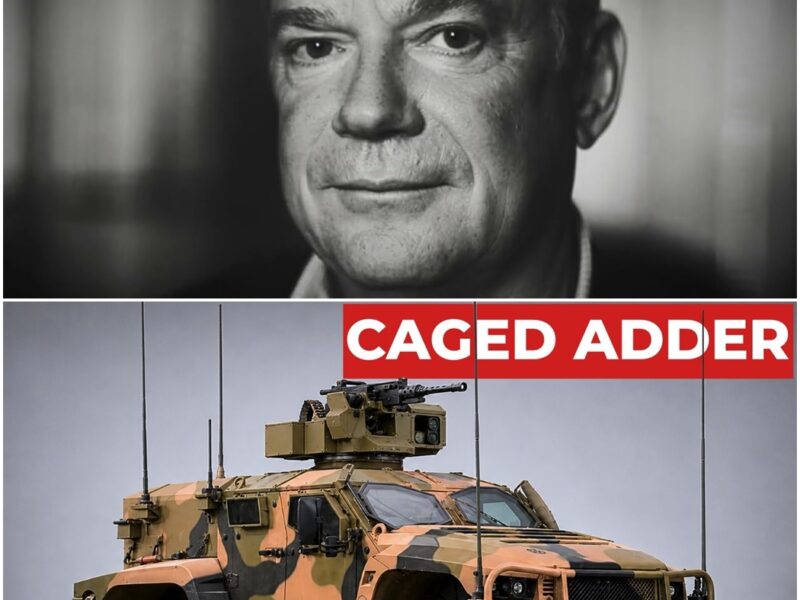
Why Australia Refused Ukraine The ‘Baby Bushmaster’ Its Soldiers Begged A Year To Get D
Canberra, the winter of 2023. A senator named David Van is being told why his country will not help. He is not a hostile witness. He is a liberal senator. He chairs the parliamentary friendship group for Ukraine, and he has spent a year watching Australia do a great deal for a country he cares about.
Bushmasters, howitzers, ammunition. He knows exactly what Australia can do when it decides to move, and he knows where the vehicles are. 600 km south of his desk in central Victoria, there is a compound behind wire at a factory in Bendigo. In rows, in the open, in the Victorian cold, sit 450 armored vehicles.
Not prototypes, not mock-ups, finished machines designed by Australians, welded by Australians, paid for by Australians. Ukraine has asked for them by name. The reasons he has given are technical, and they are reasonable. There is a fault in the braking system. The support arrangements are not mature. The Prime Minister has said publicly that the vehicles would not be effective, and that sending equipment which cannot be used at the front is a hindrance rather than a help.
Van cannot make the reasons and the compound fit inside the same head. His verdict on the official explanation is two words long. I will give you those two words later because of where they land. This is not a story about a vehicle Australia refused to send. This is a story about the difference between building a machine and finishing one.
The building is the easy half. Part one. The case against the Hawkei was not a smear. It was a good case. Serious people made it, and for most of a decade they were winning it. It begins in 2006 with a project called Land 121 Phase 4. Australia needed to replace the Land Rovers its soldiers had been driving since before Iraq, and it needed something that could survive a mine underneath it.
The first plan was the obvious one. The United States was developing a new light protected vehicle, the Joint Light Tactical Vehicle, the JLTV, and Australia paid around $43 million simply to sit at that table as a partner. Then, in December 2011, defense walked away from American program and backed an Australian design instead.
Within days, the Americans decided to press on with the JLTV after all. Australia did not go back and check the price. That one decision is the hinge of everything the critics would say afterwards, and they were not wrong to say it. The National Audit Office found that by stepping out of the American program, Defence had lost the only thing that keeps a Defence contract honest, a competitor. There was no benchmark now.
There was no second quote. There was one Australian company, one Australian design, and one Australian buyer with nowhere else to go. What the Auditor-General wrote next is one of the strangest sentences in modern Australian Defence. He wrote that he was unable to express a conclusion on whether the acquisition had been effective or whether it achieved value for money.
Pause on that sentence. The Attorney-General had issued a certificate suppressing part of the audit’s conclusion, and so the nation’s own examiner formally recorded what auditors call a disclaimer. Parliament had asked whether the money was well spent. The answer came back blank.
Material released later filled in the blank. Fighting disclosure in court, the manufacturer itself conceded the shape of the audit’s comparison. The American vehicle, it acknowledged, was comparable to the Australian one and approximately half the price. Half the price for a machine already designed, already tested, already rolling off a production line for an army many times the size of Australia’s, and then the brakes.
In November 2020, 3 months after full-rate production began, Defence grounded the fleet, an antilock braking fault. Hundreds of brand-new vehicles parked. A fix was announced the following July. And then, in November 2022, a second and different brake problem was identified. The vehicles were banned from public roads.
A speed limit of 40 km an hour was imposed on a machine built to do 100. The engine supplier had gone insolvent in Austria, costing close to a year. Marcus Hellyer of the Australian Strategic Policy Institute put it flatly in print. The program, he wrote, had endured nearly a year of production delay when its engine supplier went into insolvency.
So, look at the file as it stood in the autumn of 2023, a decade of development, a cost the auditor could not bless. Arrival at half the price, brakes that had failed twice. That assessment was not insane. It was based on the data they had. A department that cannot demonstrate value for money on a vehicle whose brakes have failed twice is a department with a genuine problem.
And a soldier in a war does not want a project, he wants a truck that starts. The model was sound. It held for 10 years. It held until the morning a country at war asked for the truck by name. Part two. Here is what they built. 7 tons empty. A V-shaped hull, a single welded shell shaped to lift and split the force of a mine beneath it rather than absorb it.
A 268 horsepower Steyr diesel, armor that comes off and goes back on in modules reconfigurable by a crew of two in under half an hour, so the same machine can be stripped light for a road move and built heavy for a mine one. And then the number that mattered most to the people who wanted it.
7 tons is light enough to be carried by a helicopter. The Bushmaster at 15 tons never could be. This vehicle was drawn from the first sketch to go underneath a Chinook or inside a Hercules, which means it can be put down on the far side of a river that no longer has a bridge. They named it for a snake as they had named its older sister.
Acanthophis hawkei, a death adder of the Barkly Tableland, itself named after a former Australian Prime Minister. There is a great deal of Australia in that one fact. But the feature Ukraine actually asked about was none of these things. It was the wiring. The Protected Mobility Vehicle Light was built around a heavy electrical architecture.
A power system sized not for headlights, but for equipment, command systems, electronic warfare, sensors, radios that eat current for a living. In 2015 that looked like an expensive luxury. By 2023 it looked like prophecy. Ukraine’s ambassador to Australia, Vasyl Myroshnychenko, spelled it out to an Australian newspaper.
“The main advantage of the vehicle,” he said, “would be as a mobile launch platform for the Norwegian surface-to-air missile system, NASAMS, a system already in Ukrainian service, a system already knocking down the things that were falling on Ukrainian cities, not a truck.” A power station that drives.
The request came on May 28th, 2023, in public, on social media, from Ukraine’s Defense Minister, Oleksii Reznikov. “In addition to tanks,” he wrote, “Ukraine would be honored to receive the Australian Hawkei, and it could prove invaluable during the counteroffensive.” Kyiv’s Defense Ministry followed it with a video set to AC/DC, cheerfully announcing that since Australia had given them Bushmasters, the Ukrainian army now had a new crush.
A government at war made a music video to ask for a truck. That is how badly they wanted it, and they were not guessing. They knew the hull. They knew what it did underneath a mine. They knew because 120 of its older sisters were already in the mud. A Ukrainian soldier, identified only as Petro, told a Western research institute what the Australian shell does when it finds an explosive.
“Western equipment saves people,” he said. “The Bushmaster could take a mine strike with the crew alive. There are concussions, yes, but people survive.” That is the entire argument in one sentence from a man who had been sitting inside it. The answer from Canberra was courteous, and it was final. The Prime Minister, Anthony Albanese, told the national broadcaster the vehicles would not be effective, and that it was no good sending equipment which could not be used on the front line because it would create a hindrance rather than a help. The Defense Minister, Richard Marles, wrote it down more precisely in reply to a member of Parliament. The Hawkei was not yet accepted into operational service. Ongoing brake issues and immature support and sustainment systems made it unsuitable for gifting to Ukraine at this juncture. At this juncture, Ukraine asked again, and again, and again. What the people at Bendigo built, and what Kyiv spent a year asking for, is the thread of everything that follows. But first, if this deep dive into Australian engineering is holding you, hit subscribe. It costs nothing and it
helps the channel grow. Now, the record, part three. To understand why Australia had 120 Bushmasters to give away in the first place, you have to go to Bendigo. It is a gold rush town in central Victoria, 90 minutes north of Melbourne, and it has been making things for the Australian military for around 70 years.
The line runs back to a wartime ordnance factory. One of the places that first put large numbers of Victorian women onto a factory floor. Today, the plant employs roughly 300 people directly on protected vehicles. More than 1,300 Bushmasters have come out of its doors. If you were standing at that gate on an ordinary Tuesday morning, you would see nothing that looks like national strategy.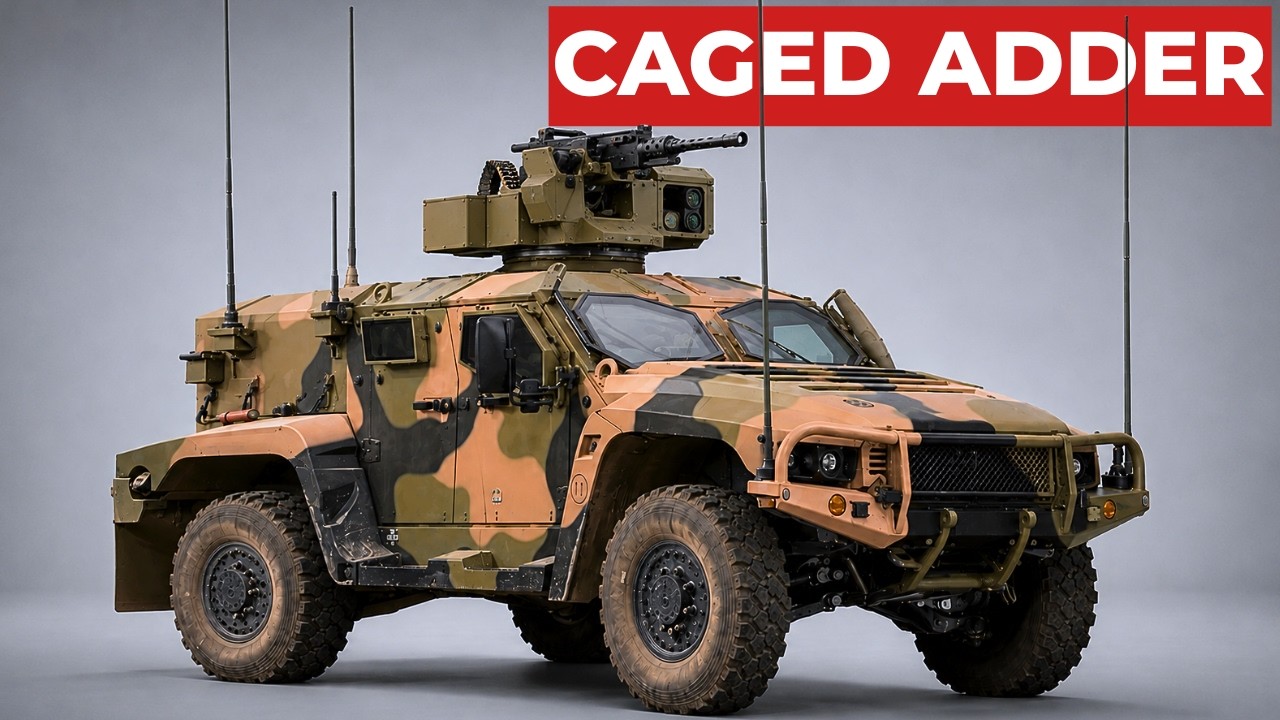
You would see a shed, a car park, men and women in high-visibility vests walking in from the street with lunchboxes. That shed is the reason a president got an answer. Almost nobody outside Australia knows the next part. The Bushmaster was very nearly canceled. In its first life, it was a troubled, unloved project derived in part from an Irish design, passed between companies, and by December 2000, it had stalled so badly that voices from every side of Australian politics were calling for it to be scrapped as a dud. It survived because a defense minister, Robert Hill, and a general named Peter Cosgrove put their names on it and refused to let it die. Then Iraq happened. Then Afghanistan happened. In Afghanistan, 31 of them were damaged beyond repair. The figure Australians remember is not the vehicles. It is the crews who walked away from them. The dud became the vehicle soldiers came home in. The Dutch bought it. The British bought it. Japan bought it. New Zealand, Fiji, Jamaica, Indonesia. The machine Australia had been embarrassed by became the machine
Australia was known for. Hold the timeline in your mind because it is the whole point. In 2000, this was a failure. In 2022, it was the thing a president asked for by name from the floor of the Australian Parliament. On March 31, 2022, Volodymyr Zelenskyy spoke to Australian politicians by video link.
Australia, he said in translation, had wonderful Bushmaster armored vehicles that could significantly help Ukraine. Better that they do something for common freedom, he suggested, than sit gathering dust on Australian soil. Within days, the answer was yes. The Prime Minister of the day, Scott Morrison, said Australia would send them and fly them over in Globemasters.
20 at first, eventually 120 across five tranches in the bellies of Air Force transports. That is what a factory buys you, not vehicles, permission. And now, the money. The Hawkei contract was worth $1.3 billion for 1,100 vehicles and their trailers. That is the figure the order to general could not bless, and it sits underneath every criticism in this story.
Set it against the alternative. The American vehicle, the JLTV, was comparable, and by the manufacturer’s own concession in court, approximately half the price. On a spreadsheet, that is where the argument ends. But ask the next question. Ask why it was half the price. It was half the price because somebody else had already paid to finish it.
Because an army many times the size of Australia’s had absorbed the development, the testing, the failures, the recalls, the decade of quiet humiliation. The Americans were not cheating anybody. They were selling a finished thing. Finished things are cheap because the finishing has already been paid for in someone else’s currency, out of someone else’s 10 years.
Buy the finished vehicle and you own vehicles. Build your own and you own a line. The building is the easy half. The finishing is the invoice. Australia was paying that invoice in public, in audits, in grounded fleets and suspended brakes, and it hurt, and it was embarrassing. But it was being paid on Australian soil, in an Australian shed, by Australian hands, which is why, when a country at war rang the doorbell in 2022, there was something behind the door.
The critics could not answer that, and the reason is structural. You cannot audit a capability you did not buy. There is no line item in any budget paper ever written for the vehicles you were able to give away because you happen to own the factory that made them. A spreadsheet can price a truck. It cannot price a shed in Bendigo on the day a president calls.
If you have driven one, built one, or worked that line, I would like to read what you know in the comments. This story belongs to the people in the high-visibility vests as much as it belongs to anyone in Canberra. Part four. Here is the part that is hard to say. In July 2024, Australia’s Minister for Defense Industry, Pat Conroy, announced that the brake problem had been solved.
The manufacturer had found the cause. A remediation program was rolling across the fleet, and the results in the field, he said, were very positive. The brakes were fixed. By then, the counteroffensive Reznikov had asked for the vehicles for was over, and it had fallen well short of what it was meant to achieve.
The window in which 100 of these machines, or 50, or 20, might have carried a mobile air defense launcher up a Ukrainian road had closed. It closed while they were still standing behind wire in Bendigo, and then the war changed again in a direction that reads, in hindsight, like an accusation. The drone arrived. By 2024, the most dangerous thing above a Ukrainian road was not artillery.
It was a cheap first-person view quadcopter flown by a 19-year-old in a headset from a tree line 2 km away, and the counter to it, everywhere, on every side, turned out to be electronic. Jammers, detection sets, electronic warfare boxes bolted onto vehicles, equipment that eats power. Australia noticed. Of course, Australia noticed.
Canberra committed to modernizing its own Hawkei fleet, a program reported in the Australian defense press at around $450 million, and to a next-generation Bushmaster fitted for remote weapon stations and directed energy weapons. Conroy said the goal out loud. The intention, he explained, was to mount lasers on these vehicles to destroy drones.
And obviously, he added, you need plenty of juice to do that. Plenty of juice. Read that line again. Then read what Ukraine’s ambassador had said 2 years earlier about wanting the vehicle as a mobile launch platform for an air defense system. It is the same sentence written twice.
One of them was a request that was refused. The other was a plan that was funded. In September 2025, the last of the 1,100 was handed over to the Royal Australian Air Force. The program was complete. Every single vehicle went to the Australian Defense Force. Not one went to Ukraine. Now, the fair verdict on the people who said no, because they are owed one.
They were right that the brakes had failed twice, and that a vehicle banned from public roads in its own country is not a gift you send into a war. They were right that the support system was thin, that the spares pipeline barely existed, and that a handful of these machines in Ukraine would have demanded a logistics tail Australia had not yet built.
One official put it starkly to a newspaper, to keep them running over there, Australia would have had to move the entire supply chain to Ukraine. They were right about all of it. What they were wrong about was what the money had bought. It was not a truck. It was not a contract. It was a production line.
And a production line is the only defense asset in the world that can answer a telephone. Which brings Senator David Van Back, because his two words were an argument, not an insult. Told the vehicles could not go. Knowing 450 of them were parked behind wire in Bendigo. Knowing the braking fault bit hardest at highway speed, and not at the crawl of a field track.
He called the official explanation complete bollocks. He may have been unfair to the engineers. He was not wrong about the compound. Part five. So, how does a country give away 120 of the big one, and not a single one of the small one? The answer is not the one the headline wants, because one of them was finished and the other one was not.
Finishing is not a stage of manufacturing. It is a stage of war. The Bushmaster was finished by Iraq and Afghanistan. By 20 years of mines and dust and mechanics swearing at it in the dark, by export orders that dragged a global spares network into existence, by the sheer accumulated weight of evidence that the thing worked.
The Hawkei had been finished by nothing at all. It had been finished by an audit. Their metric was value for money. Australia’s metric, whether Australia understood it at the time or not, was permission. And the ledger has to be honest. The auditor was right. Defense walked out of the American program, never went back to check the price, and a buyer with no alternative is a buyer with no power. That failure was real.
It cost money. No amount of sovereign romance erases it. The brakes were right, twice, and the vehicle is not a miracle. A 7-ton light vehicle in a drone war is still a 7-ton light vehicle. A hull that beats a mine underneath it does not beat a munition that comes down through the roof.
Anyone selling you this machine as the thing that would have changed the war is selling you something. But it would have carried a launcher. It would have carried a jammer. It would have carried the electronic weight of a war that nobody in Bendigo had imagined when they drew the wiring diagram in 2015. And it could only have done that because 1,100 of them at 1.
3 billion dollars had kept a shed in central Victoria alive long enough to matter. So, the reverence goes where it belongs, to the men and women on the Bendigo line who built the vehicle that Ukrainian crews are alive because of, and who then built its younger sister, and watched her sit. To the crews, Australian and Ukrainian, who found out in the worst possible classroom what a shaped steel floor is actually worth.
To Vasyl Myroshnychenko, who asked politely, in a newspaper, for the thing his city’s needed. To David Van, who said two rude words in defense of a factory he did not own. And to the death adder that never got its war. The building is the easy half. Australia learned that the expensive way in public over 10 years.
The lesson is parked in depots across a continent right now. Brakes fixed, wiring waiting. Next time, the Bushmaster’s own trial. The vehicle Australia called a dud and the men who refused to let it be canceled. Subscribe if you want to be in the room when that record is read.