Why Did the Royal Family Erase This Woman From History? D
Westminster Abbey, 20th November, 1947. The official wedding photographs went around the world. Philip in his naval uniform. Elizabeth in her Norman Hartnull gown with its 10,000 seed pearls and embroidered York roses. The full bridal party arranged for a country that badly needed something to celebrate after 8 years of war and its aftermath.
BBC radio broadcast the ceremony to 200 million people. Newspapers from London to Sydney ran the image across their front pages. Count Phillip’s sisters. He had four. Margarita, Theodora, Cecilia, and Sophie. Four women who were a large part of whatever childhood stability he ever had.
By November 1947, three of them were alive. Not one appears in the formal group photographs Buckingham Palace released. Their names weren’t recorded in the official accounts of the occasion. They had no ceremonial role, no official standing, no acknowledged place in the record of the most photographed wedding in British history.
The palace has forgotten royal women before. There is Princess Victoria of Wales, fourth daughter of Edward IIIth, born 1868, died 1935, who never married, who was kept at home by a mother who seemed to need her more than any suitor did. Her erasure is real, but it’s soft, postumous, ambient, the kind of forgetting that happens to a woman who leaves no heirs and holds no office.
She appeared in official group portraits at Jubilees and coronations. She faded after death, not before it. Philip’s sisters are something harder. Their erasure has a before and an after you can point to in the calendar. It has a paper trail and the shape of what was removed corresponds precisely to the thing the most image conscious institution in the world most needed you never to see.
To understand what was decided and why, you have to go back to who they were. Philip of Greece in Denmark was born on 10 June 1921 on the dining room table at Molrao, a villa on the Greek island of Corfu. He was the fifth child and the only son of Prince Andrew of Greece and Princess Alice of Battenburg. his four sisters, Margarita born 1905, Theodora born 1906, Cecilia born 1911, Sophie born 1914, were 7 to 16 years his senior by the time he arrived.
18 months after his birth, Greece collapsed. His uncle, King Constantine I, commanding the Greek forces in the Greco Turkish War, was blamed for the defeat and forced to abdicate. The new military government arrested Prince Andrew and several others, tried them, and executed the commanding general and five politicians.
Prince Andrews life was considered in danger. A British naval vessel, HMS Calypso, evacuated the family. Philip, barely old enough to walk, was carried to safety in a fruit crate. They settled in Slow, a suburb of Paris, in a house lent to them by Prince Andrew’s wealthy sister-in-law, Princess George of Greece.
What followed was the parapotetic hand-to-mouth existence of exiled royalty, financially dependent on the generosity of relatives, traveling on Danish passports after Greece stripped them of their citizenship in 1924. Princess Marie Bonapart financed the children’s education. Lady Louise Mountbatton sent the girls her used clothes.
Philip’s mother, Princess Alice, suffered a breakdown in 1930 and was committed to a psychiatric clinic in Croling in Switzerland, where she remained for 3 years, tearing up photographs her daughters sent her during fits of rage. His father withdrew to Monte Carlo. What was left was the four sisters.
Over the early 1930s, one by one, they married German princes and moved to Germany. Theodora married Berthold Margrave of Boden in August 1931. Margarita married Gotfrieded, 8th prince of Hoen Loa Langenberg in April 1931. Cecilia had already married Gayorg Donatis, hereditary grand duke of Hessa at the Nuya Pala in Dharmmstat in February 1931.
A double Orthodox and Lutheran ceremony that drew guests from across Europe. Sophie, youngest of the four, had married first. In December 1930 at 16, she wed Prince Kristoff of Hess in twin ceremonies at Friedri’s Hoff Castle in Croninberg, Imannonis. Philip was then housed in his sister’s households during school breaks.
In 1933, he was sent to Schula Schllo Salom in Germany. The school was owned by Theodora’s husband, Bert Hold’s family, which saved on fees. He lived inside the German world his sisters now inhabited. He spoke German. He ate at their tables. He was the small brother who’d grown up with the four of them as the nearest thing to a fixed point his childhood had.
Cecilia was by multiple accounts, including Philip’s own later correspondents, his favorite. She had been described by her maternal grandmother, the daager Martianess of Milford Haven, as the prettiest of the four sisters. She was warm where their upbringing had been unstable, constant, where the family had been scattered. She maintained a devoted correspondence with their institutionalized mother when Alice had been too ill to see any of them in person, sending photographs of her children, even when Alice, in her rage, tore them up. These weren’t obscure women living below public notice. In the summer of 1928, Cecilia made her social debut in Britain, aged 17, attending her first ball at the Earl of Elmir’s Bridgewater House, appearing at Cow’s Week on the aisle of White and then spending days as a personal guest
of King George V at Balmoral. Formal studio portraits of Philip alongside all four sisters circulated in press archives across the 1920s and 1930s. The Illustrated London News tracked the sisters marriages and movements throughout the decade. Their mother, Princess Alice, was a great granddaughter of Queen Victoria, connecting the family directly to the British bloodline.
When Cecilia died in 1937, the British press identified her specifically and immediately as Prince Philip’s sister. British readers were assumed to know exactly who she was. Before 1937, the record of this family is clear. Four sisters, prominent, present, photographed in the story. Then came the spring of that year, and the story began to change.
On 12th of May 1937, Cecilia attended the coronation of George V 6th at Westminster Abbey. She was listed among the personally invited foreign royals as the hereditary grand duchess of Hess. Her name appears in the official documentation of the guest list present and formally received as a member of the extended European royal family. She was 25 years old.
11 days earlier on 1st May 1937 Cecilia and Gayorg Donatus had joined the Nazi party. So had Margarita and Margarita’s husband Gotfrieded 8th prince of Hoenla Langenberg both on the same date both in the same mass intake. This wasn’t a sudden conversion for any of them. The drift toward the Nazi regime had been moving through Philip’s extended family for years.
Sophie’s husband, Prince Kristoff of Hess, had joined the Nazi party in February 1932 and the SS around the same time. By 1937, Kristoff held the SS rank of SS Oberfurer, a senior rank in the Algamina SS, roughly equivalent to a senior colonel. Jonathan Petropolis in his 2006 study Royals and the Reich published by Oxford University Press describes Kristoff as one of the highest ranking state officials in the province of Hess Nassau.
He served at Hitler’s headquarters. He ran Luftvafa intelligence operations. He wasn’t a peripheral sympathizer drawn in by social circumstance. He was part of the administrative machinery of the Third Reich. The pathway that brought him there is documented. In October 1930, his cousin, Prince August Wilhelm of Prussia, son of Kaiser Wilhelm II, introduced Kristoff to Herman Guring.
Guring became a close friend. Through Guring, Kristoff and Sophie met Hitler before he took power. Sophie’s own account of that meeting survived in a previously unpublished memoir discovered by the makers of a Channel 4 documentary broadcast in July 2015. Her son, Prince Rainor von Hessen, read Passages aloud on camera.
Guring, she wrote, was very enthusiastic about the Nazi party and urged her and her husband to meet Hitler personally. She explained that as Germany was going through hard times, they were interested to hear about the improvements his party was planning. Then describing Hitler himself, she wrote that although she and Kristoff changed their political views fundamentally some years later, they had been impressed by this charming and seemingly modest man and by his plans to change and improve the situation in Germany. A photograph from Gurin’s wedding in April 1935 shows Sophie seated opposite Hitler at the head table. Hitler appears in the same frame there as Gurin’s witness. Sophie is smiling. By May 1937, three of
Philip’s four sisters were Nazi party members. Sophie’s husband was a senior SS officer who had served at Hitler’s headquarters. Theodora’s husband, Berthold, fought for Germany throughout the war. Historical accounts document that Margarita and Godfrieded used their family connection, specifically their connection to the future consort of the Queen of England to attempt to promote German interests in Britain during the late 1930s without success.
Three of Philip’s four sisters had joined the Nazi party in that spring. Their youngest brother was on a trajectory toward becoming the consort of the future queen of England. 6 months after Cecilia attended the George V 6th coronation, she was dead. On 16th of November 1937, Cecilia, her husband Gayorg Donatis, their sons Ludvig, aged six, and Alexander aged 4, and Gayorg’s mother, Grand Duchess Eleanor, boarded a Sabina Junker’s Ju 52, in Frankfurt.
Their destination was London. They were traveling for the wedding of Gayorg’s brother, Prince Ludvig of Hessa, who was marrying Margaret Campbell Gettis, daughter of a British diplomat in a ceremony scheduled for London on the 20th November. Cecilia was 8 months pregnant with her fourth child.
The aircraft flew northwest toward Belgium. Over a fog had come in from the North Sea, thick and low. The plane had already been diverted from Brussels due to the weather. The pilot was attempting to land at Oend. Near the approach, in poor visibility, the aircraft struck a factory chimney on the edge of the city.
It came down in flames. There were no survivors. Firemen working through the wreckage found the remains of a newborn beside Cecilia’s body. The working conclusion, never formally contradicted, was that she had gone into labor during the flight. The pilot had diverted attempting to reach the runway. He didn’t make it.
Cecilia died in the wreckage of a burning aircraft on the outskirts of Ostend having given birth somewhere over Belgium. She was 26 years old. Also killed in the crash, Gayorg Donatis, Grand Duchess Eleanor, Ludvig, Alexander, a lady in waiting, and the best man. Johanna, the surviving daughter, aged 1, had stayed behind in Dharmmstat.
She was adopted after the crash by her uncle, Prince Ludvig, and died of menitis in 1939. Philip was 16 in Scotland at Gordon when his headmaster called him to his study and told him. He later wrote that he had the very clearest recollection of the profound shock with which he heard the news of the crash and the death of his sister and her family.
He attended the funeral in Dormstat. The church was packed. The procession through the streets was photographed. The photographs were published. What those photographs show is documented in multiple sources, including a description published by Tatler. Philillip, flanked by grieving relatives, all wearing distinctive Nazi uniforms, one clad in the uniform of the brown shirts, another in full SS regalia.
Philip, 16 years old in dark civilian clothes, follows his sister’s coffin through the streets of Dharmmshot alongside men in the uniform of a state that would shortly be at war with Britain. The crash received extensive coverage in the British press. Cecilia was named specifically as Philip’s sister.
British readers were expected to know the connection. The photographs were published. The evidence was in the public domain. a young man at a Nazi funeral mourning a Nazi surrounded by SS officers. That young man would marry the heir to the British throne 10 years later. Before building the case, it’s worth pausing on the strongest innocent explanation because it deserves to be taken seriously before being dismantled.
Philip’s sisters were never really part of the British royal family to begin with. They were Greek and Danish princesses who married German nobles and moved to Germany. They held no British titles. They had no British residency and no British working role. As foreign resident relatives with no formal connection to the British system, their near absence from the court circular would be unremarkable regardless of any active management.
The gap might simply reflect status rather than suppression. This argument has real force and it covers a significant portion of the timeline naturally. And then Britain declared war on Germany on 3rd September 1939. From that moment, Philip’s sisters were legal nationals of an enemy power. Enemy alien legislation classified German and Austrian nationals accordingly.
The sisters were in Germany and couldn’t have visited Britain even if they’d wanted to. Their complete absence from British official life between 1939 and 1945 required no decision. Compulsion did that work automatically. But the innocent explanation starts fraying after May 1945. The war ended. The legal barrier fell.
The sisters were no longer enemy nationals. They were citizens of a defeated occupied country, rebuilding their lives in the ruins of postwar Germany. Philip had served with distinction in the Royal Navy, been mentioned in dispatches for the Battle of Cape Matipan, and commanded during the Allied invasion of Sicily.
By summer 1946, he had asked King George V 6th for his daughter’s hand. The engagement was announced on 9 July 1947. The wedding took place on 20 November 1947, 26 months after VE Day. The wartime argument covers 1939 to 1945. It does not cover November 1947, and it’s in the space between legal necessity and personal decision that the forensic record gets genuinely interesting.
The Court Circular has been published daily since 1803. Every morning it appears in the Times, the Daily Telegraph, and the Scotsman. A meticulous list of every public engagement carried out by the monarch and senior working royals. Audiences given, hospitals opened, handshakes recorded.
The Lord Chamberlain’s office controls what enters the record. Prince Harry’s memoir, Spare, describes it as something the royals themselves understood to be managed. Not a neutral register of everything that happened, but a curated document of what the institution chose to put in writing. The palace had used it as a tool of selective record before.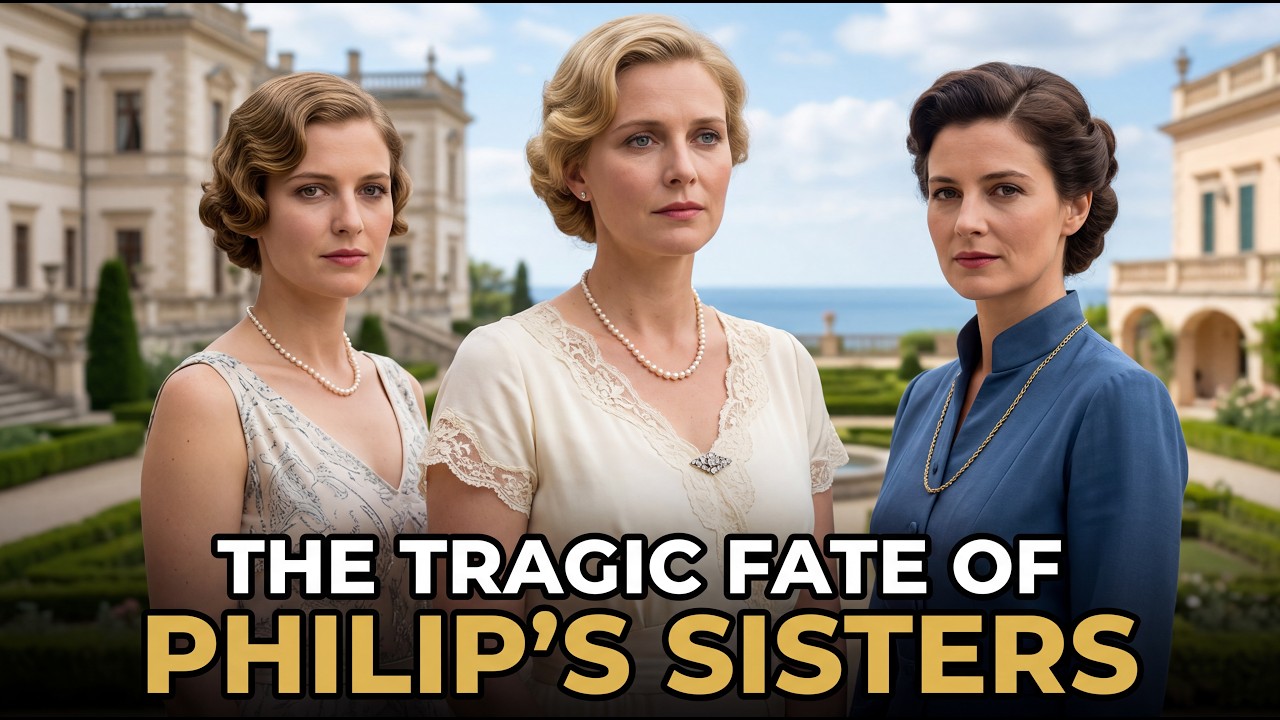
When Edward VIII married Wallace Simpson in June 1937, the wedding of the man who had been king of England 6 months earlier, it wasn’t recorded in the court circular. The abdication itself, one of the most significant constitutional events of the century, produced no court circular entry.
The palace’s official daily chronicle simply omitted it as though it had not happened. If the machinery could write a king’s abdication and remarage out of the daily record, excising a few German married sisters in law from the count of official occasions required considerably less institutional effort. The Duke of Windsor provides the direct institutional precedent.
Edward VII’s Nazi sympathies are extensively documented. His visit to Hitler at Beriscotten in October 1937 was photographed. He was subsequently monitored by British intelligence and he was posted to Nassau as governor of the Bahamas during the war partly to limit his ability to act on those sympathies. After his abdication, his name fell out of official royal life.
The palace managed his postwar public existence as a carefully maintained distance from the institution he had led. The sister situation was less prominent. They were never the monarch. They never abdicated, but structurally identical in the key respects. German connections, Nazi proximity, a postwar need to present a clean narrative to a British public that had just lost 450,000 people fighting Germany.
The machinery that managed the Duke of Windsor also managed the sisters. It’s the same institution using the same tools to determine which parts of a complicated family story the public would see. Edward Owens’s 2019 study, The Family Firm, published by the University of London Press, presents what he describes as the first major historical analysis of the transformation of the royal household’s public relations strategy in the period 1932 to 1953.
From George V’s first Christmas broadcast through the 1953 coronation, the palace was consciously constructing what Owens frames as a new media monarchy, working with the Church of England and the press to manage a family centered image, projecting roles of domesticity and duty. The monarchy was professionalizing its image management in exactly the years when the sister’s Nazi connections became a political liability.
and the 1947 wedding required a specific decision about their place in the official story. The capacity for this management wasn’t improvised. It was being built deliberately at the moment it was most needed. The most clearly documented proof object is the 1947 wedding itself. The formal group photographs released by Buckingham Palace and reproduced across the world’s press contain no trace of the three surviving sisters.
The historical literature is explicit about the logic. The book Thorns in the Crown directly connects Philip’s sisters to his public relations problem in the late 1940s. It was no help that four of Philip’s sisters had married German princes. This is framed as a documented political liability, not a casual footnote.
Queen Elizabeth II, an icon of modern monarchy, attributes the sister’s exclusion from official roles to postwar sensitivity, a phrase that describes a calculated decision, not an administrative oversight. Postwar sensitivity isn’t the same as a legal prohibition. Someone made a judgment about what 1947 Britain would tolerate and the sisters were on the wrong side of it.
What makes this more than routine political caution is the contrast with what came before. The last time one of Philip’s sisters had appeared at a British state occasion was 12th of May 1937. Cecilia at the George V 6th coronation listed by name in the official guest record. That was the before. 20 November 1947 was the after.
10 years separated those two moments. One war, three Nazi party memberships, one SS Oberfurer brother-in-law who had served at Hitler’s headquarters, and one specific decision made around a specific wedding that determined the shape of the official record for the next three decades. By 1953, the exclusion had begun.
Carefully, quietly, to ease, Tatler published a photograph of Princess Margarita of Hoen Loa Langenberg at the coronation of Elizabeth II in Westminster Abbey, captioned explicitly as Philip’s sister. She was there in the building 8 years after the war, reintegrated into the congregation. But being present in the abbey isn’t the same thing as being named in the official record, acknowledged in the formal photographs, incorporated into the story the institution was constructing of itself.
You can sit in a pew and still not be there as far as permanent history is officially concerned. The gap between attendance and existence in the official narrative is exactly where the eraser lives. The question of whether there was a specific dated formal decision to exclude the sisters, a memo, a conversation, a written instruction, is precisely what the royal archives would answer if you could gain access.
The royal archives at Windsor Castle hold the private papers of the royal family. They aren’t subject to freedom of information legislation. Access is granted at the discretion of the keeper of the royal archives on behalf of the monarch. In June 2022, files relating to the royal family that had been accessible at the National Archives were actively reclosed.
A tribunal was convened and held in November 2022. A decision came in 2024. The files remain closed. The documents that would most directly address whether there was a conscious coordinated decision to manage the sisters out of the official narrative are held in a building the public can’t enter controlled by the institution whose conduct is under examination.
Petropolis was permitted access to both the royal archives and the Hessen family private papers for royals and the Reich. Philip cooperated directly, answered questions, provided access. The Mail on Sunday described it as Philip breaking 60 years of silence on the subject to speak with an American historian.
The book was published in 2006 by Oxford University Press. The history was real. Philip engaged with it through a controlled academic channel and the institution continued telling its simpler, cleaner story for the cameras. That selective cooperation, private engagement with the historical record, public management of the official one is itself a sophisticated form of narrative control.
Sophie lived until 24 November 2001. After the war ended, the immediate material reality was stark. Her first husband Kristoff had died in October 1943 when his Luftvafa aircraft went down over Italy. She was widowed at 29 with five children in a Germany under Allied occupation with no income. The sequestration of Kristoff’s property by Allied authorities lasted until 1953.
American soldiers during the occupation of Friedri’s Hoff Castle took her jewelry. She was reduced to dependence on relatives for basic support. She remarried in April 1946. Prince George William of Hanover. George William became director of Schula Schllo Salem in 1948, the same school Philip had briefly attended in 1933.
They moved there, then later to Schlers in the Bavarian foothills, where Sophie spent the last decades of her life in a modest, largely private existence. She read, listened to music, and gardened by the account of those who knew her. She maintained close private contact with Philip.
Correspondence, occasional visits. The gap wasn’t in the relationship. It was in the record of the relationship. She watched her brother become the Duke of Edinburgh, the consort of a queen, one of the most filmed and photographed figures of the 20th century. She was alive when the crown first aired in 2016. She had outlived Theodora, who died in October 1969.
She outlived Margarita who died in April 1981 at 76 in Germany. Sophie outlived them both by 20 years and outlived Philip himself by less than five. She died in a care home in Schlers on 24 November 2001, aged 87. Almost no one who watched BBC News that winter knew her name.
Cecilia, the favorite sister, had been reduced in British historical memory to two things. a Nazi party membership dated May 1937 and the photographs from a funeral cortees in Dharmmstat, the actual Cecilia, the young woman who attended balls at Bridgewwater House, who stayed at Balmoral with King George V, who maintained a correspondence with her institutionalized mother through years when Alice was too ill to respond.
That woman does not appear in the British official narrative. She lives in the German archives in the Hessen family papers in the commercial stock libraries where the pre-war portraits still circulate. Margarita is buried in Germany, identified by her husband’s title. Theodora is at Salem Palace in Boden.
Sophie’s grave is in Schlers. Most people who watched Philip’s funeral broadcast on BBC 1 in April 2021 can’t find any of those places on a map and had no idea the graves existed. When Philip died on the 9th of April, 2021, a specific detail emerged about his funeral arrangements. He had written a personal request in advance, specific, documented, that his German relatives attend, that the descendants of his four sisters be included.
The Times of Israel reported it directly. His German family was present at his wish, and despite the family’s Nazi past, he had to ask. He had to write the instruction himself. Without that specific exemption, the institutional default would have continued. The same default that had governed the sister’s public presence since 1947 would have operated.
Even at the funeral of the Duke of Edinburgh, the presence of his own family required a personal written request from the man in the coffin to override seven decades of institutional management. The gap had been maintained and maintained and maintained, and it took a dying man’s instruction to close it for a single afternoon.
Here is what the evidence actually supports, stated plainly. It’s documented that three of Philip’s four sisters joined the Nazi party in 1937. It’s documented that Sophie’s husband Kristoff held the SS rank of SS Oberfurer and served as a senior administrative official in Nazi Germany. It’s documented that Sophie met Hitler before he took power and described him in her own memoir as charming and seemingly modest.
It’s documented that Philip attended Cecilia’s funeral in Dharmmstat in November 1937 and was photographed in a Cortez alongside men in SS uniforms. It’s documented that Cecilia attended the George V 6th coronation as a named foreign royal guest on 12th May 1937 and was dead 6 months later as a Nazi party member. It’s documented that the formal group photographs from the 1947 royal wedding released by Buckingham Palace and seen by 200 million people contain no trace of the three surviving sisters.
It’s documented that published historical accounts describe their exclusion from official roles as a deliberate decision made on grounds of postwar sensitivity. It’s documented that the Royal Archives aren’t subject to freedom of information legislation, that files were actively reclosed in June 2022, and that the documents which would most directly answer the question of who decided what and when remain inaccessible to independent researchers.
What is inferred rather than directly documented is the specific mechanism. whether a formal written instruction was issued, by whom, in what terms, and whether it was codified or simply understood as institutional practice. That inference, however, isn’t a reach. An institution with the sophistication, the experience, and the demonstrated willingness to manage its own record that the British monarchy had shown by 1947, does not produce clean and sustained erasers by accident.
The question deliberate management or circumstantial drift has a calibrated answer. What is certain is the pattern visibility before 1939 compulsory absence 1939 to 1945 and then specific managed exclusion from official roles and imagery beginning with the 1947 wedding and sustained for decades.
What is inferred is intent and intent is precisely what the institution has ensured can’t be definitively proven by keeping the relevant papers in a privately controlled archive not subject to public law. There is one thing the British monarchy has never quite managed. Making the absence itself invisible. The official photograph of 20th November 1947 still shows a wedding party that doesn’t include the groom’s sisters.
The official guest list of the 12th May 1937 coronation still shows Cecilia’s name. The funeral photographs from Dharmmstto still exist, published by Petropolis with Philip’s own cooperation, showing a 16-year-old boy in dark civilian dress among men in SS uniforms. Sophie’s memoir was read aloud on channel 4 in 2015. The facts were always there.
The eraser wasn’t from the historical record. It was from the official narrative, from the story the institution tells about itself in real time, through the court circular, through the authorized portraits, through the formal photographs that define public memory. That is a different kind of eraser and it works differently.
It doesn’t destroy evidence. It shapes attention. It decides which photographs go around the world and which ones stay in German archives. It determines which names appear in the official accounts and which ones are simply absent from the pages where you’d expect to find them. Sophie lived to 2001 in Schlers. She watched the institution her brother served construct its story decade after decade without her name in it.
She died largely unknown to the people who thought they knew everything about the family she had helped raise. The gap is there. It has always been there. And now you know what’s in it.