Why Russia’s ‘Billion Dollar’ APC Sat In Testing While The Old BTR Burned In Ukraine D
May 9th, 2015. Red Square, Moscow. The crowd is enormous. The banners are crimson. The columns of steel rolling through the heart of the Russian capital are immaculate. This is the 70th anniversary of Soviet victory in the Second World War, and the Kremlin has turned it into something else entirely. A statement of power, a declaration that Russia has returned, that the old empire did not simply survive the Cold War, it rebuilt itself.
And now, it is showing the world what it built. The cameras track the machines as they pass. First, the tanks. The T-14 Armata, sleek and angular, and unlike anything seen before. It’s unmanned turret rotating with robotic precision. Then the tracked infantry vehicles, the Kurganets-25 family, low and fast and purposeful.
And then the wheeled machines. Eight large wheels on each side, a sharply angled hull rising from the asphalt, hatches sealed. A modular turret sitting atop the fighting compartment like a promise. The shape is modern, genuinely modern, in a way that nothing Russia had fielded before actually was.
The commentators call it a revolution. Defense journalists in a dozen countries run the parade footage and describe a generational leap. The name printed in the briefing documents is the VPK-7829 Bumerang. And the Russian Ministry of Defense is categorical about what it means. This vehicle will replace the BTR-80. It will replace the BTR-82A.
It will give the Russian ground forces a platform that matches the best wheeled armored personnel carriers in the world. Seven years later, Russia drove into Ukraine in the BTR-80. The exact vehicle the Bumerang was built to retire. And in the three years that followed, Russia lost more than a thousand of them.
Burning, captured, abandoned on roads and in fields across the country that the Bumerang was supposed to make irrelevant. The Bumerang itself never appeared. Not once. Not in any confirmed engagement. Not in any documented deployment. 15 years after the program began with the war it was designed for raging without it.
The most ambitious wheeled armored vehicle Russia ever attempted to build remains what it has always been. A prototype, a parade queen. A vehicle that exists in brochures and briefing rooms and precisely nowhere else. This is the story of how Russia spent a decade and a half trying to retire a Cold War relic, failed completely, and is still paying the price.
To understand what the you need to understand what the BTR-80 actually was. And more importantly, you need to understand what it was not. The BTR-80 entered service in 1985. It was a Soviet design built on Soviet logic. Simple, cheap, fast to produce, fast to drive, capable of swimming rivers without preparation, which mattered enormously in a Soviet doctrine that expected armored columns to move deep into Western Europe at speed.
The engine sat at the rear of the hull. The troop compartment occupied the center. Eight large wheels gave it good cross-country mobility, and it carried seven infantry soldiers plus a three-man crew. The problem was getting those soldiers out. The BTR-80 had no rear ramp. Troops dismounted through two narrow side hatches located between the third and fourth wheel stations on each side.
In training, this was inconvenient. In combat, it was lethal. To exit the vehicle, soldiers had to drop directly into the open space beside the hull in full view of any enemy covering those hatches. In Chechnya in the 1990s, Russian infantry discovered exactly what this meant. The vehicle would stop in a street or an alley.
The hatches would open, and the men climbing out would be shot before their feet touched the ground. The armor compounded the problem. The BTR-80’s welded steel hull was designed to stop rifle fire and shell fragments, nothing more. A heavy machine gun firing armor-piercing rounds from any angle could kill the crew through the hull walls.
A rocket-propelled grenade would devastate the interior. The engine mounted at the rear was vulnerable from that direction and had a documented tendency to catch fire when struck. And the communications equipment, the fire control systems, the passive night vision devices, all dated from an era when those technologies were primitive by any standard.
The BTR-90 was developed through the 1990s to address these failures. It added a more powerful engine, improved armament, and a marginally better layout. The Russian army evaluated it for more than a decade and ultimately refused to buy it. The improvements were real, but insufficient. The cost increase was real and significant.
And the fundamental layout flaw, the side doors, the thin armor, the rear engine, remained uncorrected. The army decided it would rather keep modernizing the BTR-80 than buy an evolutionary dead end. The result was the BTR-82A, introduced in 2011, which grafted a 30-mm 2A72 autocannon, improved optics, a spool liner, and a more powerful KAMAZ 740 diesel onto the existing hull.
It was better, but it was still recognizably a 1980s vehicle. In mid-2011, the Russian Ministry of Defense issued a formal requirement for something genuinely different, not an upgrade, a replacement built from a clean sheet of paper. The program was assigned to the Military-Industrial Company, known by its Russian initials VPK, the organization that oversees the Arzamas Machine Building Plant, which has manufactured every wheeled armored vehicle Russia has built since the BTR-60. The program name was Boomerang. The ambition was explicit. Russia would build an 8×8 armored platform that could match or exceed the Patria AMV, the Boxer, and the Stryker. A vehicle that would be as capable as anything in Western inventories. A vehicle that would serve the Russian army for the next 40 years. In February 2012, Colonel General Alexander Postnikov, then commander of the Russian Ground Forces,
made the timeline public: prototypes in 2013, mass deliveries beginning in 2015. The BTR-80 and BTR-82A would be retired in the following years, replaced by a fleet of at least 2,000 Boomerangs across multiple variants. None of that happened. Not one part of it. The vehicle that Postnikov described, and that VPK eventually showed to the world, was genuinely ambitious.
The hull was entirely new. Where the BTR-80 placed its engine at the rear, the Boomerang moved it to the front right next to the driver. This freed the rear of the vehicle for a proper powered ramp, allowing troops to dismount quickly under armor cover, rather than squeezing through side hatches into the open.
The troop compartment could carry eight to nine soldiers in addition to the three-man crew. The hull floor was V-shaped, angling sharply downward from each side toward a central keel, designed to deflect blast energy from mines and improvised explosive devices away from the crew compartment. Blast-attenuating seats were suspended from the hull sides, rather than bolted to the floor.
The vehicle was fitted with laser warning receivers and multi-spectral smoke grenade launchers. A run-flat tire system allowed it to continue moving after tire damage. The design was amphibious. Two water jets at the rear of the hull allowed the Boomerang to swim at approximately 10 km/h without preparation.
Road speed was stated at approximately 100 km/h. Range was quoted at 800 km. The power plant was reported to be a YaMZ-780 turbocharged diesel, with claimed output ranging between 551 horsepower and 750 horsepower, depending on the source and the year. in those figures is itself revealing. These were not numbers confirmed by independent testing.
They were numbers released by the manufacturer and repeated by state media. Two primary variants were announced. The K-16 would serve as the armored personnel carrier, mounting a 12.7 mm cord heavy machine gun in a remote weapon station. The K-17 would serve as the infantry fighting vehicle variant, carrying the Epoch unmanned turret, also called the Bumerang BM, which combined a 30 mm 2A42 auto cannon with a coaxial 7.
62 mm PKT machine gun and four Cornet-EM anti-tank guided missiles with a stated range of up to 10 km. The Epoch turret was the same system proposed for the Kurganets-25 infantry fighting vehicle, part of a deliberate modular approach that would allow one turret design to equip multiple platforms simultaneously.
On paper, the comparison with the BTR-82A was favorable in every dimension that mattered. The BTR-82A weighs approximately 16 tons. The Bumerang was variously cited between 22 and 28 tons, reflecting genuine uncertainty about final weight, but also reflecting the protection difference. The BTR-82A carries 30 mm armament in a two-man turret with limited fire control.
The Bumerang’s Epoch turret is unmanned, with a lower profile and an integrated missile capability that the BTR-82A cannot match. The BTR-82A has no rear ramp. Its mine protection is basic at best. Its electronics are substantially dated. The comparison with Western equivalents was equally instructive. The Finnish Patria AMV, which entered service in 2004 and has since been ordered by more than seven nations with over 1,600 vehicles delivered, weighs between 24 and 32 tons depending on configuration, carries a 543 horsepower Scania diesel, offers mine protection against 10 kg TNT equivalents, and is combat proven across multiple conflicts including Afghanistan and more recently Ukraine, where Finnish supplied AMV derivatives are in active service. The American Stryker, which has fought in Iraq, Afghanistan, and now supports Ukrainian forces, weighs between 17 and
19 tons, carries a 350 horsepower Caterpillar C7 diesel, and has been produced in several thousand units. The German Boxer, adopted by multiple NATO members, offers a highly modular mission module system, and has been ordered in large quantities. The crucial distinction between all of these vehicles and the Bumerang is not capability on paper.
The distinction is that they exist in service in their thousands, proven, maintained, crewed, and deployed. The Bumerang existed on paper and in a handful of prototypes, and the gap between those two states would prove impossible to close. Before we go any further into how this program collapsed, if you are following along with this deep dive into modern military procurement and the gap between what nations promise and what they field, subscribe now. It costs nothing. Costs.
It takes 1 second, and it helps the channel keep producing exactly this kind of research. The first deadline slipped quietly. No official announcement acknowledged that 2013 had passed without prototypes reaching the army as Postnikov had promised. By 2015, the Bumerang appeared publicly at the Victory Day parade, and Russian state media treated that appearance as a milestone.
In a narrow sense, it was. The vehicle existed and it moved and it looked formidable, but showing a prototype on Red Square is not the same as fielding a vehicle, and every organization with any competence understood the distinction. Alexander Krasovitsky, who became VPK’s chief executive, subsequently set revised expectations.
Testing would begin in 2016. Mass production would start in 2017. Large-scale deliveries would follow in 2019, then 2020, then the end of 2023, then the middle of 2024. In December 2019, VPK announced to the TASS state news agency that preliminary trials of both the K-16 and K-17 variants had been completed.
Four months later, in April 2020, VPK told the same outlet that the hull would need to be enlarged to improve buoyancy and crew comfort. This was not a minor adjustment. Enlarging a hull to correct a buoyancy failure means revisiting weight calculations, armor configurations, and powertrain loads across the entire design.
It pushed the state trials program back again. By 2023, Russian media reported that seven Boomerang vehicles had entered state trials, not 700. Seven. Against a stated requirement of at least 2,000. And even those seven were not in operational military hands. They were in the hands of the trial program.
The reasons for this collapse are multiple, and they compound each other. The first and most fundamental is cost and complexity. The Boomerang was designed to be a sophisticated vehicle at the frontier of wheeled armor technology. A V-shaped hull, blast-attenuating seats, advanced fire control, an unmanned turret with guided missiles, laser warning receivers, a modern power plant.
Each of these subsystems added cost and integration challenge. VPK, the Arzamas plant and its partners, had spent decades producing the BTR family, which was simpler, lighter, and cheaper in almost every dimension. Building the Boomerang required capabilities and supply chains that did not simply exist at scale within the Russian defense industrial base.
The parallel with the T-14 Armata is exact. Sergey Chemezov, the chief executive of Rostec, the state conglomerate that encompasses Rosoboronexport and the Russian defense industry, said publicly in March 2024 in an interview with RIA Novosti that the Armata was simply too expensive. He said the army found it easier to continue buying the T-90.
The same logic applied to the Boomerang. The BTR-82A cost far less. The Arzamas plant knew exactly how to build it and under the conditions of a grinding high attrition war, the ability to produce a known vehicle at volume outweighs the theoretical advantages of a superior vehicle that cannot be produced at volume.
The second reason is industrial capacity under sanctions pressure. Russia’s post-2014 and intensified post-2022 sanctions environment disrupted access to foreign components in precision electronics, optical systems, and integrated circuits. The Epoch turret’s fire control system and the vehicle sensor suite required components that were difficult or impossible to source domestically after Western export controls tightened.
The BTR-82A’s electronics were older, simpler, and more easily sourced within Russia or from suppliers willing to circumvent sanctions. The sophisticated system was the harder system to build under exactly the conditions that made building it most urgent. The third reason is the logic of wartime production.
When the scale of losses in Ukraine became clear in 2022 and 2023, the Russian Ministry of Defense and the industrial base faced a single overriding priority: replace what was being destroyed as quickly as possible. In July 2023, Defense Minister Sergey Shoigu stated publicly that deliveries of BTR-82A vehicles from the Arzamas plant had increased fourfold since the beginning of 2022.
The Institute for the Study of War assessed in 2025 that the Arzamas plant was capable of producing more than 500 BTR-82 vehicles annually. That is a Soviet-era production rate. It is the rate of a factory running at maximum capacity on a product it knows intimately. No factory switches from that mode to producing an entirely new vehicle on a parallel line without accepting a substantial production gap.
And Russia could not afford that gap. So, the BTR-82A continued and the Boomerang waited. What the war in Ukraine revealed about the BTR family was devastating. Not because the vehicles were poorly designed by the standards of their era. They were not, but because the era they were designed for ended decades ago and the conditions of modern high-intensity warfare exposed every limitation without mercy.
The open-source intelligence tracking organization Oryx, which catalogs visually confirmed equipment losses using photographic and video evidence, documented the destruction and capture of more than 800 BTR-82A and BTR-82AM vehicles along with roughly 263 BTR-80s and several hundred additional BTR derivatives in the first 3 years of the conflict. These are confirmed minimums.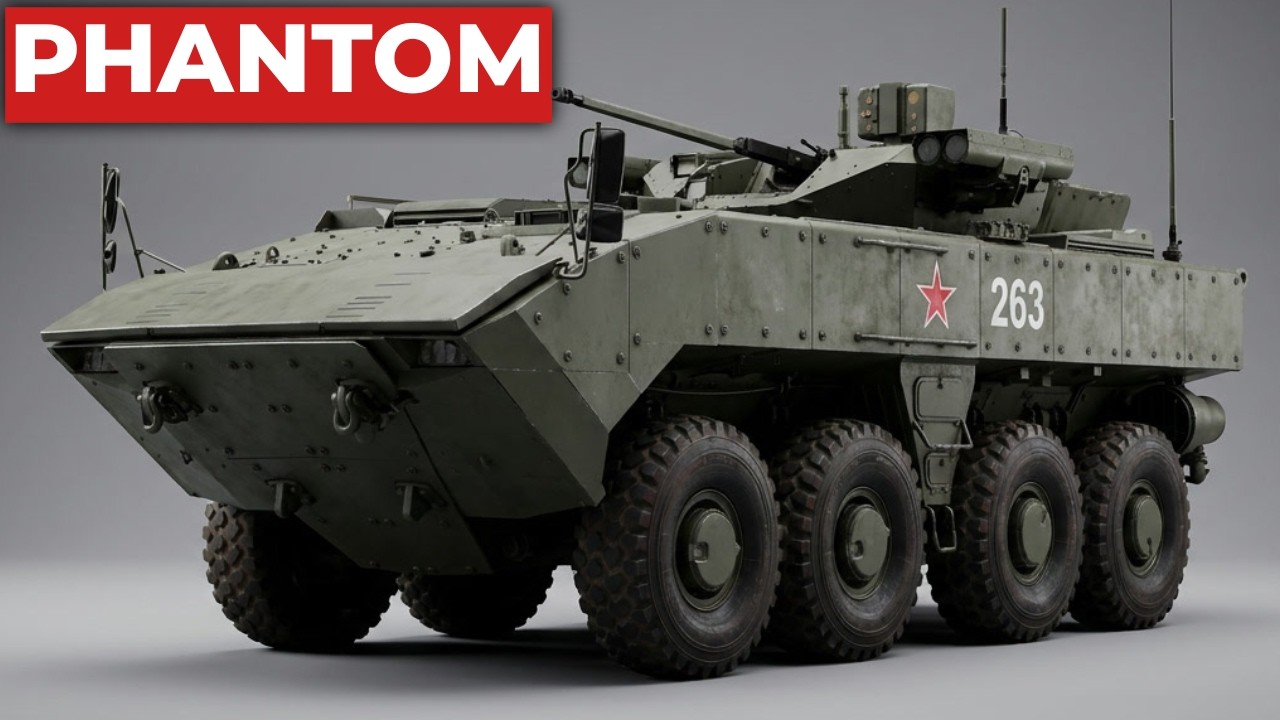
The actual figures are substantially higher because not every loss is photographed and not every photograph reaches open-source channels. The pattern of those losses told a consistent story. Russian armored columns entering urban environments, streets, and villages and tree lines were ambushed by Ukrainian forces armed with Javelin and NLAW missiles, rocket-propelled held grenades, and later by first-person view drone strikes.
The BTR-82A’s armor, designed to stop rifle fire and shell fragments, could not stop any of these threats. The side door dismount geometry meant that infantry attempting to exit under fire exposed themselves at the moment of greatest danger. In documented drone footage, burning BTR-82s appear again and again with troops attempting to escape through the roof hatches or simply unable to get out at all.
David Axe, writing for Forbes in October 2023, documented a single engagement in which Russian units lost 13 BTR-82s in 1 day. The Oryx database shows entire battalions worth of these vehicles confirmed destroyed across the Zaporizhzhia, Kherson, Kharkiv, and Donetsk fronts. And for each one destroyed, Russia scrambled to replace it, pulling vehicles from storage, including BTR-80s that had been sitting in warehouses since before 2014, and in some documented cases even BTR-50s, a design dating to the 1950s that were pressed back into operational service from military museums. The Bumerang’s rear ramp, its V-shaped floor, its mine protection, its modern fire control, its ability to engage targets with guided missiles from a protected position, these were not theoretical advantages. They were answers to the exact problems that were killing Russian infantry in Ukraine. The vehicle Russia needed to replace the BTR-80 was the Bumerang. The
vehicle Russia actually had to replace it with was another BTR-82A or a museum piece. The only documented appearance of anything connected to the Bumerang program in the combat zone was the 32G01, designated the Bumerang Burevestnik. This was a remote weapon module developed by the Burevestnik Central Research Institute.
Originally intended for the BTR-K16 variant of the Bumerang, it was not the Bumerang itself. It was a turret module mounted on a standard BTR-82A as a stopgap measure to field some of the Bumerang’s fire control technology on a vehicle that was actually available. Approximately three of these modified vehicles were visually confirmed destroyed in Ukraine by early 2025.
Ukrainian military analyst Oleksandr Kovalenko noted, with characteristic bluntness, that the 12.7 mm weapon fitted to those vehicles represented what he called the Russian military-industrial complex’s inability to supply the required number of 30 mm guns. The Bumerang had become a source of spare turret technology for a vehicle it was supposed to have retired.
The Bumerang itself was not confirmed in combat, not once. In February 2023, Russian social media accounts reported that Bumerang vehicles had been transported toward the front. No subsequent photographs, damage assessments, or capture records corroborated this. A Russian state export report in the same period stated that Bumerangs had been sent to Ukraine for combat testing.
Russia’s Ministry of Defense made no official confirmation. The researchers at the Royal United Services Institute noted in their 2024 study of Russian armored vehicle procurement that the Bumerang, like the Armata, was likely considered too complex and too costly to risk losing on camera. A single burning Bumerang photographed and identified in open-source channels would have been a strategic communications disaster for a government that had spent a decade presenting this vehicle as proof of Russian technological renaissance. So, it stayed away from the war and the war continued without it. The Bumerang program also attempted to become an export product, which is perhaps the clearest measure of how far the gap between ambition and reality had grown. Rosoboronexport, Russia’s state arms export agency and a subsidiary of Rostec, began marketing the Bumerang internationally in April 2020. Alexander Mikheev, then the agency’s chief executive, told TASS that Russia estimated the export potential of
the Bumerang platform at approximately $1 billion in what he called the foreseeable future. He cited interest from Africa, the Middle East, Southeast Asia, and the Commonwealth of Independent States. The Bumerang appeared at the MILEX exhibition in Belarus in 2021 and at the Aero India exhibition in the same year.
It appeared at the Army 2022 exposition on the grounds outside Moscow. In November 2024, Russian officials proposed supplying India with 198 Bumerang armored personnel carriers. This was positioned as a competitor to the American Stryker, which the United States was simultaneously offering to India as part of bilateral defense cooperation.
The Indian Army was evaluating multiple wheeled armored platforms for a large procurement. The Bumerang offer was specifically designed to present Russia as a viable alternative supplier of a modern Western-style 8×8 vehicle. India did not accept the offer. No export contract for the Bumerang has been signed with any nation.
No foreign military has taken delivery of a single vehicle. This is, in one respect, entirely predictable. No responsible procurement authority buys a vehicle that its country of origin has not managed to produce at scale for its own forces. The Patria AMV succeeded in export markets because Finland fielded it first in significant numbers.
The Boxer succeeded because Germany, the Netherlands, and Australia fielded it. The Stryker succeeded because the United States fielded it by the thousand in combat. The Boomerang had no such foundation. It had a parade appearance and a brochure. It had a $1 billion estimate and a 198 vehicle pitch.
It had no serial production, no operational evaluation, and no war record. By 2025, defense analysts tracking the program described it as effectively suspended rather than canceled. The Army Recognition Outlet and several Russian-language defense publications reported that the Boomerang, alongside the Armata and the Kurganets-25, had been placed in a category of programs continuing in a reduced form with no clear production timeline.
Russia was simultaneously ordering new BTR-82A M vehicles, the latest evolution of the 1985 design, in substantial quantities, and refurbishing stored BTR-80s to fill battlefield losses. The gap between what Russia announced in 2012 and what Russia actually built had never been closed. It had only grown.
2012, Moscow, a Defense Ministry conference room. Alexander Postnikov stands in front of officers and officials and tells them what is coming. Prototypes in 2013, mass deliveries in 2015, a new vehicle for a new era, a wheeled armored platform that will finally give Russian infantry what their predecessors in Grozny and Chechnya and Afghanistan never had.
A rear ramp, mine protection, modern fire control. The BTR-82A is a stopgap. The Boomerang is the future. That announcement was made with the certainty of institutional confidence, and everything it promised was wrong. The program was not technically fraudulent. The vehicle is real. It moves. It swims. The Epoch turret is sophisticated.
The V-shaped hull is a genuine improvement over anything Russia previously fielded. On a testing ground in peacetime, the Boomerang is, by all available evidence, a capable machine. The engineering ambition was not misplaced. The gap was not between what Russia designed and what the world demanded. The gap was between what Russia designed and what Russia could build, sustain, and deliver at the scale that modern warfare requires.
The Soviet defense industrial base could produce the BTR-80 because it was simple, because the supply chains were domestic, because the tolerances were achievable on Soviet-era equipment, and because the entire system, from raw material to finished vehicle, was optimized for volume. The Boomerang required none of those conditions.
It required precision manufacturing. It required sophisticated electronics that Russia could not produce independently. It required integration of subsystems from multiple design bureau that had different institutional priorities and different supply chain vulnerabilities. And it required the political will to accept the cost and the delay even when a cheaper, faster alternative sat ready for production on the floor of the Arzamas plant.
Russia chose the alternative again and again for 15 years, and every choice pushed the Boomerang further from the front line. The BTR-80 had limitations. Everyone knew it. The men who died trying to exit through its side hatches in Grozny knew it. The battalion commanders who watched their vehicles burn in Ukraine knew it.
The engineers at VPK who spent a decade building something better knew it. And still, the BTR-80 fought. Still, the BTR-82A was ordered by the thousand. Still, the program that was supposed to end that dependence waited in trials. 15 years, more than a thousand BTR-82 family vehicles confirmed destroyed.
A war fought with the exact relic that a generation of engineers was hired to retire. Seven Boomerangs in state trials and a billion-dollar export pitch that found no buyers. That is not bad luck. That is the systematic failure of a state to translate procurement ambition into production reality under the conditions of modern war.
And the men riding into Ukrainian villages in BTR-82A’s without rear ramps and without modern protection paid the price for it. The Boomerang still has not reached the front line. The BTR, the vehicle it was built to replace, is still burning there.