Wilson Pickett Was Sent to Record With an All-White Southern Band. Nobody Expected This. D
1966, Muscle Shoals, Alabama. A small recording studio called Fame Recording Studios on the banks of the Tennessee River. Jerry Wexler, the Atlantic Records producer who had been making some of the most important soul and R&B records of the decade, had a theory. His theory was that there was something happening in the small studios of the American South, something in the rhythm sections of Alabama and Tennessee and Georgia, that the New York and Detroit production environments had not captured and could not replicate. He had been listening to the records coming out of Fame Studios and hearing something in the groove, in the specific relationship between bass and drums and guitar that sounded different from what his Atlantic sessions in New York were producing. He sent Wilson Pickett to Muscle Shoals
to find out if the theory was right. Wilson Pickett was not a man who accepted the unfamiliar without resistance. He was 34 years old, a veteran of the gospel circuit and the R&B world, a performer with a voice and a stage presence that had made him one of the most commercially successful soul artists of the mid-1960s.
In the Midnight Hour had reached number one on the R&B charts in 1965. 634-5789 had followed. He was not a man who needed to be sent somewhere new to produce good records. He was a man who was producing good records in the ordinary course of his career. He went to Muscle Shoals anyway, and the musicians waiting for him in the studio were white.
It was 1966 in Alabama. Nobody in that room was certain the experiment would work. What happened in the sessions was not immediately legible as historic. What happened was that a set of musicians who had developed their approach in one tradition and a vocalist who had developed his approach in a different tradition found a shared pocket.
A groove in which both things could exist simultaneously without either of them having to diminish what they were to accommodate the other. Land of 1,000 Dances had already been recorded by Wilson Pickett for Atlantic in 1965. The Muscle Shoals version, recorded in 1966 became the definitive version.
The one that reached the top five on the pop charts. And that is the version people mean when they mean Land of 1,000 Dances. The difference between the two recordings is, in one sense, a matter of rhythm section. In another sense, it is a matter of everything that comes from the rhythm section being right.
The confidence it gives the vocalist. The way a groove that is locked in the pocket allows a voice to take risks that a groove that is merely competent does not support. Mustang Sally was written during the Muscle Shoals sessions. A song whose title and structure have become so deeply embedded in the repertoire of American popular music that it is sometimes difficult to hear it as having been made at a specific place and time by specific people who were not certain how the session was going to go. It was made at FAME Studios in Muscle Shoals in 1966 by Wilson Pickett and the Muscle Shoals Sound rhythm section. Because Jerry Wexler had a theory about groove and sent an Alabama-born soul singer back to Alabama to test it. The theory was correct. The records that came out of the Muscle Shoals sessions were different from what Wilson Pickett
had been making in New York. Not better in a simple ranking sense, but different in a way that mattered. The groove was deeper. The rhythm section’s relationship to the pocket was tighter. The combination of a voice built in the Detroit and New York soul tradition with a rhythm section built in the Muscle Shoals tradition produced something that neither could have produced separately.
The musicians in the room in 1966 were operating across a racial divide that the world outside the studio was not operating across. In 1966 Alabama, this was not an abstract consideration. It was the daily and legal reality of the state they were recording in. The studio was a temporary exception to the rules of the world outside it.
What the exception produced is still playing on the radio. Wilson Pickett had grown up in Prattville, Alabama, not far in geographic terms from where he was now standing. He had left the South as a teenager, had moved to Detroit, where his father had relocated, and had come to music through the Detroit gospel scene in the late 1950s.
He had been a member of the Violinairs, a Detroit gospel group, before moving into secular music with the Falcons, a group that also, at different points, included Eddie Floyd and Mack Rice. His solo debut in 1963 with If You Need Me had been picked up by Atlantic after the original label failed to properly promote it.
By 1966, Wilson Pickett at Atlantic Records had established the sound that would define his commercial peak, a hard-driving soul sound built on a rhythm section locked together as tightly as anything being made in New York or Detroit. A voice that could move between the register of a shout and the register of a plea with no transition time and a stage presence that made every performance feel like something was actually at stake.
He was not a smooth performer. He was a performer whose intensity was the point. The Muscle Shoals Sound rhythm section, the all-white group of musicians who played on the Fame Studio recordings, had been developing their sound in a way that did not follow any of the paths that the soul music industry had established as the standard approach.
They were not playing what New York produced. They were not playing what Motown produced. They were playing something that had come out of their specific intersection with the gospel and country and blues traditions of the rural South, a groove that was looser in its feel but tighter in its pocket than what the commercial soul world was currently making.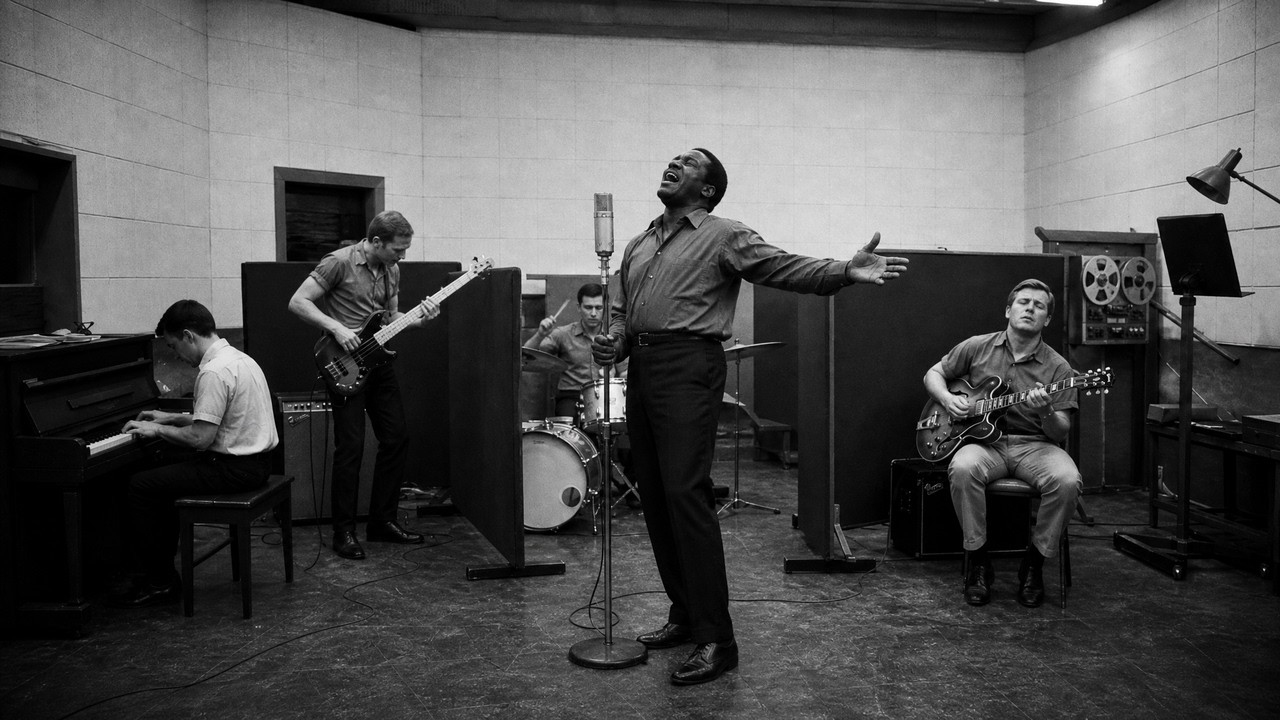
They had been making records for local artists and for occasional Atlantic acts that Jerry Wexler had been listening to with increasing attention. What he was hearing was a rhythm section that could hold a groove in a way that made the music feel like it was breathing. Wilson Pickett walked into the studio with those musicians and the air in the room was whatever it was.
The year was 1966, the state was Alabama, the situation was what it was. They began playing the Muscle Shoals sessions with Wilson Pickett were the beginning of something that extended well beyond Wilson Pickett himself. Jerry Wexler sent other Atlantic artists to Muscle Shoals in the years that followed.
Artists including Aretha Franklin, who recorded “I Never Loved a Man the Way I Love You” there in January 1967. In a session that produced arguably the most important record of her career, the Muscle Shoals Sound rhythm section became, across the late 1960s and into the 1970s, one of the most recorded rhythm sections in the history of popular music.
The group behind records by artists ranging from the Rolling Stones to Paul Simon to Cher. The starting point of all of it, in a certain accounting, is the moment Wilson Pickett walked into Fame Studios in 1966, and the theory Jerry Wexler had been developing in his listening sessions at Atlantic Records was put to a practical test.
Wilson Pickett continued performing and recording through the 1970s and into the 1980s with the commercial peak of his career in the mid to late 1960s during and immediately after the Muscle Shoals sessions. He was inducted into the Rock and Roll Hall of Fame in 1991. He died in January 2006. He was 64 years old.
The Muscle Shoals Sound rhythm section continued working. Fame Studios continued operating. The small city in Alabama that had produced a groove unlike anything else being made in American popular music in the 1960s became over time a point of pilgrimage for people who were trying to understand how something that specific and that consequential could have come from somewhere so unlikely.
The answer is that it is not unlikely if you know what was there. The musicians, the tradition they had grown up in, the specific relationship between bass and drums and guitar that they had developed in the small studios of North Alabama. And one afternoon in 1966, a soul singer from Prattville, Alabama, who had left the South as a teenager and come back at the request of a New York producer who had a theory.
The theory was right. Mustang Sally is still playing. Land of 1,000 Dances is still playing. The records that came out of those sessions are still exactly what they were in 1966. The sound of two different musical traditions discovering that what they had in common was larger and more powerful than what separated them.
All of that because someone sent Wilson Pickett to Alabama to test a theory.