Why This ‘Aluminum’ American Box on Tracks Was the Most Unkillable Armored Vehicle Ever Built D
1960, San Jose, California. Inside a sprawling factory complex owned by the Food Machinery Corporation, a tracked vehicle rolls off the production line and into the California sun. It weighs just under 13 tons. Its hull is not steel. It is aluminum, the same material used to build soda cans and lawn furniture.
Its armor, at its thickest, measures barely 38 mm. Its armament is a single heavy machine gun bolted to an open mount on the roof, operated by a man standing completely exposed from the chest up. Its profile is a featureless box on tracks. With all the aerodynamic sophistication of a shipping container, it looked cheap. It looked expendable.
Senior officers who inspected the first production models openly questioned whether an aluminum vehicle had any business on a modern battlefield. Skeptics in the Pentagon called it a tin can. Armored warfare traditionalists dismissed it as a glorified taxi, a vehicle designed not to fight, but to deliver soldiers to the edge of battle and then retreat.
It carried no cannon, no missile launcher, no turret. It was, by every measure of Cold War military ambition, the most underwhelming armored vehicle the United States had ever built. It would go on to fight in more wars, on more continents, under more flags, and across more decades than any other armored vehicle in Western military history.
It would be built in numbers exceeding 80,000, making it the most mass-produced armored vehicle of the post-war Western world. It would serve in over 50 nations. It would fight in the jungles of Vietnam, the deserts of Sinai, the mountains of Lebanon, the streets of Baghdad, and the trenches of Eastern Ukraine.
It would spawn more than 40 specialized variants. It would be declared obsolete at least four times, and it would outlast every vehicle sent to replace it. Its designation was the M113 armored personnel carrier, and it was the most unkillable battlefield workhorse America ever produced. To understand why the M113 existed, you need to understand the problem the United States Army faced in the mid-1950s.
The Korean War had exposed a brutal gap in American mechanized capability. The army needed a vehicle that could carry a full infantry squad under armor protection, keep pace with tanks, cross rivers without bridging equipment, and be light enough to fit inside a transport aircraft. None of its existing vehicles could do all four.
The M75, built by International Harvester and later by FMC, was the army’s first fully enclosed tracked personnel carrier. It weighed nearly 19 tons, cost roughly $100,000 per unit, and was far too heavy to be air-lifted or to swim. Production stopped after just 1,729 vehicles. Its successor, the M59, solved the cost problem by using cheap commercial truck engines, but it was so badly underpowered that it could not keep pace with the M48 tank, and so unreliable that none ever saw combat.
The army needed something fundamentally different. In June of 1954, the Detroit Arsenal began studying a family of lightweight tracked vehicles sharing a common chassis. By January of 1956, Continental Army Command approved formal development. FMC of San Jose, California, received the contract to build evaluation vehicles.
Half would be constructed from aluminum, half from conventional steel. The aluminum prototype was designated the T113, the steel version the T117. The choice of aluminum was radical. The material had never been used for the hull of a mass-produced combat vehicle. FMC partnered with Kaiser Aluminum and Chemical Company to develop a specialized 5083 aircraft-grade aluminum alloy.
The principle was counterintuitive. Aluminum armor must be roughly three times as thick as steel to stop the same projectile, but the thicker aluminum hull was far more rigid than a steel equivalent, eliminating the need for internal reinforcing structures and freeing enormous interior space. The result was a vehicle that weighed less than the steel alternative while offering equal ballistic protection against small arms fire and shell splinters.
The vehicle itself was was masterpiece of practical engineering. Its hull was welded 5083 aluminum alloy, tapering from 38 mm at the front to as little as 12 mm on the sides. Power came from the Detroit Diesel 6V53, a two-stroke V6 producing approximately 215 horsepower paired with an Allison TX100 automatic transmission.
This gave the vehicle a top road speed of roughly 42 mph and a swimming speed of 3.6 mph, propelled entirely by its tracks with no preparation beyond raising a small trim vane at the front. That amphibious capability meant the M113 could cross a river without waiting for engineers. Range on a full tank of diesel exceeded 300 miles.
The crew consisted of a driver and a commander with space for 11 fully equipped infantrymen in the rear compartment accessible through a large hydraulic rear ramp. Every specification answered a strategic problem. The weight, just under 13 tons, meant a single C-130 Hercules could carry it. The diesel engine eliminated the catastrophic fire risk of its gasoline-powered predecessor.
The amphibious hull meant it could operate in the rice paddies and river deltas of Southeast Asia without modification. The rear ramp meant a squad could dismount in seconds under fire. And the cost, roughly $22,000 per vehicle in early production, meant the army could buy them in vast numbers. The M113 entered production in June of 1960.
Initial orders totaled 900 vehicles. First deliveries reached American units in Europe by 1961, replacing the failed M59. Within 3 years, it would be tested in the most unforgiving combat laboratory on Earth. Now, before we get into where the M113 actually fought and how it performed under fire, if you’re enjoying this deep dive into American military engineering, hit subscribe.
It takes a second, costs nothing, and helps this channel continue producing these stories. March 30, 1962. 32 M113s arrived in South Vietnam, issued to two mechanized rifle companies of the Army of the Republic of Vietnam. By June, they were in combat against the lightly armed Viet Cong. The vehicles were initially devastating.
The guerrillas had never faced tracked armor in the flooded paddies of the Mekong Delta. And the M113’s ability to swim across canals and crash through tree lines made it a terrifying psychological weapon. The Viet Cong gave it a name. They called it the Green Dragon. Then came the battle that changed everything.
January 2, 1963. The village of Ap Bac, Dinh Tuong province. Approximately 1,400 South Vietnamese troops, supported by American helicopters and advisers, attacked a Viet Cong force of roughly 350 fighters from the 261st and 514 battalions. Captain Ly Tong Ba, commanding the 4th Mechanized Rifle Squadron of the 2nd Armored Cavalry Regiment, was ordered to advance his 13 M113s across the Cong Ba Cay canal.
American adviser Lieutenant Colonel John Paul Vann pressed urgently for their deployment. But the Viet Cong had been specifically trained in anti-M113 tactics. They had studied the vehicle’s single critical vulnerability. The commander’s heavy machine gun position left the operator completely exposed from the chest up.
The Viet Cong concentrated their fire on those exposed gunners. At least 14 South Vietnamese M113 gunners were killed at Ap Bac. The battle was a tactical humiliation, the first major Viet Cong victory, and it exposed a design flaw that would define the M113’s entire combat legacy. The vehicle had been designed as a battle taxi.
Its doctrine assumed soldiers would dismount to fight. But the reality of counterinsurgency warfare in Vietnam demanded that crews fight mounted. And the open machine gun position was a death trap. The solution came not from Washington, but from the field. By late 1964, South Vietnamese crews from the 2nd Armored Cavalry and the 80th Ordnance Unit were fabricating gun shields from scavenged metal, including steel cut from sunken ships.
By 1965, the United States Army standardized the modification as the armored cavalry assault vehicle kit. It included a shielded turret for the 50 caliber machine gun, two shielded M60 machine guns mounted at the rear cargo hatch, and belly armor plates against mines. The ACAV was not a new vehicle.
It was the same aluminum box adapted by the men who fought in it because the doctrine written in peacetime had failed in war. The first large-scale American use of the ACAV configuration came during Operation Cedar Falls in January of 1967, conducted by the 11th Armored Cavalry Regiment, the Blackhorse.
The M113, now bristling with machine guns and protected by improvised armor, had transformed from a transport into a fighting vehicle. It was never designed to be one. It became one anyway. By the height of American involvement, 10 mechanized infantry battalions were deployed across South Vietnam, and the ACAV had become the defining vehicle of the war’s ground campaign.
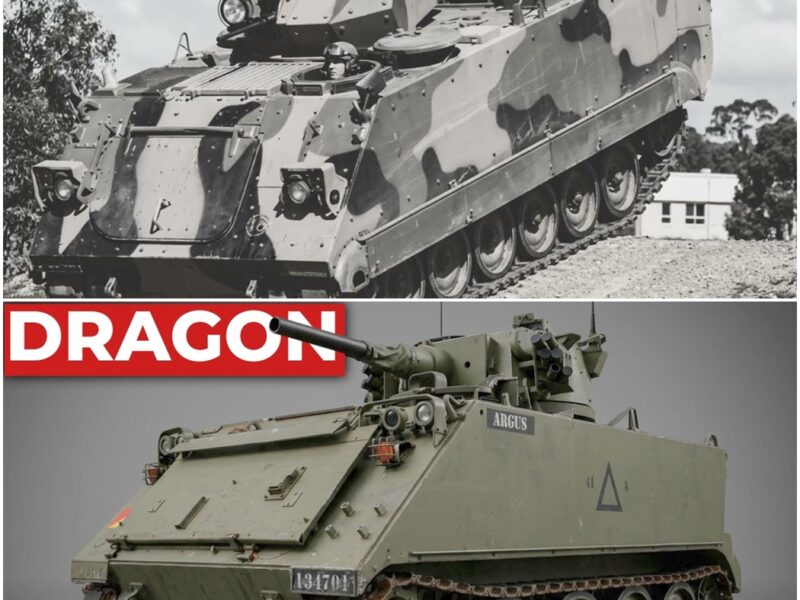
Units used them for everything from convoy escort to deliberate assaults on fortified positions, roles that no personnel carrier doctrine had ever anticipated. The Australians took the adaptation even further. The Third Cavalry Regiment and First APC Troop fielded M113s with Cadillac Gage T50 turrets, creating a fire support variant that blurred the line between armored personnel carrier and light tank.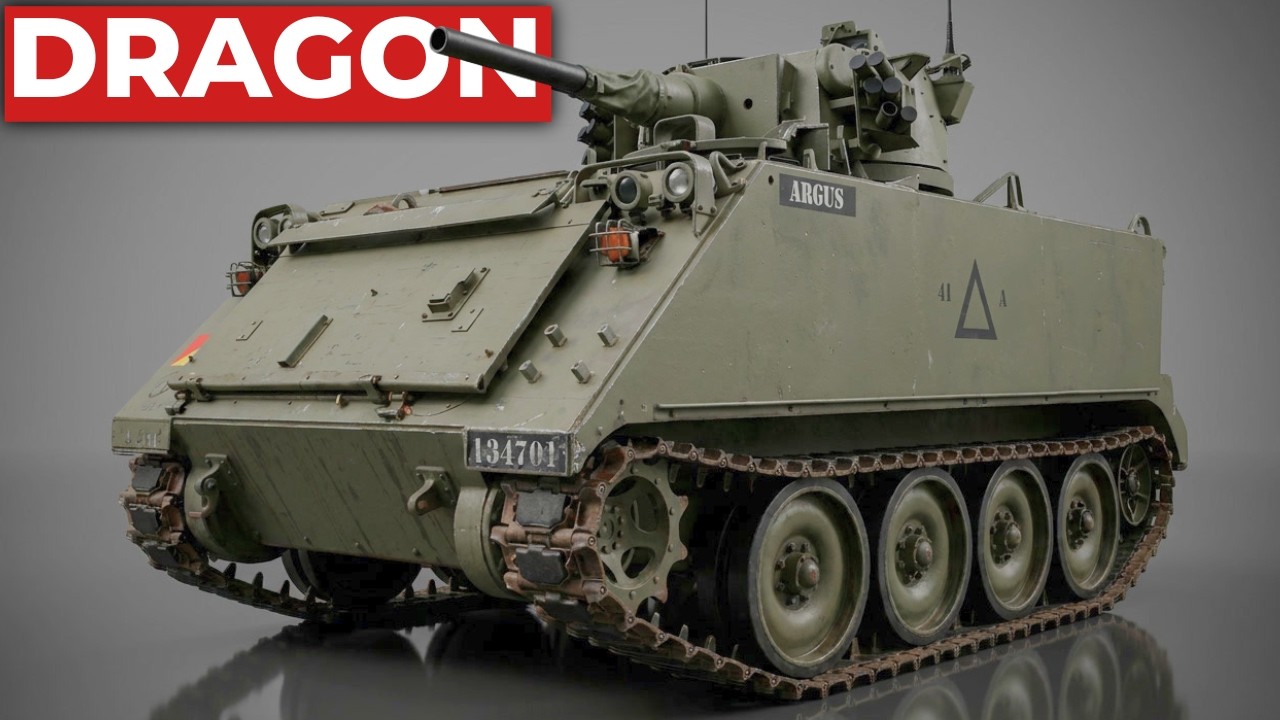
Later, Australian modifications mounted Saladin 76 mm turrets and Scorpion turrets, producing dedicated fire support vehicles from the same aluminum hull that Washington had designed to carry troops and nothing more. One of the most extraordinary M113 actions of the war belonged to Captain Harold A. Fritz of Troop A, First Squadron, 11th Armored Cavalry Regiment.
On January 11th, 1969, near Quan Loi in Binh Long province, Fritz’s seven-vehicle armored column was ambushed on Highway 13. Though wounded in the initial attack, Fritz leapt atop his burning vehicle to organize the defense, directing fire and rallying his men under sustained enemy contact. He was awarded the Medal of Honor, presented by President Nixon on March 2, 1971.
Fritz went on to serve 27 years in the Army, retiring as a Lieutenant Colonel, and later serving as president of the Congressional Medal of Honor Society. The losses were staggering. Between November 1967 and March 1970, United States and South Vietnamese forces lost no fewer than 1,342 M113s to landmines alone. By the fall of Saigon in April of 1975, 1,381 ARV and M113s were destroyed or captured.
Over 1,000 were seized intact by the People’s Army of Vietnam. Some remain in Vietnamese service to this day. Beyond Vietnam, the M113 fought across the globe. Israel received M113A1s in 1970 and fielded 448 of them during the Yom Kippur War of October 1973 on both the Sinai and Golan fronts.
Israeli forces discovered the same vulnerability the Vietnamese had found. Shaped charge warheads from RPGs penetrated the aluminum hull with ease, and the resulting interior fires were devastating. Israel responded by developing the Zelda, a locally up-armored variant with applique steel plates, and eventually built the Namer, one of the heaviest infantry carriers ever designed, specifically because the M113 could not survive the threats of modern anti-armor warfare.
In the 2003 Iraq War, Sergeant First Class Paul Ray Smith of Bravo Company, 11th Engineer Battalion, 3rd Infantry Division, earned the first Medal of Honor of the conflict for actions on April 4 at Baghdad International Airport. When his position was overrun, Smith manned the .50 caliber machine gun of a damaged M113, firing over 300 rounds and killing an estimated 20 to 50 enemy fighters before he was killed.
His actions saved approximately 100 soldiers. And then came Ukraine. Beginning in 2022, partner nations donated at least 1,729 M113s and derived vehicles to Ukraine’s armed forces. The 60-year-old aluminum box fitted with bolt-on cage armor and Ukrainian-made remote weapon stations returned to a peer battlefield against Russian forces.
The vehicle that was supposed to have been retired decades ago was once again carrying soldiers into combat. On paper, the Soviet BMP-1 looked superior to the M113 in almost every respect. It carried a 73-mm cannon, an anti-tank guided missile, and firing ports that allowed infantry to fight from inside the vehicle. It was faster, lower profile, and designed from the ground up as an infantry fighting vehicle rather than a transport.
The M113 carried a single machine gun, and expected its passengers to get out before the shooting started. But, the doctrinal comparison reveals a deeper truth. The BMP-1 was a specialist. It did one thing. The M113 was a platform. It did everything. The same basic aluminum hull was adapted into over 40 official variants.
The M106 mortar carrier, the M129 63 Vulcan air defense system, mounting a 20-mm rotary cannon that proved devastating against massed infantry. The M577 raised roof command post, the M901 improved TOW vehicle, carrying twin anti-tank missile launchers on an elevating mount. The M548 tracked cargo carrier, ambulances, smoke generators, engineer vehicles, flamethrowers, and surface-to-air missile launchers all shared the same chassis.
The British FV432, the closest Western equivalent, was built entirely of steel. When Australia tested both vehicles side by side in 1962, the M113 won on maneuverability and amphibious performance. Only about 2,500 FV432s were ever built. The M113’s production run exceeded 80,000, making it the most produced Western armored vehicle since the M4 Sherman tank of World War II.
Only the Soviet T-54 and T-55 family, at roughly 100,000 vehicles, was built in greater numbers worldwide. The vehicle that was supposed to replace the M113 in frontline service, the M2 Bradley Infantry Fighting Vehicle, entered service in 1981. It was heavier, better armed, and vastly more expensive, but the Bradley replaced the M113 only in the direct combat role.
Thousands of M113s remained in service for every support function the Bradley could not fill. As late as 2023, the United States Army still fielded approximately 6,000 M113s, representing roughly 30% of all tracked vehicles in armored brigade combat teams. The formal replacement, the armored multi-purpose vehicle built by BAE Systems, entered full-rate production in 2023 at a cost of $6.9 million per vehicle.
The Army plans to purchase 2,897 of them. Even so, over 1,900 M113s in higher echelon units have no funded replacement at all. The M113 is not expected to fully leave American service until after 2030. It will have served for over 70 years. Today, more than 50 nations still operate the M113. Israel fields approximately 6,000, Egypt nearly 3,000, Saudi Arabia 3,000, Greece 2,500, Pakistan 2,300.
The vehicle has outlived its designers, its critics, its intended replacements, and most of the conflicts it was built to fight. 1960, San Jose, California. An aluminum box on tracks rolls off the production line. It weighs under 13 tons. Its armor will not stop a rocket-propelled grenade. Its armament is a single machine gun operated by a man standing in the open.
It carries no cannon, no missile, no fire control system. It has no night vision, no air conditioning, no nuclear biological chemical protection. It is, by every measure that defense contractors use to sell vehicles to governments, inadequate, and yet it worked. It worked in the rice paddies of the Mekong Delta and the sand dunes of the Sinai.
It worked in the mountains of Lebanon and the streets of Baghdad. It worked in the frozen mud of Eastern Ukraine six decades after it was built. It worked because it was light enough to fly, simple enough to fix, cheap enough to lose, and adaptable enough to become whatever the soldiers inside it needed it to be. 80,000 were built.
More than 40 variants were created. Over 50 nations bought it. Some are still using it. The M113 was never the best armored vehicle on any battlefield it ever entered. It was never the fastest, the toughest, or the most heavily armed. It was the one that showed up, did the job, and refused to go away.
That is not glamour. That is not innovation. That is the difference between a weapon designed for war and a vehicle built for every war.