Why This ‘Boring’ Swiss Vehicle Made Every NATO Army Quietly Abandon Their Tracked Fleets D
1972, a small factory on the edge of Kreuzlingen, Switzerland, a border town so quiet it barely appears on most maps. Inside, a team of engineers has been working for months on a private venture. No government contract, no military specification driving the design, no urgent battlefield requirement demanding an answer.
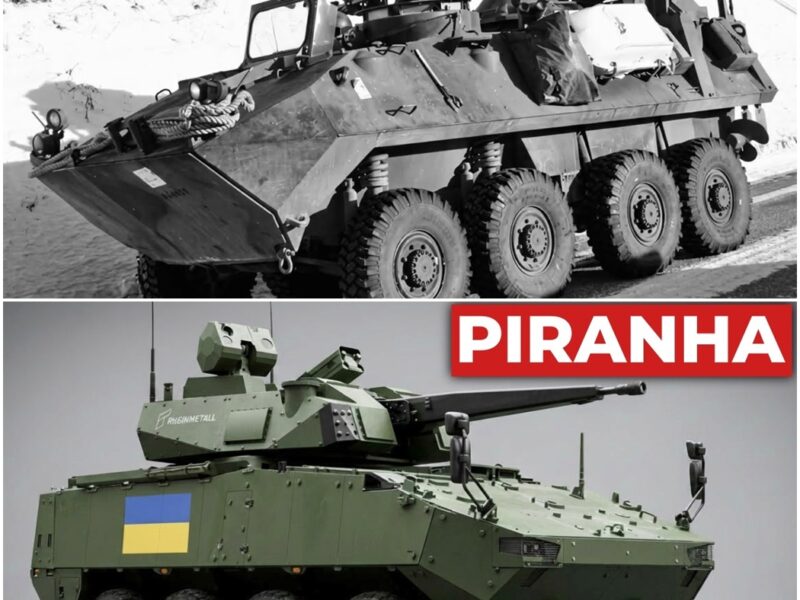
Just a group of Swiss engineers who believed they could build something the world would want. The vehicle they rolled out of that factory looked unremarkable, a boxy eight-wheeled hull in plain gray steel. No sleek lines, no intimidating silhouette, no visual drama of any kind. It sat there on its tires like a steel box placed on top of a truck chassis.
Observers were polite about it. Some were less polite. Critics called it too simple, too commercial, too plain, a product designed by accountants, not soldiers. It looked to more than one defense journalist of the era almost boring. It would go on to be built in greater numbers than any other wheeled armored vehicle in the Western world.
It would equip the armies of more than 20 nations. It would be licensed, copied, and adapted into the backbone of the United States Marine Corps, the United States Army, the Canadian Army, the Australian Army, and the armies of Saudi Arabia, Belgium, Denmark, Spain, Romania, and a dozen others beside. Its derivatives would fight in Panama, Kuwait, Bosnia, Afghanistan, Iraq, Kosovo, Chad, East Timor, and Ukraine.
More than 12,000 would be built before the century turned and production continued still. Its name was the Mowag Piranha, and it became the most successful wheeled armored vehicle in the history of the Western world. The man behind it was Walter Ruf. In 1950, Ruf founded Motorwagen Fabrik AG, Mowag, in Kreuzlingen on the southern shore of Lake Constance.
The company’s first products were specialized four-wheel drive trucks for the Swiss Army. More than 1,600 of them delivered through the 1950s. Through the 1960s, Mowag built armored personnel carriers under license for West Germany’s border guard. Ruf watched the Cold War harden, watched NATO armies struggle with the tension between tracked protection and wheeled mobility, and made a decision.
In the late 1960s, without being asked, his company began designing a wheeled armored vehicle of their own. The philosophy was simple and would prove decisive. The vehicle should be modular, offered in four-wheel, six-wheel, and eight-wheel configuration sharing a common hull. It should be reliable above all else, with a conventional front-mounted diesel engine, independent suspension, twin propellers for water crossing, and central tire inflation.
It should be maintainable in the field by ordinary mechanics, not specialist technicians. It should be air transportable. It should cost less to operate over its lifetime than any tracked alternative. It should not try to win any single specification battle. It should simply be the most practical vehicle any army could choose.
The first prototype, a six-wheel configuration, was completed in 1972. Production of the Piranha 1 family began in 1976. If you’re getting value from this deep dive into military vehicle history, hit subscribe now. It takes a second, costs nothing, and it helps this channel keep making these documentaries.
Canada was the first to buy. In 1977, the Canadian Army awarded Mowag a contract for what it called the Armored Vehicle General Purpose Program. 269 armored personnel carriers, 195 fire support vehicles mounting a 76-mm gun, and 27 recovery vehicles. 491 vehicles in total, with the crucial condition that they be license built in Canada. Mowag accepted.
The Piranha had its first major customer and its first lesson in what would make it commercially unstoppable, the willingness to offer license production to the buying nation, sharing industrial benefit rather than insisting on factory gate sales. Chile became a license producer. Ghana, Nigeria, Liberia, and Sierra Leone bought early versions for internal security.
Saudi Arabia’s National Guard placed enormous orders, eventually receiving more than 1,100 vehicles in 10 variants. Oman ordered 174. Qatar followed. Sweden acquired variants for specialist roles. Within 15 years of that first prototype rolling out of Kreuzlingen, the Piranha was in service on four continents, and the orders were still coming.
The second generation, the Piranha 2, brought a stretched hull, improved armor, and upgraded transmission. It also brought the vehicle that would seed the American connection, General Motors of Canada, which had been building Piranhas under license, entered the eight-wheeled variant into the United States military’s light armored vehicle competition in 1981.
The American requirement was explicit, an off-the-shelf vehicle, already proven, already in production. The Piranha was exactly that. In September 1982, the General Motors submission won. The United States Marine Corps ordered 758 vehicles in six variants. Entering service in 1983 as the LAV-25, the LAV-25’s first real test came eight years later, on the 29th of January, 1991.
Iraqi forces crossed the Saudi border and occupied the coastal town of Khafji. Task Force Shepherd, built around Marine Light Armored Infantry Battalions equipped with LAV-25s and LAV anti-tank vehicles, screened the border and moved to contain the Iraqi advance. During the fighting that followed, Marine crews discovered something that surprised even them.
The 25-mm armor-piercing rounds carried by their LAV-25s could penetrate the flanks and rear of Iraqi T- 55 tanks at combat ranges. A vehicle dismissed by some as an armored car was killing main battle tanks. The Battle of Khafji ended with Iraqi forces driven back, and the LAV-25’s reputation secured. Two LAVs were lost in the battle, one of them to friendly fire in a tragic incident that killed 11 Marines.
It was a reminder that no vehicle is invulnerable, but the LAV-25 had shown what the Piranha platform could do when pushed into serious combat. The third generation changed everything. The Piranha 3, unveiled in 1996, was a structural reinvention, an entirely new lightweight hull with variable ballistic protection, higher payload margin, greater internal volume, and the same front right power pack layout that made maintenance straightforward.
It retained the Piranha’s core virtues, air transportable, amphibious, reliable, affordable, while delivering a step change in protection and capacity. Its first major buyer was Canada again, which ordered 651 vehicles as the LAV III, entering service in 1999. By 2001, LAV IIIs were deploying to Eritrea on United Nations duty.
By 2002, they were in Afghanistan. And in September 2006, they fought what became the most significant battle in Canada’s post-Korean War history, Operation Medusa, 2nd to 17th of September, 2006, the Panjwai district of Kandahar province. Taliban forces had established a deep defensive network in the orchards and irrigation channels of Pashmul, a few kilometers west of Kandahar city.
Coalition commanders assessed that if the Taliban held Pashmul, they could threaten Kandahar itself. The task of destroying them fell primarily to the first battalion of the Royal Canadian Regiment Battle Group, Task Force 306, under Lieutenant Colonel Omer Lavoie, operating under Canadian Brigadier General David Fraser’s Regional Command South.
On the 3rd of September, C Company crossed the Arghandab River into Pashmul ahead of schedule, seeking to exploit an apparent gap in Taliban defenses. The gap was not there. The company moved into prepared positions, intensive fire from multiple directions, and suffered four soldiers killed and nine wounded within hours.
Several LAV IIIs were damaged. Lavoie pulled C Company back and called in air support and artillery. Over the following 2 weeks, systematic air strikes, artillery bombardment, and armored ground assaults using LAV IIIs broke the Taliban defensive network at a cost of 12 Canadian lives. And, according to coalition assessments, more than 500 Taliban fighters killed or captured.
The LAV III’s 25-mm cannon and night-fighting capability were repeatedly cited in after-action assessments as decisive. The vehicle could engage in the dark, fire accurately while moving, and absorb small arms fire that would have stopped unprotected vehicles immediately. Soldiers who had trained for years on the platform trusted it.
That trust was not absolute. And Operation Medusa was brutal enough to dispel any illusions. The LAV III had a flat-bottomed hull, and buried improvised explosive devices were its most serious vulnerability. Over the years of Canadian operations in Afghanistan, several LAV IIIs were destroyed by large bombs buried in roads and paths.
Corporal Nicholas Beauchamp and Private Michelle Leveille were killed near Sperwan Ghar when their LAV hit a remotely detonated device powerful enough to blow the tailgate off and ignite the interior. Major Steve Mala lost a leg in the same incident. These were not failures of the vehicle’s design, so much as encounters with weapons specifically engineered to defeat armored vehicles far heavier than any wheeled platform.
But, the other side of that record was documented just as clearly. A Canadian combat medic named Christine Lascelle was inside a LAV III when a device detonated beneath it one night, destroying 50 m of road, flipping the 17-ton vehicle, and blowing off four of its eight tires. The hull held.
Every one of the eight people aboard survived. Lascelle described opening her eyes to find herself upside down inside the vehicle, and every person around her still alive. Retired Major General Lewis MacKenzie, in a public broadcast interview, called the LAV III an outstanding armored personnel carrier that had saved a multitude of lives through its protection from landmines and enemy fire.
Both accounts were true simultaneously. The LAV III was not invincible. It was, on the balance of a decade of hard combat, significantly better than the alternative of being in nothing at all. New Zealand operated 105 of the same variant designated the NZLAV delivered between October 2003 and November 2004.
New Zealand Defence Force records credit the vehicle with protecting personnel from improvised device attacks on several occasions during deployment in Bamyan province. Australia’s equivalent, the ASLAV, 257 vehicles served in East Timor, Iraq and Afghanistan across a 12-year period. The largest single derivative was American.
In November 2000, the United States Army of LAV III derivative built by General Dynamics Land Systems as its interim armored vehicle renamed the Stryker. In February 2002, the platform entered production in March of that year with the first combat deployment coming in late 2003 when the third Brigade of the second Infantry Division deployed to Mosul, Iraq.
The Stryker generated more controversy than any of its predecessors. Critics were savage. A United States Army internal assessment in December 2004 cataloged design flaws, inoperable and maintenance problems that were described as getting worse rather than better after the intense urban fighting in Sadr City in April and May 2008 in which six Strykers were destroyed in six days.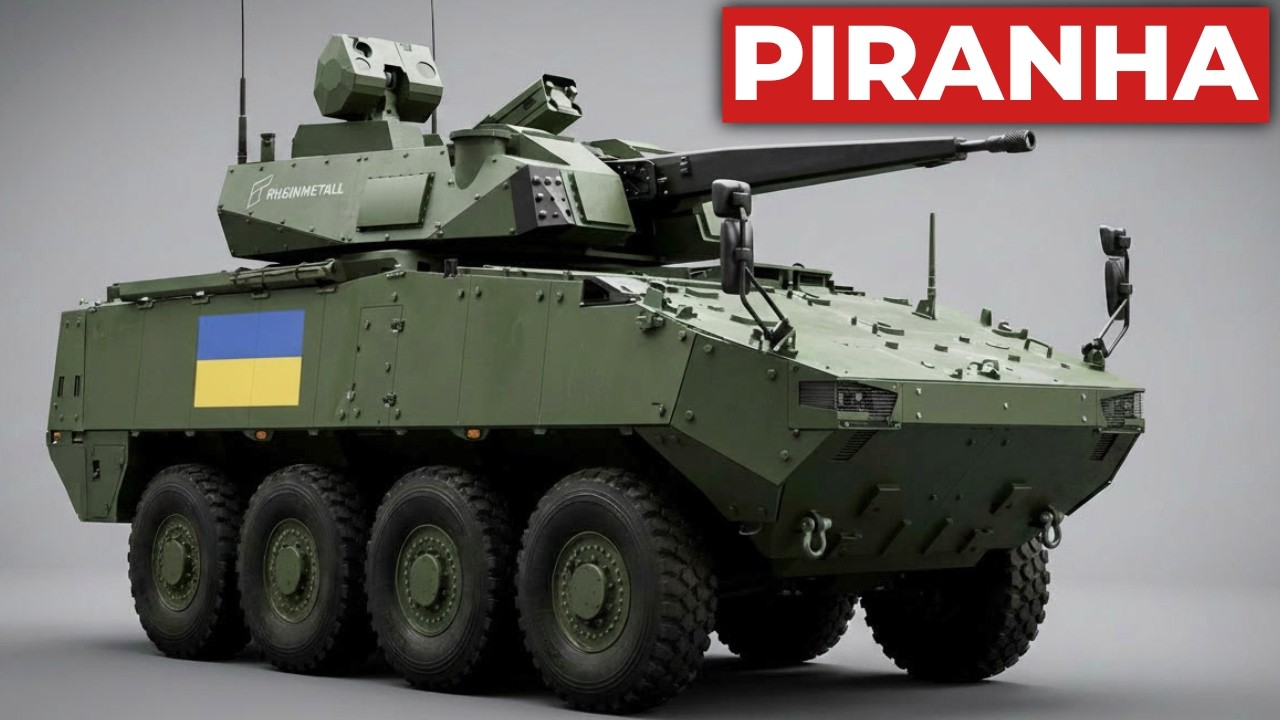
Soldiers gave the vehicle a name that became notorious in American military media. They called it the Kevlar coffin. One prominent analyst described the entire program as the most egregious example of corporate welfare in American defense procurement history. The Israeli Army’s assessment of the mobile gun system variant, a 105 mm gun mounted on a Stryker hull, was reportedly so negative that it has been paraphrased rather than directly quoted in official sources ever since.
Colonel Robert Brown, who commanded Stryker-equipped forces in northern Iraq, offered a different accounting. He estimated that the Stryker’s combination of mobility, protection and firepower had saved the lives of at least 100 American soldiers. The Lexington Institute reviewing the Stryker’s overall combat record concluded that the vehicle had a better survivability record than all but the most heavily armored vehicles in theater.
Roughly 4,900 Strykers were eventually built. The United States Army is still operating them. In January 2023, the United States began transferring more than 100 Strykers to Ukraine. They are currently in combat. The Piranha II was also sold to Belgium, which in the late 1990s made a decision remarkable for a Western European army.
Belgium chose to replace its entire fleet of tracked armored vehicles, M113 personnel carriers, AIFV infantry fighting vehicles, and Leopard 1 tanks with wheeled vehicles. 242 Piranha IIIC variants entered Belgian service, making Belgium the most comprehensively wheeled army on the continent.
Ireland ordered 80 Piranha IIIH variants for peacekeeping operations, eventually deploying them to Kosovo and Chad. Romania took 43 Piranha IIIC vehicles in 2006. By 2008, Mowag was no longer a Swiss family firm. General Motors of Canada had acquired it in 1999. General Dynamics had then acquired General Motors Defense for $1.
1 billion, completing the deal in 2003, and integrated Mowag into General Dynamics European Land Systems. Since the 1st of April 2010, the company has operated as GDELS Mowag. The change of ownership dramatically expanded the export network. General Dynamics had relationships with defense ministries across NATO and beyond.
The Piranha, already commercially successful, now had one of the world’s largest defense contractors behind it. The same year that General Dynamics completed its integration of Mowag, the fifth-generation Piranha made its public debut. The first prototype had been completed at the end of 2008. GDELS presented it publicly at Eurosatory in Paris in June 2010.
They called it the Piranha configuration, length of approximately 8 m, width of 3 m, capacity for a crew plus up to 13 soldiers. The engine was a six-cylinder MTU diesel rated at around 586 horsepower with some national variants using a Scania diesel of 480 kilowatts coupled to a 75 kilowatt auxiliary power unit.
Maximum road speed of approximately 100 kilometers per hour, range of approximately 550 kilometers, hydropneumatic suspension on all axles with the fourth axle steered, height adjustable ride height, central tire inflation, run-flat tires, full amphibious capability with minimal preparation. The protection system was the most significant advance over all previous generations.
Baseline armor met STANAG 4569 level four, meaning all-round protection against 14.5 millimeter armor-piercing ammunition. Frontal protection against 20 to 30 millimeter cannon fire across a 30-degree arc, and full crew protection against a 10 kilogram anti-tank mine blast beneath the hull or any wheel.
Modular add-on armor panels, replaceable in the field, could elevate protection to STANAG level five, adding all-round 25 millimeter protection and specialist panels against rocket-propelled grenades and submunitions. The mine protective philosophy addressed the lesson that Afghanistan had written in blood.
Energy-absorbing seats, occupant restraints, and a hull geometry designed to deflect and absorb blast were integrated from the concept stage rather than bolted on as an afterthought. These figures were manufacturer stated and certified to STANAG standards by GDELS. Armament options ran from a 12.7 millimeter remote weapon station up through 40 millimeter automatic grenade launchers, 25 and 30 and 40 millimeter auto cannon turrets in various configurations, anti-tank guided missile systems, and variants carrying a 120 millimeter mortar or fire support guns up to 105 millimeters. The first major customer was Denmark. The competition Denmark ran was one of the most demanding armored vehicle evaluations in European history. Five platforms were assessed across several years. The tracked CV90 Armadillo, the ASCOD infantry fighting vehicle, the French VBCI, the PMMC G5, and the Piranha 5. On
the 30th of April, 2015, Denmark announced its selection. The Piranha 5 had won. On the 15th of December, 2015, Denmark’s Defense Acquisition and Logistics Organization signed a contract for 309 Piranha 5 vehicles in six variants: infantry carrier, command vehicle, ambulance, engineer vehicle, mortar carrier, and repair vehicle for approximately $600 million.
Final assembly of more than 290 vehicles was performed in Denmark by Hydrema. First production vehicles entered Danish service in March 2019. Deliveries were complete by the end of 2023. Danish Piranha 5s have since deployed to Estonia and Latvia under NATO enhanced forward presence.
GDELS president Alfonso Ramonet, on signing the contract, stated that the Piranha 5 had won in a highly competitive tender. On the 12th of January, 2018, Romania signed a framework agreement for 227 Piranha 5 vehicles in six variants with a technology transfer provision and an 80% industrial offset for Romanian production.
The contract value was reported by Jane’s Defense Weekly as 868 million euros. The first batch of 36 vehicles initially built in Switzerland with final assembly in Bucharest was delivered from October 2020 to the 26th Infantry Battalion, the Red Scorpions. Production then transferred to Uzina Mecanica Bucuresti, a subsidiary of the Romanian state arms company, with turrets produced by a local subsidiary of the Israeli defense firm Elbit Systems.
By January 2026, 216 of the 227 contracted vehicles had been confirmed as delivered. Romania conducted a 1,000 km road march with its Piranha 5s to Poland in 2023 for exercise Anaconda, a demonstration of strategic mobility that no tracked fleet could have matched without rail or heavy transport.
In August 2020, Spain formalized its own selection. The Spanish Army’s vehicle replacement program, named Dragon, had evaluated the same field of European competitors. The Piranha 5 won again. The Spanish Ministry of Defense awarded a contract worth 1.74 billion euros for 348 vehicles with the program expected to grow to approximately 1,000 vehicles in total across different phases of procurement.
In 2024 and 2025, Germany added significant orders. The Bundeswehr selected the Piranha 5 for its Luch 2 reconnaissance program in October 2024 with a contract reported as signed in October 2025 for 274 therm vehicles plus an option for 82 more valued at approximately 3.5 billion euros. A separate German requirement for tactical communications network vehicles, designated Talwan, also selected the Piranha 5 platform with an initial order of 58 for delivery in 2026.
Moldova received five Piranha 5s as a German coordinated defense assistance transfer. The total picture across all generations and all derivatives is extraordinary. The Mowag Piranha in its various forms has been operated by more than 20 nations. Total production, including all licensed variants, has exceeded 12,000 vehicles, a figure stated by GDELS managing director Giuseppe Chillari in April 2024.
The United States alone has built and operated more than 4,900 Strykers. Canada has operated more than 600 LAV IIIs and is now operating upgraded LAV 6.0s under a contract worth approximately 1.1 billion dollars that will keep the family in Canadian service until 2035. Australia’s 257 ASLAVs served for more than two decades.
Belgium’s wheeled fleet, built on Piranha 3, replaced an entire tract order of battle. Denmark, Spain, and Romania have committed their armies’ wheeled future to the Piranha 5. Against this record, consider its rivals. The German Boxer, technically sophisticated, modular to a degree the Piranha cannot match, has found customers in Germany, the Netherlands, Australia, Lithuania, the United Kingdom, and a handful of others.
It is heavier, more expensive, and more complex. The Finnish Patria AMV has performed excellently in Polish and South African service, but has not approached the Piranha’s global reach. The French VBCI, roughly 630 vehicles built almost exclusively for France, remains primarily a domestic program. The American Stryker, the Piranha’s own descendant, has not been exported to significant numbers of customers outside the American sphere.
None of them has placed vehicles in service across 20-plus nations. None has generated more than 12,000 units. None has seeded derivative programs that equip the armies of both the world’s largest defense spender and a dozen NATO allies simultaneously. The Piranha 5 has not won every competition. It lost to the Boxer in Lithuania, Slovenia, and the United Kingdom’s mechanized infantry vehicle program.
It lost to the Patria AMV in Slovakia. It lost to local designs in the United Arab Emirates. Competition is genuine and rivals are capable, but the scoreboard, across more than 40 years and five generations, runs heavily in one direction. Return to Kreuzlingen. 1972. A gray steel box on eight wheels sits outside a small Swiss factory.
No government sponsor. No urgent requirement driving the design. No military tradition behind the company that built it. Critics who saw it called it too simple, too plain, too commercial, not a proper military vehicle at all. It had no laser rangefinder, no composite armor, no thermal imaging, no active protection system, no network-centric data links, no stealth features, no marketing name designed to evoke fear.
It had a reliable diesel engine, a proven suspension design, a modular hull that could be adapted to almost any role, and an acquisition cost that any defense ministry could justify without embarrassment. Those were its weapons. Not guns, not armor, not speed, simplicity, reliability, affordability, adaptability, the willingness to let each buying nation make the vehicle their own, build it in their own factories, fit their own weapons and their own electronics, and call it what they chose. The LAV 25, the LAV III, the Stryker, the ASLAV, the NZLAV, the Dragon, the Luchs 2. Dozens of names, one bloodline, one factory, one quiet border town in Switzerland. In the deserts of Kuwait, Canadian medics in Afghanistan, the streets of Mosul, the forests of Estonia, the highways of Romania, it proved a single truth that the defense industry has never been entirely comfortable admitting. The most successful weapon is not always the most impressive one.
Sometimes it is simply the most useful one. The Piranha was not beautiful. It was not revolutionary. It was not the product of a great military tradition or a celebrated design house. It was built by a Swiss company in a neutral country that has not fought a war since the Napoleonic era.
That country built the vehicle that quietly armed the armies of two dozen nations across half a century. That is not luck. That is not accident. That is what boring looks like when it works.