Why This ‘Cheap’ Brazilian Carrier Armed Thirty Nations Across the Middle East’s Deadliest Wars D
July 1970. A factory floor in S Jose Campos, Sao Paulo State, southeastern Brazil. A country with no history of building armored vehicles, no tradition of weapons exports, and no reputation in the global defense industry is about to roll something out of a workshop that will change all three of those facts permanently.
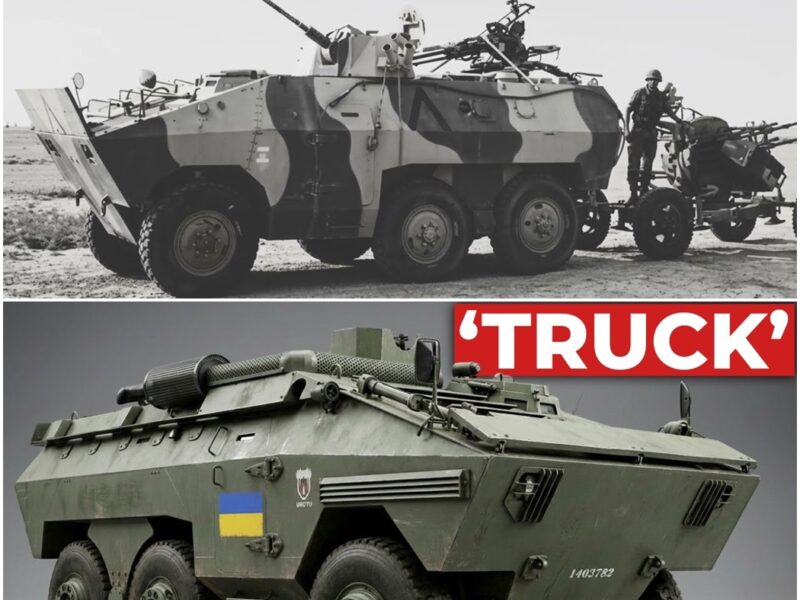
The machine that emerges is squat, angular, and riding on six rubber tires. It weighs 14 tons. Its hull is welded from a strange dual- layered steel that no other manufacturer in the developing world has ever attempted. A single heavy machine gun sits on top. The engine is borrowed from a commercial truck.
The suspension at the rear is a bizarre articulated arrangement that looks like it belongs on a piece of mining equipment, not a military vehicle. The whole thing is designed to swim across rivers under its own power, carrying a dozen soldiers inside a steel box that can barely stop a heavy rifle round. It looked like a science project.
It looked like something a trucking company had welded together in a backyard. Western defense analysts dismissed it as crude. Soviet engineers ignored it entirely. No serious military power on Earth believed that Brazil, a country still importing secondhand American M8 Greyhounds from the 1940s, could build a competitive armored personnel carrier from scratch.
They were wrong. Over the next two decades, this vehicle would be shipped across the Atlantic Ocean by the hundreds. It would arm more than 30 nations across three continents. It would fight in the longest conventional war of the 20th century, in the deserts of Chad, in the streets of Bogatar, and in the chaos of the Libyan civil war.
It would make its manufacturer the largest armored vehicle exporter in the developing world. And then it would outlive the very company that created it by more than 30 years. Its designation was the EE11 Uru, named after one of the deadliest pit vipers in South America. And it was the vehicle that proved a country with no defense pedigree could build a machine that nations at war would trust with their soldiers lives.
To understand why the Aruto existed, you need to understand the problem Brazil faced in the late 1960s. Brazil’s military government, which had seized power in 1964, inherited an armed forces equipped almost entirely with surplus American hardware from the Second World War. M3 halftracks, M8 Greyhound armored cars, M113 tracked carriers, all of it secondhand, all of it aging, and all of it dependent on Washington for spare parts, ammunition, and replacements.
That dependency became a strategic vulnerability almost overnight as the United States sank deeper into Vietnam. American defense exports to South America slowed to a trickle. Spare parts dried up. Replacement vehicles stopped arriving. Congress imposed restrictions on arms transfers to military regimes and Brazil found itself near the top of the list.
The message from Washington was unmistakable. If Brazil wanted modern weapons, it would have to ask permission and permission could be revoked at any time for any reason by politicians in a foreign capital who had no stake in Brazilian security. Brazil’s generals looked at their rusting fleet of American castoffs and realized that if they wanted a modern mechanized army, they would have to build it themselves.
The military government launched an import substitution program for defense, encouraging private industry to develop indigenous weapon systems that would free Brazil from reliance on any single foreign supplier. The man who stepped forward to solve that problem was Joseé Luis Whitaker Rivero, a mechanical engineer trained at the University of Sa Paulo’s polytechnic school.
Whitaker Rivero had founded a company called Engineer Especially Zardos, known by its abbreviation in the late 1950s. The company had started by converting commercial trucks into six-wheel drive military utility vehicles. It was small, ambitious, and deeply connected to the military regime.
Whitaker Rivero’s friendship with Lieutenant Colonel Pedro Dlo, the commander of the Brazilian Army’s working group of automobile engineers gave Enisa a direct channel into the procurement system that its competitors could not match. In 1970, Whitaker Rivero began work on two vehicles simultaneously. The first was a six- wheeled armored reconnaissance car that would become the EE9 Cascavel, named after the Rattlesnake.
The second was a six- wheeled amphibious armored personnel carrier, the troop carrier, the workhorse, the URU. The Brazilian army’s requirements were specific. They needed a vehicle that could cover the enormous distances of Brazil’s interior. Where paved roads were rare and rail networks barely existed, it had to be wheeled, not tracked.
Because tracks wore out fast on rough roads and demanded constant maintenance that conscript crews could not provide. It had to swim because Brazil’s river network was vast and bridging equipment was scarce. And above all, it had to be cheap. Not cheap by the standards of American or European defense budgets. Cheap enough for a developing nation to buy in hundreds without bankrupting its treasury.
The vehicle Whitaker Rivero designed to meet those requirements was built around a philosophy that no western defense manufacturer would have considered respectable. Instead of purpose-built military components, the URU used a commercial truck engine, a Mercedes-Benz OM 352A diesel producing 170 horsepower.
Its transmission was a standard Allison automatic gearbox. Its electrical system ran on 24 volts from off-the-shelf batteries. Every major mechanical component could be sourced from civilian truck suppliers across South America, Africa, and the Middle East. A crew chief who could maintain a Mercedes cargo truck could maintain a Neurutu. That was the point.
But Whitaker Rivero’s genius was not in the drivetrain. It was in two innovations that gave the Arutu capabilities far beyond what its price tag suggested. The first was the armor. Enisa developed a proprietary dual hardness steel. A welded composite of a hard outer face bonded to a softer, more ductile inner layer.
This bi-metal armor weighed the same as conventional homogeneous steel plate, but offered roughly 1.8 eight times the ballistic protection. At 12 mm thick on the front and 6 mm on the sides, it could stop 7.62 mm armor-piercing rounds at combat ranges. For a vehicle that cost under $150,000, that level of protection was remarkable.
The second was the suspension. The front axle used a conventional independent double wishbone arrangement with coil springs, but the rear two axles were connected by Enisa’s patented Boomerang walking beam system. a tandem articulated linkage with semi-eleptical leaf springs that allowed each rear wheel to travel nearly 90 cm up or down independently.
The effect was extraordinary. On broken ground, over rocks, through dried rivereds, across terrain that would have grounded a conventional 6×6, the URU kept all six wheels pressed to the earth. It gave a wheeled vehicle off-road mobility approaching that of a tracked carrier at a fraction of the operating cost.
The Arutu could carry a crew of 2 or three, plus up to 12 infantry soldiers. It could reach speeds of 100 kmh on paved roads and cover 850 km on a single tank of fuel, more than double the range of the American M13. In the water, twin propellers with court nozzles drove it at 8 km/h, steered by twin rudders linked directly to the steering wheel, a pneumatic trim vein at the front folded up before entry, and electric billagege pumps kept the hull dry.
It could cross a river and emerge fighting on the far bank. For armorament, the standard fit was a ring-mounted 12.7 mm M2 Browning heavy machine gun with roughly 1,000 rounds. But the Arut was designed as a platform, not a fixed configuration. Optional turrets range from a twin 7.62 mm mount to a 20 mm silicon cannon, a 25 mm autoc cannon, a 60 mm gun mortar combination, and even a 90 mm cannon in the fire support variant known as the Ural.
For armies that needed an entire mechanized fleet on a budget, Engiza offered the Arutu and the Casavl as a matched pair, sharing engines, transmissions, suspension components, and spare parts. Buy one, and the other cost almost nothing extra to maintain. Serial production began in 1974. The Brazilian Army ordered 223. The Marines took six.
And then something happened that Joseé Luis Whitaker Ribero had planned for from the very beginning. The export orders started arriving. Now, before we get into where the Arutu actually fought and what happened when it did, if you are enjoying this deep dive into Cold War armored vehicle engineering, hit subscribe. It takes a second, costs nothing, and helps the channel grow.
The first major export customer was Chile, which ordered 37 Arutus in 1975. General Austoa Pinocha’s regime was internationally isolated, cut off from most Western arms suppliers by human rights sanctions, and Brazil was willing to sell without political conditions. Within a year, Enisa had delivered more casavls and Arutus to Chile than was serving in all of Brazil’s own armed forces combined.
But it was the Middle East that transformed the Arutu from a regional product into a global one. The 1973 oil crisis had flooded Arab states with petro dollars, and those states needed to spend that money on modern weapons fast. Libya under Colonel Mama Gaddafi became enga’s single largest customer.
The Brazilian army itself helped facilitate the relationship, personally introducing Whitaker Rivero to Gaddafi. Libya would eventually acquire an estimated 100 to 180 Arutus alongside hundreds of casavls, making it the largest operator of Brazilian armored vehicles outside Brazil itself. And then came Iraq, according to accounts documented by defense historians.
After 3 weeks of negotiations, Enisa secured a contract on May 5th, 1978 for the delivery of 364 Cascavel and 148 Uritus to the Iraqi armed forces. Some sources place the total Iraqi Uru fleet at closer to 200. The exact number remains disputed. What is not disputed is what happened next. On September 22nd, 1980, Iraqi forces crossed the border into Iran.
The Iran Iraq war, the longest conventional war of the 20th century, had begun. It would last eight years. It would kill over a million people, and the Uru was in the middle of it from the start. Iraqi Urus were thrown into the grinding attritional warfare of the southern front where mechanized columns pushed across flat, featureless terrain under artillery bombardment and chemical weapons attacks.
The vehicle’s range was critical here. Supply lines in Ire stretched across hundreds of kilometers of open desert and a carrier that could cover 850 km without refueling was a logistical asset that shorter range tracked vehicles could not match. Its commercial truck engine could run on low-grade diesel available at any Iraqi fuel depot, a practical advantage that more refined Western power plants could not replicate in the field.
According to a declassified CIA assessment from February 1987, the majority of Iraqi Uritus were assigned to individual Republican Guard brigades, the regime’s elite formation. The Republican Guard expanded from roughly five brigades at the start of the war to more than 25 by its end, and these units spearheaded Iraq’s decisive offensives.
In the spring of 1988, Republican Guard divisions under the command of Lieutenant General Iad Futaya Alawi launched the Tawakala Ala Allala operations. A series of massive counterattacks that recaptured the Alfor Peninsula and broke Iranian momentum for good. Mechanized infantry in those operations moved in armored carriers and Arutus were among the vehicles assigned to those formations.
The specific unit level deployment of individual Arutus in named engagements remains undocumented in publicly available sources, but the vehicle’s presence in the Republican Guard’s order of battle during the war’s most critical phase is confirmed by American intelligence records. The war also produced an ironic footnote.
Iran, Iraq’s enemy, also operated Arutus. French military historian Pierre Razu in his definitive account of the conflict notes that at least some Iranian Uritus were acquired directly from Brazil rather than captured from Iraqi forces. Libya reportedly reexported as many as 130 Brazilian origin armored vehicles to Iran before 1987 using the URU’s commercial availability and Brazil’s relaxed export controls to funnel weapons to both sides of the same war simultaneously.
When Iraq invaded Kuwait in August 1990, the Arutu went to war again. This time it was on the losing side. During Operation Desert Storm in 1991, coalition forces captured Iraqi Arutus along with the rest of Saddam Hussein’s shattered mechanized fleet. One vehicle seized by the United States 101st Airborne Division during the ground offensive is now displayed at the Donf Pratt Museum at Fort Campbell, Tennessee.
Its placard notes a Swedish designed turret equipped with a 20 mm cannon, a fuel capacity of 100 g, a range of 528 mi, and a top speed of 55 mph. A second captured example sits at the tank museum in Bovington, England, fitted with a 20 mm Ericon ET20 turret and is occasionally driven in the museum’s arena demonstrations. Two Brazilianbuilt vehicles captured by two different armies from the same country now sit in museums on two different continents.
That is the reach of the URU. Libya’s URU saw a different kind of war. Throughout the 1980s, Gaddafi deployed his Brazilianbuilt carriers in support of FR O L I N A T rebels during the Chedion Libyan conflict. To disguise the extent of Libyan involvement, Erutas were positioned near rebel posts and presented to international media as rebel equipment.
The deception fooled almost no one. During the 1987 Toyota War, the final phase of the conflict, highly mobile Chadian forces in Toyota pickup trucks armed with m anti-tank missiles overwhelmed Libyan armored columns in a series of devastating engagements. Libya lost an estimated 7,500 men killed and over $1.5 billion in military equipment destroyed or captured.
Armored personnel carriers, including Arutus, were among the wreckage scattered across the desert. More than two decades later, Libya and Urus returned to combat one final time. During the 2011 civil war that toppled Gaddafi, surviving vehicles were pulled from storage by various militia factions, some retrofitted with improvised multiple rocket launchers welded to their hulls.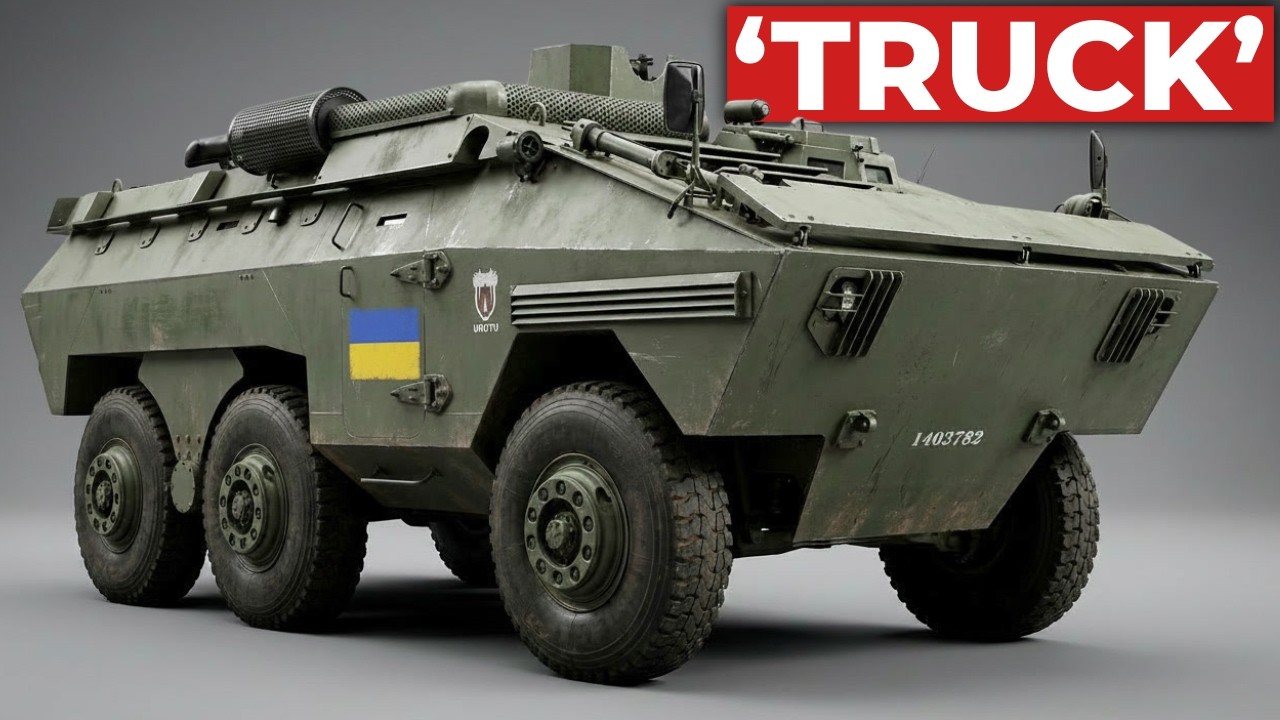
They fought in the streets of Certi and Misata, battered and patched and decades past their intended service life more than 40 years after rolling off the production line in Sao Sedos Campos. The vehicle that Brazil had sold to Gaddafi in the 1970s was now being used by the forces that overthrew him in South America.
The URU saw combat of a very different kind. Colombia received 56 Us in 1982 as part of a $93 million package that included 128 casels. On November the 6th, 1985, guerrillas from the M19 movement stormed the Palace of Justice in Bogatar, seizing the Supreme Court building and taking hundreds of hostages, including nearly half the country’s Supreme Court justices.
The Colombian army’s response was immediate and devastating. General Jesus Armando Aras Cabales ordered an armored assault on the building. Colonel Alonso Plazas led Cascavel’s Andutus directly into the plaza surrounding the palace. The vehicles surrounded the building and the army stormed it. A fire broke out during the assault and destroyed the structure, killing scores of hostages, including roughly half the Supreme Court.
The event remains one of the most controversial episodes in Colombian history, and the Enisa vehicles that breached the plaza became permanent symbols of that day. Colombian neurutus continued to see action for decades after the Palace of Justice. The army deployed them in counterinsurgency operations against FRC dissident and the ELN across Colombia’s rural interior where the vehicles range and road speed allowed rapid redeployment between forward operating bases separated by hundreds of kilometers of mountainous terrain. Colombia’s attempts to eventually replace the URU with a domestic design. First the Elzipo prototype in 1993 and then the four-wheeler program from 1996 to 2003. Both failed and were shelved in favor of imported replacements. Brazilian Urutus also deployed on peacekeeping operations far from South America. In the early 1990s, Brazilian contingents took Eurus to United Nations missions in Mosambique and Angola, where the vehicles operated in conditions similar to those they had been designed
for, long distances on unpaved African roads in tropical heat. From 2004 to 2017, the Brazilian Army led the United Nations my ynus mission in Haiti. And unmarked Urutus patrolled the streets of Porto Prince for 13 years. During one incident, a bullet pierced the Urutu’s hull and wounded a Brazilian soldier’s hand, exposing the vehicle’s armor limitations against even small arms fire at close range.
That single penetration helped accelerate Brazil’s decision to replace the Uru with a modern design. On paper, the URU faced competition from some of the most prolific armored carriers ever built. The American M113, with over 80,000 produced, was lighter, cheaper per unit in bulk orders, and tracked, giving it superior performance in soft terrain like mud and snow.
But it was slower on roads with a top speed of only 61 km/h, and its operational range was roughly half the Urutus. For nations whose armies operated across vast desert highways and arid plains rather than European mud, wheels made more sense than tracks. The Soviet BTR60 and BTR70 were close arrivals.
Eight- wheeled amphibious, fast on roads, and available in huge numbers through Soviet military aid programs. But the BTR series carried a fatal design flaw. Troops inside had to exit through cramped side or roof hatches, a process that was slow under calm conditions and often lethal under fire.
The Euro2 offered large side doors and rear hatches that allowed a full squad to dismount in seconds. Its front-mounted engine also provided a passive shield of steel and machinery between incoming fire and the troop compartment, a protection arrangement the rear engine BTRs could not match. The French VAB was perhaps the closest conceptual equivalent, a wheeled amphibious troop carrying vehicle of similar size and role.
It was arguably better protected and more refined in its engineering with superior manufacturing tolerances and more advanced optional equipment, but it was also significantly more expensive, and France attached political conditions to its arms exports that Brazil did not. For nations with limited defense budgets and no political ties to Paris, the URU offered 80% of the capability at half the cost.
And for nations that Western governments refused to sell to at all, Brazil was often the only option. That willingness to sell without strings was itself a competitive advantage. While the United States required end-user certificates, congressional notifications, and human rights reviews before approving arms exports.
And while the Soviet Union tied weapon sales to ideological alignment and basing agreements, Brazil asked only for payment. Inessa sold to Libya under Gaddafi. It sold to Iraq under Saddam Hussein. It sold to Chile under Pinoa. It sold to both sides of the Iran Iraq war simultaneously through direct exports and Libyan intermediaries.
The ethics were questionable. The business model was effective. And that was the URU’s ultimate selling proposition. Not superiority, sufficiency. It was good enough to fight, cheap enough to buy in volume, and simple enough that a conscript mechanic trained on commercial trucks could keep it running in conditions that would strand more sophisticated machines.
By the mid 1980s, Enisa had produced over 1,700 urutas and shipped them to more than 30 countries. The company had more than 5,000 employees and a dozen subsidiaries. Joseé Luis Whitaker Rivero was hailed as the man who had turned Brazil into an arms exporting nation. Enisa was one of the big three of Brazil’s defense industry alongside Avibas and Embra.
And then Whitaker Rivero made the decision that destroyed everything he had built. Convinced that Enza could compete at the highest level of armored vehicle design, he poured the company’s resources into the EE1 Assorio, a main battle tank intended to compete with the American M1 Abrams and the British Challenger.
The Assorio was technically impressive. It performed well in Saudi Arabian trials where it was tested head-to-head against the American M1 A1 and the British Vicar’s Mark 7 in desert conditions. The tank demonstrated superior acceleration, better gun accuracy on the move, and a more effective fire control system in Saudi tests.
For a brief moment, it appeared that a Brazilian company might win the largest tank contract in the Middle East. But the contract in Giza needed a massive Saudi order that would have justified the entire program evaporated after Iraq invaded Kuwait in August 1990. The geopolitics of the Gulf shifted overnight.
Saudi Arabia, now dependent on American military protection against Iraqi aggression, was never going to buy its main battle tank from Brazil. The kingdom turned to the United States for its armor, purchasing M1 A2 Abrams tanks as part of a broader defense relationship that no Brazilian company could compete with.
The Assorio, despite its technical merits, never found a single buyer. The collapse cascaded. Iraq, which owed in Giza roughly $80 million for vehicles already delivered, defaulted on its debts under international sanctions. The Cold War ended, collapsing demand for weapons across the developing world as superpower patrons stopped subsidizing their clients arms purchases.
The Brazilian government, now a democracy again after the military regime ended in 1985, withdrew the institutional support that had sustained Enessa for two decades. Enessa entered a pre-bankruptcy state in 1988 and declared full bankruptcy in 1993. The company that had built over 6,800 military vehicles across eight different models, the company that had single-handedly turned Brazil into a net arms exporter simply ceased to exist.
Joseé Luiz Whitaker Ribero, the engineer who had drawn the URU’s design plans with his own hands, watched his life’s work dissolve. But the URU did not. Decades after Enghiza’s collapse, the vehicle remained in service across multiple continents. Brazil’s own fleet was modernized by the Sao Paulo war arsenal, which upgraded 226 routters with new engines producing 230 horsepower automatic transmissions, improved armor, and an extended range of 950 km, a stop gap measure.
While the Aeco fifth BTPMR guarani was developed as a replacement, the Guarani began entering service in 2014 and Brazil started decommissioning its last Arutus in 2022, donating surplus vehicles to the military police of Rio de Janeiro and the Federal Prison Service. Chile retired its fleet in 2002, selling the vehicles to an Israeli contractor for reexport.
Iraq’s surviving Arutus remained in infantry during the war against the Islamic State from 2014 to 2017, more than three decades after they first arrived from Brazil. Venezuela’s Marine Corps reportedly refurbished its Urutus as recently as 2020. Angola and Tunisia continued to operate the vehicle into the 2020s.
In total, the URU outlived the company that built it by more than three decades, and it outlived many of the governments that first ordered it. The captured Iraqi Uru at Bington is occasionally started up and driven around the museum’s arena for public demonstrations. Its Detroit diesel engine still turning over reliably, its boomerang suspension still absorbing the uneven ground.
The vehicle was built in Brazil, shipped to Iraq, driven through a war captured by the British, and now entertains crowds in the English countryside. That journey from a factory in Sao Paulo State to a museum in Dorset is as unlikely as the vehicle itself. July 1970, a factory floor in Sos Campos, a country with no defense pedigree, rolls out a prototype armored carrier built from truck parts, welded from experimental steel, and riding on a suspension system named after a boomerang. It had thin armor.
It had no advanced fire control. It had no night vision, no NBC protection as standard, no stabilized weapon station, no laser rangefinder, no thermal imaging. It was not fast enough to outrun a modern infantry fighting vehicle and not tough enough to survive anything heavier than a rifle bullet. Every serious Western defense analyst who looked at it in 1970 would have predicted it would sell a few hundred to the Brazilian army and disappear.
And yet it worked. It worked in the marsh lands of southern Iraq where Republican Guard brigades used it to carry soldiers into the most intense ground combat since the Second World War. It worked in the Chadian desert where Libyan columns drove it hundreds of kilometers from their own borders into territory no other vehicle could reach without a logistics chain.
It worked in the streets of Bogatar where it breached a besieged government building under fire. It worked in Porto Prince where it patrolled for 13 years under the United Nations flag. It worked on the highways of Venezuela, in the jungles of Angola, on the borders of Tunisia and in the mountains of Ecuador.
It worked for armies that could not afford American equipment. did not trust Soviet equipment and needed something that a truck mechanic could fix in a field workshop with a socket wrench and a diesel can. Over 1,700 were built. More than 30 nations bought them. Two city museums on opposite sides of the Atlantic, captured from the same army in the same war.
Proof that a machine built by a trucking company in Brazil crossed an ocean and fought in conflicts its designers never imagined. The E11 Arutu was not elegant. It was not advanced. It was not built by a superpower or backed by a trillion dollar defense budget. It was built by an engineer who understood that the armies of the developing world did not need the best armored carrier ever designed.
They needed one that worked, one they could afford, and one they could keep running when everything else broke down. That is not luck. That is engineering for the real world.