Why This ‘Cheap’ Turkish Carrier Just Replaced Western Armor On NATO’s Front Line D
2007, a factory floor in Arafier, a small industrial city on the western edge of Turkey. Engineers from a company called Otakar are gathered around a drawing board, arguing over the geometry of a steel hull. The argument is not about aesthetics. It is about survival. It is about what angle a floor must be cut at to redirect the force of a buried mine away from the men sitting above it.
The engineers are not working on a government contract. There is no ministry funding behind them. The Turkish state has not commissioned this vehicle. Every lra being spent in this room is coming from Otakar’s own pocket, on a bet that a machine they have not yet built will one day be wanted by armies they have not yet spoken to.
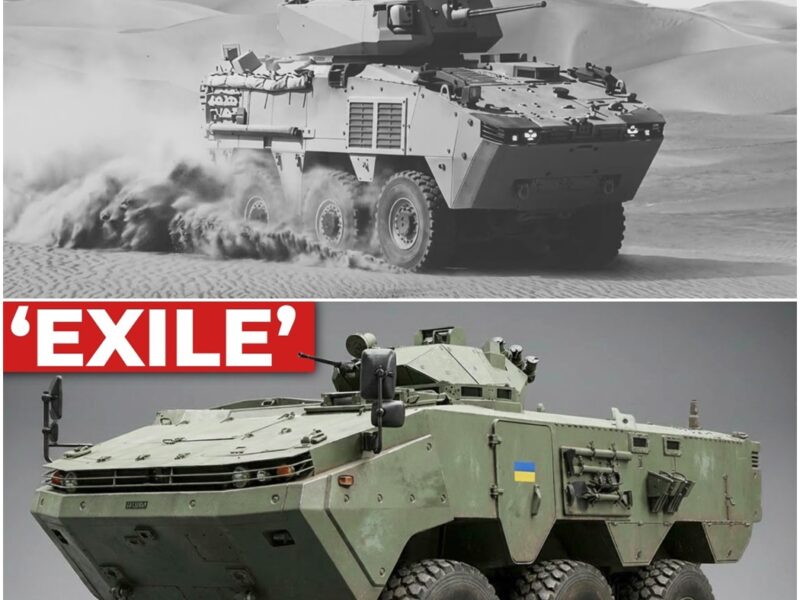
What rolled out of that factory 3 years later looked to most observers like a practical machine, boxy, high clearance, six wheels turning on independent suspension. No visual drama, no lines suggesting speed or aggression. It was the sort of vehicle a critical eye might dismiss before it had even moved.
a product from a second tier defense industry in a country that had spent decades assembling other nations designs under license rather than generating its own. That dismissal would have been a mistake, a serious one. The Oticar Armor 6×6 would go on to be purchased by a Gulf state that immediately deployed it to one of the most brutal ground wars of the 21st century.
It would win a competitive NATO tender against European and North American rivals, placing it inside a military alliance whose member states had spent the previous two decades setting the global standard for armored vehicle protection. It would spawn a derivative worth $661 million, the largest single defense export contract in Turkish history at the time it was signed.
And it would do all of this while its home country’s own army chose a different vehicle entirely. Its designation is the Armor 6×6 and it is the machine that proved Turkey could design, engineer, and sell a worldclass armored vehicle on its own terms. To understand why the armor exists, you need to understand what Turkeykey’s defense industry looked like before it.
For most of the 20th century, Turkish military procurement followed a familiar pattern. Vehicles arrived from abroad. Designs were licensed. Assembly happened locally. But the intellectual property, the engineering DNA belonged elsewhere. The Cobra 4×4, Otakar’s breakout product of the 1990s and early 2000s, changed this in a limited way.
It was domestically produced. It sold to dozens of nations, and it built UTRA’s reputation. But it was a light vehicle, a 4×4 platform in the scout and patrol bracket. What Turkeykey’s military and the export market increasingly needed was something heavier, something protected against the threat that had defined ground warfare since the invasion of Iraq in 2003.
That threat was the buried explosive device, the mine, the roadside bomb, improvised, industrial, or purpose manufactured. It did not matter. What mattered was the geometry of the blast, the column of pressure traveling upward through the floor and into the men above it. The entire paradigm of armored vehicle design had shifted.
The lesson learned in Iraq and Afghanistan, paid for in lives across a dozen coalition nations, was that flat bottom vehicles killed their occupants even when they survived a blast structurally. The force transmitted through the floor was enough to shatter bones, destroy spines, and kill through hydraulic shock before any fragment had reached a crew member.
The answer was the V-shaped hull, the angled floor that deflected blast energy outward rather than channeling it upward. Every serious armored vehicle program launched after 2005 incorporated this principle to some degree. The Americans called their solutions mine resistant ambush protected vehicles. Otar called their answer the armor.
The design brief the engineers wrote for themselves in Arafi was ambitious. The vehicle had to be amphibious, able to cross rivers under its own power. It had to be air transportable fitting inside a C130 military transport aircraft. It had to carry a full infantry section driver and commander plus eight dismounts, all seated on anti-mine blast attenuating seats with fivepoint harnesses and a floating floor that would isolate them from ground shock.
It had to do over 100 kmh on road. It had to run for 700 km without refueling and it had to do all of this at a weight that would not destroy the bridges and roads of the regions where it was likely to operate. The resulting machine was built around a monoke steel hull, meaning the protection was structural, not bolted on in panels.
This matters because bolt-on armor is only as strong as the fasteners holding it. A monoke hull is the armor, the shape itself carrying the protective load. The ground clearance was set at 420 mm, a significant figure for a vehicle this size, placing the belly well above the ground and reducing the explosive pressure that would reach it from a shallow buried mine.
The hull geometry was designed to direct blast energy outward. The floor was not flat. The power plant was a turbocharged diesel producing 450 horsepower driving all six wheels through an automatic transmission and a transfer case with a locking differential. The driver could select six-wheel drive or four-wheel drive depending on the terrain.
And the system included cross-axxle differential locks for situations where traction was lost on individual wheels. The tires were 14-in run flats with a central tire inflation system, allowing the crew to adjust tire pressure from inside the vehicle to match the surface and to keep moving on deflated tires long enough to exit a contact zone.
Suspension was fully independent on all three axles, either hydronneumatic or a telescopic shock and helical spring arrangement, depending on the customer’s specification. The hydronneumatic variant allowed the crew to adjust ride height while moving. For amphibious operations, twin hydraulic propellers at the rear drove the vehicle through water at better than 8 km/h, and the system allowed pivot turns in the water, meaning the driver could spin the vehicle on its own axis without forward motion. The amphibious system was not cosmetic. It was designed for operational river crossings under time pressure and the pivot capability meant that a driver who had misjudged the current or the exit point on the far bank could correct without needing to complete a full circle in the water. That is the difference between a specification written by an engineer and a specification written by someone who has actually tried to cross a river in an armored vehicle. The survivability architecture extended beyond the hull geometry. The crew sat on energyattenuating seats mounted on a floating floor. The floor was isolated
from the hull structure by shockabsorbing mounts so that even when blast energy reached the underside of the vehicle. The mechanical coupling between the floor and the crew positions was interrupted. The five-point harnesses kept occupants from becoming projectiles inside the hull. The interior was fitted with spool liners to catch fragments that might penetrate the steel in a catastrophic strike.
Fire suppression was automatic, triggered by sensors in the engine bay and fighting compartment. NBC filtration maintained positive pressure inside the hull, allowing the crew to operate in environments contaminated by chemical, biological, radiological, or nuclear agents without entering full protective suits.
The Armatronics vehicle electronic suite integrated the engine management, driver vision enhancement, navigation, diagnostics, and data logging into a single architecture with invehicle displays, allowing the crew to monitor the health of every major system while moving. Ottoar built over 40 variants of the armor family across the 6×6 and 8 by8 platforms.
The weapons integration options ran from a basic ring-mounted 7.62 mm machine gun at the simplest end through 12.7 mm heavy machine guns and 40 mm automatic grenade launchers on remote weapon stations up to a 20 mm eric cannon in the Bozok turret configuration. A 30 mm cannon in the Misrak 30 configuration.
and at the heaviest end, a 105 millimeter gun. In the mobile gun system variant, a single Monoke hull, a single drivetrain family, and a single logistics chain could therefore serve as a dismount carrier, a fire support vehicle, a command post, an ambulance, an engineering vehicle, or a direct fire platform, depending on what was bolted to the top of it.
The payload capacity of 4,500 kg gave the integration teams enough margin to absorb the weight of heavier mission modules without pushing the vehicle beyond its designed gross weight of 18,500 kg. a central tire inflation system, run flat capability, the amphibious drive, the independent suspension, the automatic gearbox, the fire detection and suppression system, the NBC filtration, the Aratronics vehicle electronic suite with driver vision enhancement and integrated diagnostics. The list of systems built into a vehicle that was by the standards of European competitors priced modestly was the core of the sales argument Oticar would make to every potential customer over the following 15 years. Now, before we get into where this machine was actually sent and what it faced there, if you are getting value from this deep dive into modern military vehicles and defense industry history, hit subscribe. It takes a second, costs nothing, and it is what keeps this channel producing content like this. The
first country to write a check for the armor 6×6 was Bahrain, the island kingdom of the Gulf, a close ally of Saudi Arabia, a nation with a small but professional military force that had been watching the wars in Iraq and Afghanistan and drawing the same conclusions everyone else was drawing. Flatbottomed vehicles were acceptable until the first mine.
After that, what you needed was geometry. The Bahini procurement came in two tranches. The first in excess of $10.6 million covered an initial batch with spares and training. The second announced in June of 2011 was worth $63.2 million. Otcar’s general manager Serda Gurguch speaking at the announcement noted it was the second export contract for the Armor 6×6 within its first year on the market.
Combined, the two contracts came to roughly $73.8 million and they covered approximately 73 vehicles destined for both the Royal Bahraini Army and the Bahraini National Guard. Deliveries were scheduled for 2012. The army variant went to the mechanized infantry with an amphibious configuration and a 12.
7 mm heavy machine gun. The National Guard variant was non- amphibious and mounted a 20 mm cannon turret. Bahrain configured its fleet for two different operational realities which itself was a demonstration of the armor’s modular design working as intended. Then in 2015, the war in Yemen began. Saudi Arabia assembled a coalition of Gulf states to intervene against the Houthi movement that had seized the Yemeni capital. Bahrain sent forces.
Among those forces was a reinforced company of Royal Bahini Army mechanized infantry. The vehicle they deployed to the forward operating base at Safir near the city of Marib in central Yemen was the armor 6×6. This was documented by Michael Knights and Alex Almeida of the Washington Institute for Near East Policy in September of 2015.
The war in Yemen was not a clean war with defined front lines and predictable engagements. It was a conflict shaped by improvised explosive devices, rocket fire, indirect bombardment, and the specific horror of ballistic missiles fired by forces equipped with Soviet era hardware. On September 4, 2015, an otr21 TotKa ballistic missile, a weapon with a warhead weighing approximately 480 kg, struck the vehicle park at Seafir.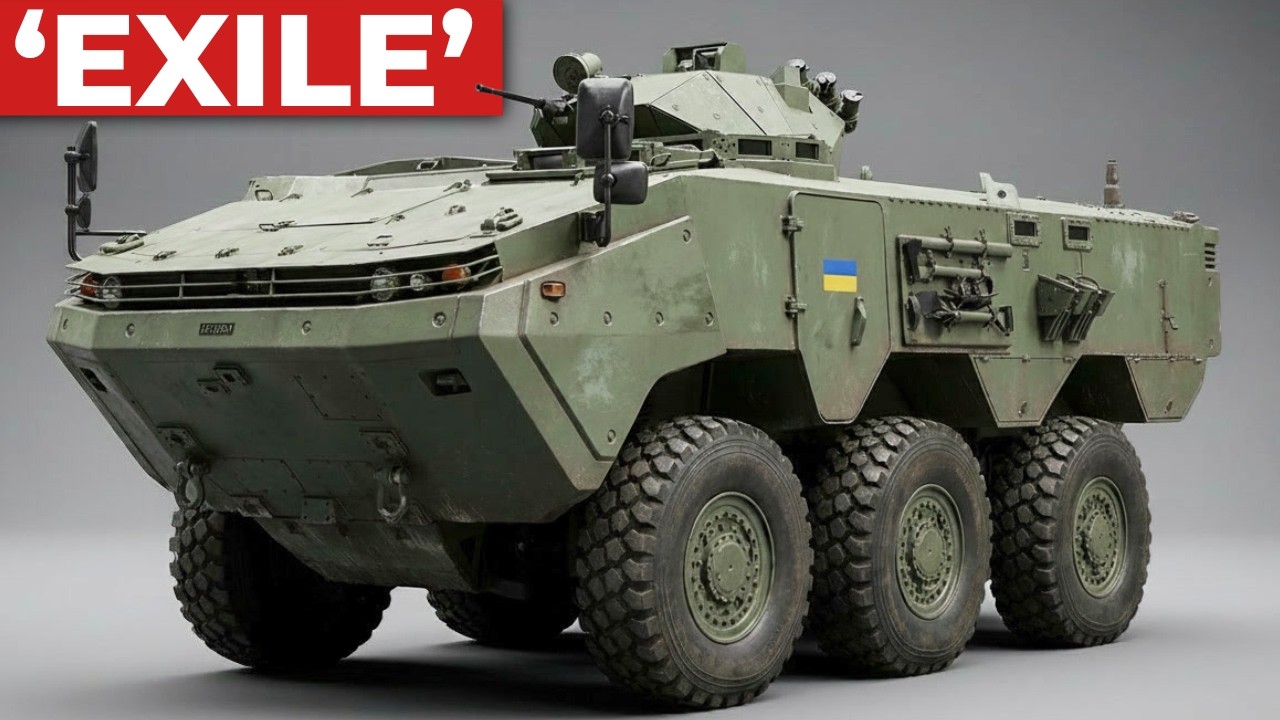
The casualties were catastrophic. 45 Emiratis, 10 Saudis, and five Bahrainis killed. It was the single deadliest incident for coalition forces in the entire Yemen campaign. What the strike does not provide for the purposes of assessing the armor is a clean verdict. No source has ever confirmed that an armor was struck by that missile or that Bahraini armor crew members were among the dead. The deployment is documented.
The proximity is documented. The specific forensic outcome for any individual vehicle on that ramp is not. What the Yemen deployment does establish with confidence is that Bahrain considered the armor the right vehicle to put into a contested environment in a peer- adjacent conflict zone that is not a trivial endorsement.
Small militaries do not deploy their most visible foreign procurement into live wars to satisfy a manufacturer’s marketing department. They deploy what their operators trust. The Gulf track record combined with the growing reputation of Turkeykey’s defense sector opened a door that no Turkish armored vehicle had walked through before.
In 2017 at the International Defense Exhibition in Abu Dhabi, Otcar signed what Gurguch publicly described as the largest single defense export contract in Turkish history to that point. The customer was the United Arab Emirates. The vehicle was not the 6×6. It was a derivative, a larger, heavier 8×8 platform jointly developed for the UAE market through a joint venture called Aljasur with Otakar holding an indirect 49% share and the Emirati state holding the majority.
The vehicle was named the Rabdan after a traditional Emirati falconry technique. The contract was worth $661 million, covering up to 700 vehicles over 6 years. The Rabbdan was built to more demanding specifications than the baseline armor, achieving North Atlantic Treaty Organization Standard Agreement level 4 ballistic protection and level four mine protection, meaning it was certified to survive a 10 kg TNT equivalent blast beneath its hull.
Some 400 Rabbdan vehicles had been delivered as of the mid 2020s with production continuing at the Aljasaur facility in Abu Dhabi. The Rabdan confirmed what the Bahrain order had suggested that the armor platform could be evolved upward in protection, size, and lethality to meet the requirements of well-funded demanding customers.
But the most strategically significant contract came from a direction almost no analyst had predicted. In October of 2023, Estonia signed a€30 million euro agreement covering 230 armored vehicles. Within that package were 130 armor 6×6 units representing the bulk of the contract value.
Estonia is a North Atlantic Treaty Organization member. Estonia is a European Union member. Estonia shares a border with Russia. And Estonia, facing the most intense pressure on European collective defense since the Cold War, chose a Turkish vehicle manufactured outside the European Union and outside the traditional Western Defense Industry supply chain.
The Estonian Center for Defense Investment Director General Magnus Valdemar SAR signed the contract alongside Otakar military cluster head Sedf Vi who told reporters afterward that Estonia would be the second North Atlantic Treaty Organization country fielding the armor and that the contract was a very important milestone for the armor vehicle family.
Deliveries began in late 2024. By early 2025, approximately 50 vehicles had been received by the Estonian Second Infantry Brigade. Full delivery of the package was projected for the end of 2025. The Estonian decision was not made on sentiment. Estonia conducted a competitive evaluation. European and North American options were assessed.
The ARMA1. The grounds for that decision, as understood from Estonian public statements, centered on the vehicle’s protection levels relative to its cost, its modular mission flexibility, and Otar’s ability to meet Estonia’s delivery timeline at a moment when European defense industries were already stretched by Ukrainian demand.
What Estonia needed was vehicles quickly at a price that allowed the small Baltic state to equip an entire brigade without consuming its entire capital equipment budget. To understand what the Arma 6×6 is competing against, you need to look at what Europe and North America were offering in the same weight and roll bracket.
The Petria AMV from Finland, an 8×8 platform in the 24 to 32 ton class, is perhaps the armor’s most natural point of comparison. It is combat proven in Afghanistan across multiple operators. It is in service with the Ukrainian military, and it carries certified North Atlantic Treaty Organization mine protection ratings that have been validated in actual conflict.
It cost approximately $5 million per unit at full specification. The armor 6×6 working backward from the barin contract math implied a unit cost closer to $1 million. The protection floor of the Patriot is higher. The cost difference is significant enough to buy four armor vehicles for everyone Patria. The boxer, a German Dutch 8×8 in the 36 ton class, is the premium option.
It uses a mission module system that allows the same vehicle to be reconfigured between APC, ambulance, command post, and direct fire support roles without structural modification. Its protection is among the highest of any wheeled vehicle in the current international market.
Its cost, when factoring in mission modules and national content requirements, frequently exceeds $5 million per unit, and has reached considerably higher in certain national programs. The boxer offers a protection level the base armor cannot match. It also costs multiples of what the armor costs, making it inaccessible to any nation that cannot fund a premium armored vehicle program.
The Pan 5, produced by General Dynamics European Land Systems out of Switzerland, is a 30 ton 8×8 with a strong export track record across Europe. Spain’s Dragon program covering 348 vehicles was reported at 1.74 billion, implying a per unit cost approaching €5 million. Again, the protection is certified and significant.
Again, the cost places it in a tier above what a middle-income military or a small NATO state can sustain across a large fleet. The Israeli ATAN, an 8×8 in the 30 to 35 ton class, represents perhaps the most heavily protected wheeled vehicle in the current global market. It carries iron fist active protection, certified ballistic and mine ratings at North Atlantic Treaty Organization level 4, and it has been tested in the most demanding urban and combined arms combat of the 21st century in Gaza from October 2023 onward. It costs approximately $3 million per unit. It is not offered freely on the export market. Against these competitors, the Arma 6×6 is a lighter, cheaper, less protected vehicle. Its ballistic ratings have never been publicly certified at the level Oticar claims them. The company’s marketing language is qualitative rather than citing specific North Atlantic Treaty Organization certification numbers for the base 6×6. What the armor offers that none of the heavier platforms can offer is the combination
of amphibious capability, C130 air transportability in its 6×6 configuration, low logistical footprint, lower acquisition cost, and the platform modularity to accept weapon systems from 7.6 62 mm machine guns up to a 105 mm gun in the mobile gun system variant. For a customer that needs to equip many vehicles across many roles at a price that does not bankrupt the program, the armor presents a credible argument.
There is one more dimension to the armor’s story that the vehicle itself cannot tell. It is the story of a domestic competition that the ARMA lost. Turkey’s own land forces ran a competition called Usuzel Maxatler Tactic Techle Zura Arach or OMTTZA for a new generation of specialized tactical wheeled vehicles covering NBC reconnaissance, radar carriers, sensor platforms, and command versions.
Otar entered the armor. It competed against the FNSS PARS and another domestic contender. In 2021, the contract was signed with FNSS, not with Otcar. The Turkish army, the home customer in whose name the armor had been developed, chose the competitor. Otar’s own national military did not want what Otakar had built. This is not a footnote.
It is the central irony of the armor program. A vehicle designed with Turkish state requirements explicitly in mind, funded entirely with Turkish private capital, manufactured in Turkey, won contracts with Bahrain, the United Arab Emirates, Estonia, and reportedly other undisclosed African and Central Asian customers.
While the Turkish land forces sent the order elsewhere, limited Turkish army procurement of the 8 by8 armor variant began only in late 2023, a decade and a half after the program started. The vehicle proved itself abroad before it proved itself at home. Otcar’s answer to this reality was not to retreat. The company responded by developing the Arma 2.
Unveiled at the International Defense Industry Fair in Istanbul in 2023, the Arma 2 addressed the most pointed criticism leveled at the original by analysts and implicitly by the domestic competition loss dependency on foreign subsystems. The original Armor’s engine, transmission, and suspension components sourced from international suppliers were replaced in the Arma 2 with domestically developed alternatives, including a 720 horsepower engine derived from a Ford Ottoand truck engine developed entirely within Turkey, the message was clear. If the criticism was that Turkey was assembling imported components rather than engineering its own vehicle, the Arma 2 was the answer to that criticism. The lineage of the company behind all of this is worth understanding. Otcar was founded in 1963 as Turkeykey’s first intercity bus manufacturer initially under a German license. It came under the control of Cootch Holding in 1976. Cootch is Turkeykey’s largest industrial conglomerate founded by VB Cotch and it
provided Otar with the financial stability that allowed the armor to be developed on private funds when no government contract existed. The same corporate umbrella that sold our celic refrigerators and Ford trucks through Ford Ottoan was backing the engineering team trying to build a vehicle that could survive a mine strike in the Arabian Peninsula.
Oticar trades on the Istanbul stock exchange under the ticker OTK and by the mid2020s armored vehicle exports had become a structurally more significant part of the company’s revenue with the military segment growing substantially as a share of total turnover. The general manager who oversaw the armor’s development, Sea Gurguch, had been with the company since 1985 and was the figure most associated with its transformation from a bus builder into an armored vehicle exporter.
He retired from the general manager role in March of 2024, replaced by Ibrahim Aikutuna 2007, a drawing board in Arafier. Engineers arguing about the angle of a floor. The vehicle they were designing that year was not elegant. It was not the fastest machine in its class. Its ballistic protection at the base specification did not match what the premium European platforms could achieve with certified ratings.
It was not adopted in meaningful numbers by the military that had in some sense inspired its creation. And yet it worked. It worked in the sand and heat of Bahrain’s mechanized brigades. It worked on the forward operating base at Safia near Marib where a Bahini reinforced company trusted it enough to take it into a coalition ground war.
It worked in the boardrooms of Abu Dhabi, where a $661 million signature said more about the platform’s potential than any manufacturers’s brochure ever could. It worked in the procurement offices of Talin, where a North Atlantic Treaty Organization member facing a live Russian threat on its border selected it over every European alternative offered.
The armor exists because Otar bet its own money on an engineering principle that a steel hull shaped correctly, built at the right clearance height, fitted with enough suspension travel and enough power, and offered at a price that did not exclude half the world’s militaries from the conversation was exactly what a significant portion of the armored vehicle market actually needed.
30 nations have bought Otcar products. Several are running armor platforms today. One is reinforcing a Baltic front line with them. That is not luck. That is what happens when an engineering bet made with private capital in a factory in RFI in 2007 turns out to have been correct.