Why This ‘Fragile’ Australian Armoured Car Made the Taliban Refuse to Fight D
September 1999, the warf at HMAS Stirling, Western Australia, a crane swings a flat angular machine onto the deck of HMAS Tobruk. It sits on eight black rubber wheels. It’s hull a dull matte olive drab. The steel is thin, visibly thin. A soldier standing beside it rests his hand on the upper hull plate and the palm of his glove covers nearly the entire thickness of the armor.
Welded stowage baskets cling to the turret like afterthoughts. A 25 mm chain gun jets from a two-man turret that looks too small for the hull beneath it. The whole vehicle weighs barely 13 tons, less than half the weight of the tanks it was supposed to replace. It looked inadequate. It looked disposable.
Senior officers in Canberra had questioned whether it could survive a sustained firefight. Infantry veterans who had trained on heavier tracked platforms openly called it a coffin on wheels. Armored doctrine specialist warned that the moment this vehicle met a serious threat, a rocket-propelled grenade, a buried mine, a heavy machine gun, its crews would pay the price for choosing speed over steel. They were wrong.
Not about the armor. The armor was thin. They were wrong about everything else. Over the next 14 years, vehicles exactly like this one would deploy to three separate wars across three different continents. They would escort diplomats through the deadliest road in Baghdad. They would chase militia through burning streets in Dili.
They would provide overwatch fire for infantry pinned down by 100 Taliban fighters in a valley where a Victoria Cross would be earned. They would survive vehicle-borne bombs, rocket-propelled grenades, small arms ambushes, and improvised explosive devices buried over anti-tank mines. They would be declared too fragile for every mission they were ever given, and they would complete every single one.
Its designation was the ASLAV 25, the Australian Light Armored Vehicle, and it was the machine that proved Australia could project armored power anywhere on Earth on eight wheels with almost no warning. To understand why the ASLAV existed, you need to understand the problem Australia faced in the late 1980s.
The country’s strategic posture had changed. The The 1987 defense white paper shifted Australian military planning toward the direct defense of the continent itself with particular emphasis on the vast unpopulated north. The distances were staggering. From Darwin to Cairns alone stretched more than 2,500 km of coastline and sparse interior. Roads were few.
Rail links were nonexistent across much of the territory. Tracked armored vehicles, heavy, fuel hungry, and punishing on sealed roads could not cover the ground fast enough. Australia did not need a tank. Australia needed something that could drive itself into a crisis, fight when it arrived, and sustain itself for days without a logistics tail.
The answer came from an unlikely source. In 1989, the Australian Army purchased 15 surplus LAV-25s from the United States Marine Corps under Project Land 112, Phase 1. The LAV itself descended from the Swiss MOWAG Piranha, an eight-wheeled armored originally designed in the 1970s. The Marines had adopted it for rapid deployment operations and had proven the concept in service.
Australia wanted to know if the same platform could survive the red dust, the tropical heat, and the brutal corrugated roads of the Northern Territory. The trials were conducted by A Squadron, Second Cavalry Regiment between 1990 and 1991. The vehicles covered more than 6,500 km across some of the harshest terrain in the country.
They forded rivers, they crossed sand, they ran for days in temperatures where the interior of a closed vehicle exceeded 55° C. The results were emphatic. The wheeled platform outperformed every expectation. In December of 1992, the Australian government signed a contract with the Canadian Commercial Corporation for 113 improved ASLAV Phase 2 vehicles manufactured by General Dynamics Land Systems Canada.
These were not carbon copies of the Marine Corps LAV. Australian engineers introduced modifications that would define the platform. The most important was air conditioning, a system specifically designed to reduce crew position temperatures to outside ambient levels. In a vehicle expected to operate for days at a time in tropical heat, this was not a luxury.
It was a combat multiplier. Crew fatigue kills as surely as enemy fire. Deliveries began in 1995. By 1997, the 2nd Cavalry Regiment in Darwin was fully equipped. A further 144 improved Phase 3 vehicles followed, bringing the total fleet to 257 machines across six variants, including reconnaissance, personnel carrier, command, surveillance, ambulance, and recovery.
Phase 3 vehicles carried enhanced electric turret drives, improved thermal sights, an integrated laser rangefinder, and upgraded suspension. The vehicle itself was a masterpiece of practical engineering. The ASLAV-25, the reconnaissance variant, carried a crew of three. A driver sat front left, the engine packed to his right.
A commander and gunner occupied the two-man turret, offset slightly left of center. Behind the turret, a rear compartment could carry up to six dismounted troops, accessed through twin rear doors. Primary armament was the M242 Bushmaster 25-mm chain gun, a dual-feed weapon capable of switching between high explosive and armor-piercing sabot rounds without the crew ever leaving their seats.
720 rounds of 25-mm ammunition sat ready. A coaxial 7.62-mm FN MAG-58 machine gun provided suppressive fire, with a second MAG mountable on the turret roof for air defense. Eight smoke grenade launchers offered rapid screening. The hull rode on eight independently sprung wheels with a central tire inflation system and solid core run-flat inserts.
Every tire could be punctured and the vehicle would keep driving. Power came from a Detroit Diesel 6V-53T engine, producing 275 horsepower, mated to an Allison MT653 five-speed automatic transmission. Top road speed reached 100 km/h. Operational range exceeded 660 km on a single tank. The vehicle was fully amphibious, propelled through water by twin rear propellers at 10 km/h.
What those specifications meant in practice was this: the ASLAV could drive itself from Darwin to a forward staging area faster than any tracked vehicle in the Australian inventory. It could swim across a river without equipment, and its 25-mm chain gun could destroy any armored personnel carrier, any light vehicle, and most infantry fighting vehicles at ranges beyond 2,000 m.
The steel was thin, but the machine was fast, reliable, and armed with a weapon that hit far above its weight. Now, before the combat record, if this deep dive into Australian armored doctrine is the kind of content you value, hit subscribe. It takes a second, costs nothing, and helps the channel grow. September 21st, 1999. C Squadron, Second Cavalry Regiment, rolled 22 ASLAVs off the deck of HMAS Tobruk into the port of Dili, East Timor.
The island was burning. Following a UN-sponsored independence referendum on August 30th, pro-Indonesian militia had unleashed a campaign of systematic violence across the territory. Entire towns had been razed. As many as 500,000 civilians had been displaced. Half the population had fled.
The United Nations authorized an Australian-led multinational intervention force designated INTERFET under the command of Major General Peter Cosgrove. The ASLAVs were among the first armored assets on the ground in a force that had deliberately deployed without tanks or artillery to avoid escalation. The eight-wheeled vehicles provided the only mobile firepower and armored protection available to Australian infantry.
They escorted convoys through ambush-prone roads. They established vehicle checkpoints across the shattered capital. They conducted surveillance patrols along the volatile border with Indonesian West Timor, where militia groups staged cross-border raids. And within days of arriving, one particular vehicle made history.
ASLAV bearing Army registration number 16004, call sign 3 Echo, 2nd Cavalry Regiment, became the first Australian ASLAV to engage enemy forces in combat. The Australian War Memorial would later preserve the vehicle, painted in tan, olive drab, and black camouflage as a testament to the platform’s operational debut.
No ASLAVs were lost during the deployment. Cavalry detachments continued rotating through East Timor until 2002. The skeptics noted that East Timor had been a peacekeeping operation. Militia fighters carried small arms, not anti-armor weapons. The real test, they argued, would come when the ASLAV met a genuine military threat.
That test came in Iraq. From 2003 to 2009, the Australian Army deployed ASLAVs to Baghdad as part of the security detachment known as SECDET. The cavalry troop provided armed escort and close protection for Australian diplomats moving through the most dangerous urban environment on Earth. Route Irish, the highway linking Baghdad International Airport to the Green Zone, was at the time the single most targeted road in Iraq.
Vehicle-borne bombs detonated with terrifying regularity. Mortar rounds fell into the Green Zone daily. And Australian ASLAV crews drove through it all. On April 13th, 2004, an ASLAV from SECDET3 engaged and destroyed an insurgent mortar team that had been actively firing rounds into the coalition headquarters inside the Green Zone.
The 25-mm Bushmaster opened up and eliminated the mortar base plate. It was the first time an Australian ASLAV had fired its main armament in combat. The chain gun had proven itself. Then the war got worse. On October 25th, 2004, SECDET5 was hit. A vehicle-borne explosive device detonated just short of an International Zone checkpoint.
The blast struck an ASLAV 25 directly. Four Australian soldiers were wounded in action. The vehicle sustained serious damage, but the hull held. The crew survived. The ASLAV that everyone had called too thin to withstand a real blast had absorbed a car bomb and brought its people home alive. Weeks later, in December 2004, third troop, a squadron, second cavalry regiment was ambushed twice in the northern city of Tarin Kowt on December 8th while escorting a United States engineer convoy. Insurgents opened fire with small arms and rocket-propelled grenades. The Australian vehicles returned fire with 25 mm and 12.7 mm weapons. Two days later, on December 10th, the same troop was ambushed again in roughly the same location. This time with a combination of IEDs, small arms, and RPGs. The troop returned fire en masse. In both engagements, the insurgents suffered casualties. The Australian patrol took zero damage. SECDET 6
endured a vehicle-borne explosive device detonation directly against an ASLAV patrol on Route Irish and a second blast against their headquarters compound in Baghdad. The vehicles kept rolling. The crews kept fighting. Across six years and multiple SECDET rotations, ASLAV crews in Baghdad operated in the most hostile urban combat environment of the 21st century and proved conclusively that speed, firepower, and aggressive tactics could compensate for thin armor, at least when the crews knew what they were doing. But Afghanistan would demand something the ASLAV was never designed to give. From 2006 to 2013, the Australian Army deployed ASLAVs to Uruzgan province in southern Afghanistan as part of Operation Slipper. The terrain was a nightmare for wheeled vehicles, narrow mountain valleys, unpaved tracks, and irrigation ditches that turned to mud in the wet season. The Taliban had learned from Iraq. They buried IEDs deep, stacked anti-tank mines beneath pressure
plates, and waited for the heaviest vehicle in the convoy to roll over the trigger. The ASLAV, at 13 tons, was often that vehicle. On October 8th, 2007, a patrol from the third reconstruction task force was returning to Camp Russell at the Tarin Kowt Multinational Base after an engineering reconnaissance mission in the Kura Valley.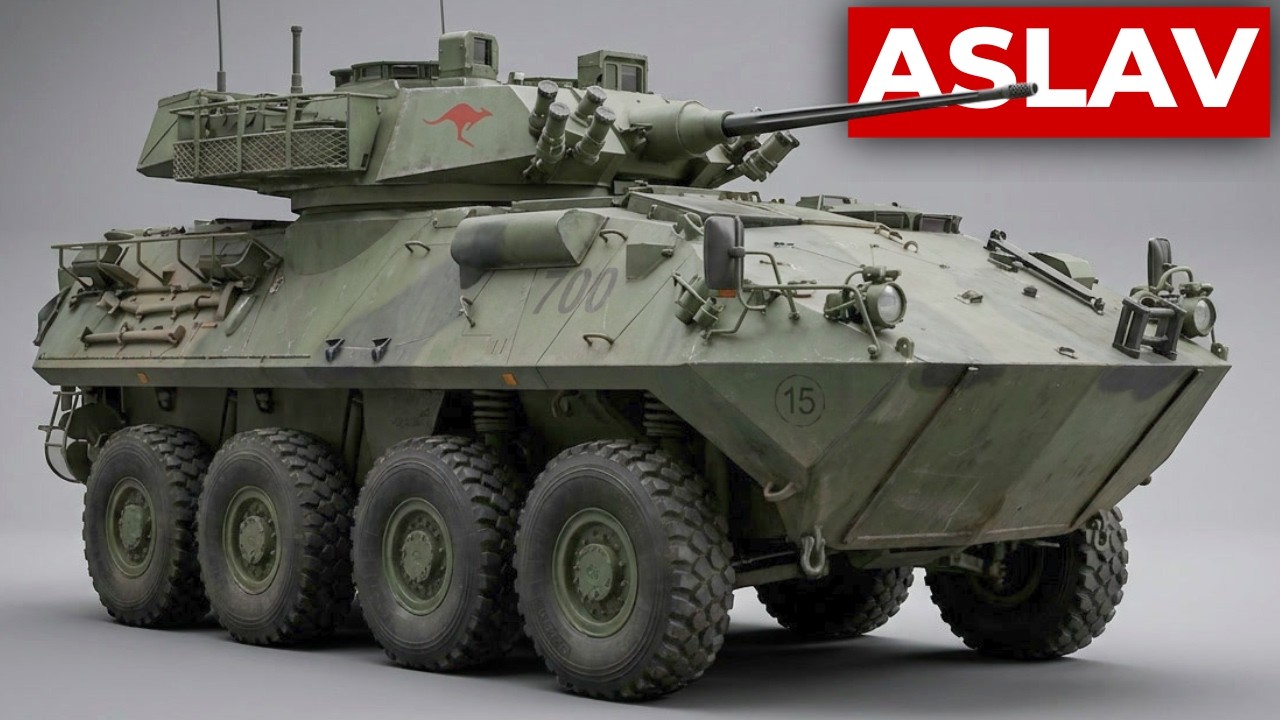
The patrol was 6 km from the base. Trooper David Pearce, a 41-year-old father of two from Brisbane, was driving the lead ASLAV. He had transferred from the Army to the regular army only the year before, qualifying as an ASLAV crewman with the 2nd/14th Light Horse Regiment, Queensland Mounted Infantry. In his diary, written the night before his first patrol in Afghanistan, Pearce had written that he had confidence in his mates and himself, and that this was what he trained to do.
The ASLAV triggered an improvised explosive device positioned on top of an anti-tank mine. Trooper David Pearce was killed. His vehicle commander, Lance Corporal Michael Crossley, survived. Crossley led the pallbearers at the ramp ceremony in Tarin Kowt, carrying his driver’s flag-draped casket through the honor guard along the airstrip.
Pearce was the first Australian soldier killed by direct enemy action in the current deployments to Afghanistan or Iraq. The recreation hut at the Australian base in Tarin Kowt was named Poppy’s after his nickname in his memory. The loss exposed the ASLAV’s most critical vulnerability. The flat hull offered minimal protection against buried blast devices.
Armor that could stop small arms and shell fragments was never engineered to deflect the upward force of a mine detonation. The tension between the vehicle’s extraordinary mobility and its inadequate underbelly protection became the defining controversy of its Afghan deployment. And yet, the crews kept going out.
On August 24th, 2010, a combined Australian and Afghan National Army patrol of 40 soldiers moved into the Tangye Valley near the village of Deh Rawood, 20 km west of Tarin Kowt. The Australian force from Delta Company, 6th battalion, Royal Australian Regiment, included two sections of dismounted infantry and two ASLAV 25 gun cars in overwatch at a position designated Juliet.
Intelligence suggested 15 to 25 Taliban fighters. The actual number was closer to 100. The patrol walked into an ambush. Insurgents opened fire from elevated positions and concealed compounds with AK-47s, machine guns, and rocket-propelled grenades. Within minutes, Lance Corporal Jared McKinney, 28 years old, was shot and killed moving to reinforce a hillside position.
At overwatch position Juliet, the ASLAV crews did not wait for orders. Lieutenant Tim Hurley commanded the lead gun car. His crew had been in position since dawn, concealed behind the summit of their hill. When the ambush began, they rolled forward and engaged. The 25 mm chain guns and thermal sights allowed them to suppress Taliban firing positions at ranges the dismounted infantry could not reach.
For more than 3 hours, the ASLAVs provided continuous fire support while artillery and close air support pounded the valley. The ASLAVs had proven decisive. Their range, accuracy, and sensors allowed them to change the outcome of the battle. Over 30 Taliban insurgents were confirmed killed.
The surviving fighters retreated into the mountains. Corporal Daniel Keighran of the 6th battalion was awarded the Victoria Cross for Australia for his actions during the Battle of Derapet, repeatedly breaking cover under intense fire to identify enemy positions and direct return fire. In more than 500 combat patrols across Uruzgan province, ASLAV crews provided the speed, firepower, and situational awareness that kept Australian combined arms teams effective in one of the most dangerous operating environments in Afghanistan. On paper, the ASLAV should have been outclassed by almost every comparable platform of its generation. The American Stryker weighed nearly 20 tons and carried a full infantry squad in better protected comfort. The Canadian LAV III, a direct descendant of the same Piranha family, had evolved into a heavier, more capable infantry fighting vehicle with a bigger gun and substantially thicker armor. The Bushmaster Protected Mobility Vehicle, fielded by Australia alongside the ASLAV in Afghanistan, offered a V-shaped hull
specifically engineered to deflect mine blasts, the exact threat the ASLAV could not defeat. Every one of these vehicles was better protected. Several were better armed. All of them weighed more, and that was the point. The ASLAV was never designed to absorb punishment. It was designed to avoid it.
Australian cavalry doctrine treated the vehicle as an armored scout, not an infantry fighting vehicle. Its job was to find the enemy, report, and fight only when necessary, using speed and the long reach of its 25 mm gun to maintain standoff distance. When it was forced to fight at close range in Baghdad and Uruzgan, it performed far beyond what its protection level suggested was survivable.
The thin armor stopped small arms and shell splinters. The run-flat tires kept it moving after hits. The chain gun suppressed or destroyed nearly anything short of a main battle tank. And the eight-wheel drivetrain meant it could extract from a firefight at 100 km/h or limp away on four working wheels across broken ground.
The vehicle that replaced it tells the story of what the ASLAV lacked and what it achieved despite those shortcomings. Under Land 400 Phase 2, Rheinmetall Defence Australia won a $5.2 billion contract to deliver 211 Boxer 8×8 combat reconnaissance vehicles. The Boxer carries a 30-mm cannon with greater range and lethality. It weighs over 36 tons.
Its modular armor system is designed from the outset to survive IED blasts and RPG strikes. It is, by every measurable standard, a generation ahead of the vehicle it replaces. The first 25 Boxers were built in Germany and delivered by 2021. Australian production of the remaining 186 vehicles began in Ipswich, Queensland in 2023, with final operational capability expected by 2027.
The ASLAVs have been declared non-deployable and are being progressively withdrawn from service, but the Boxer program cost $5.2 billion, nearly 20 times what the original ASLAV fleet cost. 257 ASLAVs served for more than 25 years. They fought in three wars. They deployed to four countries. They conducted thousands of patrols under fire.
The original phase two acquisition cost $123 million for 113 vehicles. Roughly $1.1 million per machine. An ASLAV from the Australian War Memorial sits in Canberra, repainted in the tan, olive drab, and black scheme it wore in the streets of Dili. It carries the markings of call sign three echo, second cavalry regiment, the first ASLAV to engage the enemy in East Timor.
September 1999, a flat angular machine rolls off a warship and onto a burning island. It weighs 13 tons. Its armor will not stop a rocket-propelled grenade. It has no mine-resistant hull. It has no composite armor, no active protection system, no battlefield management network. It is, by the standards of every heavy armored vehicle in existence, dangerously under protected. And yet it worked.
It worked on the shattered roads of Dili where militia scattered at the sound of its engine. It worked on Route Irish where car bombs detonated against its hull and the crews walked away. It worked at Tular Fahar where RPGs and small arms fire hit the convoy and not a single Australian was scratched. It worked at Derapat where two gun cars with 25-mm chain guns broke the back of a hundred fighter ambush and helped earn a Victoria Cross.
The ASLAV was not invincible. It could not stop a buried anti-tank mine. Trooper David Pierce proved that on October 8th, 2007, 6 km from safety, driving home after a patrol in the Koro Valley. His sacrifice and the sacrifices of every crew member who climbed into a vehicle they knew was under armored for the threat they faced are the reason the boxer exists today.
The next generation was bought with the lessons the ASLAV taught in blood. 257 vehicles, three wars, 25 years of continuous service. From the tropical monsoons of East Timor to the blast walls of Baghdad to the mountain valleys of Uruzgan, the ASLAV carried Australian soldiers into harm’s way and brought most of them home again.
It was not the heaviest. It was not the most protected. It was not the most advanced. It was Australian and it fought when it mattered.