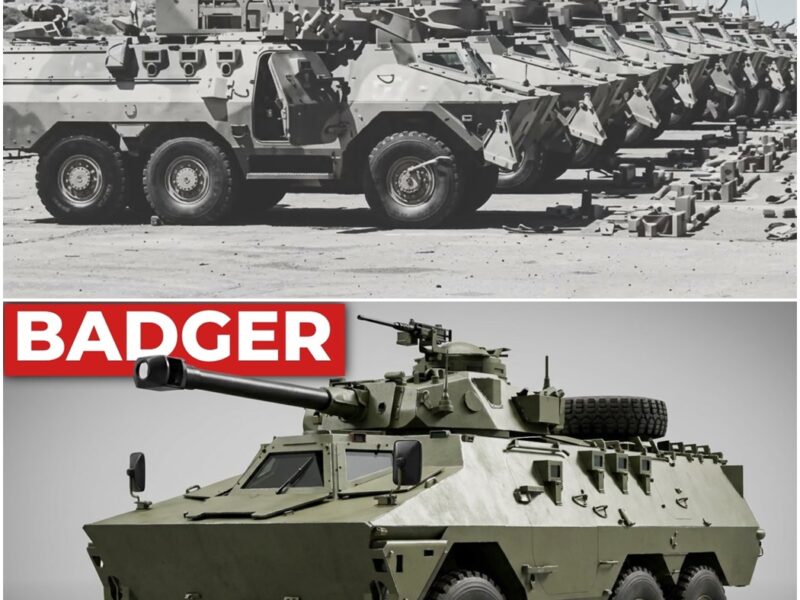
Why This ‘Ridiculous’ War Machine on Wheels Destroyed Soviet and Cuban Tanks in Africa D
1976, the Sandock Austral factory complex, Boksburg, east of Johannesburg. A machine rolls off the production line that no Western military doctrine says should exist. It rides on six rubber tires, not tracks. It weighs less than 19 tons. Its hull is welded steel, barely 20 mm thick at its strongest point, enough to stop rifle rounds and shrapnel, nothing more.
It stands taller than a truck, wider than a bus, and its silhouette on flat ground would make any tank commander smile. On paper, it is too big to hide, too thin to survive, and too lightly armed to fight anything heavier than an armored car. It looked like a coffin on wheels. Within 12 years, vehicles exactly like this one would fight in the largest conventional battles on the African continent since the Second World War, destroyed dozens of Soviet-supplied T-54 and T-55 tanks in open combat, shatter entire enemy brigades reinforced by Cuban armor, and force a strategic realignment that contributed to the independence of Namibia and the end of the Cold War in Southern Africa. It would serve in more African conflicts, equip more African armies, and cover more operational distance than any infantry fighting vehicle ever built on the continent. Its designation was the Ratel, named after the honey badger, and it was the war machine that apartheid South Africa was never supposed to be able to build.
To understand why the Ratel existed, you need to understand the problem South Africa faced in 1968. The country was an international pariah. The Sharpeville massacre of 1960 had poisoned relations with Britain, the traditional arms supplier. France and West Germany were willing to deal quietly, but the political window was closing.
A voluntary United Nations arms embargo had been in place since 1963. By 1977, it would become mandatory under Security Council Resolution 418, the first binding arms embargo ever imposed on a member state. South Africa could not buy tanks. It could not buy infantry fighting vehicles.
It could not buy the components to build them from anyone willing to sell openly. And South Africa needed them desperately. Its mandate territory of South-West Africa, modern Namibia, shared a border with Angola that stretched over 1,300 km of featureless, roadless bush. The South-West Africa People’s Organization, SWAPO, was launching cross-border insurgent raids from Angolan bases.
Behind SWAPO stood the Angolan Armed Forces, FAPLA, equipped and advised by the Soviet Union and reinforced by thousands of Cuban combat troops. Behind them stood hundreds of Soviet T-34 and T-54 tanks, BMP infantry fighting vehicles, BTR armored personnel carriers, and a modern air force flying Soviet MiG fighters.
South Africa’s existing armor was inadequate. The Eland, a licensed copy of the French Panhard AML armored car, carried a 90-mm gun, but had no room for infantry, limited fuel range, and sank into soft sand. The British Saracen armored personnel carrier was a 1950s design already obsolete. Neither vehicle could carry a mechanized infantry section, fight its way through contact, and sustain operations across 500 km of African bush without a logistics tail it could not afford to maintain.
In 1968, the South African Defence Force began war-gaming a new doctrine built around mobile warfare across vast distances. Every simulation produced the same conclusion. South Africa needed a dedicated infantry fighting vehicle that could carry troops, fight on arrival, and self-deploy over enormous range without tank transporters or paved roads.
The terrain dictated wheels, not tracks. The abrasive Angolan sand destroyed track links at catastrophic rates. Wheeled vehicles could cover 1,000 km on their own fuel. Tracked vehicles could manage less than half that before needing maintenance. Springfield Bussing, a South African franchise holder for the German Bussing truck manufacturer, proposed a 6×6 infantry fighting vehicle built on a modified MAN truck chassis.
The first prototype appeared in March 1972. The South African Defense Force tested and rejected the German Thyssen-Henschel UR-416, the French Berliet 5 XB 170, the French Panhard M3, and the Brazilian EE-11 Urutu. Every foreign option was either too light, too short-ranged, or politically impossible to procure in volume under embargo conditions.
The Springfield Bussing design won. It was entirely indigenous. Serial production began at Sandock Austral in 1976 and ran until 1987. By the time the line closed, 1,381 Ratels had been built across three production marks and more than half a dozen variants. The vehicle itself was a masterpiece of pragmatic engineering shaped entirely by the bush it was designed to fight in.
The Ratel 20, the base infantry fighting vehicle variant, weighed approximately 18 and 1/2 tons. It was powered by a Bussing D3256 BTXF six-cylinder turbocharged diesel engine producing 275 horsepower mounted at the left rear of the hull in a configuration that allowed two technicians with a portable crane to swap the entire engine pack in 30 minutes.
It 530 L of diesel fuel giving an operational range of approximately 1,000 km. Top road speed was 105 km/h. The main armament was a 20 mm GIAT auto cannon in a manually traversed two-man turret fed by a twin-linked ammunition system that allowed the gunner to switch between armor-piercing and high explosive rounds without reloading.
Three 7.62 mm machine guns covered the coaxial arc, the turret roof, and the rear of the vehicle. Up to nine infantry rode in the hull compartment, entering and exiting through three pneumatically sealed doors on each side and a large rear door. Every troop position had a firing port and a vision block.
The hull was all welded steel with a mine contoured underside designed to deflect blast energy outward. The vehicle could continue driving with two wheels destroyed. Run-flat tires meant a punctured wheel did not stop the vehicle. Onboard potable water tanks meant the crew could sustain operations for days without resupply.
The Ratel was not amphibious, a deliberate omission. Southern Angola’s rivers were seasonal and fordable. Designing for deep water crossing would have added weight and complexity the vehicle did not need. But the Ratel was not just one vehicle, it was an entire family. The Ratel 60 replaced the auto cannon turret with a 60 mm breech-loading mortar, in a turret adapted from the Eland armored car.
The Ratel 90 mounted a 90 mm rifled gun firing high explosive and shaped charge anti-tank rounds effective to 1,200 m. The Ratel 81 carried an 81 mm mortar firing through the open roof. The Ratel command variant carried extra radios and map tables for battle group headquarters. And the final variant, the one that would change the course of the war, was the Ratel ZT3, a dedicated tank destroyer armed with a triple launcher for the ZT3 Ingwe laser beam riding anti-tank guided missile capable of penetrating up to 1,000 mm of rolled homogeneous armor at a range of 5,000 m. 53 ZT3s were built. They arrived just in time. Now, before we get into where this vehicle actually fought, if you are enjoying this deep dive into one of the most remarkable armored vehicles ever built, hit subscribe. It takes a second, costs nothing, and it helps the channel grow. May 1978, Operation Reindeer, the Ratel’s combat
debut. Battle Group Juliet, commanded by Commandant Frank Bestbier, rolled across the Angolan border with the new Ratels alongside older Eland armored cars. Their target was SWAPO’s Chetequera base complex. The difference between the two vehicles was immediately obvious. The petrol-powered Elands needed a separate logistics tail and had to be towed out of soft sand repeatedly.
The diesel-powered Ratels drove through the same terrain without stopping, arrived with their infantry sections intact, and fought on contact. The operation confirmed everything the war games had predicted. Within months, the South African Defence Force stood up a permanent mechanized infantry unit built entirely around the Ratel.
It was designated 61 Mechanised Battalion, commanded by Commandant Johan Dippenaar, and it would become the most battle-tested mechanized unit in the Southern Hemisphere. August 1981, Operation Protea, the largest South African mechanized operation since the Second World War. Approximately 5,000 troops advanced up to 200 km into Angola’s Cunene Province to destroy SWAPO and FAPLA base complexes at Xangongo and Ongiva.
The terrain was flat, dry, and covered in sparse mopane woodland that offered concealment but not cover. Temperatures exceeded 40° C. Dust blooms from advancing columns could be seen for kilometers. Ratel 20s and Ratel 90s led the assault columns, overrunning defended positions and engaging a FAPLA armor for the first time in the war.
At Xangongo, mechanized infantry dismounted from their Ratels and cleared buildings on foot while the Ratel 90s suppressed defensive positions with high explosive rounds at ranges under 800 m. At Ongiva, the fighting intensified. South African forces destroyed several T-34 tanks and captured enormous quantities of Soviet-supplied equipment valued at approximately $250 million including anti-aircraft systems, armored vehicles, ammunition stockpiles, and communications equipment.
FAPLA’s 11th Brigade was shattered. Nine Soviet military officers were killed during the assault. Among the prisoners taken was a Soviet warrant officer, Nikolai Fyodorovich Pestretsov, captured after he refused to leave the body of his wife who’d been killed in the fighting. South African losses were 10 killed and 64 wounded against over 800 FAPLA and SWAPO dead.
The Ratel had proven it could fight Soviet-era armor, but the real test was coming. December 1983, Operation Askari. For the first time, the South African Defense Force faced T-54 and T-55 tanks used in their intended mobile role, not dug in as static positions, but advancing as a coordinated maneuver force supported by Cuban infantry battalions and Soviet advisers directing operations from rear command posts.
At Cuvelai, Task Force Delta under Commandant Fan Greyling engaged FAPLA’s 11th Brigade reinforced by two Cuban battalions and a full T-54 tank company. The Ratel 90s opened fire at ranges their manually traversed unstabilized guns were never designed for. The 90-mm shaped charge rounds punched through the T-54’s frontal armor at 1,200 m.
The entire tank company, reported at 12 vehicles, was destroyed. When FAPLA counterattacked with 10 additional T-55s, they knocked out one Ratel and killed several crew before being driven off and destroyed by more Ratel 90 fire. Lieutenant Alexander Macaskill won the Honoris Crux for his actions during the engagement.
Operation Askari proved the Ratel 90 could kill tanks, but it also proved the cost was dangerously high. Fighting main battle tanks with a 90-mm low-velocity gun in a vehicle with 20 mm of armor was not sustainable doctrine. The South African Defense Force accelerated two programs. The Olifant main battle tank would deploy forward and the Ratel ZT3 with its laser-guided missiles would give the mechanized battalions a dedicated tank-killing platform.
Both arrived just before the biggest battle any of them would ever fight. September 1987, southeastern Angola, FAPLA launched Operation Salutando October, a Soviet-planned offensive sending four full brigades south from Cuito Cuanavale to capture UNITA’s headquarters at Mavinga. The force included over 150 tanks, mostly T-54 and T-55 models, supported by BMP-2s, BTR-60s, artillery batteries, and a full Soviet advisory contingent.
The South African Defense Force intervened with 61 mechanized battalion, 32 battalion, and supporting units grouped under 20 South African Brigade commanded by Colonel Deon Ferreira. What followed was the largest conventional battle on African soil since the destruction of the German Africa Corps in Tunisia in 1943.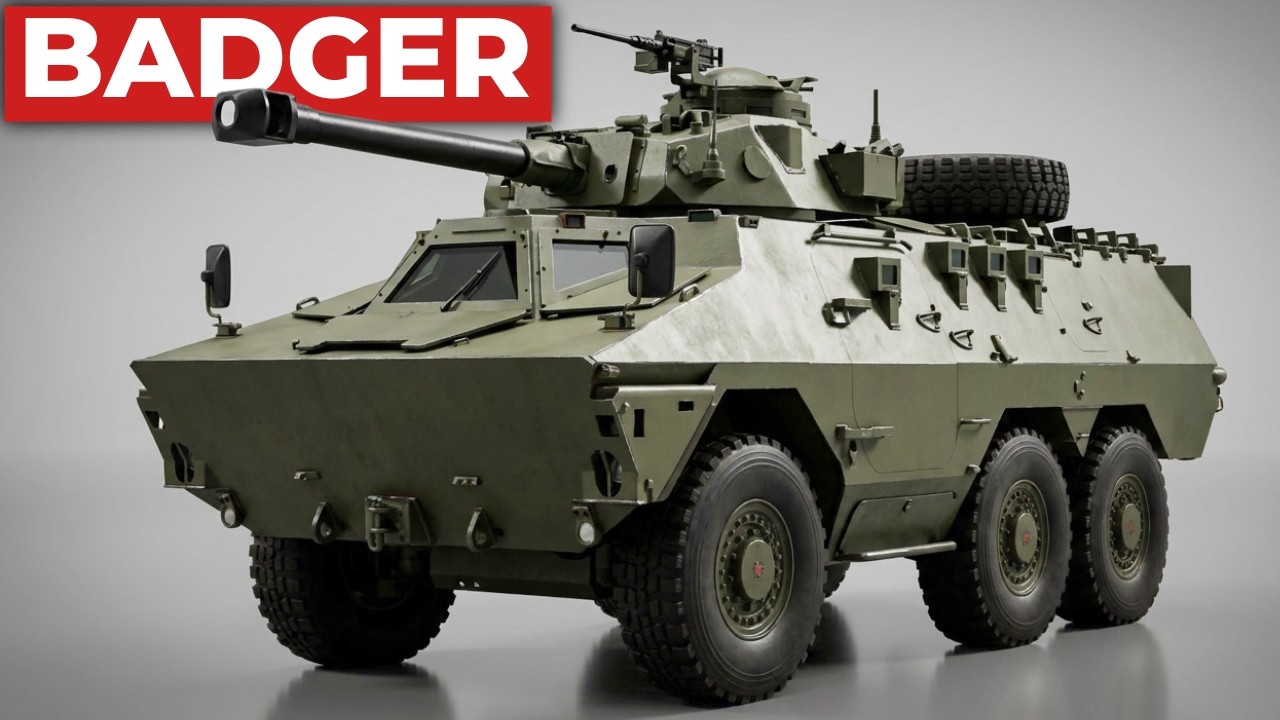
On September 10th, 1987, near the Lomba River, three T-55s from FAPLA’s 21st Brigade advanced on South African positions. Ratel 90s engaged but could not stop them at range. In desperation, pre-production ZT3 Ratels were committed to combat for the first time. Major Hannes Nortmann took command of ZT3 vehicle 12 after Lieutenant Ian Robertson was wounded.
The gunner, a young trooper named Darren Nelson, locked the laser designator onto the lead tank. Of seven missiles fired, four struck home. Three T-55s burned. The engagement was recorded on the vehicle’s on-board data recorder and Nelson’s excited commentary during the firing sequence became one of the most remarkable primary source recordings of the entire Border War.
Three weeks later, on October 3rd, 1987, 61 Mechanized Battalion’s Ratel 90 Squadron spearheaded an attack that annihilated FAPLA’s 47th Brigade at the Lomba River Crossing. The scale of destruction was staggering. Soviet military advisor Igor Zhdarkin, embedded with FAPLA, counted 18 tanks and 20 armored personnel carriers lost by the Angolan side.
South African accounts recorded 18 T-54 and T-55 tanks, 22 BTR-60s, and 85 trucks destroyed or captured, along with approximately 600 FAPLA dead. The South African Defense Force captured an intact Soviet SA-8 surface-to-air missile system, the first of its type to fall into Western hands. South African losses were one Ratel and, according to most accounts, fewer than five killed.
The South African military historian Leopold Scholtz described the engagement as the most complete mechanized victory on African soil since the Second World War. It was also the first time a wheeled infantry fighting vehicle had ever destroyed an entire enemy brigade in a single engagement. The fighting continued through Operations Hooper and Packer into early 1988.
On February 14th, Lieutenant David Duncan’s Ratel 90 engaged a FAPLA T-55 with three shaped charge rounds close-range combat near Cuito Cuanavale. A Cuban Third Tank Battalion counterattack cost six T-55s that same day. But when the South African Defense Force attempted to storm FAPLA’s fortified positions in the Tumpo Triangle east of the Cuito River, the advance stalled in dense minefields.
Six assaults failed. The South African forces disengaged in March 1988. Across the entire campaign from August 1987 to March 1988, FAPLA lost approximately 61 tanks, 83 armored vehicles, and over 1,000 dead. South African losses totaled approximately 31 killed, three Olifant tanks, and a handful of Ratels.
The outcome remains fiercely disputed to this day. Cuba and the African National Congress call the Battle of Cuito Cuanavale a decisive defeat of apartheid South Africa and a turning point that led directly to Namibian independence and the end of apartheid. Cuban sources claimed up to 47 South African tanks and 50 aircraft destroyed, figures the South African Defense Force categorically denies.
South African historians, including Schulz, argue the decisive battle was the Lomba River in October 1987, not Cuito Cuanavale, and that the Tumbo Triangle was a peripheral action against fortified positions the South African Defense Force chose not to pay the price to take. Most neutral analysts characterize the campaign as a tactical stalemate that nonetheless produced a strategic realignment leading to the New York Accords, Cuban withdrawal from Angola, and Namibian independence in 1990.
On paper, the Ratel should never have competed with the vehicles it faced. The Soviet BMP-1 carried a 73-mm gun and Sagger anti-tank missiles. The BMP-2 mounted a 30-mm autocannon and Konkurs missiles with greater range than anything the Ratel 20 carried. The T-55 weighed 36 tons and carried a 100-mm rifled gun that could kill any Ratel variant from 2,000 m.
The American M2 Bradley, which never fought in Angola, weighed 30 tons and carried a 25-mm chain gun with TOW missiles. The German Marder and British Warrior each weighed over 30 tons with correspondingly heavier protection. The Ratel weighed less than any of them. It was thinner skinned than all of them.
Its turrets were manually traversed with no stabilization and no night fighting equipment for most of its service life. A single hit from a T-55’s 100 mm main gun would destroy any Ratel variant completely. The BMP’s Sagger and Konkurs missiles could kill a Ratel from ranges the Ratel 20’s auto cannon could not even reach.
And yet, it won. It won because it could drive 1,000 km on a single fuel load while the BMP could manage 600 and the Bradley less than 450. It won because its engine could be swapped in 30 minutes in the field while tracked vehicles needed depot level maintenance. It won because its wheeled drivetrain survived the abrasive Angolan sand that ate through track links in days.
It won because the men of 61 Mechanised Battalion and 32 Battalion trained in shoot and scoot tactics across open bush use speed and distance to overcome the range and armor advantages their enemies held on paper. 1,381 Ratels were built between 1976 and 1987. When international sanctions eased after the end of apartheid in 1994, surplus Ratels were exported widely across Africa and the Middle East.
Jordan alone purchased over 300 vehicles refitting them with modern Cummins diesel engines producing 329 horsepower. Morocco, Cameroon, Ghana, Djibouti, Senegal, Zambia and others acquired small batches. The United Nations Conventional Arms Register recorded 423 Ratels exported between 2003 and 2012.
The Ratel was supposed to be replaced by the Badger infantry fighting vehicle under Project Hoefyster registered in 1997. That program has consumed 7.7 billion rand over 18 years without delivering a single production vehicle. A further 6.6 billion rand is still needed to complete production. The program has been paused, investigated for corruption, and entangled in South Africa’s state capture scandal.
As of today, no replacement has entered service. The Ratel remains in frontline service nearly 50 years after the first one rolled off the line. 1976, Boksburg. A machine on six rubber tires that every conventional military mind said was too tall, too thin, too lightly armed, and too exposed to survive against Soviet armor.
It was underpowered for its size. It had no stabilized guns. It had no night vision. It had no amphibious capability. It had no composite armor, no active protection, no thermal sights. It was, by every measurable standard of Cold War armored vehicle design, an impossible proposition. And yet, it destroyed more Soviet-supplied tanks in direct combat than any other wheeled vehicle in history.
It broke four FAPLA brigades on the Lomba River. It fought Cuban armor at Cuvelai and won. It operated across distances that would have immobilized any tracked vehicle on the continent. 20 nations bought it. Some are still using it. Its intended replacement has been in development longer than the Ratel was in production.
It was not elegant. It was not sophisticated. It was South African, built under siege, designed for a war nobody else was willing to fight, and it worked when nothing else could. That is not luck. That is what happens when an arms embargo forces a nation to build exactly the weapon its battlefield demands.