Charging Across Nazi Germany and Liberating Dachau Concentration Camp
From Ivy League Slopes to the Gates of Dachau: Alan Lukens on the Rapid Advance Across Nazi Germany and Witnessing Unimaginable Horrors
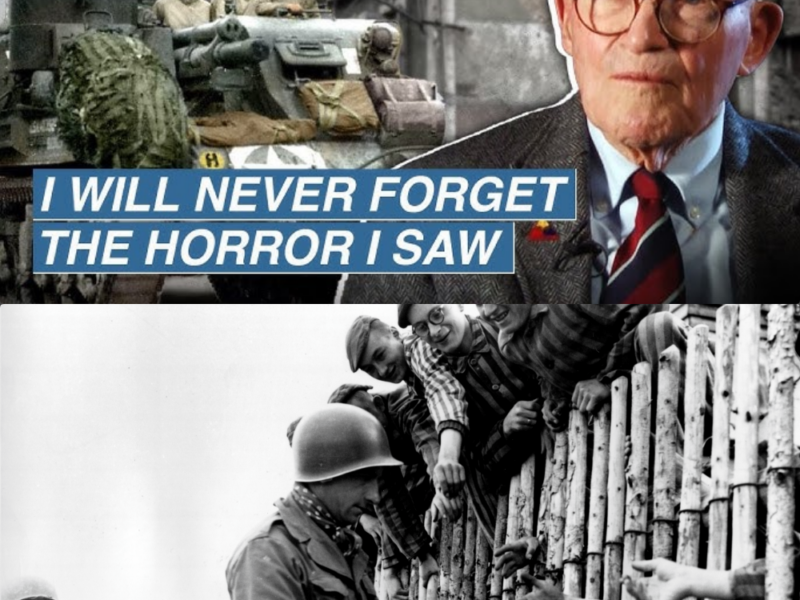
Imagine charging across the blood-soaked landscape of Nazi Germany, thinking you were approaching a standard enemy stronghold, only to stumble upon the unimaginable horrors of a death camp. When Alan Lukens and his armored artillery unit breached the gates of Dachau on April 29, 1945, they expected a routine surrender. Instead, they were greeted by thirty-seven railcars packed solid with decomposing bodies, smoke billowing from overworked crematoriums, and tens of thousands of desperate souls wasting away from starvation and typhus.
For a young Ivy League skier turned soldier, the sudden confrontation with absolute human depravity shattered any remaining illusions about the nature of total war. Witness the harrowing, firsthand account of a veteran who helped liberate one of history’s darkest chapters and lived to tell the unvarnished truth. Click the link in the comments section to read the full, gripping story right now.
The final months of World War II in Europe witnessed a dizzying collapse of the Nazi regime, punctuated by rapid Allied armored thrusts and the staggering discovery of atrocities that shocked the conscience of humanity. Among the generation of young Americans swept into this historic cataclysm was Alan Lukens. Raised in an accomplished Philadelphia family and studying at Princeton under accelerated wartime schedules, Lukens initially volunteered for the U.S. Army’s mountain infantry before finding himself redirected through specialized training programs and ultimately serving as a forward observer and artilleryman with the 413th Armored Field Artillery Battalion attached to the 20th Armored Division [01:02]. His journey from civilian comfort to the front lines of the European Theater offers a vivid window into the chaotic closing months of the war, culminating in the harrowing liberation of the Dachau concentration camp [09:41].
Early Life, Ivy League Skiing, and Wartime Diversions
Born in Philadelphia to a lawyer father and an architect mother, Lukens attended the Episcopal Academy before entering Princeton University [01:12]. With the onset of the war accelerating academic calendars, he completed his freshman coursework through intensive summer and fall terms in 1942 before volunteering for military service [01:24]. As an enthusiastic member of the ski club, Lukens naturally gravitated toward the newly forming 10th Mountain Division in Colorado, training alongside fellow Ivy League skiers [01:45]. Life in the mountain troops was initially defined by rigorous rock climbing, physical conditioning, and learning the nuances of alpine warfare [02:31].

However, the military’s shifting personnel demands soon intervened. Selected alongside a select group of soldiers to study foreign languages, Lukens was dispatched first to the University of Nebraska and then to Indiana University for specialized training under the Army Specialized Training Program (ASTP) [03:07]. When the language programs were abruptly canceled to replenish frontline infantry and engineering ranks, Lukens and his peers were reassigned to Camp Campbell, Kentucky, joining the ranks of the 20th Armored Division in early 1944 [03:27]. After months of intensive armor and artillery training, the division prepared for deployment, boarding transports in early 1945 for a perilous, zigzagging Atlantic crossing threatened by active German U-boats [04:19].
The Drive Across Western Europe and the Rhine Crossing
Landing in France in January 1945, Lukens’s unit spent time staging near Rouen before pushing forward into Belgium and Holland, where local populations greeted them with immense enthusiasm [04:41]. Entering Germany shortly thereafter, the battalion encountered an eerily quiet landscape where local civilians remained hidden, offering little immediate resistance [05:29]. Equipped with M7 self-propelled howitzers—which mounted 105mm artillery pieces atop modified Sherman tanks—the 413th Armored Field Artillery Battalion provided crucial mobile fire support [06:02].
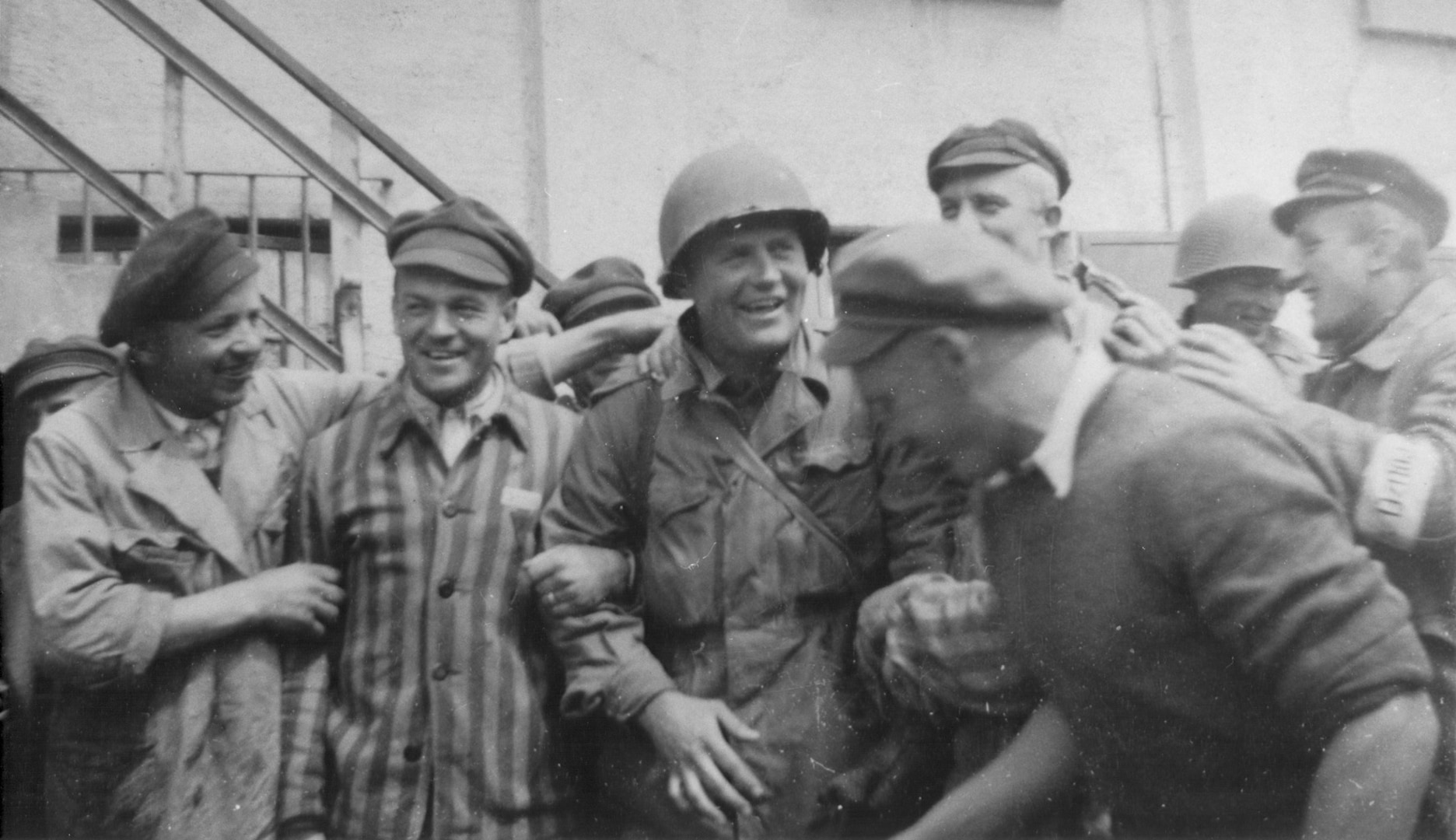
As the Allied armies advanced, Lukens’s unit moved with astonishing speed, transitioning between different field commands [06:47]. Initially operating within the northern sectors, the rapid pace of their advance soon placed them under General George S. Patton’s Third Army, and subsequently within the Seventh Army as they drove deeper south toward Frankfurt and Munich [07:04]. Despite occasional skirmishes, sniper fire, and the persistent annoyance of Luftwaffe harassment aircraft dubbed “Bed Check Charlie,” the overriding sense among the advancing troops was that the German military infrastructure was hurtling toward an inevitable collapse [07:43]. Yet, fanatical resistance from entrenched SS units proved that pockets of desperate violence remained [07:49].
The Accidental Discovery of Dachau
The defining moment of Lukens’s wartime service occurred on April 29, 1945, as elements of the 20th Armored Division approached the outskirts of Munich [08:29]. Operating within a combat command consisting of their artillery battalion, a tank battalion, and a small infantry contingent, the troops were entirely unaware of the nearby existence of the Dachau concentration camp [09:10]. The main body of the division was operating further east toward a major SS headquarters, leaving Lukens’s specific sector to encounter the camp unexpectedly [09:23].
As the column advanced, soldiers spotted towering perimeter fences, barbed wire, and defensive water moats surrounding a large administrative facility adorned with white flags [09:49]. Believing the flags signaled a peaceful surrender, the troops prepared to enter, only for hidden SS snipers to open fire from the rooftops [10:21]. The treacherous attack instantly killed several men, including their commanding officer who had stood up in his vehicle to assess the situation [10:30]. Realizing the white flags were a cynical ruse, the American forces unleashed their armor and artillery, breaching the moats and smashing through the gates to take control of the compound [10:43].
Witnessing Unspeakable Atrocities
Entering the camp grounds in the days immediately following the breach, Lukens and his fellow soldiers confronted a scene of catastrophic human suffering [11:28]. The camp, originally designed to house political prisoners and opponents of the Nazi regime since 1933, had become a receptacle for victims transferred from other collapsing facilities across the Reich [14:49]. Along the railroad sidings inside the camp, Lukens witnessed thirty-seven freight cars packed hundreds-deep with the emaciated bodies of prisoners who had died of starvation, disease, or summary execution during transit [12:07].
Further exploration revealed the camp’s crematoriums actively managed by prisoners, alongside twenty-two overcrowded barracks holding tens of thousands of survivors living in squalid conditions [12:23]. Though the camp’s notorious inmate functionaries—the criminal camp guards known as kapos—had largely fled or been attacked by vengeful survivors, the immediate medical crisis was overwhelming [13:42]. Ravaged by typhus and severe malnutrition, the liberated prisoners were in desperate need of aid, prompting Allied commanders to strictly regulate food distribution to prevent fatal digestive shock [13:49]. Within twenty-four hours, American combat units were largely rotated out of the immediate camp area to continue their push toward Munich, leaving the haunting memories etched permanently into the minds of those who served [14:12].
Reflections on History and Legacy
Looking back on the closing weeks of the war, Lukens noted how little ordinary soldiers knew about the full scope of the Nazi concentration camp network prior to stumbling upon them [14:20]. While isolated reports had circulated in publications like Stars and Stripes, seeing the industrial-scale devastation firsthand provided an unshakeable reckoning with the true nature of the enemy they had defeated [14:30]. Decades later, the memories of charging across Nazi Germany, losing comrades at the threshold of liberation, and bearing witness to the darkest depths of human cruelty remain vivid testaments to the sacrifices required to restore peace to a fractured world.