Fierce Infantry Combat During The Battle of the Bulge
From the Frozen Trenches to Unbroken Promises: World War II Veteran David Marshall Recalls Fierce Infantry Combat and the Cost of Freedom
Imagine making a solemn promise to your best friend on the eve of battle, only to watch him killed the very next minute he stepped onto the field. This is the heartbreaking reality of World War II veteran David Marshall, who served bravely in the U.S. Army Infantry.
In a deeply moving interview, Marshall opens up about the brutal combat of the Battle of the Bulge, the harrowing conditions of freezing winters, and the lifelong bonds forged in the fires of war. Discover the raw, unfiltered truth of heroism and the haunting memories that stayed with a soldier for over seven decades. Click the link in the comments section to read the full, unforgettable story.
The Second World War remains one of the most defining chapters in modern history, shaped not only by grand military strategies and geopolitical shifts but by the profound, deeply personal sacrifices of ordinary young men thrust into extraordinary circumstances. Among these individuals is David Marshall, a U.S. Army infantryman whose harrowing experiences during the conflict encapsulate both the unimaginable brutality of frontline combat and the enduring power of human loyalty. His recollections provide a stark, moving window into the realities faced by the generation that answered the call of duty during a global crisis.
Growing up in New York City with no prior family history of military service, Marshall’s path to the battlefield began unexpectedly. In December 1941, while hospitalized for a dislocated elbow sustained from playing basketball, he learned of the Japanese attack on Pearl Harbor. At just sixteen years old, his initial reaction was one of youthful detachment, believing the conflict would conclude long before he reached service age. However, the sweeping tide of history eventually caught up with him. Drafted in March 1943, Marshall underwent rigorous training across various camps, including a stint at a medic camp in Camp Picket, Virginia, before transitioning to infantry training in Louisiana despite his mother’s earnest efforts to find a medical exemption for him.

By October 1944, Marshall and the 84th Infantry Division sailed for Europe, arriving initially in England before crossing the English Channel on a rusty tramp steamer and landing near Omaha Beach. Though months had passed since the historic D-Day landings, the landscape remained heavily scarred by conflict, littered with foxholes, shell craters, and discarded military hardware, serving as a grim prelude to the realities awaiting them on the continent. Moving through the Netherlands and up to the German border, Marshall’s unit prepared for the intense engagements that lay ahead.
It was during this period of tense anticipation near Gulpin that Marshall experienced one of the most defining and painful moments of his life. Alongside his best friend in the company, George Benedict “Smitty” Schmidt, Marshall stepped out into a farmyard one evening to decompress and talk through their shared anxieties about the impending combat. Anticipating the worst, Smitty extracted a promise from Marshall: if anything happened to him, Marshall must visit his parents to explain how he fell. Though initially reluctant and feeling unsuited for such a task, Marshall ultimately agreed. The tragic fragility of war manifested with devastating swiftness the very next day. As the company advanced onto the battlefield in a coordinated squad-by-squad maneuver, Smitty was killed the instant he stepped onto the field. Marshall soon walked past his fallen friend’s body, a moment of profound shock that left him emotionally numb as the relentless shelling forced the unit to keep moving forward. Demonstrating early resilience rooted in his initial medical training, Marshall later paused amidst the chaos to assist a wounded platoon sergeant, administering aid to his injured leg before pressing on to rejoin his squad.
As a mortar man, Marshall operated the 81mm mortar, a heavy yet vital weapon system relied upon for its accuracy and destructive capability. Operating in tight-knit teams where every member carried a vital component of the heavy weapon across difficult terrain, Marshall served alternatively as a gunner and a forward observer, utilizing his keen sense of distance to direct precise fire against enemy positions.

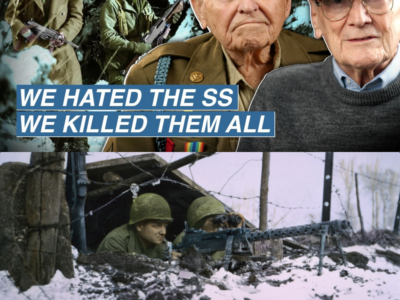
The winter of 1944 brought a new and punishing test with the onset of the Battle of the Bulge. Deployed to Belgium amidst freezing temperatures, heavy snow, and biting winds, American forces faced brutal conditions that rivaled the ferocity of the enemy. The dense, heavily wooded terrain of the Ardennes rendered standard mortar tactics difficult, forcing Marshall and his fellow mortar men to take up M1 Garand rifles and operate as frontline infantrymen. Facing relentless pressure, the troops held their ground with fierce determination, refusing to retreat and ultimately pushing back the enemy advance through overwhelming firepower and steadfast resolve. Reflecting on his role as a twenty-year-old Jewish soldier fighting Nazi Germany, Marshall noted a complete absence of remorse for the actions required to defend his position and secure survival.
Following the grueling weeks in the freezing Belgian winter, Marshall relished the simple yet profound comforts of a clean uniform and a hot shower in a coal mining town in the Netherlands—luxuries that soldiers famously regarded with unmatched appreciation. It was during this brief respite that a chance encounter occurred: walking down the street, Marshall unexpectedly ran into another close friend serving in a neighboring division. The two friends shared a brief reunion before parting for their respective duties, eventually meeting again to celebrate Passover near the Rhine River, forging a lifelong bond that would endure for decades.
In February 1945, Marshall participated in Operation grenade, crossing the swollen Roar River under the cover of an intense artillery barrage and navigating narrow, swaying footbridges while under enemy fire to push toward the Rhine. For his dedicated service during these fierce engagements, Marshall was awarded the Bronze Star, a treasured token of recognition which he later entrusted to his daughter.
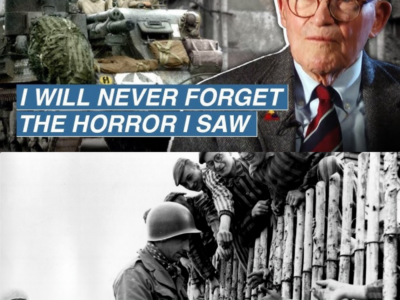
Perhaps the most haunting chapter of Marshall’s wartime service came later in 1945 with the liberation of the Hannover-Ahlem slave labor camp. Advancing through the region, troops were met with an increasingly unbearable odor that guided them directly to the camp’s gates. The scene inside was catastrophic: emaciated prisoners with skeletal frames and hollow eyes lay scattered across the ground, some dead, others struggling to survive. In a heartbreaking moment of tragedy, one man who managed to walk out the gates as a newly freed individual collapsed and died mere steps away. Due to the severe physical deterioration of the survivors, soldiers had to exercise extreme caution, withholding standard field rations that could prove fatal to starving systems, and instead waiting for specialized medical units to arrive. For Marshall, confronting the horrific reality of the Holocaust firsthand was a deeply jarring experience that permanently affected him, exposing the absolute depths of human cruelty.
Long after the guns fell silent and the war concluded, Marshall fulfilled the solemn promise he had made to his best friend years earlier. After months of mustering the courage, he contacted Smitty’s parents, visiting them to share the full account of their son’s final moments. The encounter brought a measure of closure to the grieving family. Demonstrating the permanence of their bond, Marshall arranged for a portion of his own ashes to eventually rest alongside his fallen friend’s grave in the Netherlands—a final, enduring testament to a friendship forged in the crucible of history and honored across a lifetime.