A Passenger Was Deemed Too Drunk to Fly—Then the Situation Escalated Into an Airport Standoff
Too Drunk to Fly? Bodycam Captures a Routine Airport Incident Escalating Into a Dramatic Police Encounter
The Terminal Threshold: Airport Trespass, Intoxication, and the Thin Line of Lawful Force
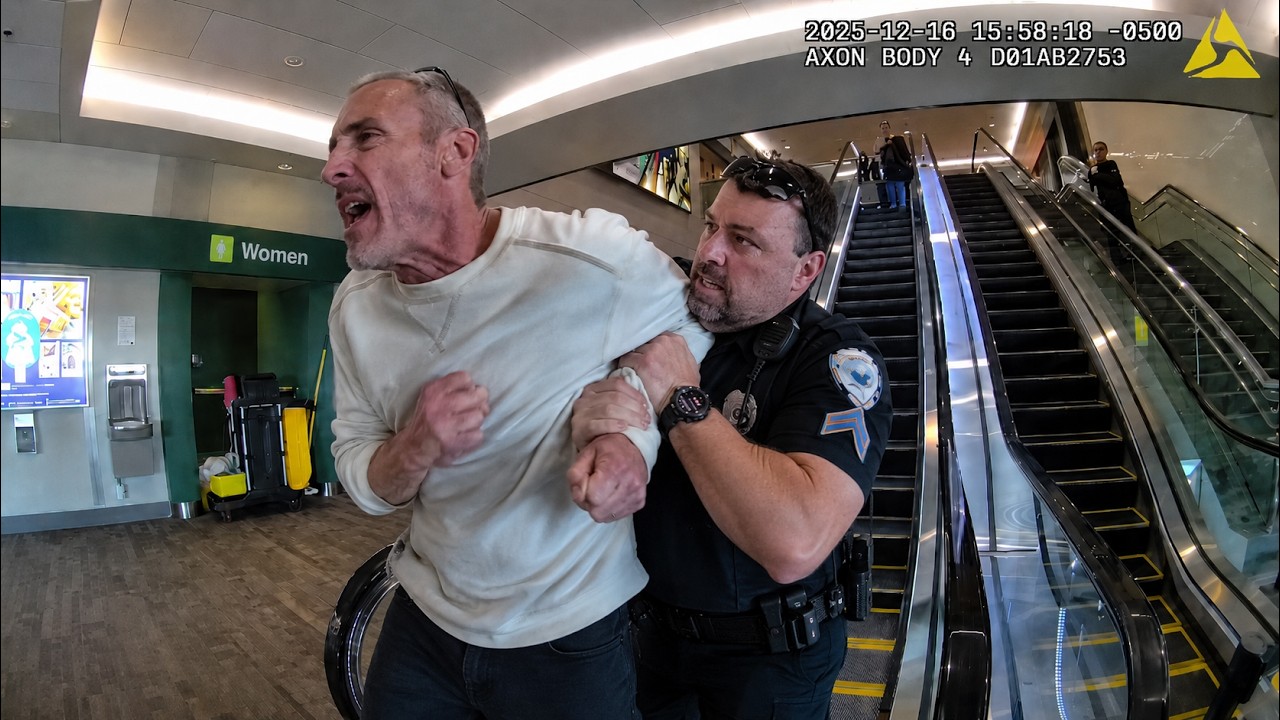
The sharp, abrasive snap of body armor shifting and the guttural roar of absolute defiance cut through the ambient hum of the airport terminal like a razor. “Don’t put your hands on me! What the fuck? Stop resisting!” A man’s voice spirals upward, cracking with a mixture of righteous fury and chemical panic, as heavy boots scramble against polished tile. Seconds later, a chilling threat rings out, delivered with casual administrative coldness by an officer whose patience has completely evaporated: “You’re about to get face down if you don’t stop.” In an instant, a mundane travel delay transforms into a chaotic, violent spectacle of physical restraint, leaving onlookers paralyzed and setting the stage for a profound legal reckoning. This is not merely a story about a rowdy traveler losing his temper at the gate; it is a microscopic examination of authority, statutory thresholds, and the explosive friction that occurs when federal aviation rules collide with municipal police powers.
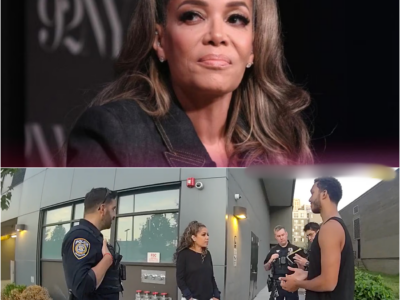
On December 16th, 2025, officers at Sarasota International Airport found themselves drawn into a low-grade dispute that would quickly escalate into a high-stakes legal labyrinth. The subject of their attention was John, a visibly impaired passenger whose journey to Chicago was derailed not by mechanical failure or weather, but by his own mouth and an inexplicable obsession with getting strangers to smile. Earlier that afternoon, restaurant staff had reported a disruptive customer who was filming bartenders without permission, shouting erratic commentary, and acting generally belligerent. While he had paid for his beer and departed without causing physical damage, his lingering presence in the terminal caught the eye of airport law enforcement. When officers intercepted him near gate K3, John greeted them with a bizarre demand: they could only talk to him if they were smiling.
To the casual observer, John was simply a nuisance—a classic terminal “yapper” whose alcohol consumption had stripped away his social filters. He rambled about taking a chunk of Sarasota to Chicago, joked about a twenty-year-old fishing warrant in Georgia, and alternated between amicable compliance and defiant lecturing. However, behind the easygoing facade and the strange crusade for cheerfulness, a complex legal chess match was quietly unfolding. The officers were facing a multi-layered puzzle: Did filming staff in a public airport restaurant constitute a crime? Was his loud, obnoxious rudeness enough to trigger a disorderly intoxication charge under Florida law? And perhaps most crucially, who held the ultimate authority to stop an intoxicated passenger from boarding a commercial airliner?
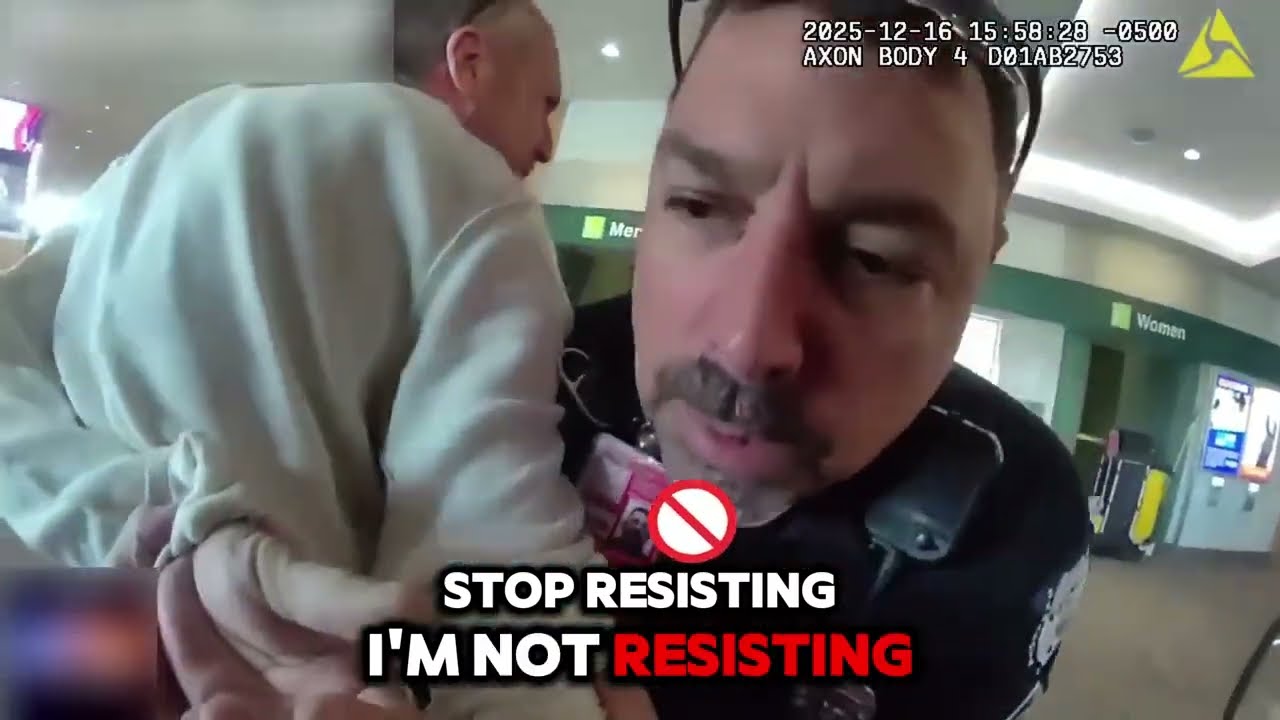
To understand the legal earthquake that followed, one must unpack the initial encounter through a rigorous lens. Public spaces like airport terminals generally enjoy robust First Amendment protections regarding photography and speech. However, restaurants operating within those terminals remain private business properties. Under the law, a private enterprise possesses the legal right to bar filming of its staff and to eject disruptive patrons, meaning John’s insistence that he had an absolute right to film anyone anywhere in a public building was legally flawed. Yet, being annoying or legally incorrect is not, by itself, a criminal offense. Landmark jurisprudence, such as the 1987 Supreme Court ruling in City of Houston v. Hill, dictates that the First Amendment protects a significant amount of speech that merely annoys or offends police officers. John’s coarse remarks and mouthy retorts were constitutionally shielded; they did not constitute chargeable criminal conduct on their own.
The situation shifted dramatically when the conversation turned toward his upcoming flight. Federal aviation regulations—specifically 14 CFR § 1575 and 14 CFR § 91.17—grant airlines and aviation authorities strict power to deny boarding to any passenger who appears intoxicated or whose behavior poses a safety risk. When the officers consulted with the airline gate manager, the decision was made: John was not getting on that plane. This boarding denial was a civil, administrative matter governed by federal regulations, not police discretion. While law enforcement possessed every right to secure the terminal perimeter and enforce carrier decisions, they could not magically convert a federal boarding denial into an immediate criminal charge.
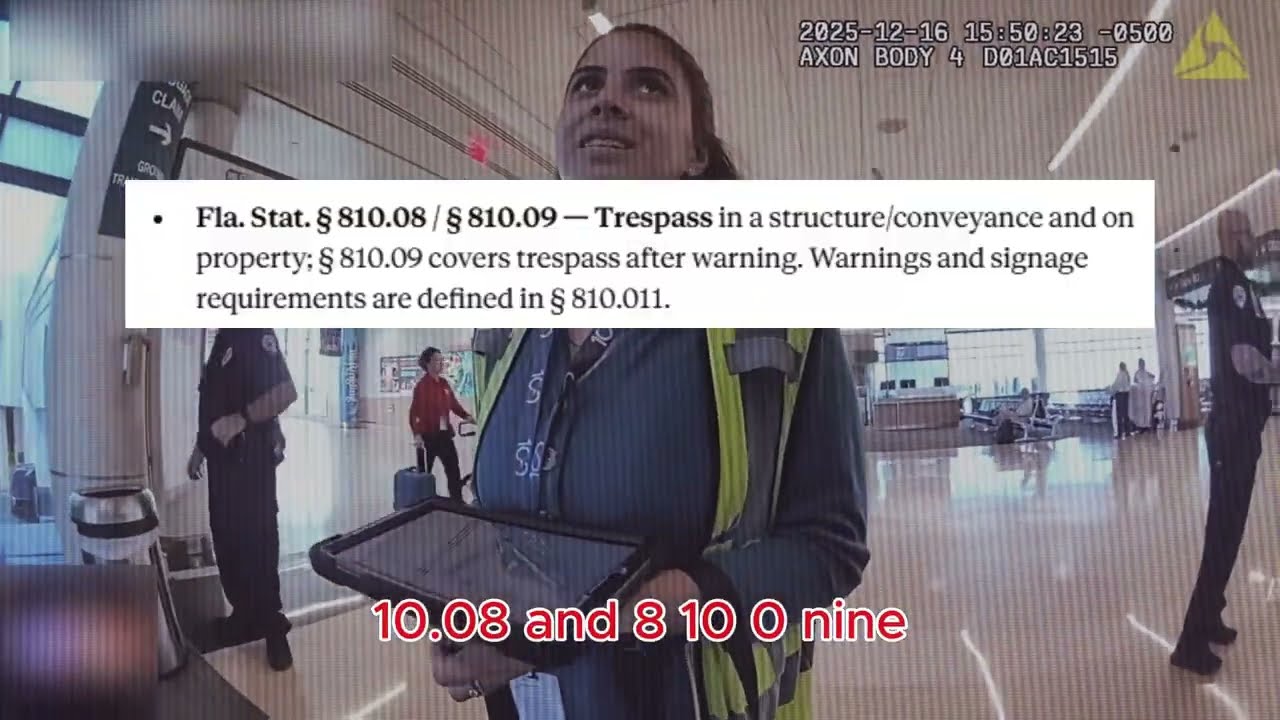
As the reality of his canceled flight set in, John’s demeanor swung wildly between acceptance and agitation. Recognizing that his travel plans were ruined, he loudly announced his intention to leave the airport entirely. “I don’t want to go to jail, I’m out of here,” he declared, demanding his checked luggage so he could return the following day. This declaration of voluntary departure introduced a critical legal fork in the road. Under Florida Statutes § 810.08 and § 810.09, criminal trespass requires a clear, unambiguous warning by a person authorized to give it, followed by a willful refusal to leave the premises. If a subject is actively complying with an order to depart or voluntarily choosing to leave, the foundational requirement of a trespass charge evaporates, taking probable cause right along with it.
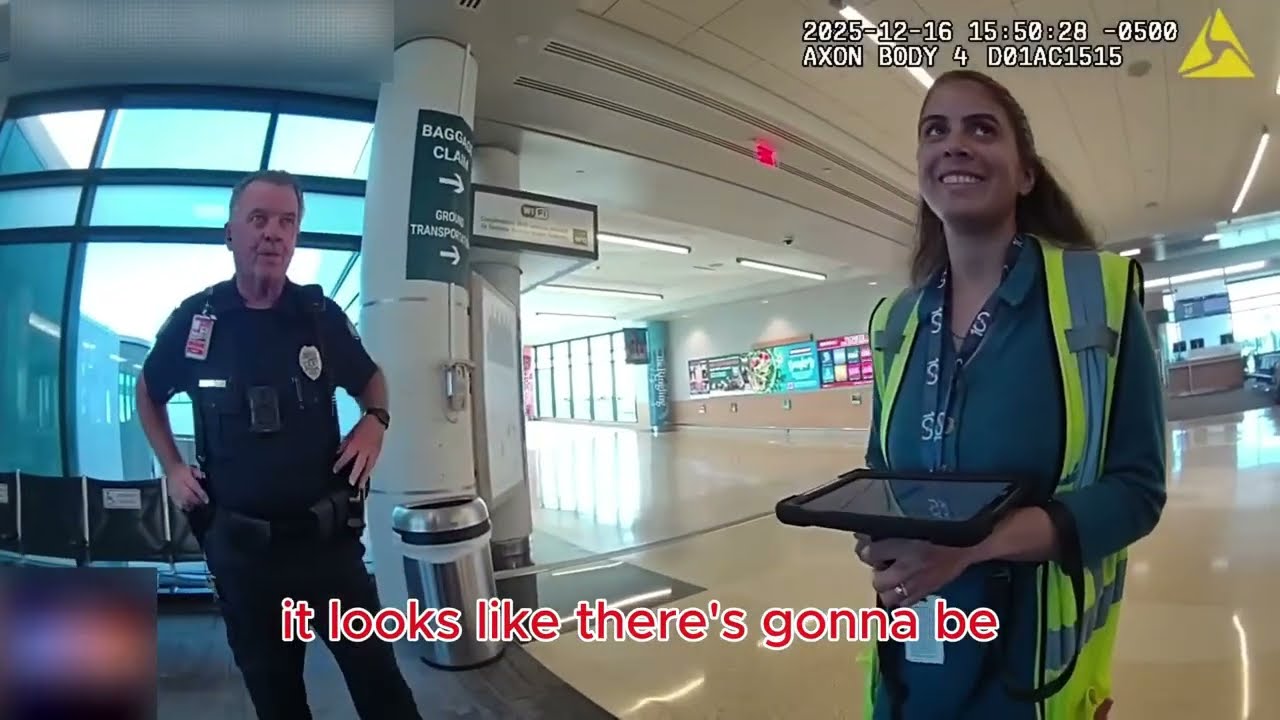
Yet, despite John’s verbal announcements that he was leaving, the officers made a split-second pivot. Viewing his erratic movements and perceived defiance as a refusal to cooperate, they moved to take him into custody for trespassing. What followed was an immediate physical clash. As hands clamped onto his arms, John twisted and pulled away, shouting that he was not resisting and complaining that his back hurt. The officers responded with overwhelming physical dominance, taking him to the floor with a force that pushed the boundaries of objective reasonableness.
Under the framework established by the landmark Supreme Court ruling Graham v. Connor (1989), the legality of police use of force must be judged from the perspective of a reasonable officer on the scene, balancing the severity of the crime, the immediate threat posed by the suspect, and whether the individual is actively resisting or attempting to flee. In John’s case, the underlying offense was remarkably minor—a low-level dispute over airport access and a potential trespass. No weapons were visible, and while he was verbally obnoxious and physically uncooperative, his resistance was primarily passive and clumsy, driven more by alcohol-induced confusion than calculated aggression.
This brings us to the most troubling moment captured on the bodycam footage: the explicit warning delivered by an officer that John was about to get “face punched” if he did not comply. From a constitutional and tactical standpoint, delivering a threat of a facial strike to a contained, non-violent, and heavily impaired individual is exceptionally difficult to justify under the law. Use of force is designed to overcome resistance and ensure safety, not to vent officer frustration or punish verbal disrespect.
When legal analysts dissect the overall performance of the agencies and individuals involved, distinct grades emerge. The responding officers earned a mixed review: strong early patience and communication, but a questionable legal basis for the sudden trespass arrest and an indefensible threat of retributive force. The subject, John, earned failing marks for his self-defeating behavior, excessive drinking, and inability to de-escalate his own situation, though his actions remained largely non-violent until physical handling commenced. The police department as a whole demonstrated transparency by releasing the unedited bodycam footage, yet left lingering questions regarding consistency in trespass enforcement and de-escalation training.
Ultimately, the incident at Sarasota International Airport serves as a stark case study in the complexities of modern policing. It illustrates how quickly a civil aviation issue can morph into a criminal confrontation when administrative rules are conflated with penal statutes. As airports grow busier and passenger tensions remain high, the lessons from John’s encounter resonate clearly: federal boarding denials are matters for airlines, not criminal pretexts for arrests; public drunkenness rarely meets Florida’s high statutory threshold for disorderly conduct without a genuine, violent public disturbance; individuals attempting to leave a property should be permitted to do so before an arrest for trespass is executed; and police force—as well as police threats—must always track actual physical threat levels rather than the shifting boundaries of officer frustration.