D4vd Murder Hearing Takes Shocking Turn As Prosecutors Unveil Mountain of New Evidence
D4vd Sat Silent As Prosecutors Laid Out Graphic Evidence in Teen Murder Case
THE HOLLYWOOD SHOCKWAVE: MORE GRUESOME EVIDENCE PILES UP AT D4VD’S HORRIFIC MURDER HEARING
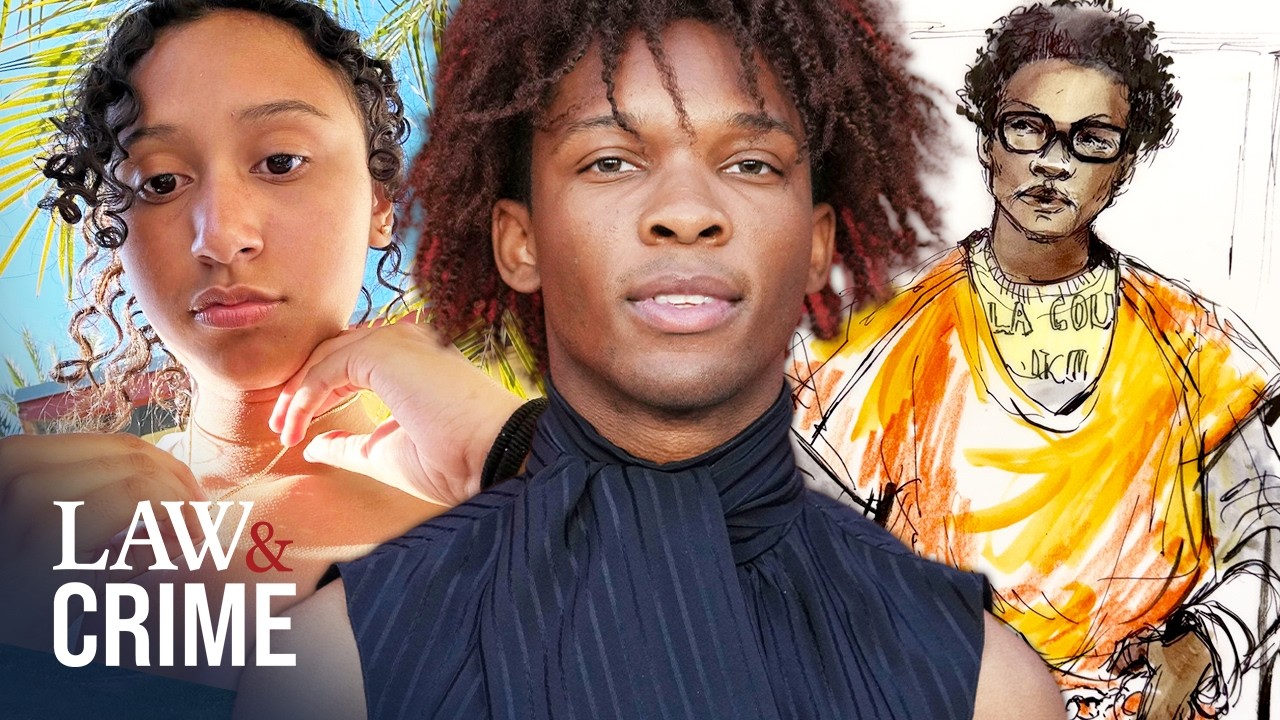
LOS ANGELES — In the sterile, fluorescent-lit confines of a downtown courtroom, where justice is measured in milligrams of DNA and micro-seconds of cellular metadata, a chilling tableau of modern horror unfolded. The preliminary hearing for indie-pop sensation David, known professionally to millions of devoted fans simply as d4vd, entered its harrowing third day. The charges laid against the young artist read like a descent into the deepest circles of macabre fiction: the alleged sexual abuse, brutal murder, and unimaginable dismemberment of 14-year-old Celeste Rivas Hernandez. As the proceedings plumbed new depths of depravity, the courtroom sat in stunned, suffocating silence. Here, amidst the quiet shuffling of legal briefs and the sterile hum of overhead projectors, the veneer of celebrity was stripped away, revealing a nightmare landscape of forensic evidence, bloodstained garments, and a chillingly detached defendant who stared blankly into the middle distance, seemingly immune to the gravity of his own annihilation.
To understand the sheer magnitude of the shock reverberating through the American legal landscape, one must return to the grotesque discovery of September 2025. It was then that authorities, acting on frantic tips and digital breadcrumbs, pried open the front trunk of a Tesla registered to the singer, parked quietly in a Hollywood tow yard. Inside lay the decomposed, dismembered remains of a child whose life had barely begun. Celeste Rivas Hernandez was just fourteen years old. Now, months later, Deputy District Attorney Beth Silverman and the prosecution team are methodically building an unassailable mountain of probable cause to bind the defendant over for trial. Day three of this preliminary hearing did not merely chip away at the edges of the defense; it detonated a series of forensic bombshells, introducing into the official court record blue inflatable pool fragments, hidden biological evidence, incriminating geolocation telemetry, and a surreal defense pivot involving jugs of theatrical fake blood.
As legal analysts, true-crime devotees, and American households follow every sensational twist, the question remains: does the state have enough to pierce the armor of celebrity and send this case to a full jury trial? What follows is an exhaustive, deep-dive chronicle of the morning session of day three—a morning marked by explosive courtroom drama, fierce legal skirmishes, and revelations so horrifying they threaten to redefine the darker underbelly of modern fame.
THE MORNING FIREWORKS: STRICT PROTOCOLS AND COURTROOM PURGES
Even before the first witness took the stand to testify about biological residues and microscopic polymers, the courtroom erupted in procedural chaos. Superior Court judges presiding over high-profile capital or major felony cases walk a tightrope between public transparency and the absolute preservation of trial integrity, and this morning was no exception.
As NBC LA reporter and courtroom observer Julia Deng recounted during a court recess, the session began with immediate fireworks: a credentialed reporter was summarily barred and ejected from the proceedings. The reason? An alleged violation of strict live-transmission and electronic communication protocols. In an era where digital information travels at the speed of light, the court has maintained a zero-tolerance policy against any potential leaks, unauthorized recordings, or external transmissions. No cameras, no mobile phones, and no outside chatter are permitted within the sacred confines of the well. The judiciary’s rationale is ironclad: in a case freighted with immense public notoriety and deeply sensitive allegations involving a minor, the risk of a mistrial or contaminated evidence is a catastrophic hazard that no court can afford to entertain.
Yet, the exclusion of media personnel was merely the prologue to a more startling expulsion. Steve Fischer, a private investigator who had been retained by the owner of the property where d4vd had been temporarily residing near the epicenter of the investigation, was abruptly scrubbed from the witness equation. According to Deputy DA Beth Silverman, Fischer had allegedly violated grand jury secrecy rules through his public commentary and media appearances. Silverman formally requested that Fischer be stricken entirely from the prosecution’s witness list. When the motion was called, Fischer—sitting quietly in the gallery—stood up, acknowledged the court’s directive without a shred of pushback or legal posturing, and walked out of the courtroom.
While Fischer’s exit removes a vocal and controversial figure from the immediate witness box, legal experts note that his prior intelligence and investigative tracking could well resurface if and when the case proceeds to a formal jury trial. For now, however, the preliminary hearing is laser-focused on a singular legal threshold: establishing probable cause. With witness number eight taking the stand, the state was not merely checking boxes; they were laying down heavy railroad tracks designed to carry this prosecution straight past preliminary hurdles and into the courtroom of judgment.
THE PHANTOM IN THE DOCK: D4VD’S UNSETTLING DEMEANOR

Perhaps nothing in this preliminary hearing has unnerved seasoned court observers quite like the physical demeanor of the accused. While facing charges that carry the very real specter of life imprisonment or worse—continuous sexual abuse of a minor, murder, and the unlawful mutilation of human remains—a defendant is typically expected to display anxiety, remorse, profound stress, or at least active engagement with their defense counsel.
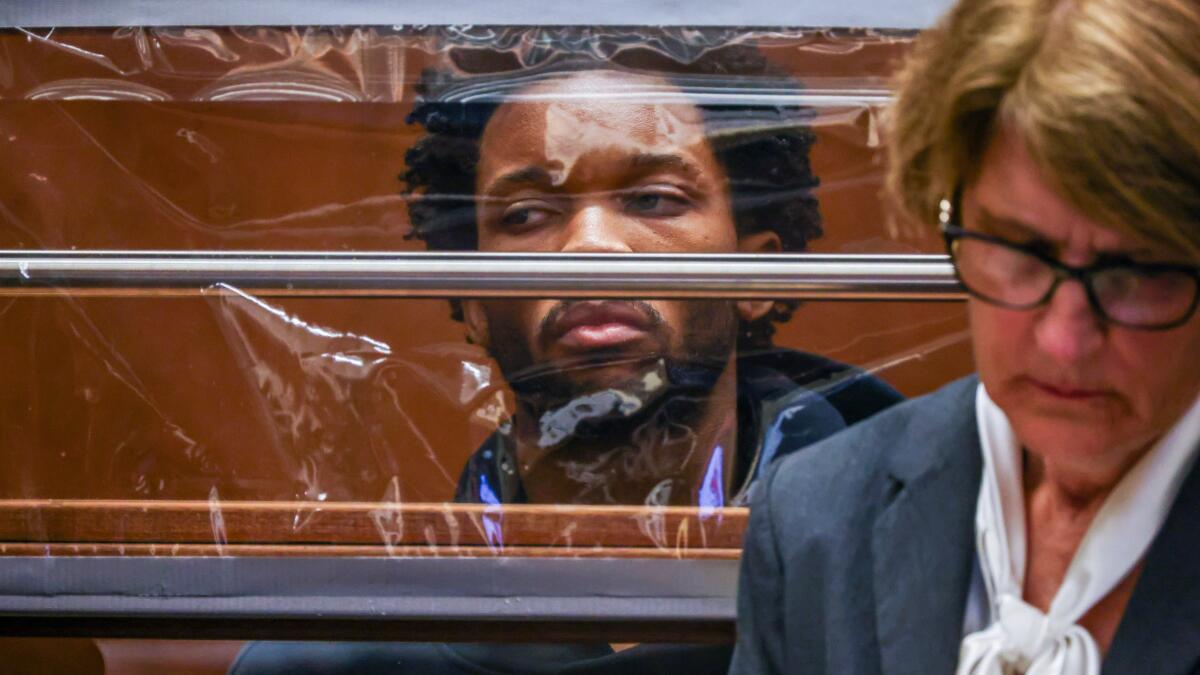
Instead, courtroom sketch artist Mona Schaefer Edwards, positioned uniquely within the jury box with a direct, unobstructed view of the defendant’s face, described a chillingly surreal scene. To Edwards, d4vd appeared to be “on another plane.” He was described as completely disengaged, staring blankly straight ahead toward whichever witness was testifying or upward at the overhead monitors projecting forensic exhibits.
For hours on end, as graphic descriptions of decomposed remains and bloodstained garments filled the air, the defendant sat with his arms firmly folded. Before him rested a yellow legal notepad upon which—according to close visual monitoring—not a single word or note was ever jotted down. His only refreshments were sips of water from a white styrofoam cup, and his physical interactions with his defense team were limited to perhaps two or three brief, whispered exchanges throughout the entire morning session. When graphic photographs of the victim’s clothing—soiled, bloodstained, insect-infested, and wet—were displayed as physical evidence, the defendant did not flinch, turn away, or blink. He simply stared forward.
This eerie, almost robotic detachment has fueled rampant speculation outside the courtroom. Legal commentators have openly questioned whether the defendant’s flat affect is the result of heavy medical management, profound psychological shock, or a chilling psychological compartmentalization. Whatever the underlying cause, the stark contrast between the unspeakable horror of the allegations and the placid, immobile posture of the man in the dock has created an aura of psychological unease that hangs heavily over the entire proceeding.
THE FORENSIC BATTLEGROUND: CHAINSAWS, TRASH BAGS, AND THE MISSING TOOL
The substantive heart of the morning testimony kicked off with the rigorous cross-examination of an LAPD criminalist who had processed the physical evidence recovered from d4vd’s residential garage approximately one week after the grim discovery in the Hollywood tow yard. The garage had yielded a cornucopia of forensic potential: trash bags, rubber floor mats, suspicious stains, and mechanical tools, including two heavy-duty chainsaws.

Defense attorney Blair Burke launched a calculated assault on the prosecution’s handling of these tools, bearing down on a crucial point: preliminary forensic tests conducted on the chainsaws yielded no positive presumptive results for blood. Burke pressed the criminalist relentlessly, attempting to establish that the failure to seize and conduct touch-DNA analysis on the chainsaws represented a critical blind spot in the police investigation—an omission that might have obscured alternative contributors or other individuals who could have had access to the property.
The criminalist, however, stood her ground with sharp, meticulous precision, frequently referencing her detailed investigative notes. She testified that field evaluations indicated the chainsaws possessed no apparent forensic value. She stated unequivocally that if those specific chainsaws had been utilized for the horrific task of human dismemberment, biological transfer—specifically blood—would have been virtually impossible to clean to a degree that would escape presumptive chemical detection. Consequently, investigators elected not to seize them as primary evidence.
This testimony opened a fascinating window into the prosecution’s tactical narrative. If the chainsaws found in the garage were not the instruments of dismemberment, what tools were? The answer to that question brought forward one of the most compelling anomalies of the case: the testimony confirming a missing Makita brand chainsaw, ordered online and delivered directly to the residence prior to the killing, which was conspicuously absent during the execution of the search warrants. Furthermore, the criminalist’s testimony turned to a double-bagged black plastic sack discovered within the garage. Inside this inner bag, investigators located white Clorox-style cleaning wipes stained with a brownish residue. When subjected to preliminary chemical screening, those wipes tested positive for the presumptive presence of biological blood material, reinforcing the state’s narrative of a hurried, desperate post-crime cleanup operation.
THE SMOKING GUN: THE BLUE INFLATED POOL PUZZLE
If the chainsaws represented a point of contention, the testimony surrounding a blue inflatable pool shattered any lingering doubts regarding the physical mechanics of the alleged cover-up. In what courtroom observers described as an irrefutable, textbook display of forensic science, a second LAPD criminalist, Lisa Leendro, took the stand to present analytical work that connected physical evidence from the autopsy directly to consumer goods purchased by the defendant.
Leendro detailed her microscopic examination of material recovered from the LA County Medical Examiner’s office—specifically, fragments collected during the autopsy of Celeste Rivas Hernandez, which had remained embedded within her decomposed remains and soiled clothing. These items included a pair of Sketchers brand socks, the victim’s undergarments, and leggings that had been sheared into pieces, corresponding to the alleged amputation of her legs at the kneecaps.
:max_bytes(150000):strip_icc():focal(995x450:997x452)/celeste-rivas-hernandez-d4vd-split-111925-54cd9e856e6347e7a1471fef4cb34371.jpg)
Under careful questioning by Deputy DA Silverman, Leendro presented photographic exhibits comparing the autopsy fragments to a blue inflatable pool recovered during the investigation. Under the microscope, the microscopic cuts, linear damage patterns, and structural polymer characteristics of the pool fragments matched the autopsy remnants with uncanny precision. Exhibits displayed in court showed how the small shreds of blue plastic recovered from the victim’s body fit into the damaged sections of the inflatable pool like pieces of an intricate, macabre jigsaw puzzle. Four distinct areas of structural damage and stress marks on the underside of the pool aligned perfectly with the physical trauma sustained by the victim.
For the prosecution, this evidence bridges the gap between hypothesis and physical reality, suggesting that the inflatable pool was utilized as a containment vessel during the horrific acts that followed the murder. In the gallery, the emotional toll of this testimony was stark. The victim’s family, including her mother Mercedes—who had previously broken down in open grief—sat in the courtroom with a haunting, frozen stillness. Having endured days of viewing graphic photographic inventories of their daughter’s final garments and remains, their presence served as a poignant, agonizing reminder of the human cost underlying the sterile courtroom exhibits.
DIGITAL FOOTPRINTS: GEOLOCATION TELEMETRY AND THE ROAD TO SANTA BARBARA COUNTY
As the morning session progressed from biological residues to digital forensics, the focus shifted to the invisible trails left by modern technology. Prosecutors have long maintained that d4vd lured Celeste Rivas Hernandez to his Los Angeles residence on an April night in 2025. To prove the subsequent movement of her remains, the state presented damning cellular and vehicular telemetry.
An LAPD digital forensics expert walked the court through comprehensive mapping exhibits that tracked the physical movements of the defendant’s Tesla and his personal iPhone on the night of April 24, 2025, and during subsequent covert trips. The data revealed an identical chronological and geographical trajectory: originating in the Hollywood Hills, the vehicle traveled west along Sunset Boulevard before heading north up the rugged Pacific coastline into Santa Barbara County.
This digital trail intersected directly with the geographic coordinates where Celeste’s passport card was subsequently recovered—discarded near Lake Kachuma off State Road 154. Furthermore, cell phone data established that this harrowing nocturnal road trip was not a singular event; telemetry confirmed additional return trips north in the days following the initial journey, suggesting a calculated, multi-stage effort to conceal evidence across county lines.
Adding a surreal layer to the digital narrative, testimony revealed an outgoing phone call placed from the defendant’s device to the victim’s phone approximately thirty to sixty minutes after the Tesla had departed Los Angeles on its northern migration. Defense counsel vigorously objected, successfully ensuring the court record accurately reflected that the call originated from the device rather than implying a live conversation with a victim who was already deceased. Legal analysts noted the bizarre psychological absurdity of the gesture: calling a deceased victim’s phone while actively transporting her remains northward serves as a glaring testament to either panicked cognitive dissonance or an erratic, flawed attempt to manufacture a false timeline of contact.
THE DEFENSE COUNTER-NARRATIVE: THE SPECTER OF THE THEATRICAL MERCHANDISE

Every formidable prosecution invites a counter-narrative, and day three provided the first substantive glimpse into how the defense intends to explain away the incriminating biological artifacts discovered at the scene. When LAPD criminalists testified regarding the recovery of jugs and jars of theatrical fake blood found stored within the residence, the defense seized upon this discovery to construct an alternative explanation.
The defense pointed out that the defendant maintained an active commercial merchandise operation tied to his music career, which included the production and styling of promotional apparel—such as white t-shirts and hoodies intentionally stained with fake blood to match his artistic aesthetic and music video imagery. Forensic testing confirmed that the jugs of liquid recovered from the garage tested negative for biological material and were not seized as actionable evidence.
While the presence of theatrical fake blood offers a convenient narrative hook for the defense to explain red-hued stains or artistic props, legal experts caution that it falls woefully short of neutralizing the broader tapestry of evidence. Fake blood in a jar does not account for the microscopic pool fragments embedded in the victim’s clothing, the positive presumptive blood wipes found sealed in double-bagged trash sacks, the damning cellular telemetry placing the defendant’s vehicle near Lake Kachuma, or the grim contents discovered within the Tesla’s front trunk. Nevertheless, it signals the primary battleground upon which the trial will be fought: a bitter contest over the interpretation of physical residue, pitting artistic license against forensic certainty.
FUTURE SCENARIOS AND LEGAL TRAJECTORIES: CALCULATING THE ROAD AHEAD
As this preliminary hearing marches toward its inevitable conclusion, legal scholars and criminal justice analysts are already projecting the trajectory of the case as it transitions from a preliminary evidentiary screening to a full-blown jury trial. The statistical and procedural probabilities governing this case illuminate several distinct future scenarios.
First, regarding the preliminary hearing threshold itself, legal consensus heavily favors the prosecution. In the California judicial system, a preliminary hearing requires only a showing of “probable cause”—a remarkably low legal bar compared to the “beyond a reasonable doubt” standard required at trial. Given the extensive presentation of cellular telemetry, vehicle tracking, physical polymer matching via the inflatable pool, and biological residues, it is an overwhelming statistical certainty that the presiding judge will hold the defendant to answer on all primary counts.
Second, looking toward a potential trial horizon, the defense faces an uphill battle of monumental proportions. To counter the state’s circumstantial web, defense counsel will likely pursue a multi-pronged strategy: challenging the chain of custody for digital evidence, attacking the specificity of presumptive blood tests that lack confirmatory DNA profiling, and leaning heavily on the “music video/artistic props” defense to account for chemical and visual anomalies in the garage. However, the absence of the missing Makita chainsaw, combined with the devastating physical linkage of the inflatable pool fragments to the victim’s remains, creates formidable evidentiary hurdles that will require extraordinary legal maneuvering to overcome.
Third, the specter of plea negotiations hangs heavily over the proceedings. As discussed by veteran legal commentators, prosecutors frequently present an exhaustive, overwhelming amount of evidence during preliminary hearings not merely to satisfy the court, but to send an unmistakable message to the defense: the case is airtight, the trial will be grueling and public, and the emotional devastation to the victim’s family will be absolute. In such high-stakes capital or major felony prosecutions, this dynamic often opens confidential backchannels exploring whether a negotiated plea—such as accepting a life sentence without the possibility of parole in exchange for taking the death penalty off the table—might eventually be entertained. Yet, given the stoic, detached silence of the defendant in the courtroom, whether such pragmatism will penetrate the defense bunker remains an open question.
CONCLUSION: THE RECKONING AWAITS
As day three of the preliminary hearing draws to a close, the courtroom empties out into the bustling Los Angeles sunlight, a stark juxtaposition to the dark, suffocating realities discussed within its walls. The case of d4vd has evolved from a shocking celebrity scandal into a profound legal examination of modern depravity, forensic science, and the relentless pursuit of accountability.
For the family of Celeste Rivas Hernandez, no legal ruling, no amount of cell tower telemetry, and no courtroom exhibition can undo the unimaginable trauma of their loss. Yet, as the evidence continues to pile high, brick by forensic brick, the wheels of American justice grind forward, inexorably drawing closer to the moment of ultimate accountability. When the gavel finally falls to send this case to trial, the nation will be watching, waiting to see whether the haunting silence of the defendant will finally be broken by the unyielding verdict of truth.