The “Most Corrupt” Presidential Move Ever? Explosive Allegations Spark Nationwide Political Firestorm
The “Most Corrupt” Presidential Move Ever? Explosive Allegations Spark Nationwide Political Firestorm
The Most Corrupt Act in Presidential History: A Republic at the Precipice

In the heart of the American capital, a shadow has fallen over the machinery of democracy—a shadow cast not by foreign adversaries, but by the very hand of the Presidency itself. What began as a routine legal claim has metastasized into what is being described by legal scholars and historical observers as the most breathtakingly corrupt act in the history of the United States. This is not mere political theater; it is a fundamental reconfiguration of the American legal landscape, designed to grant the executive branch unprecedented power and near-total immunity from the rule of law.
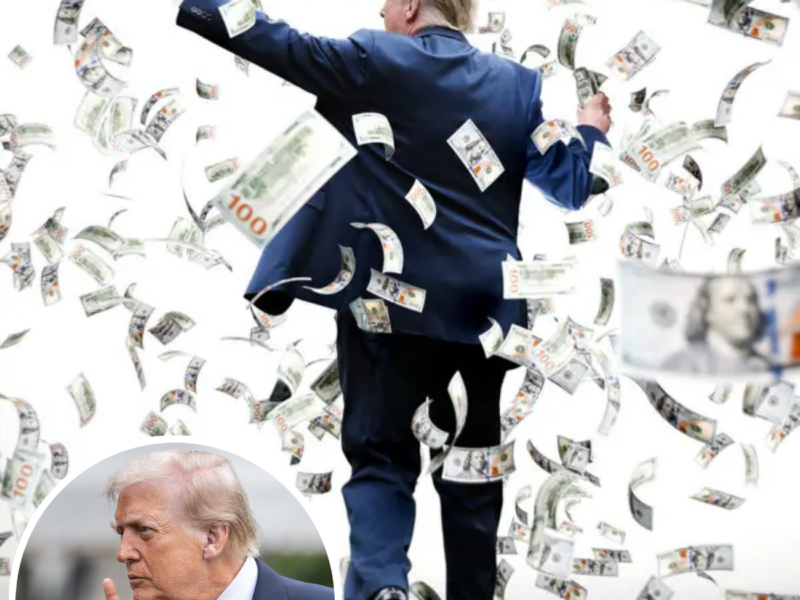
Imagine, if you will, a scenario where the President of the United States—the commander-in-chief and the chief executive officer of the federal government—decides to sue himself. It sounds like a premise from a dystopian novel, or a nonsensical riddle, yet this is the reality we face. By filing a ten-billion-dollar lawsuit against the Internal Revenue Service—an executive agency under his direct command—the President effectively eliminated the concept of an adversarial legal system. Because the Justice Department’s lawyers serve at the pleasure of the President, and because he issued an executive order prohibiting those same lawyers from disagreeing with his legal interpretations, the government was essentially forced to defend itself against him with both hands tied behind its back.
This was not a lawsuit; it was a self-licking ice cream cone, a circular exercise in power where the plaintiff, the defendant, and the arbiter of the law were all puppets on a single, golden string. And when the legal waters became too perilous, when a federal judge began asking inconvenient questions about the very existence of a “case or controversy” as required by Article III of the Constitution, the President simply changed the game.
He dropped the suit, but only in exchange for something far more sinister: the establishment of a two-billion-dollar “Anti-Weaponization Fund.”
The Industrialization of Impunity
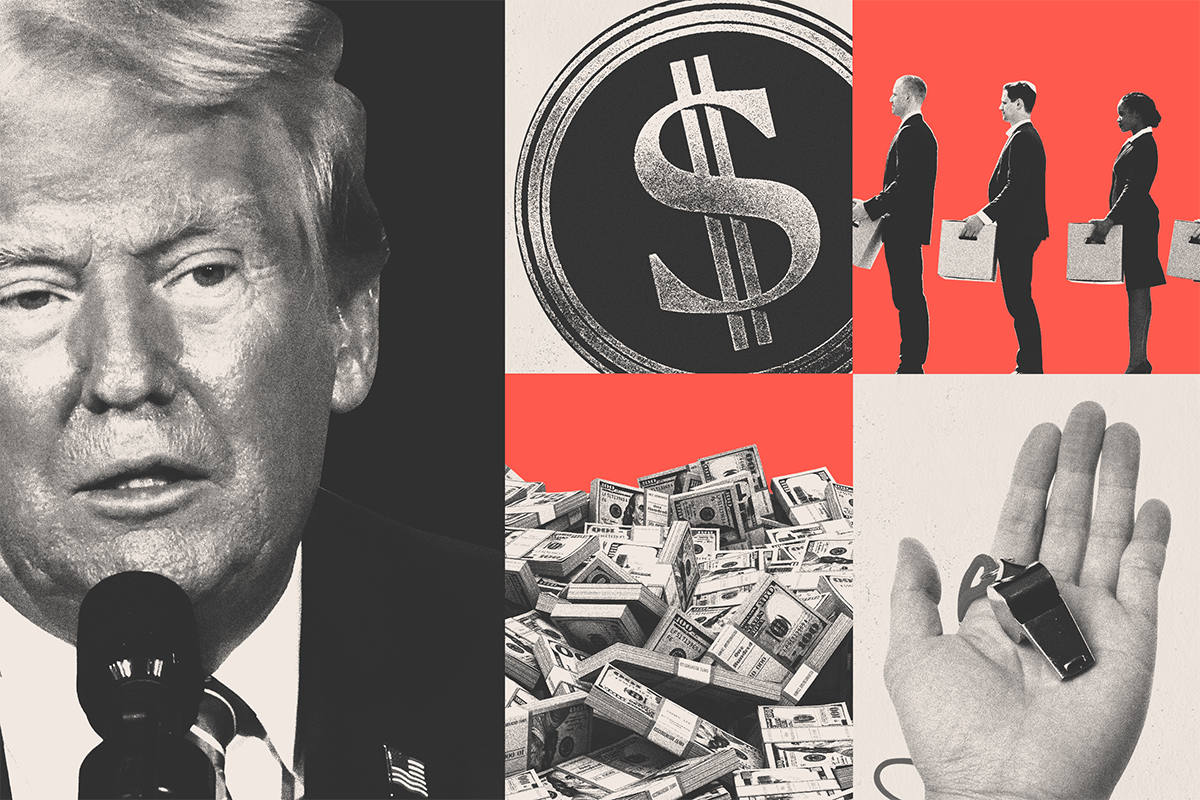
The terminology chosen by the administration is as chilling as it is ironic. Labeled an “Anti-Weaponization Fund,” this entity is, in reality, a private slush fund of taxpayer money, designed to pay “victims” of what the administration defines as “lawfare.” The definition is narrow, specific, and nakedly partisan: it covers only those targeted by Democratic administrations. Under the watchful eye of a five-member board handpicked by the President—led by his former defense attorney, who has openly declared that his only loyalty is to the President—this fund will determine who gets a payout and who does not.
Crucially, the oversight mechanisms are effectively nonexistent. While quarterly reports are meant to be filed, they are designated as confidential. The public, whose tax dollars are funding this operation, may never know which political allies received how much money, or by what criteria these determinations were made. This is the industrialization of impunity. It signals to every political crony, every zealot, and every operative that if you perform the President’s bidding, the full weight of the federal treasury stands behind you as a shield against consequences.
The Second Hammer: A Blanket Immunity
If the establishment of the fund were not enough, the administration quietly ushered in a second, perhaps even more dangerous, decree. This supplemental agreement grants the President, his family, and his business entities broad, sweeping immunity from federal government claims—including pending or future audits and investigations. It is, in effect, a self-issued pardon for the history of the Trump family’s business dealings.
This move directly undermines the separation of powers. Federal law expressly prohibits the President from interfering in the tax audits of specific taxpayers. By signing a settlement that effectively terminates his own audit, the President has bypassed the democratic process, rendering himself a king above the tax code.
Future Scenarios: A Legacy of Erosion
The implications of this act extend far beyond the current term. By creating this precedent, the administration has introduced a new, dangerous mechanism into the American political ecosystem. Future presidents, observing this blueprint, may find it all too easy to replicate. Imagine a future where every administration starts by initiating “friendly” lawsuits against their own agencies, only to settle them by creating slush funds to distribute wealth to their respective political bases.

The long-term erosion of trust in the federal judiciary, the Department of Justice, and the IRS will be profound. When citizens see that justice is not blind, but instead a commodity to be bought and sold by the executive, the foundation of the rule of law begins to crumble. If this fund is allowed to persist until 2028, we could see the total depletion of the federal judgment fund—money intended to pay victims of government wrongdoing—now diverted to those who have actively worked to undermine the very institutions they are claiming to “fix.”
As we move forward, the question remains: will the American public demand accountability, or have we reached a point where the mechanisms of corruption are so deeply embedded that they have become invisible? The judiciary has been sidelined, and the legislative branch is divided. The future of the Republic may well depend on whether we can see through the smoke and mirrors of these “Anti-Weaponization” labels and recognize a blatant consolidation of power for what it is.