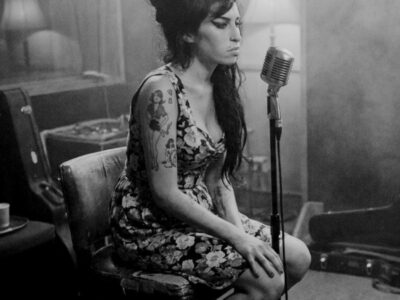
Doctors said it was impossible. Amy Winehouse proved them wrong — then ran out of time.
Amy Winehouse’s doctors said it was impossible. They said no one comes back from dependency that severe. Amy proved them wrong 3 years before she died and almost nobody knew. The story the world told about Amy Winehouse in the years after her death was a story about inevitability. It was the story of a woman who had been heading toward a single destination for a long time, whose talent and whose destruction were inseparable, whose end was written into the beginning.
It was a tidy story. It was also in important ways wrong. Because the truth about the last chapter of Amy Winehouse’s life is more complicated and more painful than inevitability. It is the story of a woman who had, against every medical prediction, climbed her way back from the worst of it and who was, in the weeks before she died, more herself than she had been in years.
To understand how she got there, you need to understand where she had been. And to understand that, you need to go back further than the tabloid photographs and the canceled concerts, back to who Amy Winehouse was before any of it. She was a girl from Southgate who had taught herself guitar at 13 and started performing in jazz clubs before she was old enough to drink in them.
She was someone who had written an entire album, Frank, by the age of 19. Honest, self-aware, shot through with a clarity about her own feelings that most people spend a lifetime trying to develop. She was funny. She was loyal. She was someone whose friends described as the person you wanted in the room when something went wrong because she would tell you the truth and then make you laugh.
That person did not disappear when the harder years arrived. She went somewhere difficult to reach, but she did not disappear. The years between 2007 and 2009 were, by any honest accounting, years of sustained crisis. The marriage to Blake Fielder-Civil had introduced heroin into her life, and heroin had taken hold with the thoroughness that it reserves for people who feel things completely and have no half measures in them.
By 2008, her father, Mitch, was telling journalists that doctors had warned him Amy’s lung capacity had dropped to 70%. They told him that if she continued the way she was going, she would lose her voice. They told him it would kill her. He passed this information on to Amy the way a father passes terrible information to a child he loves, directly, with the hope that love might be enough to make the difference.
For a while, it was not enough. The Belgrade concert in 2008, the collapse tours, the photographs that appeared in British tabloids of a woman who looked like she was disappearing, all of it happened. All of it was real. The people who followed her career in those years were not wrong to be frightened for her.

But something happened in 2008 that the headlines did not linger on because it did not fit the narrative that had already been written. Amy Winehouse stopped using illegal drugs. Her physician confirmed it. The toxicology report released after her death confirmed it. Reg Travis, the film director she fell in love with in early 2010 and stayed with until the end of her life, confirmed it with a directness that left no room for interpretation.
He told journalists that drugs were simply not part of her world during their time together, that you could not put her in a room with them. It just was not who she was anymore, that everything from that period of her life was in the past, and she had left it there. Mitch Winehouse said the same thing at her funeral in language that surprised people who had spent years reading a different story.
He stood up in front of the people who had loved his daughter, and he said that 3 years ago Amy had conquered her drug dependency. He said the doctors had told him it was impossible. He said she had done it anyway. That was 2008, 3 years before she died. The thing that remained, the thing that ultimately killed her, and that she was still fighting in the final weeks of her life, was alcohol.
And alcohol is a different kind of enemy than the one she had already defeated. In part because it is legal, in part because it is everywhere, and in part because it moves more slowly and more quietly than the substances she had walked away from. It does not announce itself the same way.
It allows you to believe for longer than you should that you are managing it. Amy was not managing it. The people who loved her knew it. She knew it. In May 2011, she checked herself into the Priory Clinic, one of Britain’s most respected addiction treatment facilities, seeking help for her drinking. She was there for less than a week before she left, her representative saying she had completed her assessment and was ready for her European tour.
Whether she left too soon is a question that has no answer now. What is certain is that she tried. The European tour that followed was the last professional chapter of her life, and it ended badly. The Birmingham concert on June 18th, 2011, the opening night, was a disaster of the kind that Birmingham had been 4 years earlier, but more complete.
She arrived on stage late, she forgot lyrics, she wandered. The audience booed. Serbian media called it a scandal. A government minister called it a disgrace. The footage from that night, which circulates on the internet, is extremely difficult to watch, not because of what it reveals about Amy’s state, but because of the gap between what you can hear her voice capable of in its brief moments of coherence and what the rest of the night looks like around it.
The remaining European dates were cancelled. Amy flew back to London. And then something happened that nobody fully anticipated. She came home to Camden. She saw her father. She saw Reg. She saw the people who had been watching her for years with the particular expression that people wear when they are frightened for someone they love and cannot find a way to say it that lands.
And something in her, something that had always been there, the same stubbornness that had made her impossible at the Sylvia Young Theatre School, the same refusal to accept other people’s conclusions about what she was capable of, turned in a new direction. She stopped drinking. Not under medical supervision, not in a facility, not as part of any formal program, she decided on her own to stop.
Her father spoke about it in his eulogy with the precision of a man who had watched his daughter fight for years and knew what a real attempt looked like. He said she had just completed 3 weeks of abstinence. 3 weeks without alcohol. A period that anyone who understands addiction will recognize as genuinely significant, as the hardest stretch, as the window in which the body is recalibrating and everything feels impossible and the only thing keeping you on the right side of it is will.
He said she had told him, “Dad, I’ve had enough. I can’t stand the look on your and the family’s faces anymore.” She was not depressed. She had made a decision. In the weeks between the cancelled tour and her death, Amy was living in her Camden Square apartment and she was by every account of the people who saw her in those days more present than she had been in a long time.
She was in love. Reg Travis was a film director, steady, private, someone who existed outside the music industry and the particular ecosystem that had surrounded her since she was 19. They had been together since early 2010. Mitch wrote in his memoir that they had planned to marry, that they had talked about having children, that Amy, who had told Rolling Stone in 2007 that she was on Earth to be a good wife and mother more than anything else, was looking toward a future with someone she trusted and building something real with him.
She was talking to her father three times a day. This detail, which Mitch mentioned in the eulogy almost as an aside, is the one that stays with you. Three times a day, not out of obligation, not because someone had told her to maintain contact with family as part of a recovery plan, because she wanted to, because Mitch was her father and she loved him and the conversation was good.
In the last call he would ever receive from her, she had found a box of old family photographs, pictures of a childhood in Southgate, a family before the divorce, a girl who had not yet become anything, and she wanted him to come over and look at them with her. She was looking backward and finding something worth keeping. In the middle of July, just days before she died, Amy performed at the 100 Club on Oxford Street.
It was a small venue, intimate, the kind of room where the distance between the stage and the audience is close enough that you can see faces. She had played rooms like this at the very beginning, before the arenas and the Grammys and the wreckage of the years between. Her father was in the crowd. He watched her and he heard her, the voice back, the timing back, the wit that had always been part of her on stage and that the difficult years had buried.
After the show, she told him she had thoroughly enjoyed herself. Thoroughly enjoyed herself. Those were her exact words. A 27-year-old woman standing at the beginning of something after years of the alternative, using a phrase that sounds like something her grandmother would say, meaning every syllable of it. In those last days, the people around her noticed things, small things.
She was eating. She was sleeping at normal hours. She was engaged in conversations rather than retreating from them. Her mother, Janis, visited on the Friday, two days before she died, and found her in good spirits. Reg was with her. By every account of everyone who saw her that final week, she was present.
She was there in the way that she had not always been there in the years before. The three weeks of abstinence had given her back something that the drinking had been slowly removing, a clarity, a groundedness, a reconnection with the version of herself that had always been underneath everything else.
On the night of July 22nd, 2011, Amy Winehouse was in her apartment in Camden. Her security guard was with her. She was in her room playing drums and singing. As it was late, he asked her to keep it quiet, and she did. He heard her moving around for a while. When he went to check on her the following morning, he thought she was asleep.
He went back a few hours later. That was when he realized she was not breathing. She was 27 years old. Her blood alcohol content at the time of her death was more than five times the legal drink-drive limit. The coroner recorded a verdict of death by misadventure. No illegal substances were found in her system.
In his eulogy, Mitch Winehouse said something that he clearly needed people to hear, needed it with the urgency of a father who understood that the narrative the world had already written about his daughter was going to be the one that survived. He said, “Knowing she wasn’t depressed, knowing she passed away happy, it makes us all feel better.
He believed it. And the evidence suggests he was right to believe it in the specific and limited way that such things can be true. She was not depressed. She was sober from illegal drugs. She was 3 weeks into abstaining from alcohol. She was in love with someone who planned to marry her.
She was talking to her father three times a day about old photographs and what came next. The gap between those facts and the outcome is the hardest part of this story. Not because it suggests that things should have been fine. Addiction does not work that way. And the damage that years of it does to a body does not reverse itself in 3 weeks of abstinence, no matter how sincerely intended.
The toxicology report was clear about what happened. The coroner was clear. The past does not stop being the past because the present has changed. But the hardest part of the story of Amy Winehouse’s last days is not what they looked like. It is what they meant. It is the evidence in those final weeks of someone who had climbed back to a place where the future felt possible, who was making plans, talking to her father, singing in a small club, and thoroughly enjoying herself.
And whose body could not hold the distance between where she had been and where she was trying to go. There is a word that gets used in addiction medicine for the period Amy was in during those final weeks. The period after the worst is over, when the substances are gone, but the body is still carrying the years of damage they caused.
The word is recovery. And recovery is not a destination. It is a direction. It is something you move toward every day with the understanding that the movement itself is the thing, not the arrival. Amy was moving in that direction. The doctors who had told Mitch it was impossible had been proven wrong once already, 3 years earlier.
She had done the harder thing. She had come back from the place they said nobody came back from. The doctors said it was impossible. She proved them wrong about the drugs. She was 3 weeks into proving them wrong about everything else. The Amy Winehouse Foundation, launched on what would have been her 28th birthday, carries this part of her story forward in the way that foundations carry things, imperfectly, incompletely, but with genuine intention.
It funds rehabilitation services for young people who cannot afford private treatment. It runs music programs in schools. It bears her name not as a cautionary tale, but as something more complicated and more true. The name of someone who fought, who made it partway back, who was trying when she ran out of time.
She ran out of time, not of will, not of love, not of the thing that had always been there underneath all of it, the voice, the honesty, the person her father described in a eulogy when he said she was the greatest daughter, family member, and friend you could ever have. She ran out of time, and that is a different story than the one the world told about her.
A harder story to sit with because it does not resolve the way tragedies are supposed to resolve. It does not end with the warning fulfilled or the lesson delivered cleanly. It is a harder story and a truer one, and it belongs to her.