The ‘Useless’ German AA Gun That Terrified Every Allied Tank Crew In WWII D
June 1941, the Libyan desert west of Sollum, a narrow pass cut between sandstone cliffs the British call Halfaya. Dawn breaks at 4:15 and the first Matilda tanks of the 4th Armored Brigade begin rolling south through the gap in a column of dust. Their crews are confident. The Matilda’s 78 mm of frontal steel has bounced every German anti-tank round fired at it since France.
The 37 mm Pak 36, the weapon the Germans themselves call the door knocker, cannot scratch it. So, the column advances in the open, hatches closed, engines grinding, straight into a pass where a Lutheran pastor named Wilhelm Bach has buried something in the sand that’s about to change the entire war. No muzzle flash, no warning.
The lead Matilda lurches sideways, a neat hole punched clean through its turret at over 1,000 m. Then the second tank, then the third. Within minutes, 11 of 12 Matildas in the first wave are burning and Major Miles is screaming into his radio that something is tearing his tanks apart. The weapon responsible weighs 7 tons.
It stands almost 2 and 1/2 m tall and it was never supposed to be pointing at tanks at all. This is the story of the 88-mm flak, the anti-aircraft gun that accidentally became the most feared weapon of the Second World War. To understand why the 88 existed, you need to understand a trick played on the Treaty of Versailles.
After 1918, Germany was forbidden from developing anti-aircraft artillery. So, Krupp, the great Essen arms dynasty, moved its engineers to Sweden, where the company had quietly held majority ownership of the Bofors arms firm since 1921. Working in secret through the 1920s, Krupp’s designers built prototypes of a new heavy flak gun far from the eyes of French and British inspectors.
The German army originally wanted a 75-mm weapon, but its own specifications demanded a heavier shell, something that could throw a 10-kg round at 850 m/s into the upper atmosphere. The engineers went bigger. They settled on 88 mm, a caliber Germany had used in naval guns since before the First World War, and by 1928 they had a working prototype.
When the finished guns were shipped back to Germany and adopted in 1933, the Wehrmacht designated them the 8.8 cm Flak 18. The 18, a deliberate lie, meant to suggest the weapon was old surplus from the Great War, not a brand new design built in violation of an international treaty. The Flak 18 was a formidable anti-aircraft weapon.
Its semi-automatic breech could cycle 15 20 rounds per minute. Its effective ceiling reached 8,000 m, high enough to threaten any bomber of the era. A crew of 10 could emplace it from its towed configuration in roughly 2 and 1/2 minutes. But the feature that would change history was almost an afterthought.
The gun’s pedestal mount allowed the barrel to depress below the horizontal, and Krupp had fitted direct fire sights as standard. It could shoot at aircraft overhead, but it could also shoot at anything on the ground. And its 840 m/s muzzle velocity meant that when it did, the shell arrived before the sound. The first hint came in Spain.
In 1936, four batteries of Flak 18s, 16 guns, deployed with the Condor Legion during the Spanish Civil War, officially for air defense, but Republican forces had Soviet-supplied T-26 tanks, and the Nationalist had almost no artillery that could stop them. The 88 crews lowered their barrels. The results were devastating.
The high-velocity rounds obliterated T-26s on the first hit. By the end of the Spanish conflict, German records show the 88s had been involved in 377 combat engagements, and only 31 of them were against aircraft. The gun had done 10 times more work killing things on the ground than in the sky.
Germany’s military planners noticed. By 1938, purpose-built armor-piercing ammunition had been developed for the weapon, and armored shields were being fitted to protect crews from return fire. The 88 was no longer just an anti-aircraft gun. It was becoming something else entirely, and nobody outside Germany had any idea.
The real demonstration came at Arras on the 21st of May, 1940, during the fall of France. British Matilda tanks of the 4th and 7th Royal Tank Regiments counter-attacked Erwin Rommel’s 7th Panzer Division. The attack was meant to cut the German advance in half, and for a terrifying few hours it almost worked.
The Matildas rolled straight through the German anti-tank screen. The 37-mm rounds bouncing harmlessly off their thick armor, and Rommel’s infantry began to panic. It was the closest the Wehrmacht came to a genuine crisis in the entire French campaign. Rommel himself stopped it. Running from gun to gun under fire, he personally directed a line of 88s and 105-mm howitzers onto the advancing British tanks.
His aide, Lieutenant Most, was killed beside him. But the 88s punched through the Matilda armor that nothing else in the German arsenal could touch, and the counter-attack collapsed. Rommel never forgot. He took that lesson to Africa, and Africa is where the legend was born. Halfaya Pass, the engagement that opened this story, was Rommel’s masterpiece of anti-tank ambush.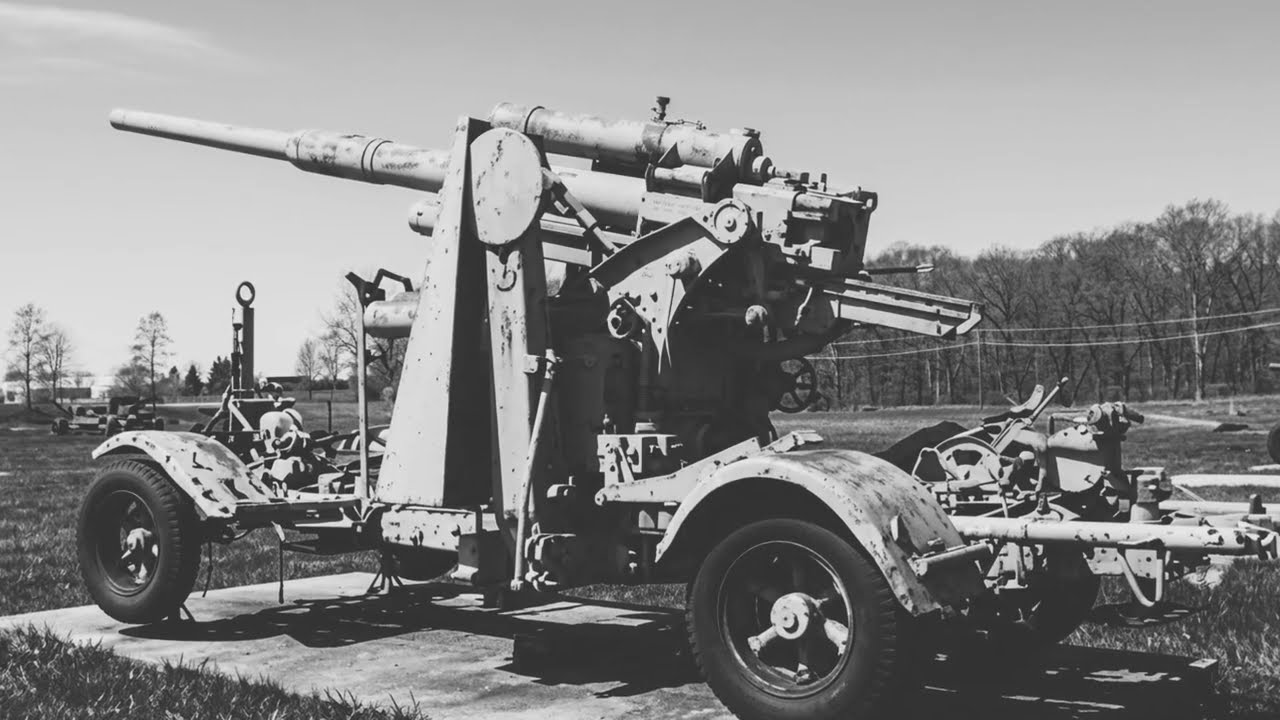
During Operation Battleaxe in June 1941, he used his tanks not as the killing weapon, but as bait, pulling back his Panzers to lure British armor forward onto concealed lines of dug-in 88s. Hauptmann Wilhelm Bach, the former Lutheran pastor, commanded the gun positions at Halfaya. The 88s were buried in sand revetments, invisible until they fired.
The British, expecting to chase retreating German armor, drove straight into the kill zone. The pass earned the name Hellfire. Over the three days of Battleaxe, the British lost around 220 tanks, 87 of them total write-offs. Historian Edward Westermann, drawing on German unit records, calculated that a single flak battalion of 12 88s destroyed 82 of the 92 British tanks knocked out during the battle.
12 guns accounting for almost 90% of British armor losses. By the end of 1941, Rommel’s two Luftwaffe flak battalions, fielding just 24 88s between them, had destroyed 264 tanks and 42 aircraft. Those numbers came not from propaganda, but from the unit war diaries themselves. And this is the part most people miss.
The 88’s dominance was not about the gun alone. It was about how the Germans used it. They invented a system called the pack front. Up to 10 anti-tank guns grouped under a single officer, all silent, all concealed, all firing simultaneously on command at a single target. The idea was simple and brutal.
No warning shot, no ranging round, just a wall of steel from every direction at once. The Allies had guns that matched or exceeded the 88 on paper. The British 3.7-in anti-aircraft gun fired a heavier 13-kg shell to a higher ceiling. The American 90-mm M1 was ballistically comparable. The Soviet 85-mm could do similar work, but none of those nations systematically deployed their heavy flak in concealed anti-tank ambushes. The British 3.
7-in was considered too valuable as an anti-aircraft weapon to risk in the ground role. The Americans eventually adapted. Their 90-mm went into the M36 Jackson tank destroyer, and later the M26 Pershing, but not until 1944. If you’re finding this breakdown of the 88’s real tactical advantage valuable, and you want to see more deep breakdowns like this on military hardware that changed history, subscribing to the War Foundry is the single best way to make sure you never miss one.
The gun itself continued to evolve. The original flak 18 gave way to the flak 36 with a new twin-axle carriage for faster deployment, and the flak 37 with updated fire control systems. But the real transformation came when the 88 moved off its pedestal and into armored vehicles. In 1942, the KwK 36, a tank-mounted adaptation of the flak 36 sharing the same ammunition, became the main armament of the Tiger I.
Roughly 1,347 Tiger Is were built, and the combination of the 88’s flat trajectory and the Tiger’s heavy armor made it the most feared tank on any battlefield it entered. In British firing trials, a KwK 36 gunner scored five consecutive hits on a target just 16 by 18 in at 1200 yd. It could penetrate roughly 100 mm of armor at 1000 m with standard rounds, enough to kill a Sherman, a T-34, or a Churchill from the front at combat range.
Then came the longer variant, the KwK 43 with a barrel stretched to 71 calibers on the Tiger and the Jagdpanther. It could penetrate 167 mm of armor at 1000 m, enough to defeat the frontal plate of any Allied tank in service, including the Soviet IS-2. The dedicated anti-tank version, the Pak 43, went into the Nashorn tank destroyer, a lightly armored open-topped vehicle that compensated for its vulnerability with the ability to kill anything at nearly 3 km.
On the 23rd of December, 1943, Nashorn ace Albert Ernst destroyed 14 Soviet tanks in a single day using just 21 rounds. His unit called him the Tiger of Vitebsk, but the 88 was never invincible. Its greatest strength as a towed gun, that towering pedestal mount, was also its greatest weakness. It stood almost 2 and 1/2 m tall and could not be hidden behind a hedgerow or dug into a shallow scrape the way a low-profile Pak 40 could.
Once it fired, every enemy observer within line of sight knew exactly where it was. Crew sat high and exposed at their sights and in the ground roll that put them within range of enemy infantry, mortars, and artillery. In Spain, casualties among the Condor Legion’s 88 batteries were second only to bomber crews.
The gun weighed 7 tons and needed a heavy half-track to tow it. No infantry squad was dragging this weapon into position by hand, and the Allies learned. They stopped sending tank columns charging blindly into suspected gun lines. They developed combined arms answers. Smoke to blind the 88s, artillery to suppress them, infantry to flank them, fighter bombers to destroy them from above.
The British 17-pounder anti-tank gun, firing armor-piercing discarding sabot rounds, could match or exceed the 88’s penetration. The Sherman Firefly, mounting that 17-pounder, gave British tank troops a vehicle that could kill a tiger from the front. By 1944, the 88 was still dangerous, still feared, but no longer the unanswerable weapon it had been in the desert.
And yet, the fear never quite died. American GIs had a saying, captured by cartoonist Bill Mauldin through his character Willie, “Let me know when we capture the inventor of the 88.” Allied soldiers attributed almost every heavy hit to the 88, whether it was one or not. Every German tank became a tiger.
Every anti-tank round became an 88. The gun had transcended its engineering specifications and become something closer to a psychological weapon, a sound, a reputation, a name that made crews button their hatches and infantry press their faces into the dirt. Between 1933 and 1945, Germany produced roughly 20,000 Flak 18, 36, and 37 guns, plus several hundred of the improved Flak 41, and thousands more in dedicated anti-tank and vehicle-mounted variants.
Conservative estimates place the total across all 88-mm types at around 24 to 25,000 guns. The Soviets studied the Packfront doctrine and used it to devastating effect at Kursk. The Americans studied German anti-tank defense at Fort Leavenworth, producing formal analyses that shaped Cold War armored doctrine.
Every modern main battle tank carries a high-velocity gun descended in philosophy, if not in direct engineering lineage, from the principle the 88 proved that muzzle velocity kills armor, and that the best anti-tank weapon is often something originally built for a completely different war. Hellfire Pass, June 1941. 12 guns buried in the sand crewed by Luftwaffe anti-aircraft troops who were never trained to fight tanks, commanded by a pastor who had never led men in combat before the war.
11 Matildas burning in the first minutes. A weapon that was never supposed to be there doing something it was never designed to do so effectively that it rewrote the rules of ground warfare for the next 80 years. Just an anti-aircraft gun.