The Women Who Saw the Real Charles — and Walked Away Before Diana D
In the summer of 1980, at one of the balls held to celebrate the Queen Mother’s approaching 80th birthday, a young woman stood in the most glamorous room in England and watched the Prince of Wales spend the entire evening with another man’s wife. Her name was Anna Wallace. She was clever, she was beautiful, and she had been for the better part of a year the woman the press expected Charles to marry.
She had seen by then exactly what loving this man would cost, that there was always another woman in the room, that the heir to the throne would never quite be hers. So, she did the thing almost no one in this story ever managed to do. She told him he would never treat her like that again. And she walked out.
And she didn’t come back. Eight months later, Charles proposed to a 19-year-old who had not yet learned what Anna already knew. We remember the girl who said yes. This is the story of the woman who said no. And why the difference between those two answers was never a matter of luck. Anna Wallace was the daughter of a Scottish landowner.
Tatler identifies her father as Hamish Wallace. Raised in the hunting and shooting world that formed the private social fabric of the British upper class in the 1970s. She was approximately 25 when she and Charles became involved in late 1979. Six years younger than Charles, born and approximately seven years older than Diana Spencer, born 1 July 1961.
The biography, Diana: Story of a Princess, describes her as the very pretty 25-year-old daughter of a wealthy Scottish landowner. Tall and blonde by every account, she moved through the same country house circuit as Charles, the hunting field, the racing calendar, the season. They met on the hunting field, the most natural introduction in that world.
Royal author Ingrid Seward recorded that Charles had been once obsessed with a particular beauty, Anna Wallace. She was taken to lunch with the Queen, a gesture that confirmed the royal family was treating the prospect with institutional seriousness, not as a passing social acquaintance. Both the Independent and the Evening Standard reported her as a realistic candidate to become Princess of Wales.
Press archives, Alamy holds multiple photographs tagged Anna Wallace and Prince Charles from the late 1970s, show her on his arm at public engagements, in hunting fields, at the kinds of events the society press followed because they tracked the matrimonial progress of the heir to the throne. She wasn’t a peripheral figure in those images. She was the person beside him.
The nickname Whiplash Wallace belongs almost certainly to hindsight. The earliest documented use appears in a Vanity Fair piece from October 1985, five full years after the relationship ended. Tatler attributed the label to her fiery temper and decisiveness. Fox News repeated the same formulation. Whether it was coined during her time with Charles or invented retrospectively by tabloid sub-editors, it captured something the biographic record confirms.
Anna Wallace wasn’t someone who would absorb a public humiliation in silence. She was the kind of woman who, when she had something to say to the Prince of Wales, said it and meant it. Charles had set himself an informal deadline, married by 30. He was born in November 1948, which meant November 1978.
He had already by then proposed to Amanda Knatchbull, the granddaughter of Lord Mountbatten, and the daughter of Patricia Brabourne. She declined in the weeks following August 1979, when the IRA bomb that killed Mountbatten also killed her paternal grandmother and her youngest brother Nicholas in the same attack on the boat off Mullaghmore, County Sligo.
She recoiled, biographers record, from the prospect of becoming a core member of a royal family that had just become a target. The courtship of Anna Wallace that autumn carried specific weight. It was his last serious attempt before a different choice entirely. Anna Wallace had come into that courtship already embedded by years of direct experience in the world Charles occupied.
She knew its conventions, its social architecture, its unspoken arrangements. She knew who mattered in what rooms. She attended the coveted lunch with the Queen that marked a woman as a genuine prospect, not a casual companion. She had appeared on his arm at events recorded in the society press.
She was, by every external measure, the woman most likely. He proposed. The Evening Standard confirmed both proposals and both refusals. Not once, twice. Charles proposed to the same woman twice and was refused twice. That isn’t mild romantic interest or casual pursuit. That is a man who recognized something specific and compelling, and a woman who had weighed the offer with sufficient care to decline it.
Not once in a moment of uncertainty, but twice in full knowledge of what she was declining. The refusals came from inside a clear understanding of what marriage to this particular man would require. She had looked at the situation from close range and arrived at a conclusion. To understand what Anna was reading, you need to understand what she was reading it against.
Charles had first met Camilla Shand in 1971 at a polo match in Windsor Great Park. Camilla Rosemary Shand was born on 17 July 1947, slightly older than Charles, the eldest daughter of Major Bruce Shand, a retired army officer and wine merchant. She had grown up between the family’s country house, The Lanes in Plumpton, East Sussex, and their London house in South Kensington.
The same class register, the same social fluency, the same instinctive command of the codes that governed upper-class British life. One of her maternal great-grandmothers, Alice Keppel, had been the favorite mistress of King Edward VII. Charles and Camilla became romantically involved by 1972, meeting at polo matches at Smith’s Lawn in Windsor Great Park, spending weekends at Broadlands, the Hampshire estate of Charles’s great-uncle Lord Mountbatten.
Then Charles was sent on extended naval service. In March 1973, while he was abroad, Camilla’s engagement to Captain Andrew Parker Bowles appeared in The Times. Parker Bowles was a Blues and Royals officer. He had played polo on Charles’s team during their younger days, who had previously dated Princess Anne.
The Guards Chapel wedding on 4 July 1973 had 800 guests. Princess Anne attended. The Queen Mother attended. Princess Margaret attended. Society described it as the wedding of the season. Camilla Shand was 25 years old. Andrew Parker Bowles was 33. Their son Tom was born in 1974. Charles became Tom’s godfather.
Their daughter Laura was born in 1978. Through all of this, the two households, the Parker Bowles’ country home at Bolehyde Manor in Wiltshire, and the Prince of Wales’ social world, remained embedded in overlapping circles, sharing the polo circuit, the country house season, the same set of friends.
Sally Bedell Smith, in her 2017 biography, Prince Charles, The Passions and Paradoxes of an Improbable Life, documents that after Lord Mountbatten’s assassination by the IRA in August 1979, left Charles grief-stricken, he relied heavily on Camilla Parker Bowles for emotional support. A source close to the Parker Bowles household, cited by Bedell Smith, confirmed the intimate relationship had rekindled by 1980.
Jonathan Dimbleby’s authorized 1994 biography tells a different story. In the television interview that accompanied the book, Charles placed the resumption of the relationship with Camilla after his marriage to Diana had irretrievably broken down, meaning after 1986. These two accounts don’t fully reconcile, and the precise chronology of 1979 to 1981 remains a genuine point of dispute among serious biographers.
What no source disputes is the structural reality underneath the chronological argument. Camilla Parker Bowles was never fully outside Charles’ emotional orbit. She was always somewhere in the room, or in the conversation, or in the social calendar. Penny Junor, in The Duchess, The Untold Story, is direct on this point.
Charles took Anna Wallace to two successive balls in the summer of 1980 and spent most of both evenings dancing with Camilla. Not one occasion, two consecutive public events with Anna present as his guest and Camilla holding his attention across both of them. Every woman Charles courted after 1973 entered a situation already shaped by that fact, whether she knew it or not.
Press archives from 1980, Express Newspapers, Getty Images, hold a photograph taken at Ludlow races that year, showing Lady Diana Spencer and Camilla Parker Bowles standing together, talking comfortably. Two women with no visible reason yet to see each other as anything other than acquaintances at a country racing event.
Diana was 18 in that photograph. Camilla was 32. The image ran in several publications. The ball that ended Anna Wallace’s involvement with Charles is documented primarily through Bedell Smith’s 2017 biography, which places it at Windsor Castle and identifies it as part of the Queen Mother’s 80th birthday celebrations.
Bedell Smith specifies the summer of 1980. The Queen Mother’s actual birthday fell on 4 August that year. Documented public celebrations included a service of Thanksgiving at St. Paul’s Cathedral on 15 July and a special birthday ballet at the Royal Opera House on 8 August. A private advance celebration at Windsor in the earlier summer months is plausible.
The royal family regularly marked significant birthdays across multiple occasions, but it does not appear in independent public event chronologies. Bedell Smith remains the most detailed source for this specific episode. Camilla Parker Bowles was at the ball. Charles spent the evening with her, while Anna Wallace had come as his guest.
What happened afterward is reconstructed by two biographers who give different accounts. In Penny Junor’s version, Anna told Charles that no one treated her like that, not even him. Sally Bedell Smith’s account of what Anna said uses different language. Neither version is a contemporaneous transcript.
Both are biographer reconstructions from sources consulted decades after the fact. They diverge in wording and converge in every essential detail. Anna spoke with clarity, Charles heard it, and she left that evening without returning. Ingrid Seward noted that Charles couldn’t understand why she walked out on him after spending the evening with Camilla.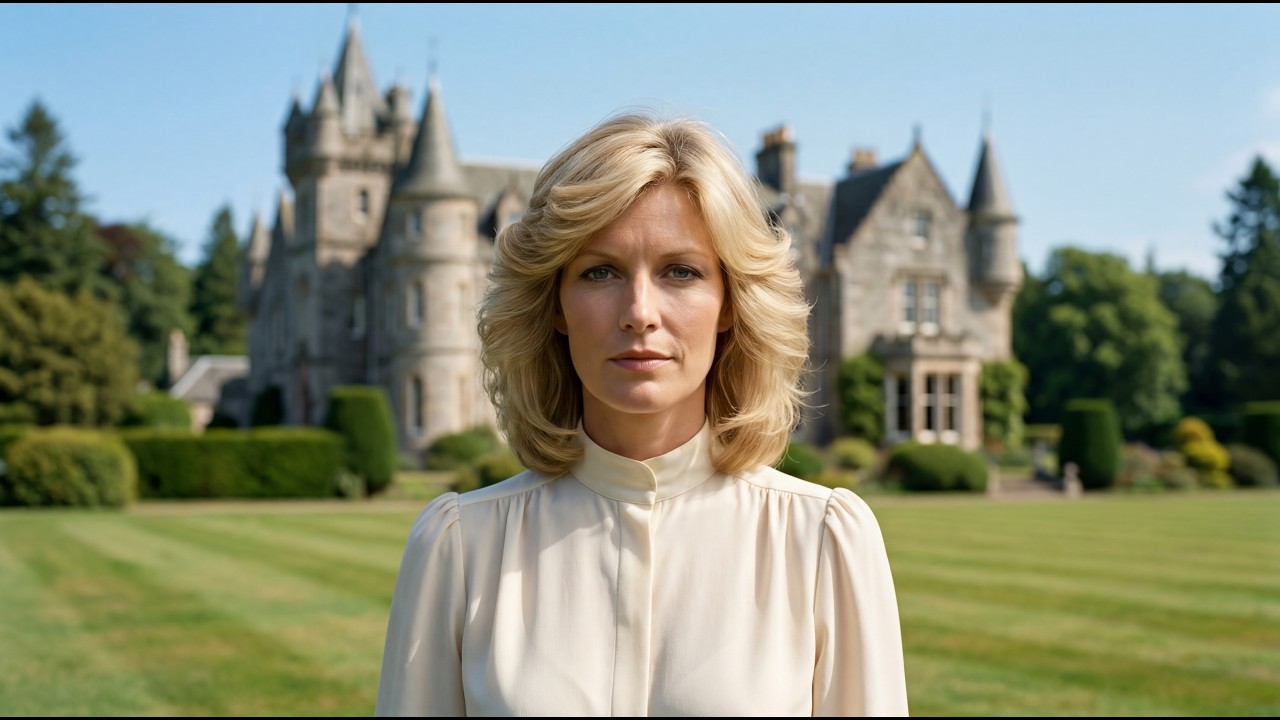
That incomprehension carries its own information. The Prince of Wales genuinely didn’t perceive why a woman attending as his guest would object to being publicly set aside for someone else’s wife. Anna had understood it within the first hour of the evening. She had understood its implications before the evening began, which is why she had already refused his proposals twice.
The ball didn’t surprise her. It confirmed what she had already concluded from direct observation of a man she had spent the better part of a year watching from close range. She gave no interview after the breakup. She accepted no currency and notoriety for the exit. She withdrew from the royal story with a completeness that suggests she understood from the inside exactly how that story generated its leverage over the people who remained in it.
The press, which had followed her as a prospective Princess of Wales through 1979 and into 1980, found it had nothing further to follow. Diana Frances Spencer was born on 1st July 1961 at Park House, Sandringham, on the Queen’s own estate, where the Spencer family leased the property from the Crown.
Her parents, John Spencer, Viscount Althorp, and Frances Roche divorced when Diana was seven. In 1975, when her father inherited the earldom and became the eighth Earl Spencer, the family moved from Sandringham to Althorp in Northamptonshire. Diana was 14. She didn’t perform well academically, failing her O levels twice, and left school at 16.
She worked before her engagement as a nursery teacher’s assistant at the Young England School in Pimlico, a position she held because she genuinely liked children, not because it was a stepping stone to anything. In July 1979, her mother bought her a flat at Coleherne Court in Earl’s Court as an 18th birthday present.
She shared it with three flatmates until 25th of February 1981, the day after the formal engagement announcement. Her older sister, Lady Sarah Spencer, had briefly dated Charles in the late 1970s. Diana first encountered him at Althorp in November 1977, when Charles was visiting as Sarah’s companion.
Diana was 16. Charles was 29. They became genuinely acquainted in July 1980 at Philip de Pass’s house party in Sussex, within weeks of the final collapse of the Anna Wallace relationship. Jonathan Dimbleby’s authorized biography records how Charles’s thinking operated at this precise moment. “Without any apparent surge in feeling,” Dimbleby wrote, “he began to think seriously of her as a potential bride, not falling in love, not overcome with feeling, thinking seriously, the calculation of a man who had just turned 31, who had missed his own deadline, who had proposed twice to one woman and been refused twice, who needed to arrive at an answer.” Charles invited Diana to sail with him at Cowes, then to Balmoral to meet his family. The Queen received her warmly. The Queen Mother received her warmly. Prince Philip reportedly made clear to Charles, in terms documented in the
authorized biography, that the sustained press attention around Diana was damaging her reputation, and a decision was required. The proposal came on 6 February 1981 at Windsor Castle. Diana accepted. The engagement was kept secret for 18 days, then announced from Buckingham Palace on 24 February 1981.
She wore a blue suit. The engagement ring she had chosen herself, a 12-carat oval blue Ceylon sapphire surrounded by 14 solitaire diamonds valued at £30,000, was the one detail of the whole arrangement that had been entirely hers. Diana was 19 years old. Charles was 32. Tina Brown records in The Diana Chronicles that Diana had met Charles on approximately 13 occasions before that proposal.
13 meetings across a courtship of roughly 7 months. His previous serious relationship, the one that had just ended, had also lasted approximately 6 to 8 months, from November 1979 into summer 1980. The difference wasn’t duration. The difference was what each woman brought to those months. Anna Wallace, years of direct experience inside the social world Charles occupied.
Diana Spencer, good manners, warmth, and the sheltered aristocratic upbringing Tina Brown described as traditional. Thorough preparation for the season, no frame of reference for the structure underneath it. At the engagement announcement, when a reporter asked if they were in love, Diana said, “Of course.
” Charles said, “Whatever in love means.” Both responses are on camera. Both have never stopped being the clearest available document of what each person understood themselves to be doing on 24 February 1981. Penny Junor records in The Duchess that during the period Charles first began courting Diana, Camilla Parker Bowles and Diana were on genuinely good terms.
Diana visited Bolehyde Manor in Wiltshire during the 1980 courtship, helping Camilla with her children Tom and Laura. Camilla was 14 years Diana’s senior and navigated the social world Diana was entering for the first time with the ease of someone who had been in it for a decade.
Junor describes Camilla as a reassuring presence for a young woman in a daunting and public situation. Shortly after Diana moved into Clarence House following the engagement announcement, she found a note from Camilla on her bed inviting her to lunch. The two women met, gossiped, spent a pleasant hour together. Diana told Andrew Morton years later that looking back, she suspected Camilla had been calculating when she might next see Charles alone.
On the honeymoon aboard the Royal Yacht Britannia, Diana found a photograph of Camilla tucked inside Charles’s diary. Charles was wearing cufflinks Camilla had given him. These details entered the public record through Diana’s own accounts passed to Morton for the 1992 book Diana: Her True Story, which drew on taped recordings Diana had made with journalist James Colthurst as an intermediary.
By November 1995, when Diana told Martin Bashir on Panorama that “There were three of us in this marriage, so it was a bit crowded.” She had spent 15 years assembling that picture. What Diana knew about Camilla’s significance to Charles before the engagement is contested across biographies. Her own accounts establish that she knew Charles had recently ended his relationship with Anna Wallace, and she knew Camilla socially.
Whether she understood the structural weight Camilla carried in Charles’s emotional life, whether 13 meetings across seven months at 19 could have equipped her to understand it, belongs to a different question from the one the documentary record can cleanly answer. Place the two women side by side, and the contrast is measurable in specific terms.
Anna Wallace, approximately 25 years old, daughter of a Scottish landowner, embedded by years of direct participation in the hunting and racing circuit that constituted Charles’s private social world, in receipt of two marriage proposals from Charles before the summer of 1980 even began, already possessing the experiential frame to read what she was observing at that ball.
Diana Spencer, 19 years old at the engagement announcement, raised in proximity to the royal family at Park House and later Althorp, but outside the intimate social circuit Charles moved through, having met her future husband on approximately 13 occasions, working as a nursery assistant in Pimlico until weeks before the engagement announcement reached Buckingham Palace.
One woman had years of direct experience inside the world that communicated to anyone paying close attention what the situation was. The other woman was entering that world for the first time, carrying the inherited social fluency of the aristocracy, but not the specific accumulated knowledge of this particular man, and the long prior attachment that shaped his emotional life.
Vanity Fair made the comparison explicit in October 1985, only four years after the wedding. The magazine described Anna Wallace as a dangerous version of Lady Diana, tall and blonde, but possessed of qualities Diana had not yet had the years to develop. That framing appeared while Diana was 24 years old and already three years into a marriage that was fracturing under pressures she had not fully anticipated when she accepted the proposal on 6th of February, 1981.
The biographical record establishes Camilla’s permanence as an emotional constant in Charles’s life, and it establishes that permanence as a structural fact that anyone with sufficient access to his social world could in principle observe. What it does not establish is intent or design. The record shows consequence, not conspiracy.
What Anna Wallace did with the evidence in front of her was, in retrospect, the only rational response to a clear-eyed assessment. She arrived at a conclusion, and she acted on it. She said no to the first proposal. She said no to the second. The ball in the summer of 1980 confirmed what she had already concluded.
She left. The pattern had an echo in the following generation, though it belonged to a different prince entirely. Chelsea Davy, born in Zimbabwe, raised in South Africa, dated Prince Harry, not Charles, for several years from approximately 2004 to 2010. She has no documented romantic connection to Charles’s life.
She belongs wholly to Harry’s story. But the structure was recognizable. An independent young woman who spent years adjacent to the machinery of the British royal family, and ultimately stepped back from a life that public accounts suggest she found genuinely incompatible with the person she intended to become.
A biography of Harry notes that both Chelsea Davy and Kate Middleton may have been mindful in some measure of the elder generation’s history, aware of what the failure to resolve Charles and Camilla’s situation had cost the people caught inside it. Whether or not that biographical reading is precisely accurate, Chelsy Davy assessed the offer, at whatever point she made her assessment, and declined it.
The specific contours of her decision belonged entirely to Harry’s era. The fundamental shape of it wasn’t unfamiliar. The wedding at St. Paul’s Cathedral on 29 July 1981 had 3,500 invited guests and a global television audience of 750 million people. Diana’s dress, designed by Elizabeth and David Emanuel, was valued at £9,000.
Its train measuring 25 ft. The sapphire and diamond ring she had chosen. The 600,000 people who lined the processional route. Charles was 32. Diana was 20 years old, having turned 24 weeks before the ceremony. The record of the woman who said yes runs to millions of words, tens of thousands of photographs, two major biographical accounts produced with her cooperation, a Panorama interview watched by over 20 million British viewers, and an aftermath tracked obsessively across three decades and counting. We have almost nothing on Anna Wallace in the same terms. A biographical description placing her age and background, press photographs from 1979 and 1980 held in agency archives correctly identified in their captions. A handful of secondary accounts drawing on Bedell Smith and Junor. A Vanity Fair
reference from 1985, four years after the ball. Her father’s name, per Tatler’s reporting. She gave the press nothing further to follow because she withheld the one thing the press required to follow her. Her continued visible presence in the story. After the summer of 1980, she made herself private, and private she remained.
We have built an entire mythology around the girl who said yes, the wedding, the dresses, the fairy tale, the long unraveling, the end. We have almost nothing about the woman who said no. Anna Wallace stood in a ballroom in 1980 and saw, with a clarity a 19-year-old couldn’t yet have, exactly what this marriage was going to be.
The other woman always in the room, the prince who could never quite be hers, and she chose herself. Eight months later, someone younger and more hopeful made the opposite choice, and the world watched how that ended. The difference between the two women wasn’t luck. It was simply that one of them was old enough to read the room.
Anna Wallace got away. History forgot her for it. She would probably tell you that was the whole idea. Subscribe for more stories about the women history left behind.