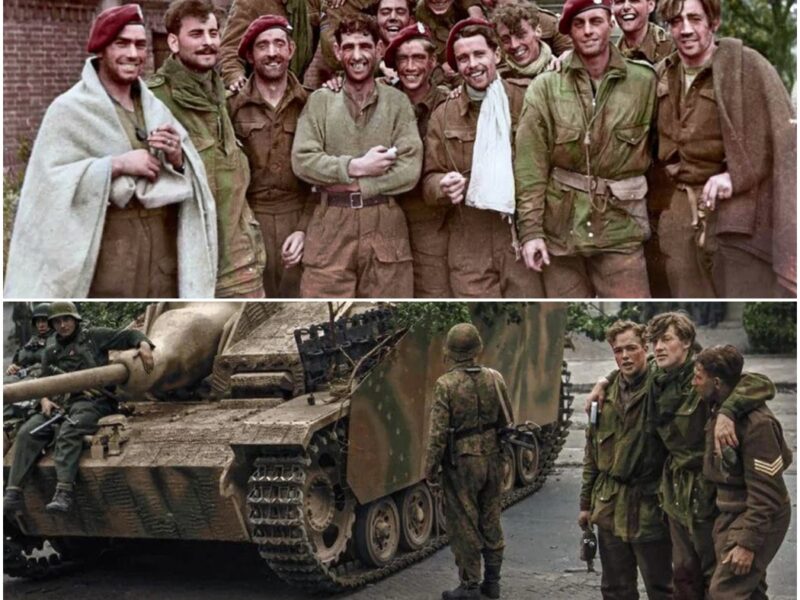
Waffen-SS Infantry vs. British Airborne – The Human Struggle at Arnhem (September ’44) D
In late 1944, the German army appeared shattered, retreating on all fronts. It was in this atmosphere of urgency and optimism that one of the most ambitious airborne operations of the war was conceived. Operation Market Garden. At the heart of this operation lay a simple objective. Seize a chain of bridges in the Netherlands and open a direct route into Germany.
The final and most crucial prize was the bridge over the lower Rhine River at Arnhem. To capture and hold it fell to the men of the British 1st Airborne Division. Opposing them unexpectedly and decisively were elements of the battle-hardened 2nd SS Panzer Corps. What followed was not only a clash of formations but a brutal struggle between elite infantry forces, paratroopers and Waffen SS panzer grenadiers fighting street by street, house by house, often at distances measured in meters. If you are interested in how German panzer companies actually fought in World War II,
I’ve put together a free ebook based on manuals and battlefield reports. You will find the link in the description. The British airborne soldier of 1944 was a carefully selected volunteer. Physically fit, mentally resilient, and trained for initiative, these men embodied a new kind of warfare.
Units were built around aggression and independence. Their training emphasized rapid assault, decentralized command, and adaptability. Officers like John Frost, who would later command the force at the Arnhem Bridge, were expected to act decisively in isolation. Yet, these strengths came with limitations.
Airborne troops were lightly equipped. They lacked heavy artillery, armor, and sustained logistical support. Their effectiveness depended on speed and surprise. And at Arnhem, both would be compromised. If you enjoyed this video, don’t just watch history, engage with it. Check out my World War II word search books on Amazon.
Each volume focuses on a specific battle, tank, unit, or commander. This one covers the Panzerkampfwagen VIII Maus. Train your knowledge and stay sharp. You will find all my books in the description below. The Waffen SS formations encountered at Arnhem were not fresh recruits. Though depleted and refitting after heavy fighting in Normandy, they were led by experienced officers such as Wilhelm Bittrich.
These soldiers had survived some of the harshest fighting of the war. Many had seen combat on the Eastern Front. They were accustomed to improvisation, defensive warfare, and brutal close combat. Contrary to Allied expectations, the Germans at Arnhem were not disorganized remnants.
They were cohesive, disciplined, and already on the ground. On the 17th of September, 1944, the skies over the Netherlands filled with aircraft. Thousands of British paratroopers and glider troops descended near Arnhem. But from the beginning, problems emerged. Drop zones were located several kilometers from the bridge, further than ideal.
This decision, made to reduce risk from anti-aircraft fire, cost precious time. Worse still, radio communications failed almost immediately. Units became isolated, unable to coordinate effectively. Despite these setbacks, small groups pushed forward. Frost’s battalion advanced toward the bridge, encountering scattered resistance.
Their movement reflected airborne doctrine, rapid, aggressive, and decentralized. Yet, the Germans were already reacting. German forces, initially surprised, quickly grasped the situation. Officers within the 2nd SS Panzer Corps recognized that this was not a small raid, but a major airborne assault.
Their response was swift and effective. Ad hoc Kampfgruppen, or battle groups, formed within hours. Training and experience allowed Waffen SS units to adapt immediately. Infantry, reconnaissance elements, and even armored units were redirected toward Arnhem. The key advantage the Germans possessed was proximity.
They did not need to be flown in. They were already there. By the evening of the first day, Frost’s men had reached the Arnhem Bridge and secured positions on its northern end. This was a remarkable achievement, but it came at a cost. Only a fraction of the division made it to the objective.
The rest were delayed or pinned down by German resistance. What was meant to be a concentrated assault became a fragmented defense. Here, the human factor became decisive. British paratroopers dug into houses, establishing defensive strong points. They used anti-tank weapons, Bren guns, and sheer determination to hold off increasingly aggressive German attacks.
Waffen SS infantry probed these positions relentlessly. They brought heavier weapons, including assault guns. Their tactics emphasized encirclement, pressure, and gradual reduction. The fighting became intensely personal. Rooms were cleared with grenades. Staircases became killing zones.
Civilians hid in basements as the battle raged above them. Neither side could afford hesitation. Urban combat strips away the advantages of technology and scale. At Arnhem, it reduced the battle to its most basic elements, courage, fear, and endurance. British airborne troops, trained for assault, now found themselves defending.
They adapted quickly. Improvised barricades, sniper positions, and coordinated fields of fire allowed them to hold out far longer than expected. Waffen SS infantry, meanwhile, demonstrated persistence and discipline. They attacked repeatedly, adjusting tactics as they encountered resistance.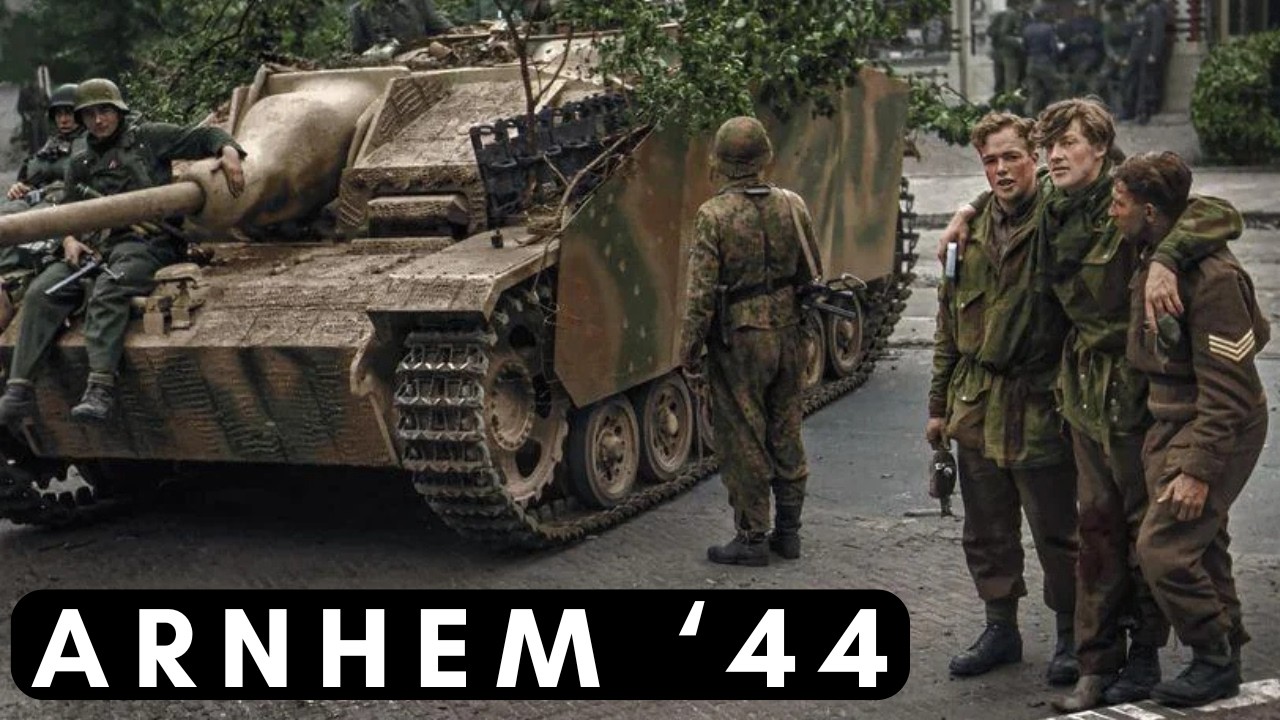
Small unit leadership proved critical. This was not a battle of sweeping maneuvers. It was a contest of small groups, often no more than a dozen men, fighting for control of individual buildings. Before we continue, this channel exists because it stays independent. If you believe serious military history should stay that way, consider channel membership. Link below.
As the days passed, the situation for the British worsened. German forces tightened the noose around Arnhem. Reinforcements arrived. Artillery was brought up. The defenders at the bridge were isolated. Water, ammunition, and medical supplies ran low. Yet, the British airborne troops continued to resist.
Their training and cohesion played a crucial role. Units held together despite heavy casualties. Leadership at all levels ensured that positions were maintained even when communication with higher command was impossible. On the German side, frustration grew. The stubborn defense delayed their operations and required increasing resources.
But, they had one decisive advantage. Time. By the fourth day, the defenders at the bridge were exhausted. Wounded soldiers lay untreated. Buildings burned. Ammunition ran dangerously low. Still, they fought. This persistence speaks to something beyond doctrine or training. It reflects the psychological dimension of warfare.
The unwillingness to yield even when situation becomes hopeless. For the Waffen SS infantry, the experience was equally harrowing. Assaulting well-defended urban positions is one of the most dangerous tasks in warfare. Casualties mounted. Yet, they continued their attacks. Both sides displayed a grim determination driven by duty, discipline, and the immediate demands of survival.
Eventually, the position became untenable. German forces brought overwhelming firepower. Tanks, artillery, and coordinated infantry assaults broke the defenders’ resistance. Those who could no longer fight were captured. Others were killed in place. The battle for the Arnhem bridge was over. While the fight raged at the bridge, the rest of the Battle of Arnhem unfolded around the perimeter of the drop zones.
Attempts by other airborne units to reach the bridge were repeatedly blocked by German defenses. The hoped-for link-up with ground forces advancing along a narrow corridor was delayed. Eventually, the surviving elements of the British 1st Airborne Division withdrew across the Rhine under the cover of darkness.
The cost was severe. In the end, Arnhem was not lost because British soldiers lacked courage or skill. Nor was it won solely because of German strength. The decisive factors were time, proximity, logistics, and communication failures. But, underlying all these was the human factor.
The ability of the Waffen SS units to reorganize quickly. The determination of British paratroopers to hold against overwhelming odds. The decisions made by junior officers and NCOs in the chaos of combat. These elements shaped the battle as much as any plan. The Battle of Arnhem remains one of the most studied engagements of World War II.
It is often remembered as a failure, a bridge too far. But, that label obscures the reality of what occurred on the ground. At Arnhem, elite infantry formations clashed in conditions that tested the limits of human endurance. The outcome was shaped not just by strategy, but by the actions of individuals under extreme pressure.
For historians, the battle offers a clear lesson. Plans matter, but people decide. And at Arnhem, both sides proved just how much soldiers can endure when everything depends on them. I hope you enjoyed this episode. If you want to support my channel, check out the PayPal donation link in the description, or consider becoming a member.
To make sure you don’t miss my future work, subscribe to my channel and press the bell notification button. Thank you for watching, and see you in the next video.