What REALLY Happened to Britain’s Sopwith Camel Fighters After WW1 D
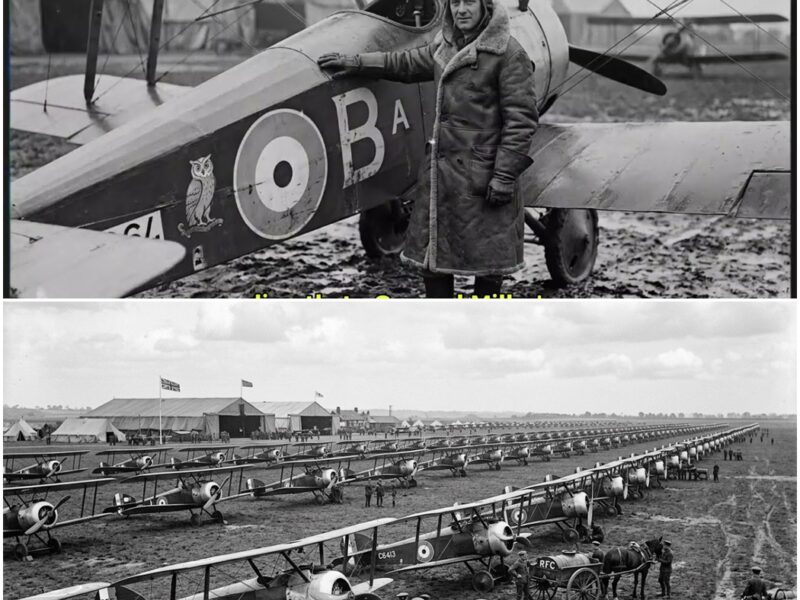
The airfield stretched quiet beneath the November mist, row upon row of Sopwith Camels waiting for someone to decide their fate. At squadrons across France and Belgium, mechanics who had spent four years coaxing rotary engines back to life now found themselves guarding aircraft nobody quite knew what to do with.
The Camel had been the most successful British fighter of the war, credited with more aerial victories than any other Allied type. Yet within weeks of the armistice, it had become something closer to a problem. Thousands of airframes scattered across dozens of aerodromes for which peacetime Britain had neither the money nor increasingly the appetite.
Roughly 5,990 Camels had left the Sopwith, Ruston Proctor, Boulton and Paul, and other contracted factories since the type entered service in 1917. By November 1918, the Royal Air Force, barely eight months old as an independent service, operated dozens of squadrons flying the type across the Western Front, Italy, Macedonia, Mesopotamia, and home defense stations guarding against Zeppelin and Gotha raids.
Now the guns had fallen silent, and an aircraft designed to kill enemy pilots at close range no obvious peacetime purpose. What followed was not a single tidy demobilization, but a scattered improvised process stretching across continents and years. One that would leave the most famous fighting scout of the Great War almost entirely erased from the skies within a decade.
The situation the Air Ministry faced at war’s end was one of chaotic abundance. Squadrons in France began ferrying serviceable Camels back across the channel to storage depots at Henlow, Ascot, and Kenley. Whilst others were simply broken up where they stood rather than risk the cost of transport. At Marquise and Berck-sur-Mer, French airfields hosting RAF units, ground crews stripped aircraft of instruments and engines before burning the wooden airframes in pits.
A practice repeated at dozens of continental stations through the winter of 1918 into 1919. The Clerget and Bentley rotary engines, expensive and in demand for spares, were frequently salvaged even when the airframe itself was condemned. Meanwhile, the Air Ministry, under intense Treasury pressure to shrink the wartime establishment from over 22,000 aircraft on charge to a fraction of that number, ordered squadron after squadron disbanded through 1919.
Each disbandment adding further hundreds of Camels to the surplus. Not every Camel met the breaker’s torch immediately, however. A debate emerged within Whitehall and among the Dominion governments over whether this surplus might serve a further purpose, seeding the infant air arms of Britain’s overseas territories, supporting continued operations against the Bolsheviks in Russia, or simply being sold off something of their original cost.
Winston Churchill, as Secretary of State for War and Air from January 1919, pressed strongly for economy wherever possible, arguing that Britain could ill afford to maintain a vast surplus fleet whilst funding continued intervention in Russia and reconstruction at home. Yet, outright disposal competed with genuine strategic interest in retaining a reserve of trained pilots and serviceable machines, and it was this tension between economy and empire that produced one of the more remarkable and now largely forgotten chapters in the Camel’s story. The Imperial Gift, announced by the Air Ministry in 1919, the Imperial Gift Scheme offered substantial quantities of surplus RAF aircraft, engines, and equipment to the self-governing Dominions at no cost beyond shipping, intended to establish the nucleus of independent air forces within the Empire. Australia received a package including a number of Camels alongside Avro 504s, SE5As, and Bristol Fighters. The aircraft arriving at Point Cook near Melbourne through 1920 to form
the basis of what would become the Royal Australian Air Force, established in March 1921. Canada’s allocation, negotiated more slowly amid debate over whether the Dominion needed a permanent air force at all, eventually saw Camels and other types arrive at Camp Borden in Ontario, where several were used for advanced pilot training before the Canadian Air Force reorganized through the 1920s.
New Zealand and South Africa received smaller allocations, the latter’s Camels operating briefly from Swartkop near Pretoria. India, too, received a contingent. Its Camels forming part of the small air component supporting the Royal Air Force’s policing operations on the Northwest Frontier.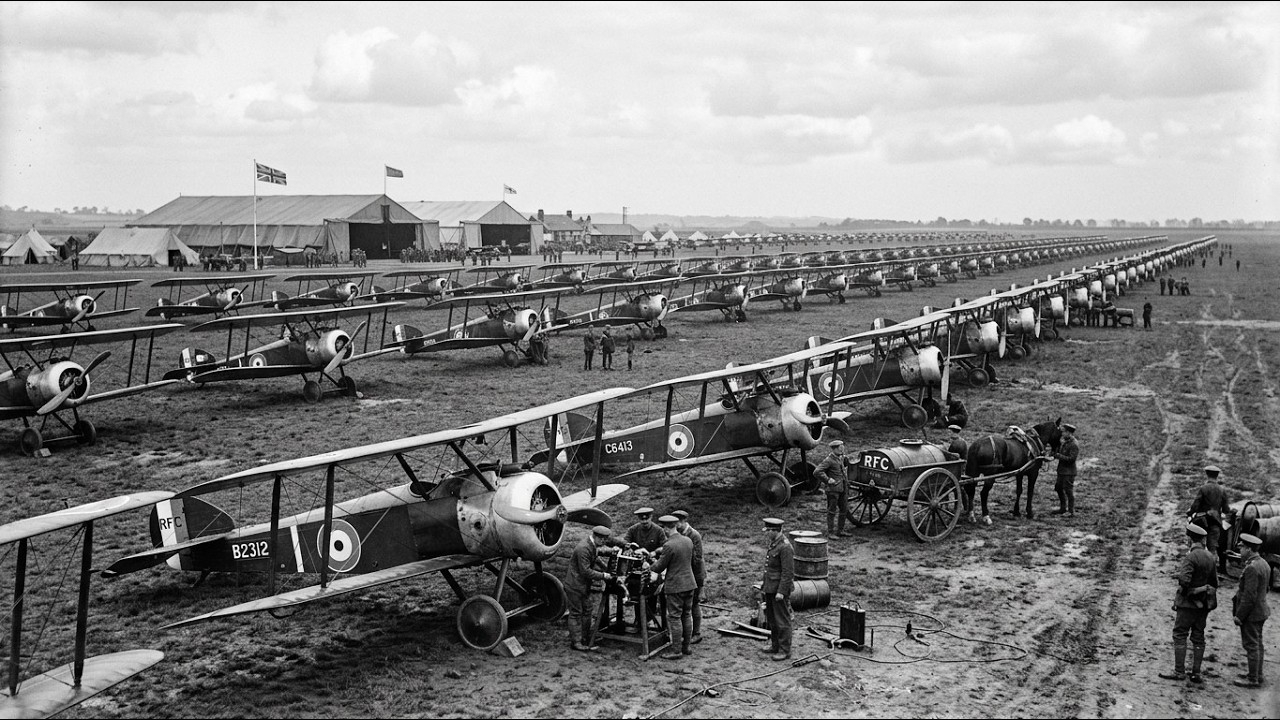
Britain’s own retained Camels found a harder, colder posting. Through 1918 and into 1919, a detachment of Camels served with the North Russia Expeditionary Force, flying from Bereznik and other improvised strips along the Dvina River in support of White Russian forces fighting the Bolsheviks. When British forces withdrew from North Russia in the autumn of 1919, several Camels were handed over directly to General Miller’s White forces rather than shipped home.
And a further batch reached the Whites in South Russia through Allied supply missions to General Denikin. Some of these aircraft were subsequently captured by advancing Red forces as the White armies collapsed through 1920. A handful reportedly pressed into brief service with the fledgling Soviet Air Arm before spares ran out entirely.
If you’re finding this look at where Britain’s most famous fighter actually ended up interesting, do consider subscribing for more of these post-war stories. Poland presented another destination for surplus Camels, though by an indirect route. As the Polish-Soviet War intensified through 1919 and 1920, the newly reconstituted Polish state assembled an air force from whatever aircraft it could obtain, including a number of Camels sourced through French intermediaries and from stocks left behind by departing Allied missions. Polish-flown Camels saw combat over the Ukrainian front in 1920, operating alongside French-supplied Spads and Breguets. Though poor spares availability in the type’s aging rotary engine meant serviceability was frequently poor. The United States, by contrast, had never operated the Camel in significant numbers during the war itself. Its own pursuit squadrons largely equipped with Spads. Post-war, the US Army Air Service and Naval Aircraft Factory in Philadelphia acquired a small number of examples for comparative testing against
emerging American designs, evaluating the Camel’s maneuverability and it’s notoriously demanding handling characteristics, the product of powerful engine torque that had killed a significant number of inexperienced pilots even during training in Britain. French interest was comparatively muted. France had operated small numbers during the war through naval aviation units, and after the armistice, most were simply scrapped alongside French wartime types at depots including Villacoublay.
With only isolated examples retained for technical comparison against the SPAD the three lineage France intended to develop further. Beyond the dominions in Russia, isolated examples found their way further afield still. Greece, that engaged in the war against Turkey in Asia Minor, acquired a number of surplus camels through Allied disposal channels in 1920, operating them briefly over the Anatolian front.
Whilst a small quantity reached the fledgling forces of the newly independent Baltic states, Latvia and Estonia among them, as those nations assembled improvised air arms from whatever wartime surplus Britain and France were prepared to release. None of these secondary transfers involved more than a dozen or so airframes at most, reflecting how thinly the remaining serviceable stock had already been spread by 1920, and how rapidly deteriorating rotary engines and a shrinking supply of Clerget and Bentley spares made the type unattractive to any air force with a genuine choice of equipment. The overwhelming majority of the type, wherever it ended the war, did not survive long into peacetime. RAF disposal boards through 1919 and 1920 processed surplus airframes at a remarkable pace, driven by storage costs, the collapsing value of wartime aircraft, and a metal and timber shortage that made scrapping economically attractive during Britain’s difficult postwar reconstruction. At Waddon, near Croydon, the Aircraft Disposal Company, formed specifically to liquidate wartime RAF surplus, processed
hundreds of airframes including camels, breaking many for scrap while selling a smaller number to civilian buyers, flying clubs, and foreign governments at knockdown prices. A serviceable Camel that had cost several hundred pounds to build could be purchased for a fraction of that figure by 1920. Some were converted for civilian joyriding operations at aerodromes including Northolt, stripped of military fittings, though the type’s difficult handling made it a poor choice for such work and few lasted in that role. Records suggest well over 90% of wartime production had been scrapped, sold for spares, or otherwise disposed of by the mid-1920s. A rate of elimination that mirrors the fate of most Great War aircraft types across all combatant nations, none of whom saw value in maintaining large fleets through the lean interwar years. The speed of this elimination is worth dwelling on. A type that had absorbed enormous industrial effort, that had consumed skilled labor at factories across the Midlands and Southern England through 1917 and 1918, and that had shaped RAF fighter tactics for the remainder of the war, was
reduced within roughly 5 years to a handful of survivors and a great many rusting engine blocks awaiting the smelter. Contemporary press coverage occasionally lamented the waste and questions were raised in Parliament about the low prices fetched by disposal sales, but the prevailing mood of the early 1920s was one of retrenchment rather than preservation.
And few at the time imagined that these machines would one day be prized museum pieces rather than simply yesterday’s obsolete hardware. What survives today is vanishingly rare. Only a small handful of genuine wartime Camel airframes exist worldwide. Among them, an example held by the Imperial War Museum in London, another displayed at the Royal Air Force Museum at Hendon, and a further original held by the Australian War Memorial in Canberra, descended from the Imperial gift allocation of 1920.
The Canada Aviation and Space Museum in Ottawa preserves elements connected to the Camp Borden training aircraft, whilst the National Air and Space Museum in Washington holds an example reflecting the American wartime and postwar evaluation program. Restoration of these survivors has proven exceptionally difficult given the scarcity of original Clerget and Bentley rotary engines and the fragility of the type’s wire-braced wooden structure.
Several museum examples displayed today are composites, incorporating original components within largely reconstructed airframes. Whilst a number of flying reproductions, built by enthusiasts using original drawings, now represent the type at airshows, since so few originals can safely be risked in the air. Occasional discoveries still occur.
Wreck sites connected to the North Russia campaign have drawn interest from Russian and British aviation historians in recent decades. Though the remote and inhospitable terrain along the Dvina has so far limited any systematic recovery effort, and no confirmed original airframe has yet been recovered from that theater.
Component fragments, engine parts, and identification plates occasionally surface at auction or in private collections, sold as relics of a type whose complete original examples now number scarcely more than half a dozen worldwide. A striking scarcity for an aircraft that once numbered in the thousands.
The Camel’s brief, violent service life, and its almost total post-war disappearance reflects a broader truth about the aftermath of the Great War. The aircraft that decided the war in the air held almost no value once the fighting stopped. Their advanced performance rendered irrelevant within a handful of years as rotary engines gave way to more efficient inline and radial designs through the early 1920s.
Yet the type’s influence persisted in less visible ways, informing RAF training doctrine on torque management and spin recovery for a generation of pilots, and shaping Dominion air forces that would themselves mature into independent commands by the Second World War. What began as Britain’s most feared fighting scout ended its working life as scrap metal mission aircraft for White Russian cavalry officers, or a training hazard at a Canadian aerodrome.
Its story, a reminder of how quickly even the most formidable technology of one war becomes the discarded surplus of the peace that follows. If you found this video insightful, watch what happened to Britain’s Handley Page bombers after the First World War next. It explores how the aircraft that were meant to bomb Berlin instead ended up pioneering commercial air routes across the Empire.
Like this video, subscribe, and hit the bell for more. Thanks for watching.