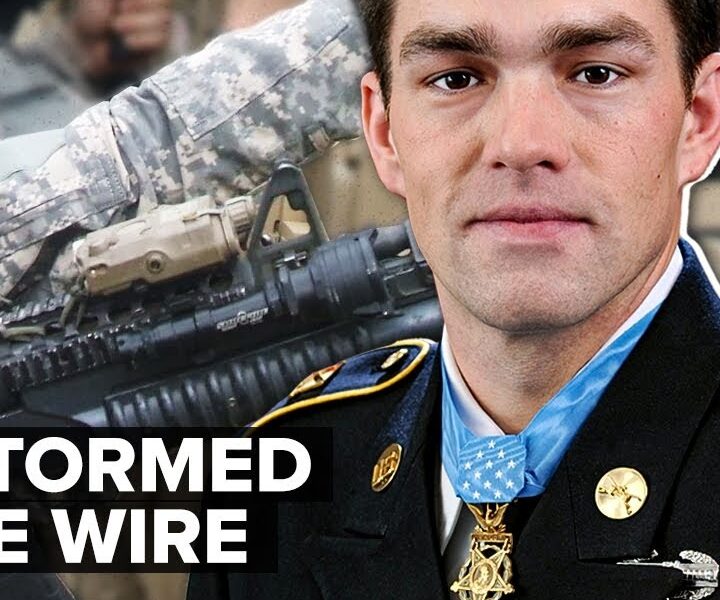
MEDAL OF HONOR: Soldier Leads Counter-Attack Against 300+ Enemy
Against All Odds: Staff Sergeant Clinton Romesha and the Epic Battle of Combat Outpost Keating
Imagine standing at the bottom of a giant bowl surrounded by jagged, towering mountains while more than three hundred heavily armed enemy fighters unleash a relentless wall of precise, devastating fire upon your tiny, indefensible outpost. This was the terrifying reality for a small platoon of American soldiers stationed at Combat Outpost Keating in the remote mountains of Nuristan, Afghanistan, on the fateful morning of October 3, 2009. Outnumbered nearly six to one, stripped of their primary mortar support within the opening minutes, and watching their comrades fall one by one to deadly sniper fire and rocket-propelled grenades, ordinary men were forced to perform extraordinary acts of sheer survival.
Amidst the chaos, smoke, and deafening explosions, Staff Sergeant Clinton Romesha refused to accept defeat. Wounded by shrapnel, running low on ammunition, and facing what seemed like certain annihilation, he made a staggering decision that defied all logic: instead of retreating, he organized a desperate counter-attack.
Rushing across open ground under blistering enemy fire, Romesha led a handful of brave volunteers to reclaim their supply point, shut the front gate, and push back an overwhelming force that threatened to wipe their entire unit off the map. Discover the breathtaking, harrowing details of this historic battle of bravery, sacrifice, and unbreakable brotherhood by checking out the full article linked in the comments section right now.
Introduction: The Crucible of Kamdesh
In the rugged, unforgiving mountains of Nuristan province in northeastern Afghanistan, history was etched in blood, sweat, and unyielding resolve on October 3, 2009. For fifty-two American soldiers and a contingent of their Afghan National Army partners, dawn did not bring the quiet promise of a new day; instead, it ushered in a fiery purgatory. Combat Outpost Keating, nestled precariously in a steep-walled valley near the village of Kamdesh, was subjected to a coordinated, multi-pronged assault by more than three hundred heavily armed Taliban insurgents. The base, widely acknowledged by those stationed there as a tactical death trap, was surrounded on all sides by towering peaks that gave the enemy an overwhelming vantage point.
Yet, out of the smoke, deafening explosions, and unimaginable chaos emerged an extraordinary testament to human courage. At the heart of this harrowing defense stood Staff Sergeant Clinton Romesha, a seasoned cavalry scout whose steady leadership, tactical brilliance, and refusal to surrender turned the tide against insurmountable odds. This is the chronicle of how Romesha and his brothers in arms stood firm when the world seemed to cave in around them, proving that the true strength of an army lies not in its weaponry, but in the unbreakable bonds connecting the men standing side by side.
A Legacy Carved in Uniform: The Romesha Family Tradition
To understand the core of Clinton Romesha’s resilience, one must look back at the generational tapestry of service that defined his family. Growing up, Romesha was surrounded by a quiet military legacy that spanned nearly three generations. His grandfather had answered the nation’s call during the harrowing crucible of World War II, stepping forward into a global conflagration that tested the limits of civilization. Following in those formidable footsteps, Romesha’s father served two rigorous tours of duty in the jungles of Vietnam, bearing witness to a conflict that left indelible marks upon his generation.
Within the household, the conversations between Romesha’s father and grandfather were rarely filled with gory war stories or cinematic exaggerations. Instead, what filtered down to the younger generation was a deep-seated commitment to something vastly larger than oneself—a profound dedication to serving the United States. They spoke of the unbreakable friendships forged in muddy foxholes and the lifelong brotherhood created within military platoons.
As a high school student in northern California, Romesha was not academically inclined toward traditional classroom learning. He was a hands-on individual who absorbed knowledge through action and application. When graduation approached, he turned to his father with a clear declaration: he wanted to join the Army. His father, drawing upon his own tumultuous experiences in Vietnam, offered a measured piece of wisdom. Recognizing that Romesha was only seventeen, his father refused to sign the consent form, telling him to wait until his eighteenth birthday.
“You’re seventeen, I’m not going to sign for you,” his father told him. “You’re going to turn eighteen; if you still want to do it, you can do it on your own as a man. Right now, it’s 1999, and the nation isn’t really at war. We’re in a peacetime status. But there will come a day when your nation is going to call on you. If you stay in long enough, your nation is going to call, and you’re going to go over and see things that you’ll never forget. Make sure before you sign, you understand this and go in there with your eyes open.”
True to his word, the day after turning eighteen, Romesha signed on the dotted line. Shipped off to Fort Knox, Kentucky, what was initially intended as a straightforward three-year enlistment blossomed into a nearly twelve-year career that would ultimately place him at the center of modern military history.
From M1A1 Abrams Tanks to Cavalry Reconnaissance
When Romesha first consulted his father about his military path, he received one firm piece of advice: “Whatever you do, don’t go infantry. Go get a real job. Be a mechanic, be an X-ray tech, be anything but infantry.” Taking that guidance to heart, Romesha enlisted as an M1A1 Abrams tank crewman. When he proudly informed his father that he was going to be a tanker rather than infantry, his father laughed, noting that being on a tank simply made him the biggest target on the battlefield.
Romesha’s first duty station took him to Germany. It was there, out in the field in Grafenwöhr conducting maneuvers on September 11, 2001, that the world shifted forever. A radio call from the squadron commander summoned all troops to an assembly point. The colonel delivered the sobering news that terrorist attacks had struck the United States, irrevocably altering the trajectory of their military service. The unit armed up, secured the gates, and locked down their posts as the global War on Terror commenced.
After completing training cycles across Europe, Romesha spent fifteen months stationed in Korea. When his unit received orders to deploy to Iraq, he pulled every string possible to rejoin his brothers in arms, eventually deploying to Iraq in 2004 with the 1st Battalion, 506th Infantry Regiment, stationed near Ramadi and Fallujah to keep crucial supply routes open and support marine operations.
Following that deployment, Uncle Sam reassigned Romesha from armor to cavalry scout at Fort Carson, Colorado. Embracing the transition to light infantry tactics—patrolling, reconnaissance, and foot-slogging through hostile territory—he deployed a second time to Iraq during the height of the Surge between 2006 and 2008. Operating in regions like Salman Pak and the outskirts of Sadr City, Romesha accumulated invaluable combat experience, sharpening his instincts as a non-commissioned officer and learning the nuances of small-unit leadership under fire.
Entering the Mountainous Inferno: Combat Outpost Keating
Having completed two grueling tours in Iraq, Romesha and his unit learned they were heading to a brand-new theater of operations: Afghanistan. By then, seasoned veterans of multiple deployments had joined his platoon, including Sergeant Kirk, who had served in that exact region of Afghanistan just a year prior. Sergeant Kirk drilled the platoon relentlessly on physical fitness, angle firing in mountainous terrain, and the physical conditioning required to carry heavy loads up steep inclines.
In mid-2009, Romesha’s unit was thrust straight into the Nuristan province, arriving rapidly at Combat Outpost Keating (COP Keating). The outpost had originally been established as part of a Provincial Reconstruction Team strategy, but its geographic placement was a tactical disaster. Situated at the very bottom of a steep bowl, surrounded on 360 degrees by looming mountain ridges, the base was entirely commanded by high ground. Supplies could only be brought in by helicopter because the original winding supply road had become utterly impassable for military vehicles.
Upon waking up on his first full morning at COP Keating and looking straight up at the towering cliffs surrounding him, Romesha recalled thinking, “Who would do this to soldiers? Who would pick this spot?” Yet, true to the indomitable spirit of American service members, the men took the dire situation and made the absolute best of it, reinforcing their bunkers, stashing extra ammunition, and conducting daily tactical brainstorming sessions on how they would defend the outpost if the persistent intelligence warnings of an impending massive attack finally materialized.
The Storm Breaks: October 3, 2009
Those warnings were not empty threats. For months, intelligence reports had indicated that local insurgent leaders were planning to strike COP Keating with a force numbering between three hundred and five hundred well-trained fighters. On the morning of October 3, 2009, at approximately 6:00 AM, that grim prediction became reality.
The attack did not begin with a standard, sporadic exchange of harassment fire. It commenced with a thunderous, overwhelming wall of fire. RPGs, heavy machine guns, and recoilless rifles rained down from the surrounding mountain ridges with pinpoint precision. The enemy’s tactical execution was terrifyingly sophisticated: they immediately targeted and neutralized the base’s mortar pit, crippling the defenders’ ability to return indirect fire. Simultaneously, they struck nearby observation posts like OP Friske to cut off external support.
Romesha, who had just come off guard duty hours earlier, awoke instantly to the unmistakable violence of the incoming barrage. Grabbing his gear and powering on his radio, he rushed to assess the situation. The perimeter security elements were pinned down by an unrelenting cyclic rate of enemy fire. Heavy machine guns like .50-cals and M240s were pouring rounds back toward the ridges, but the enemy occupied superior elevated positions that allowed them to suppress defenders while maneuvering into flanking angles.
Within the opening moments, tragedy struck. Staff Sergeant Kirk, a vital pillar of the platoon, was killed at the front gate. Romesha sprinted to the aid station to check on casualties, receiving the heartbreaking confirmation from the medic. The outpost was burning, ammunition was running critically low, and the enemy was pressing hard through the breaches.
The Heroic Counter-Attack: Taking the Fight to the Enemy
Realizing that defensive holding patterns would spell certain destruction unless the initiative was seized, Romesha took action. Finding Specialist Copus pinned down by an enemy sniper near the aid station and running out of support, Romesha grabbed a captured Dragunov sniper rifle from a wounded Afghan National Army soldier, slung his M4 over his shoulder, and engaged in a fierce game of peek-a-boo with the sniper, successfully silencing him and allowing Copus to resume laying down suppressive fire.
Determined to relieve the cut-off elements, Romesha teamed up with Specialist Gregory, grabbing a light machine gun and rushing toward a vulnerable generator position to pour fire onto the western ridge. However, the enemy outflanked their position, firing an RPG directly into the generator. The explosion blasted Romesha and Gregory off the structure. Shaken, bleeding from shrapnel wounds in his arm, and with his machine gun destroyed, Romesha brushed off the dirt, wrapped his own wound with a dressing provided by Sergeant Raz, and refused to quit.
With casualties mounting and key positions isolated, Romesha knew a desperate gamble was required. He returned to the command post and proposed a daring counter-attack to clear the enemy, reclaim the abandoned ammunition supply point, and shut the front gate. When he called for volunteers in the barracks, five brave soldiers stepped forward instantly: Sergeant Romesha, Sergeant Raz, Specialist Delaney, Specialist Daniel, Specialist Miller, and Specialist Jones.
In the midst of a base being overrun, launching a counter-attack seemed defying of military convention, but the sheer determination of those five men carried the day. Pushing out into the open wire, Romesha and his volunteer squad fought with fierce aggression. They successfully secured the ammo supply point, passed vital ammunition back to the remaining defenders in the Alamo position, and then pressed forward to the front gate. With ruthless precision, they slammed and secured the front gate, locking out the surging enemy forces.
Recovering the Fallen and Holding the Line
As close air support—including Apache gunships and fixed-wing aircraft—finally arrived to pound the mountain ridges with devastating firepower, the tide of the battle began to turn. Yet, Romesha’s mission was far from complete. Word arrived that several soldiers, including Sergeant Larson and Specialist Carter, had survived out in the contested sectors and were bringing back a severely wounded Specialist Mace.
After linking up and taking a brief, surreal pause to chug warm Dr. Pepper and share a cigarette amidst the ruins, Romesha learned that two of their brothers—Sergeant Hart and Sergeant Martin—were still unaccounted for. Driven by the sacred creed of never leaving a fallen comrade behind, Romesha once again rallied a small team of volunteers to push back out into the perilous landscape.
Searching methodically through trailers and battle positions under the cover of remaining air support, Romesha’s team recovered the fallen heroes, ensuring every single American soldier would return home. By evening, a Quick Reaction Force finally landed, reinforcing the shattered base and securing the perimeter.
Aftermath, Reflection, and Enduring Legacy
For three grueling days, the remaining defenders held their ground amidst the smoking ruins of COP Keating. By the time the outpost was officially closed down and evacuated three days later, roughly seventy percent of the base had been completely burned to the ground by relentless enemy fire.
As the unit regrouped at Forward Operating Base Bostic, Romesha gathered his surviving men. Out of the 52 Americans who fought that day, eight had made the ultimate sacrifice, and over two dozen were wounded. Yet Romesha delivered a message that resonated with profound pride:
“Even though we’d lost four guys directly from my platoon—Kirk, Gagos, Mace, and Hart—we didn’t get beat that day. We stood up against a very well-trained and very dedicated enemy fighter force. They hit us with 300 plus guys, and us 52 stood there and pushed them off.”
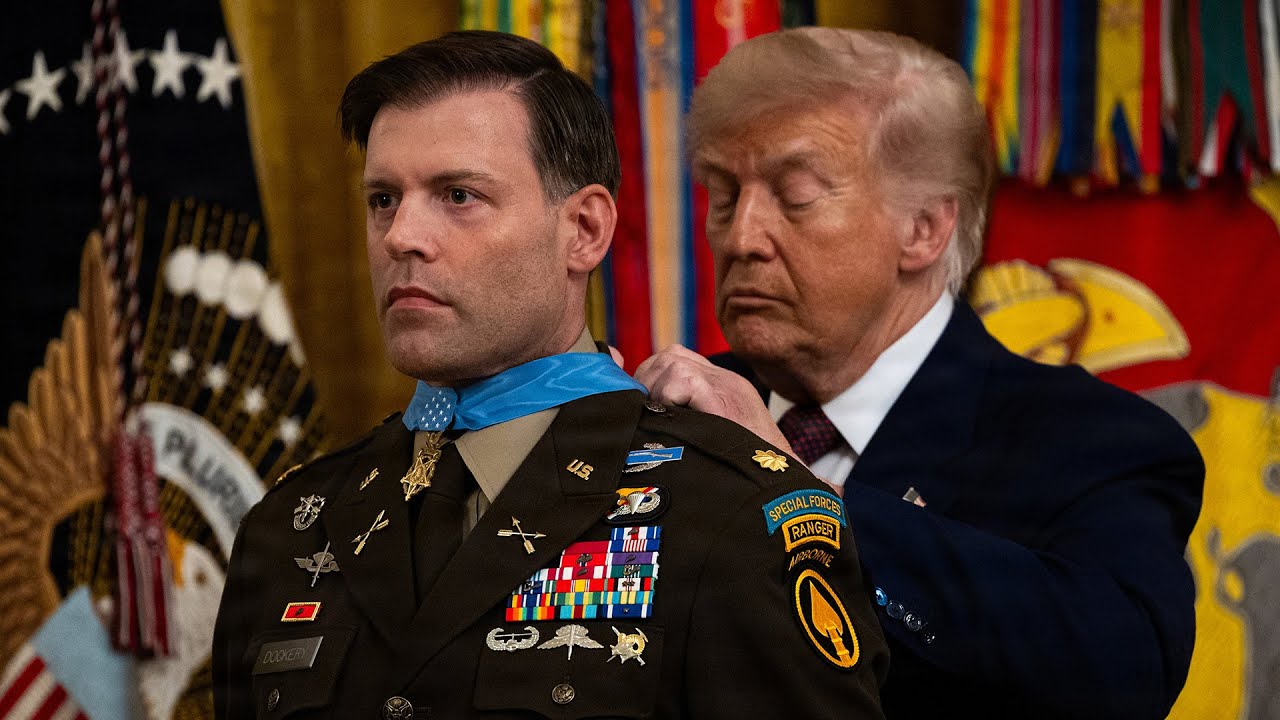
For his extraordinary heroism, leadership, and conspicuous gallantry above and beyond the call of duty during the Battle of Combat Outpost Keating, Staff Eegeant Clinton Romesha was awarded the Medal of Honor by President Barack Obama in February 2013. Today, his story stands not merely as a recounting of combat prowess, but as an eternal monument to the courage of ordinary Americans who answered history’s call with extraordinary valor, ensuring that the legacy of their fallen brothers will never be forgotten.