No One Is Shooting Here | German POWs Didn’t Expect This on American Farms
The Hidden War at Home: How Captured German Soldiers Became Part of the American Heartland
It sounds like a myth, but the records are undeniable: during World War II, America held hundreds of thousands of German prisoners of war on domestic soil, and they did more than just sit in cells. They were integrated into our agricultural system, working alongside farmers in the blistering sun.
Many were even invited into farmhouses to eat dinner at the family table, leaving both sides stunned by the common humanity that emerged amidst the chaos of global war. But this wasn’t just a story of kindness. It was a pressure cooker of conflicting ideologies, where internal camp violence was common and hardline Nazis hunted those who showed too much sympathy to their captors. Meanwhile, the American public was torn apart by the moral question: How could we feed our enemies while our own boys were starving in German camps?
And in the American South, the situation took a sickening turn, where the very men we were at war with were granted rights in public spaces that our own Black soldiers were denied. It is a story of contradictions, betrayal, and unexpected grace. If you think you know the history of World War II, you are missing one of the most haunting and revealing chapters of the era. The complete, unfiltered account of this bizarre and pivotal time in American history is available right now. Click the link in the comments to read the full story and see how the enemy became an unlikely part of our own history.
The year was 1943. Across the United States, the mobilization for World War II had stripped the agricultural heartland of its workforce. Millions of young men were overseas, fighting in the skies over Germany or storming the beaches of the Pacific, leaving harvests to rot in fields across the country. In the face of a looming food crisis, the U.S. War Department turned to a radical, controversial solution: they brought the enemy home.
Over 400,000 German prisoners of war were held in camps within the United States before the war’s end. Far from being sequestered in high-security isolation, tens of thousands of these men, mostly veterans captured in the deserts of North Africa and later from the battlefields of Normandy, were contracted out to work on American farms. What resulted was an “impossible” scene—one that defied the hatred of the time and left a legacy that remains largely forgotten today.
The Economics of Captivity
The program was established in strict accordance with the 1929 Geneva Convention. Prisoners could be utilized for labor, but they were to be paid, and their work could not be directly related to the war effort. Farmers contracted this labor through the government, paying the local prevailing wage into the U.S. Treasury. In turn, prisoners earned about 80 cents a day—not in cash, but in canteen scrip, which they could use to purchase small comforts like toothpaste, cigarettes, or a bottle of beer at their camp canteen.

By 1944, these labor contracts were generating over $22 million for the Treasury. From the perspective of the U.S. government, it was a practical necessity. From the perspective of the farmer, it was a lifeline. But the reality on the ground was far more complicated than a simple labor exchange.
Crossing the Invisible Line
Official directives strictly forbade “fraternization.” The U.S. government and the public were deeply anxious about the idea of “coddling” the enemy. Newspapers across the country voiced outrage: how could Americans feed the men who were killing their brothers and sons, while Allied prisoners in Germany were suffering?
Yet, on the ground, the reality of human decency frequently overrode the dictates of policy. In the Kansas heat, as farmers’ wives looked out at the young, dirt-smeared men toiling in their fields, the ideology of war began to fracture. It wasn’t uncommon for farmers to abandon the cold, isolated, “sack lunch” protocol in favor of inviting these prisoners into their kitchens.
“Common sigh essen,” the German phrase for “let’s eat together,” became a bridge. At these tables, the silence was initially thick with fear and suspicion. A child might stare wide-eyed; the German soldiers might shift, uncomfortable and caps in hand. But as the fried chicken and mashed potatoes were passed, the harsh lines of war softened. A “thank you” in broken English, a shared salt shaker, a moment of silence during grace—these small gestures of humanity began to chip away at the walls built by years of propaganda.
Darker Currents and Bitter Ironies
The program was not without its shadows. Inside the camps, a violent power struggle often took place. Hardline Nazi prisoners, particularly veterans of the Eastern Front, viewed any cooperation or kindness toward American captors as treason. There are well-documented cases of “secret” trials and murders, where these zealots intimidated or killed fellow German prisoners who dared to show signs of assimilation or friendship with their captors.
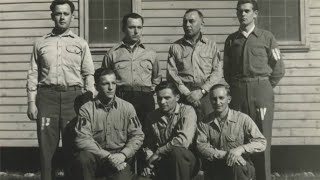
Perhaps the most jarring aspect of the experience occurred in the American South. In a bitter paradox of the Jim Crow era, German prisoners of war—men who had been fighting to destroy the American way of life—were allowed to sit in railway dining cars and take tables in roadside lunchrooms that were strictly reserved for white patrons. Meanwhile, the Black American soldiers tasked with guarding those very prisoners were often denied service and forced to eat outside. It was a stinging indictment of American society at the time: a nation that could find the capacity to extend grace to the enemy but remained deeply segregated and discriminatory against its own citizens.
A Legacy of Reconciliation
As the war came to a close in 1945, the repatriation of these prisoners began. Many had developed deep ties to the communities where they had worked. Some had even learned skills or made friendships that lasted for decades. After the war, when Germany lay in ruins, many American farm families—remembering the shared meals and the dignity of the labor—sent care packages of food and clothing to their former prisoners.
Decades later, the cycle completed itself. Former prisoners, now old men, began returning to the United States to visit the farms that had held them captive. Some, like the prisoner who later returned to become a doctor in Maine, chose to make America their home permanently.
The story of the German POWs in America is not a simple tale of heroism or villainy. It is a complex narrative of how, even in the most dehumanizing of circumstances, individual acts of kindness can persist. It is a testament to the fact that when men are stripped of their uniforms and forced to labor in the dirt of a foreign land, they are often seen not as the enemy, but as human beings. The “impossible” scene at the kitchen table reminds us that war may create enemies, but it cannot permanently destroy the capacity for human connection.