She Called City Hall About a Marriage License — One Month Later She Was Dead
The Marriage License and the Fatal Silence: The Tragic Final Days of Janis Joplin
What happens when the world’s most famous female rock singer, at the peak of her creative powers, pins her dreams of stability on a man who leads a life of dangerous instability? Janis Joplin’s final days were a testament to her desperate search for a quiet life, a dream that centered on Seth Morgan, a soap-fortune heir turned drug-dealing drifter.
Their engagement was the ultimate paradox, a fleeting spark of hope that vanished into thin air the night she died. While the world mourned a legend, Seth Morgan began a two-decade-long descent that reads like fiction—a life defined by a motorcycle crash, armed robberies, a prison sentence, and eventually, a brief moment of literary glory. Why was Janis alone in the Landmark Hotel on the last night of her life, and what does the dark aftermath of her fiancé’s life tell us about the man she truly loved?
This is not just a rock and roll tragedy; it is a gripping, cautionary tale of privilege, addiction, and the fragile nature of fame. We have peeled back the layers of this forgotten relationship to reveal the startling reality of the days leading up to Pearl’s untimely end and the man who was haunted by it until his own tragic finale. The full story is now available; tap the link to read the incredible, shocking details.
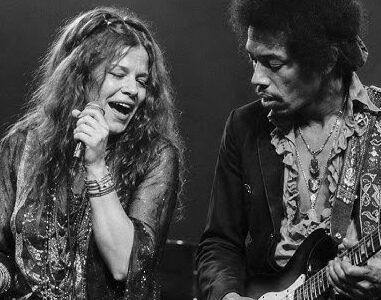
In the fall of 1970, the cultural consciousness of America was gripped by the evolution of Janis Joplin. The raw, bluesy powerhouse who had emerged from the psychedelic haze of San Francisco was in the middle of recording what would become her masterpiece, Pearl. Yet, away from the recording studios at Sunset Sound and the adulation of her fans, Joplin was engaged in a quieter, more desperate battle. She was hunting for something she had never truly possessed: a sense of normalcy. She was chasing the “picket fence”—the myth of a stable home, a reliable partner, and a life that was not defined by the relentless, grinding machinery of the touring circuit.
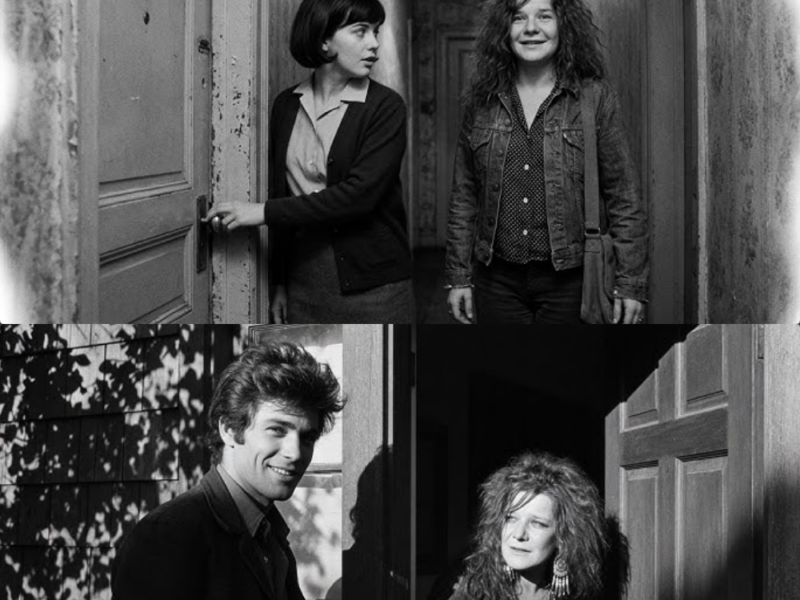
The man at the center of this dream was Seth Morgan. A 21-year-old UC Berkeley dropout with the effortless confidence of a man raised in a household where literary icons like Dylan Thomas were dinner guests, Morgan was the antithesis of the rock and roll lifestyle Joplin knew. He was a soap-fortune heir, a man of intellect and privilege, who had found himself dealing cocaine in Marin County. It was there, in July 1970, that their lives collided. Joplin, opening her door to a delivery, encountered a young man who represented a world far removed from her own.
For a few fleeting months, they inhabited a space that was not characterized by the stage or the road, but by the quiet intimacy of home. Joplin, as her sister Laura would later observe, was making a genuine effort to balance her life. She talked of marriage, of children, and of stepping away from the chaos that had consumed her for a decade. In September 1970, this ambition took a concrete, almost mundane turn: she called City Hall to inquire about a marriage license. She was, by all accounts, serious. She was looking to anchor herself, to find the calm in the eye of her own personal hurricane.

However, the “picket fence” was an illusion that was crumbling from the inside. While Joplin was undergoing a professional awakening—honing her voice and focus with producer Paul Rothschild and the Full Tilt Boogie Band—her relationship with Morgan was tenuous at best. Records suggest that in the months of intense rehearsal and recording, Morgan only visited the studio eight times. The man she intended to marry was physically and emotionally distant. The cracks in their foundation were widening long before the end.
The night of October 3, 1970, serves as the somber prologue to a tragedy that would shock the world. Joplin, hearing reports that Morgan had been seen with other women at a party, sought refuge in the familiar company of her band at Barney’s Beanery. She returned to the Landmark Hotel, where she had made plans for the night—plans that included Morgan and her longtime companion, Peggy Caserta. Neither showed up.
The image of Janis Joplin on that final night is one that resonates with a profound, stinging loneliness. She was the most famous female rock singer in America, she had just finished the sessions for what would be her best album, and yet, she was entirely alone. When she was found, she had been reduced to the most basic human needs—a few dollars in her hand, having attempted to buy cigarettes from a lobby machine, only to return to her room and never light one. The dream of the picket fence had not arrived in time.
The death of Janis Joplin on October 4, 1970, was not merely a loss of an artist; it was the abrupt, violent termination of a woman’s attempt to redefine her existence. Seth Morgan, in the years that followed, spoke of her death with a detachment that masked the enormity of the event, claiming they would have married had she not made her “untimely checkout.” It was a cold, casual dismissal of a life he had been intertwined with, a reflection of a man who was, at that point, unable to process the weight of his own actions or the loss of the woman who had sought salvation in him.
What followed for Seth Morgan is one of the more bizarre and harrowing parallel narratives in the history of music. Almost immediately after Joplin’s death, Morgan’s life took a sharp, destructive turn. He crashed his motorcycle into a house in San Francisco that had once belonged to Jack London, leaving his passenger permanently disfigured. He married her, reportedly to avoid a lawsuit, but the union was hollow and short-lived.
Morgan’s trajectory then spiraled into a grim reality that stood in stark contrast to his privileged upbringing. He moved to San Francisco, worked as a barker for strip clubs, became addicted to heroin, and orchestrated a life of crime that included 12 to 15 armed robberies. In one particularly violent incident, he stabbed a bystander’s hand to the floor with a knife. The man who had been engaged to a global icon was now an incarcerated felon.
Yet, even in the depths of his criminal life, the spark of his early years remained. While in prison, he won the PEN essay contest for convicts, a testament to the buried intellectual potential that had once led him to the dinner tables of the literary elite. Upon his release in 1986, he attempted a radical reinvention. He moved to New Orleans, achieved sobriety, and dedicated himself to writing.
The result was Homeboy, a 1,100-page manuscript that was eventually published in 1990 to critical acclaim. The novel featured a character clearly inspired by Janis Joplin—a flamboyantly dressed street worker. Whether this character was a manifestation of Morgan’s deep-seated grief, his overwhelming guilt, or simply a way to exploit the legacy of the woman he had failed, remains a mystery known only to him. He was a man who spent twenty years trying to outrun a ghost, only to have that ghost materialize in the pages of his own work.
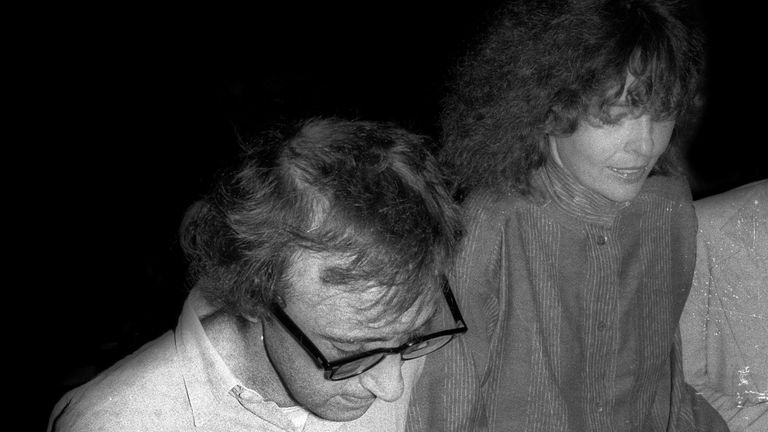
The final irony of Seth Morgan’s life occurred on October 17, 1990—almost exactly twenty years and thirteen days after Joplin’s death. While riding his motorcycle over a bridge in New Orleans with his girlfriend, he hit a dividing post. Both were killed instantly. He was 41 years old, the year of his literary success, and he was reportedly already working on a second novel. A police officer at the scene would later remark that had they been wearing helmets, the outcome might have been different—a final, senseless ending to a story that began with a marriage license inquiry and ended in a wreckage of lost potential.
Janis Joplin passed into the realm of immortality, her songs reaching the top of the charts and her legacy cementing her as one of the most important vocalists in American history. She became a symbol of raw, unvarnished expression. Seth Morgan, by contrast, remained a haunting footnote, a tragic, complex figure whose life was permanently marked by his proximity to a legend he could not sustain.
When we consider the life of Janis Joplin, we often focus on the stage, the blues, and the voice that shattered barriers. But the story of her final, failed attempt at a normal life—her call to City Hall, her lonely hotel room, and the man who didn’t show up—reveals the human being behind the icon. It reminds us that even the most powerful voices are often the most fragile, searching for a place to rest in a world that demands their constant performance.
The narrative of Joplin and Morgan is a haunting intersection of celebrity and oblivion. It serves as a stark reminder of how quickly the trajectory of a life can change, and how the choices of those around us—even those we believe we love—can leave an indelible mark on our history. For Janis, the picket fence was a dream she never reached, but for those who look back on her story, the tragedy of that dream is a powerful, essential piece of her legacy. It is a story of love, failure, and the relentless, often cruel passage of time.
Ultimately, the tale of the marriage license is not just about a legal document or a failed engagement; it is about the universal human search for meaning. Janis Joplin was not just looking for a man; she was looking for a version of herself that could exist outside the shadow of the stage. That she didn’t find it does not lessen her greatness; it only makes her humanity more poignant. Her life, and her death, remain as vibrant and demanding as the music she left behind. And in the forgotten story of Seth Morgan, we see the dark, twisted echo of her own search—a cautionary tale of a man who lost the woman he might have saved, and who spent two decades drowning in the wake of that decision.
The legacy of Janis Joplin continues to grow, and as we look deeper into the shadows of her life, we uncover more than just facts and figures. We find a person, struggling, loving, and hoping against the odds. The story of her last days in Hollywood, the silence of her fiancé, and the dark path that led him to his own end is a chapter of her life that demands to be heard—not for the sensation, but for the profound, human truth it contains.
In the end, it was not the stage that defined her, but the spaces in between—the moments of quiet, the yearning for connection, and the heartbreaking reality of being alone in a room where someone was supposed to be. That is the story of Janis Joplin: the woman who sang for the world, but in the final moments, was looking for a partner to share in the silence. It is a story that has been told in pieces, but when gathered, reveals the full, tragic, and ultimately beautiful scope of a life lived at the edge of possibility.