The Ingenious Gear Of The Elite MACV SOG Vietnam Soldiers
Ghosts of the Jungle: The Ingenious, Secretive Gear of MACV-SOG’s Elite Warriors
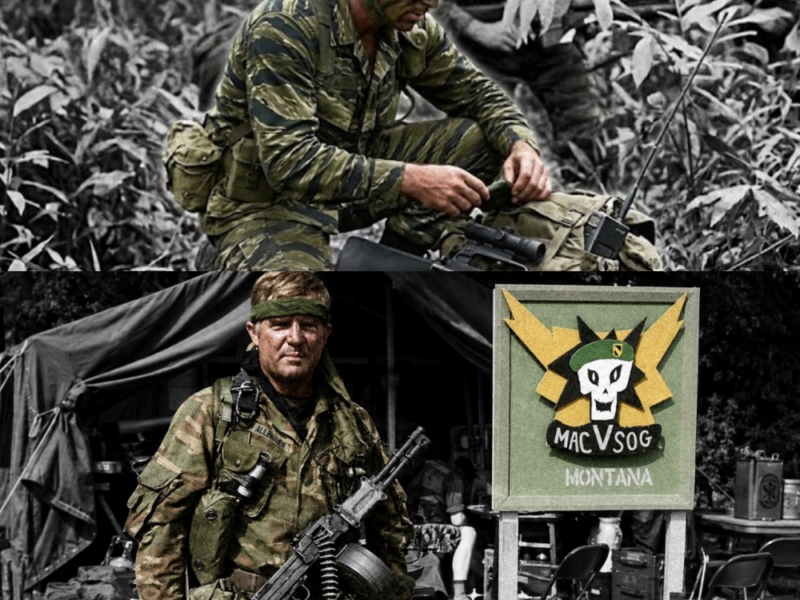
What would you do if you were sent on a mission where you were officially never there? The men of MACV-SOG didn’t have to wonder; they lived it every single day. Operating deep behind enemy lines on the Ho Chi Minh Trail, these recon teams faced the ultimate test of survival. With no chance of official rescue, every piece of gear they carried—from their custom-tailored tiger-stripe fatigues to their modified, sawed-off grenade launchers—was a matter of life or death. They were ghosts in the jungle, operating with the most sophisticated and ingenious kit ever issued to American soldiers.
We are peeling back the curtain on the secret war, exposing the true stories behind the legendary Stabbo harness, the “Hush Puppy” suppressed pistols, and the brilliant, life-saving inventions that allowed these soldiers to survive against impossible odds. This is the story of the men who carried “a small war” on their backs, operating with total deniability and the absolute trust that they were the only ones who could get the job done.
It is a story of grit, tactical brilliance, and the heavy price paid for the silence they were forced to maintain. Don’t believe the myths and the clickbait—get the real, unfiltered facts about the most elite and mysterious unit in history. The full, in-depth account is in the comments below.
In the shadow-drenched history of the Vietnam War, there exists a narrative that remained classified for decades: the story of MACV-SOG (Military Assistance Command, Vietnam – Studies and Observations Group). These were not conventional soldiers; they were the most elite, secretive operators in the American arsenal, tasked with conducting high-risk reconnaissance and sabotage missions deep within the jungles of Laos, Cambodia, and North Vietnam. Their existence was a state secret, and their survival depended on a philosophy of absolute “sterility” and ingenious, custom-engineered equipment.
The Philosophy of Sterility: Going “Sterile”
Before a MACV-SOG operator ever set foot in the field, they had to strip themselves of every identifier that could link them to the United States government. This process, known as “going sterile,” was not merely a protocol; it was a matter of survival. Operators carried no dog tags, no military ID cards, and no letters from home. Even the distinctive green beret, a symbol of their elite training, was abandoned, as were airborne wings and combat infantryman badges.

Their uniforms were local tiger-stripe fatigues, often modified by Vietnamese tailors who added zippered chest pockets for maps and personal items. Even their weapons were stripped of serial numbers and government markings, often sourced through the CIA to maintain total deniability [00:02:04 – 00:03:10]. If a team was ambushed and lost, there would be no paper trail leading back to Washington.
Footprint Deception: Engineering Invisibility
One of the most remarkable examples of SOG’s ingenuity was their approach to environmental camouflage. To avoid being tracked by enemy forces, operators wore specially made boots with soles molded to mimic the bare, un-heeled footprints of a local villager. While these boots offered little in the way of comfort, support, or arch protection, they were highly effective at confusing trackers. The Pentagon took this deception even further, airdropping tens of thousands of pairs of standard US military boots into the jungle, not for use, but to flood the area with misleading tracks, making the presence of American bootprints meaningless [00:03:22 – 00:04:02].
Customized Firepower: The Tools of Survival
SOG operators needed firepower that was compact, reliable, and capable of providing an immediate, overwhelming response to an ambush. This led to the adoption of the Colt Commando carbine, the XM177E2. With an 11.5-inch barrel, it was compact enough to maneuver through dense jungle foliage while maintaining the effectiveness of the 5.56mm round. Operators also carried sawn-off M79 grenade launchers, nicknamed “handheld artillery,” which could be fired in a “break contact” drill to create a wall of fragmentation rounds while the team retreated [00:04:26 – 00:05:08, 00:07:01 – 00:07:44].
Perhaps most intriguingly, SOG teams often utilized acoustic deception. While popular myths suggest they carried AK-47s because the M16 was unreliable, the truth was more strategic. Carrying the enemy’s own weapon created a momentary hesitation in an attacking NVA patrol—a fraction of a second that could be the difference between survival and death [00:07:50 – 00:08:54].
Communications: The Burst Transmission Revolution
Communication in denied territory was a high-risk endeavor. The NVA’s direction-finding teams were highly skilled, and any transmission could pinpoint a team’s location. To counter this, SOG teams utilized the A/G71 burst transmission coder. This device allowed operators to record an entire message onto magnetic tape and transmit it in a rapid, encrypted burst lasting under three seconds—far too short for the enemy to pinpoint their coordinates [00:12:24 – 00:13:01].
The Stabbo Harness and the SOG Knife
When it came to extraction, the environment often forbade landing a helicopter. The solution was the Stabbo harness, an innovative load-bearing rig designed in-country. Unlike the earlier, dangerous “Maguire rig,” which required the operator to hang onto a rope for dear life, the Stabbo harness allowed a soldier to be clipped to a helicopter’s bridal, freeing their hands to shoot, use a radio, or hold onto a wounded teammate [00:15:07 – 00:16:42]. Complementing their gear was the SOG knife, a custom-designed blade that was completely unmarked and specifically engineered for special operations—the only such knife designed for a specific unit at the time [00:17:02 – 00:17:48].
A Legacy of Silence
The gear of MACV-SOG was not just tactical equipment; it was physical evidence of a secret war. These men operated with nothing but their ingenuity and each other, carrying the burden of deniability in a conflict that the US government officially denied for years. Today, the legacy of these operators remains defined by their silence, their bravery, and the incredible, ingenious solutions they developed to stay alive in one of the most dangerous environments in modern history.