Hunter Biden Challenges Donald Trump Jr. to a Cage Match While Blasting White House UFC Event, Igniting a Fresh Political and Social Media Firestorm
Hunter Biden Challenges Donald Trump Jr. to a Cage Match While Blasting White House UFC Event, Igniting a Fresh Political and Social Media Firestorm
Hunter Biden Throws Down the Gauntlet: Challenges Donald Trump Jr. to a Cage Match as White House UFC Spectacle Ignites a New Political Firestorm

“Anywhere but the South Lawn.”
In an era when American politics increasingly resembles entertainment, and entertainment increasingly resembles politics, few expected the latest chapter in the Biden-Trump rivalry to involve a proposed cage fight.
Yet that is exactly what happened.
Late Thursday evening, social media erupted after Hunter Biden issued a challenge that instantly captured attention across the political spectrum.
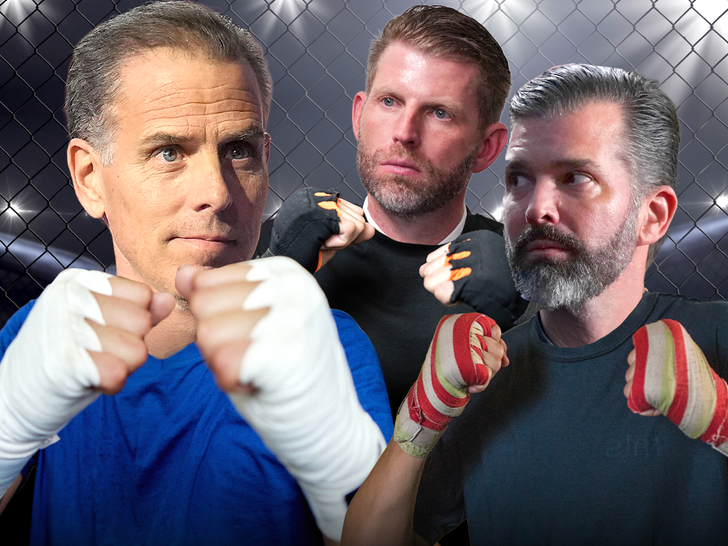
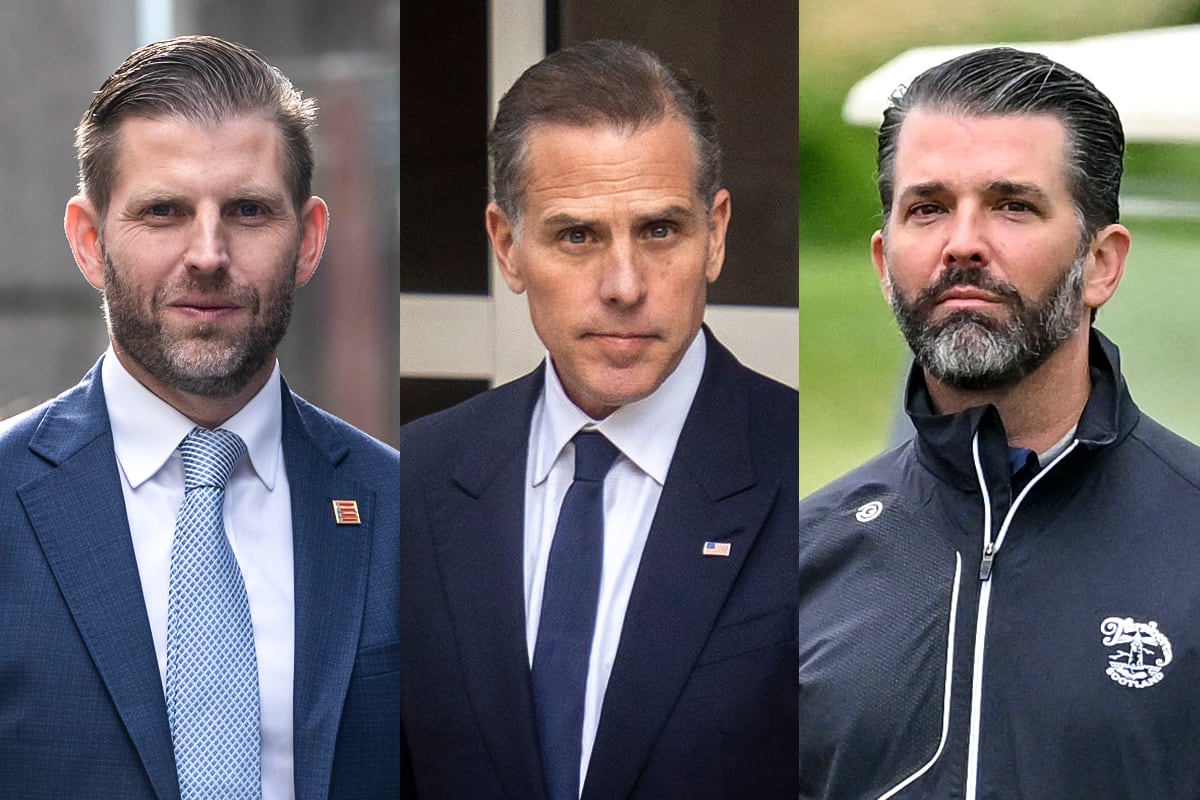
The son of former President Joe Biden publicly called out Donald Trump Jr., the eldest son of President Donald Trump, proposing a cage match between the two men.
The challenge was short.
The message was unmistakable.
“Cage match between me and Don Jr.?” Hunter wrote on X. “Your call on the venue. Anywhere but the South Lawn.”
Within minutes, screenshots spread across social media platforms.
Political commentators weighed in.
Podcast hosts debated it.
Supporters and critics of both families rushed online to celebrate, ridicule, speculate, or demand that the fight actually happen.
But beneath the headline-grabbing challenge was something much larger.
The post was not really about fighting.
It was about power.
It was about symbolism.
And it was about one of the most controversial events ever staged on the grounds of the White House.
Because for Hunter Biden, the real target wasn’t Donald Trump Jr.
It was the transformation of America’s most famous residence into what he described as a modern-day colosseum.
And in making that argument, he ignited a debate that reaches far beyond mixed martial arts.
A debate about the presidency itself.
The Event That Shocked Washington
The controversy began with an event unlike anything many Americans had ever seen.
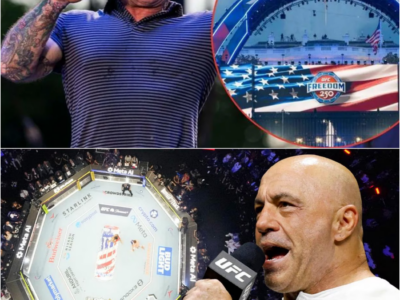
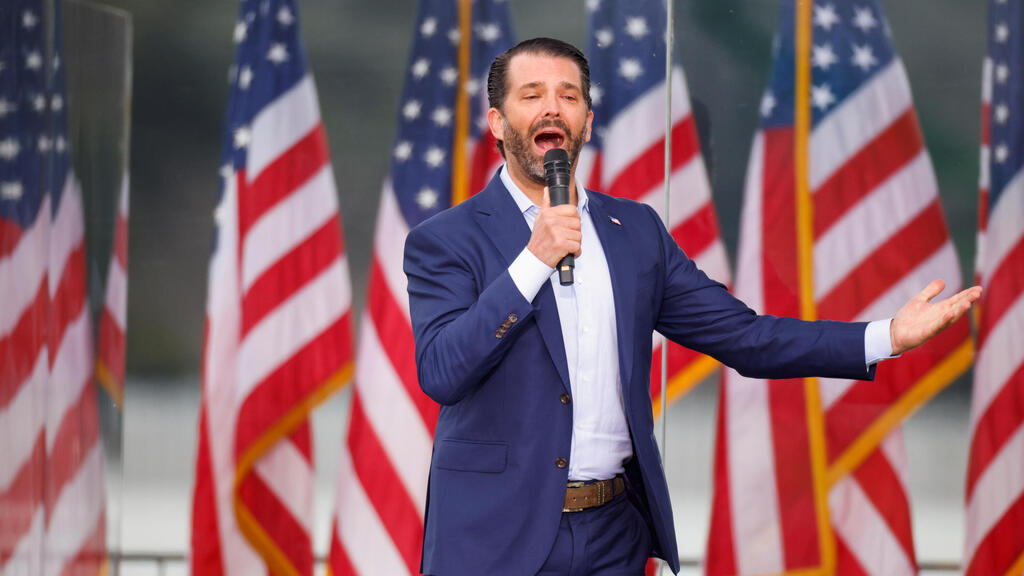
On June 14, the South Lawn of the White House became the setting for UFC Freedom 250.
The event drew thousands of spectators, major political figures, celebrities, athletes, and members of the Trump family.
For supporters, it represented a uniquely American celebration.
A fusion of sports, patriotism, and entertainment.
A demonstration of confidence.
A showcase of one of the most successful sports organizations in modern history.
For critics, however, it crossed a line.
The White House had hosted concerts before.
It had welcomed championship teams.
It had been the backdrop for state dinners and historic ceremonies.
But a UFC event?
Complete with lights, roaring crowds, walkout music, and cage fights?
For many observers, it felt unprecedented.
And that sense of unease only intensified as images from the event spread across television screens and social media feeds.
The iconic White House stood illuminated behind the action.
The symbolism was impossible to ignore.
To some, it looked patriotic.
To others, it looked theatrical.
To Hunter Biden, it looked dangerous.
Joe Rogan Enters the Conversation
Fueling the controversy were comments made by podcast titan Joe Rogan.
The UFC commentator and influential media personality dismissed criticism surrounding the event.
According to Hunter, Rogan essentially told detractors to stop complaining.
For many Americans, Rogan’s view reflected a simple question.
Why not?
If the White House can host concerts, Easter egg hunts, and cultural events, why shouldn’t it host combat sports?
Why should mixed martial arts be treated differently?
Hunter surprised some observers by partially agreeing.
He went out of his way to praise the UFC.
He praised UFC President Dana White.
He praised the fighters.
He praised the organization itself.
In fact, his criticism was not directed at the athletes at all.
“The brand you and Dana have built is a bona fide American success story,” Hunter said.
He described fighters as remarkable.
He called their discipline inspiring.
He expressed admiration for those willing to step into the cage.
Had he stopped there, little controversy would have followed.
Instead, he launched into a sweeping critique that transformed a sporting event into a constitutional argument.
“Some Places Are Sacred”
At the center of Hunter’s argument was a belief that certain public spaces carry unique meaning.
The White House, he argued, is one of them.
For over two centuries, it has functioned as the symbolic home of the American presidency.
It has witnessed wars, economic crises, assassinations, triumphs, and historic moments.
It belongs not to a king.
Not to a dynasty.
Not even to a president.
It belongs to the nation.
That distinction became the foundation of Hunter’s criticism.
Unlike supporters who viewed UFC Freedom 250 as a celebration of American culture, Hunter viewed it as an act of ownership.
An assertion of personal power.
A statement about who controls America’s institutions.
And from his perspective, that was precisely the problem.
The Colosseum Comparison
Then came the line that electrified political observers.
Hunter compared the event to ancient Rome.
Specifically, he compared it to the Roman practice of staging gladiatorial contests for public entertainment.
The image was provocative.
Ancient emperors often used massive spectacles to project authority.
They entertained crowds while reinforcing their own dominance.
The phrase “bread and circuses” has survived for centuries because it captures a timeless political concern: the use of entertainment to distract, influence, or impress the public.
Hunter suggested something similar was occurring.
He argued that the UFC event was less about celebrating America’s 250th anniversary and more about showcasing power.
According to Hunter, the South Lawn had become a stage.
The presidency had become part of the performance.
And Donald Trump had positioned himself at the center of the spectacle.
Whether one agrees with that interpretation or not, it struck directly at the heart of ongoing debates about Trump’s leadership style.
Supporters view him as a disruptor.
A builder.
A showman who energizes supporters and rejects stale traditions.
Critics view him as someone willing to blur the line between public institutions and personal branding.
The UFC controversy became another front in that larger argument.
“This Is My House”
Perhaps the most memorable portion of Hunter’s statement involved what he imagined the event communicated.
Not through words.
Through imagery.
Through symbolism.
According to Hunter, the message was simple:
“This is my house.”
It was a dramatic interpretation.
One designed to provoke.
But it reflected a concern shared by many critics.
What happens when national symbols become associated with one political figure?
The White House occupies a unique place in American life.
Every president lives there.
Yet no president owns it.
Each administration eventually leaves.
The building remains.
That continuity has long served as a reminder that institutions are bigger than individuals.
Hunter argued that hosting a UFC spectacle on the South Lawn challenged that tradition.
Not legally.
Not formally.
But symbolically.
And symbolism, in politics, often matters as much as policy.
The Imagined Future
Hunter’s criticism then moved into even more dramatic territory.
He described a hypothetical future in which presidential power becomes increasingly personalized.
A future where tradition gives way to spectacle.
A future where institutions become extensions of individual leaders.
He imagined East Wing renovations.
Golden interiors.
Marble monuments.
The erasure of predecessors.
The imagery was clearly rhetorical.
But it served a purpose.
It transformed a sporting event into a warning.
Not about UFC.
Not about sports.
But about political culture.
Whether readers find the argument compelling or exaggerated, it undeniably succeeded in generating discussion.
Trump’s America vs. Biden’s America
The controversy also reflects a broader clash between two competing visions of America.
One vision celebrates disruption.
It embraces spectacle.
It sees no contradiction between politics, entertainment, sports, and media.
In this view, the UFC event represented exactly what modern America should look like.
Energetic.
Unapologetic.
Popular.
Fun.
The other vision emphasizes institutional traditions.
Ceremony.
Restraint.
The preservation of civic symbols.
In this view, certain places should remain separate from commercial entertainment and partisan theater.
The White House becomes more than a building.
It becomes a constitutional symbol.
The UFC debate exposed the tension between those perspectives.
And it did so in a way few expected.
The Cage Match Challenge
Lost amid the constitutional debate was the moment that initially grabbed headlines.
Hunter Biden challenging Donald Trump Jr. to a cage fight.
The challenge instantly captured the imagination of social media users.
Memes exploded online.
Commentators speculated about who would win.
Supporters joked about pay-per-view numbers.
Critics accused both sides of turning politics into reality television.
Yet the challenge was also revealing.
For years, the Biden and Trump families have served as symbols of America’s political divide.
Their names dominate headlines.
Their actions spark controversy.
Their supporters defend them passionately.
Their critics attack relentlessly.
The idea of the two most famous political families in America settling their differences in a cage felt absurd.
And yet somehow perfectly aligned with the times.
Politics today is often personal.
Increasingly emotional.
Increasingly performative.
The cage match proposal became a metaphor for the larger conflict.
The Silence From Don Jr.
As of publication, Donald Trump Jr. had not responded publicly.
That silence only fueled speculation.
Would he accept?
Ignore it?
Mock it?
Counter with a challenge of his own?
The lack of response allowed the story to grow.
In politics, unanswered challenges often generate more attention than direct confrontations.
Every hour without a reply created another news cycle.
Another social media debate.
Another opportunity for commentators to weigh in.
Whether intentional or not, the silence became part of the story.
Why Americans Can’t Look Away
The reason this controversy resonated goes beyond UFC.
It goes beyond Hunter Biden.
It goes beyond Donald Trump Jr.
The story touches multiple cultural fault lines simultaneously.
Politics.
Celebrity.
Sports.
Presidential power.
American identity.
Social media.
Family dynasties.
The White House.
Each element alone would generate attention.
Combined, they create a story almost impossible to ignore.
Americans have always been fascinated by larger-than-life political personalities.
The modern media environment amplifies that fascination.
Every statement becomes content.
Every controversy becomes entertainment.
Every disagreement becomes a national conversation.
The UFC White House debate perfectly fits that pattern.
The Bigger Question
Long after social media moves on to the next controversy, one question will remain.
What should the White House represent?
For some Americans, the answer is evolving.
The White House should reflect modern culture.
Modern interests.
Modern entertainment.
If millions love UFC, why shouldn’t it appear at the White House?
Others disagree.
They argue that certain institutions derive their power from restraint.
From tradition.
From their ability to remain larger than any single political movement.
The debate is not new.
Every generation redefines public symbols.
Every president leaves a mark.
Every administration tests boundaries.
The UFC event simply accelerated that conversation.
A Political Spectacle for a New Era
In many ways, the entire controversy feels uniquely American.
A former president’s son challenging a sitting president’s son to a cage fight.
A UFC event at the White House.
Comparisons to Roman emperors.
Arguments about constitutional symbolism.
Social media warfare.
Podcast commentary.
Political outrage.
National fascination.
It is difficult to imagine another country producing such a story.
Yet in America, it feels strangely plausible.
Because the country is living through an era where politics, culture, and entertainment increasingly occupy the same stage.
And nowhere was that more visible than on the South Lawn.
The Final Bell
Whether Donald Trump Jr. ever responds remains unknown.
Whether a cage match ever happens is almost certainly beside the point.
The real battle was never inside a cage.
It was over meaning.
Over symbolism.
Over who gets to define America’s institutions.
For supporters of the UFC event, the White House hosted a celebration of American achievement.
For critics like Hunter Biden, it hosted something far more troubling.
An exhibition of power.
A political spectacle.
A modern colosseum.
The debate is unlikely to end soon.
Because beneath the jokes, memes, and headlines lies a serious question about the future of American public life.
Who owns the symbols of the republic?
The president?
The people?
Or whoever controls the spotlight?
That question—not the proposed cage match—may ultimately prove to be the fight that matters most.