Joe Rogan Unloads on UFC Freedom 250 Critics: “Just Shut the F— Up”
Joe Rogan Unloads on UFC Freedom 250 Critics: “Just Shut the F— Up”
“SHUT THE F— UP”: Joe Rogan Unleashes on UFC Freedom 250 Critics as White House Fight Night Sparks a National Culture War
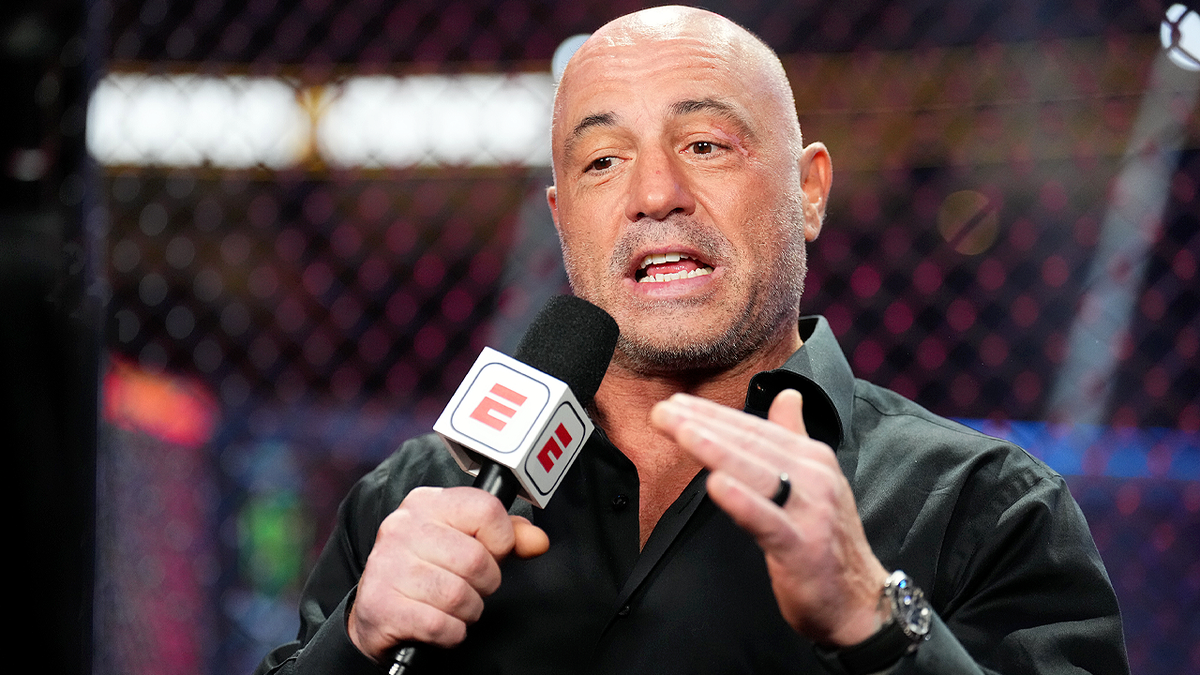
The podcaster’s fiery defense of the historic UFC event became about far more than mixed martial arts—it became a battle over politics, identity, and whether Americans can still enjoy anything together.
For a few hours on a warm June evening, the White House looked less like the center of global diplomacy and more like the center of the sports universe.
Spotlights cut through the night sky.
Crowds roared.
Music thundered across the South Lawn.
Fighters stepped into the cage beneath the gaze of presidents, celebrities, athletes, military veterans, and thousands of spectators.
The event was UFC Freedom 250.
The setting was the White House.
And before the final fight had even ended, America was already arguing about it.
Supporters hailed the event as a uniquely American celebration of freedom, competition, and national pride.
Critics condemned it as a political spectacle that blurred the line between government and entertainment.
Social media erupted.
Cable news jumped on the story.
Political commentators chose sides.
Within hours, what began as a sporting event had transformed into the latest front in America’s never-ending culture war.
Then Joe Rogan entered the conversation.
And he was not interested in polite debate.
“Like, shut the f— up,” Rogan said.
The blunt response instantly became one of the most talked-about moments following UFC Freedom 250.
But behind the profanity was a larger argument—one that touched on politics, tribalism, celebrity culture, and the growing inability of Americans to share common experiences without turning them into ideological battlefields.
For Rogan, the criticism surrounding the event wasn’t merely annoying.

It was symptomatic of something much bigger.
Something he believes is tearing the country apart.
The Night the White House Became an Arena
The images alone were enough to guarantee controversy.
For more than two centuries, the White House has served as the symbolic center of American government.
It has hosted foreign leaders, historic speeches, treaty signings, and moments that shaped the course of history.
Generations of Americans have viewed it as a symbol of continuity, stability, and democratic power.
Then came UFC Freedom 250.
The spectacle was unlike anything many Americans had ever seen on White House grounds.
The South Lawn was transformed into an arena.
Fans packed the venue.
Television cameras captured dramatic shots of fighters entering beneath the glow of the nation’s most famous residence.
The contrast was striking.
One symbolized government.
The other symbolized combat.
One represented tradition.
The other represented modern entertainment.
For supporters, the combination felt exciting.
For critics, it felt unsettling.
Yet there was no denying one thing.
Everyone was talking about it.
Joe Rogan’s Front-Row Seat to History
Few people were positioned closer to the action than Joe Rogan.
For decades, Rogan has become one of the most recognizable voices in combat sports.

His commentary has accompanied some of the UFC’s biggest moments.
He has watched championships won and lost.
He has called legendary fights.
He has witnessed the rise of stars and the collapse of dynasties.
But even after years inside the sport, UFC Freedom 250 left an impression.
According to Rogan, the event was unlike anything he had ever experienced.
He described it as the wildest moment of his career.
Coming from someone who has spent decades immersed in high-profile sporting events, the statement carried weight.
Yet the excitement surrounding the event quickly collided with the political controversy surrounding its location.
And that is where Rogan’s frustration began.
The Backlash Arrives
Almost immediately after the event concluded, criticism flooded social media.
Some questioned the decision to hold fights at the White House.
Others accused attendees of endorsing political messages simply by being present.
Still others argued that the event transformed a national symbol into a partisan stage.
The criticism extended beyond politicians.
Celebrities.
Athletes.
Fans.
Commentators.
Anyone associated with the event became a target.
For Rogan, this reaction represented a familiar pattern.

Increasingly, he argued, Americans seem unable to separate participation from endorsement.
Attend an event?
You must support every political message associated with it.
Appear on a stage?
You must agree with every person standing nearby.
Take part in a celebration?
You must endorse every action of the organizers.
Rogan rejected that logic entirely.
And he did so in language that left little room for ambiguity.
“Just Please Stop”
His message was direct.
Profane.
And unmistakably emotional.
“Like, shut the f— up. Just please. Just please stop.”
The remark quickly spread across social media platforms and news outlets.
Supporters applauded his honesty.
Critics accused him of dismissing legitimate concerns.
But the intensity of the response reflected a deeper frustration.
Rogan wasn’t merely defending UFC Freedom 250.
He was pushing back against what he sees as a culture of constant political sorting.
A culture where every action is interpreted through partisan lenses.
A culture where people are expected to choose sides before they can enjoy anything.
For Rogan, enough was enough.
A Sport Bigger Than Politics
One of the central themes of Rogan’s defense was his belief that combat sports transcend political divisions.
Inside the cage, party affiliation doesn’t matter.
Ideology doesn’t matter.
Background doesn’t matter.
What matters is discipline.
Preparation.
Courage.
Skill.

The fighter standing across from you isn’t asking how you voted.
The audience cheering isn’t filling out political surveys.
For generations, sports have functioned as one of the few remaining arenas where Americans from vastly different backgrounds gather in the same place for a shared experience.
Rogan fears that even that space is shrinking.
And the reaction to UFC Freedom 250 seemed, in his view, to prove the point.
The Political Lens Consumes Everything
The controversy surrounding the White House event revealed how thoroughly politics now permeates American culture.
Movies become political.
Music becomes political.
Restaurants become political.
Clothing becomes political.
Sports become political.
Even attending a fight can become political.
For many Americans, this constant politicization is exhausting.
People increasingly report feeling trapped inside a cycle of outrage that never ends.
Every event becomes a referendum.
Every public appearance becomes a statement.
Every gathering becomes an argument.
Rogan’s comments tapped directly into that frustration.
His supporters saw him articulating something they had been feeling for years.
A desire to simply enjoy an event without being assigned a political identity.
Why the White House Matters
Yet critics argue that the White House changes the equation.
This was not an ordinary arena.
This was not a random stadium.
This was the home of the presidency.
The symbolism matters.
And because the symbolism matters, critics argue that public debate is inevitable.
The White House carries immense historical weight.
Every event held there sends a message.
Every image generated there becomes part of the national conversation.
From this perspective, objections to UFC Freedom 250 were not about fighting.
They were about preserving the meaning of an institution.
The disagreement ultimately reflects two very different views of public space.
One side sees the event as a celebration.
The other sees it as a transformation.
Neither side appears willing to back down.
The American Divide on Full Display
What made the controversy especially revealing was how quickly it split along familiar lines.
Supporters praised the event as energetic, patriotic, and uniquely American.
Critics viewed it as performative, political, and unnecessary.
The same images generated completely different reactions.
One person saw national pride.
Another saw political theater.
One saw innovation.
Another saw erosion of tradition.
This divergence has become increasingly common in American life.
Citizens often consume the same event while experiencing entirely different realities.
The UFC controversy became another example.
The Business of Spectacle
There is also an undeniable reality at work.
Americans love spectacle.
Always have.
From boxing matches in the twentieth century to Super Bowls in the twenty-first, large-scale events occupy a special place in the national imagination.
The UFC understands this.
The entertainment industry understands this.
Politicians understand this.
The White House event succeeded in capturing attention on a massive scale.
Millions watched.
Millions discussed it.
Millions formed opinions.
From a publicity standpoint, it was impossible to ignore.
And that may be one reason the backlash became so intense.
The bigger the spectacle, the bigger the reaction.
Rogan’s Larger Warning
Beneath the headlines and profanity, Rogan’s comments contained a broader warning.
He worries that Americans are losing the ability to share experiences across political lines.
The consequences extend beyond sports.
If people can no longer attend the same events, enjoy the same entertainment, or celebrate the same moments without ideological conflict, what remains?
The question is uncomfortable.
Yet it resonates with many Americans who feel increasingly isolated within political tribes.
Rogan’s solution was simple.
Perhaps overly simple, critics would argue.
But simple nonetheless.
Stop assuming the worst.
Stop assigning motives.
Stop demanding political purity tests.
And remember that not everything is a campaign rally.
“You Should All Be Together”
Perhaps the most striking part of Rogan’s response came near the end.
After the outrage.
After the criticism.
After the profanity.
His message became surprisingly hopeful.
“You should all be together.”
It was a simple statement.
Yet in today’s political climate, it almost sounded radical.
The idea that Americans with different beliefs could occupy the same space.
Enjoy the same event.
Cheer for the same fighters.
And then go home without treating one another as enemies.
For many observers, that vision feels increasingly distant.
But Rogan clearly believes it remains possible.
The Story Beyond the Fights
Years from now, people may remember UFC Freedom 250 for its location more than its results.
The winners and losers inside the cage will eventually fade into sports history.
The broader cultural debate may not.
Because the event exposed something deeper about modern America.
A nation struggling to decide whether every public event must carry political meaning.
A nation wrestling with questions of identity and symbolism.
A nation increasingly divided over how to interpret the same images and experiences.
The White House became a battleground.
Not for fighters.
For ideas.
The Final Bell
Joe Rogan’s fiery defense of UFC Freedom 250 was about far more than one night of fights.
It was about a country that seems permanently locked in debate.
A country where entertainment, politics, sports, and culture increasingly overlap.
A country where even cheering for a fighter can become a political statement.
Rogan’s response was raw.
Unfiltered.
Controversial.
Yet it resonated because it touched a nerve.
Many Americans are tired.
Tired of outrage.
Tired of division.
Tired of being told what every event is supposed to mean.
Whether one agrees with him or not, Rogan gave voice to that exhaustion.
And in doing so, he transformed a post-fight controversy into something much larger.
A conversation about whether Americans can still gather under the same lights, watch the same spectacle, and remember that they are, despite everything, part of the same country.
That may be the most important fight of all.