Robotaxis Headed to London Could Disrupt Traditional Cabbies Who Master 25,000 Streets to Earn Their Licenses
Robotaxis Headed to London Could Disrupt Traditional Cabbies Who Master 25,000 Streets to Earn Their Licenses
THE BRAIN VS. THE ALGORITHM: The High-Stakes Warfare Over the Soul of London’s Streets

LONDON — In the dead of winter, long before the damp British fog lifts from the cobblestones of Covent Garden, Steven Fairbrass climbs onto a motorized scooter. Clutched in his trembling, wind-chilled fingers is a tattered, rain-smeared booklet known simply to a select, tortured fraternity as the “Blue Book.” For eight agonizing years, Fairbrass has spent his days and nights tracing the labyrinthine, medieval veins of London. He has sacrificed vacations, missed family dinners, and pushed his mental capacity to the absolute brink of human endurance.
He is not studying for a medical degree, nor is he training for a covert intelligence agency. Fairbrass is trying to pass “The Knowledge”—a 161-year-old examination widely considered to be the most punishing, brutal test of memory on the face of the planet. To secure a license to operate one of London’s iconic black cabs, he must completely and flawlessly memorize all 25,000 streets within a six-mile radius of Charing Cross. He must memorize 6,000 distinct landmarks, from the grand facade of the National Gallery down to the precise names of ephemeral, obscure neighborhood pubs and shifting, trendy restaurants. He must be able to instantly calculate the absolute shortest, most efficient route between any two random points in a metropolitan area layout that dates back to the Roman Empire.
But as Fairbrass stands in the rain, battling his own exhaustion during his twentieth attempt to pass the agonizing oral exam, an invisible, mechanical shadow is creeping up behind him.
Less than three miles away, a sleek, modern sport utility vehicle glides silently past the Houses of Parliament. It does not have a human driver. The steering wheel spins with eerie, ghostly precision, guided not by a human mind, but by an array of twenty-nine cameras, six advanced radars, five hyper-sensitive microphones, and five Light Detection and Ranging (LiDAR) sensors that pulse continuously, analyzing objects up to three football fields away. This is a robotaxi, a multi-billion-dollar manifestation of artificial intelligence designed by Silicon Valley’s elite and radical tech startups. Its goal is simple, clinical, and devastating to the human workforce: to render the human brain obsolete, to delete the necessity of “The Knowledge,” and to permanently displace the thousands of traditional cabbies who consider themselves the living, breathing icons of London.
A modern warfare is erupting on the ancient roads of the United Kingdom, pitting the pinnacle of human cognitive adaptation against the unstoppable, well-funded juggernaut of autonomous machinery. It is a thrilling, deeply intriguing, and thoroughly shocking collision that serves as an omen for every working professional in America and across the globe. If artificial intelligence can conquer the most complex, highly trained driving fraternity in the world, no human career is safe.
The Superhuman Brain: The Agony of “The Knowledge”
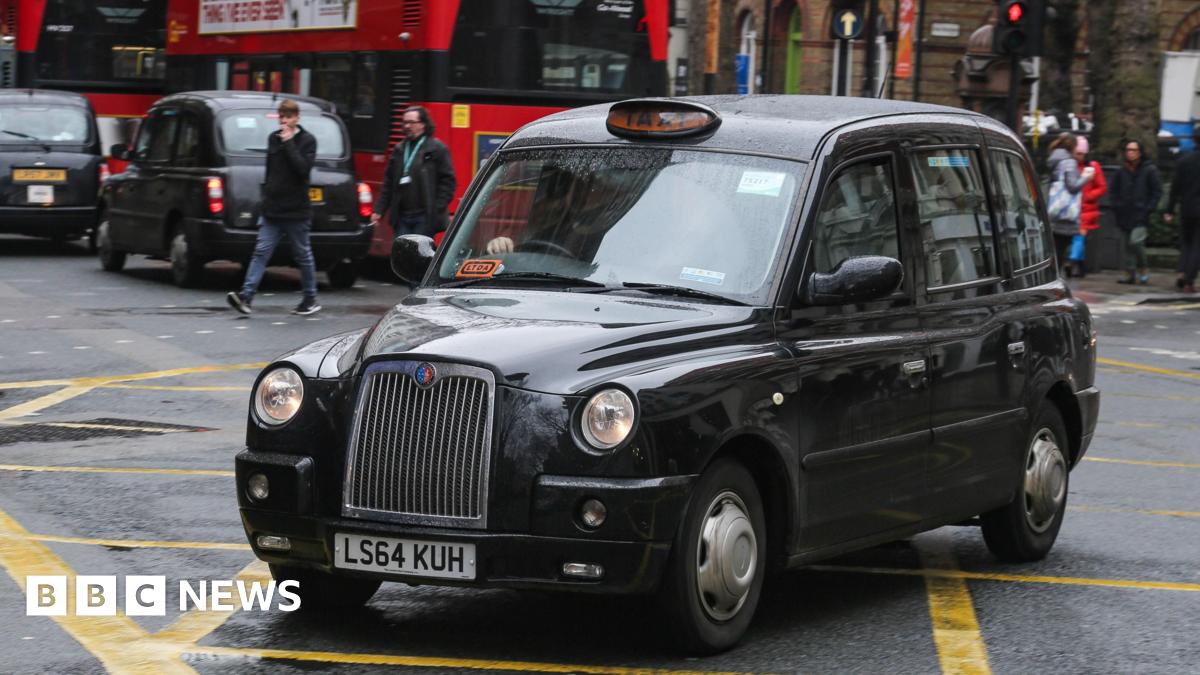
To understand the sheer magnitude of what is at stake, one must understand that London’s black cabs are not a mere transportation utility; they are a cultural institution woven into the identity of the city, as synonymous with London as Buckingham Palace or Big Ben. The trust and confidence placed in these drivers date back to 1865, when the exam was officially introduced to regulate horse-drawn carriages.
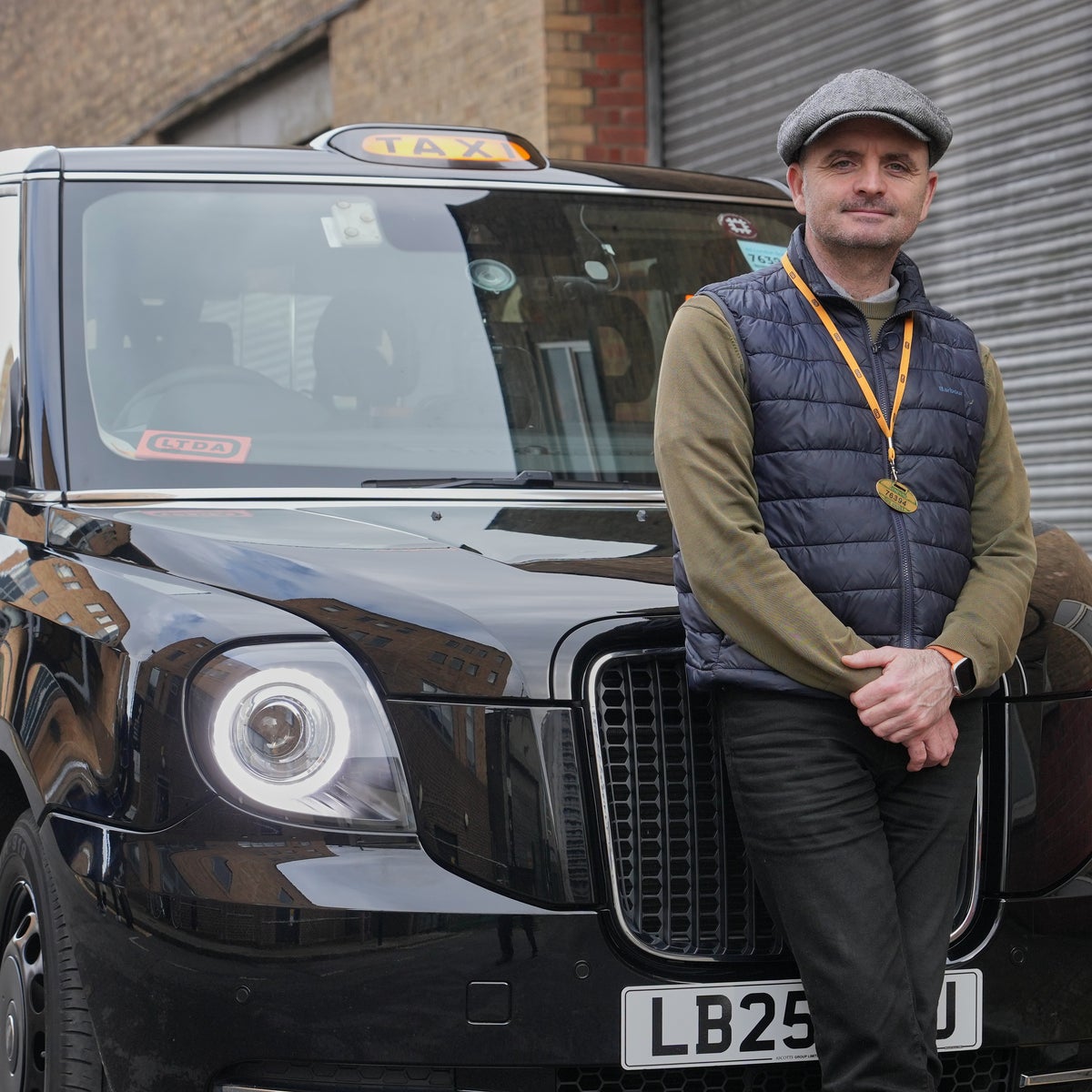
“Look, we’re the oldest form of transport in the world,” says Tom Skolian, a veteran driver who has maneuvered his black cab through London’s chaotic gridlock for thirty-four years. “In fact, we come before buses and trains. We are the icons of London.”
Skolian talks about a level of public trust that an app or an algorithm could never replicate. He describes regular mornings where frantic parents, whom he has never met and will likely never see again, hail his cab and hand over their children to be driven safely to school. He recalls a regular passenger who simply hands him a slip of paper and an Irish Wolfhound; the dog rides in the back alone, a silent, paying customer. “That’s the trust we get,” Skolian says proudly.
To achieve that level of trust, candidates must undergo a process that literally alters human biology. Aspiring drivers spend an average of three to five years—and in cases like Fairbrass’s, up to eight years—traveling the city on mopeds, hyper-focusing on the geometric relationships of thousands of streets. They must learn not just the streets, but the exact order of businesses, theater entrances, hidden alleyways, and even when a restaurant changes its name.
This systematic, intense cognitive training is so severe that it caught the attention of neuroscientists at University College London (UCL). In a landmark medical study, researchers conducted MRI brain scans on London cab drivers throughout their training. The findings shocked the medical community: the drivers’ posterior hippocampi—the specific region of the brain linked to spatial memory and navigation—physically grew and expanded over their careers. The human brain literally rewired and enlarged itself to accommodate the massive data set of London’s geography.
“There is nothing artificial about it,” says Anu Morjani, an aspiring driver who spent five agonizing years trying to conquer the test. “Everyone in their profession has had to train themselves with knowledge to be the best at what they are.”
The testing process itself is a psychological gauntlet. At the Transport for London office, nervous candidates dress in their absolute finest Sunday attire to take a series of rapid-fire oral examinations known as “appearances.” Under the cold, watchful eye of an examiner, candidates are given two completely random locations and must immediately verbalize, street by street, turn by turn, the exact shortest route without a single mistake, hesitation, or reliance on a map. Examiners measure the distance down to the yard. One wrong turn, one forgotten one-way street, and the candidate fails. Morjani was forced to endure forty separate failed attempts before finally tasting victory, a testament to the brutal standard required to wear the coveted badge.
For a traditional cabbie, comparing their organic, deeply contextual understanding of the city to a digital navigation system is insulting. “It’s like comparing a hot dog vendor to Gordon Ramsay,” Skolian laughs. “You’re never going to beat the knowledge.”
The Autonomous Invasion: Bilions of Miles in a Digital Mind
But the technology titans of America and Europe are not laughing. They are building an empire designed to prove that Gordon Ramsay can be replaced by a robotic kitchen.
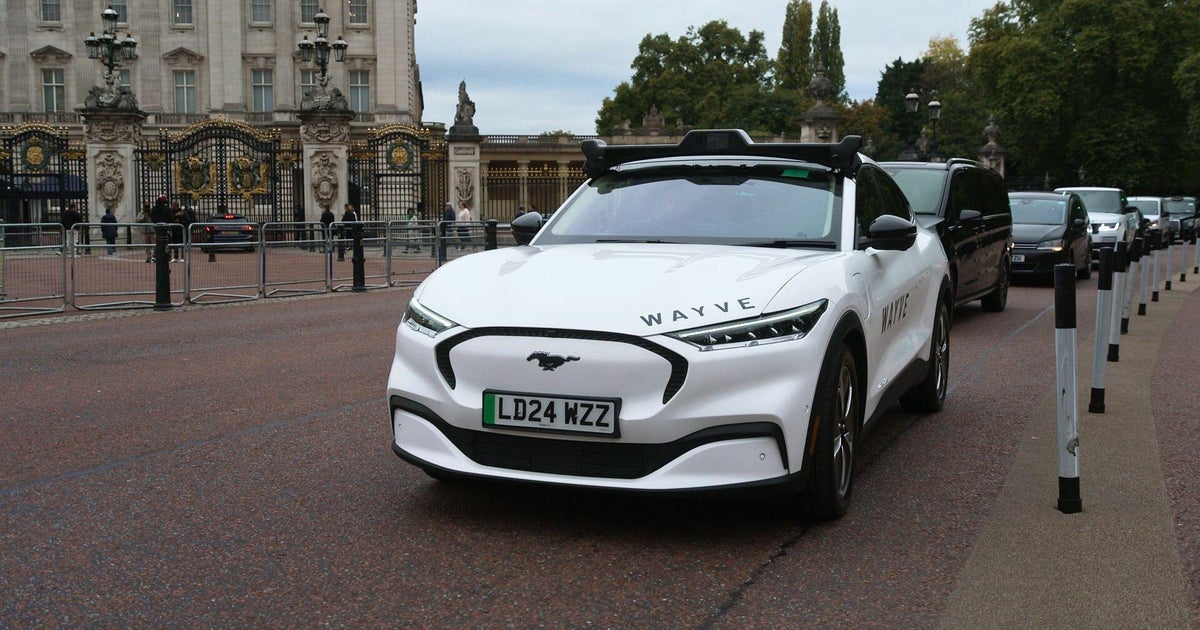
Autonomous vehicles have not yet been granted final regulatory approval to pick up commercial, paying passengers in London, but an aggressive, undeclared invasion is already underway. Massive autonomous vehicle fleets are currently prowling the British capital, mapping its historic architecture in ultra-precise 3D detail to train their algorithmic models.
Among the primary aggressors is Waymo, the autonomous driving subsidiary of Google’s parent company, Alphabet. Waymo is flanked by wave, a powerhouse British artificial intelligence startup backed by massive capital injections from Nvidia and Microsoft. These companies are operating with a profound, messianic conviction: that human drivers are an archaic, dangerous liability that must be engineered out of existence.
“Putting more of our robotaxis on the roads can save lives by reducing the million traffic deaths worldwide each year,” asserts Tekedra Mawakana, the co-CEO of Waymo. When confronted with the extraordinary training and expanded brains of London’s elite drivers, Mawakana counters with a staggering, cold metric: “In the case of Waymo, we actually have the data that shows us that we’re five times safer than a human driver.”
Waymo is not speaking from a theoretical perspective. The company has already executed an incredibly successful, highly lucrative rollout across the United States. Beginning in a Phoenix suburb in 2020, Waymo’s commercial operations have expanded exponentially. Today, millions of American riders across eleven major metropolitan areas, including San Francisco, Los Angeles, and Austin, summon Waymo robotaxis through their smartphones every single month.
To the tech industry, the term “driverless” is a misnomer. They argue that there is a driver—it just happens to be a collective, omniscient artificial intelligence. “This driver is the most experienced driver in the world,” Mawakana explains. “We travel over two million miles a week. Humans drive about 700,000 miles in a lifetime, so this is almost three lifetimes per week that our fleet is driving.”
Because every vehicle in the fleet instantly uploads its driving data to a centralized neural network, an experience gained by a single car avoiding an obstacle in San Francisco is instantly downloaded into the digital brains of the vehicles currently mapping the historic streets of London. Furthermore, these AI systems do not just learn from physical roads; they have logged billions of miles in hyper-realistic digital simulations. Waymo’s engineers deliberately subject their AI to bizarre, catastrophic scenarios within virtual worlds—such as dealing with sudden blizzards on the Golden Gate Bridge or an escaped circus elephant blocking an intersection—ensuring the machine knows how to react long before it encounters reality.
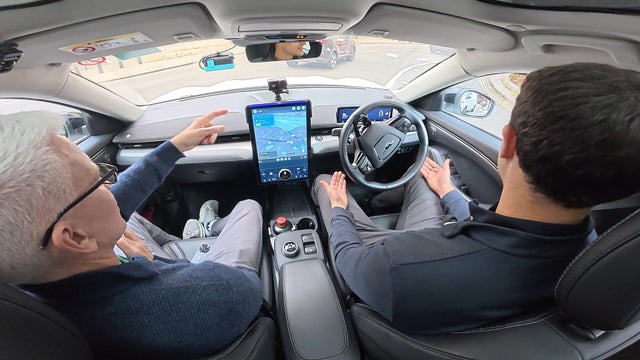
Inside a moving Waymo vehicle, the experience is deliberately engineered to be “blissfully boring.” As the steering wheel turns autonomously, passengers stare at an internal touchscreen displaying a real-time, digitized visualization of the surrounding world. The vehicle perceives pedestrians hidden behind parked trucks, anticipates cross-traffic hundreds of feet away, and detects subtle bodily movements of people on the sidewalk. When a distracted pedestrian steps into the street while looking at their phone, the vehicle calculates the trajectory and brakes instantly, responding to micro-cues faster than any human nervous system ever could.
The Glitch in the Matrix: Danger on the Asphalt
Yet, despite billions of dollars in development and trillions of lines of code, this flawless digital savior has displayed shocking, terrifying glitches that have triggered federal investigations and public outrage in American cities.
The transition from a sterile simulation to the unpredictable, chaotic reality of human society has exposed dangerous limitations in AI logic. In Los Angeles, a horrified onlooker captured video of a Waymo vehicle completely losing its cognitive bearings and driving directly through an active police crime scene, ignoring the explicit hand signals of law enforcement officers. In other high-profile American incidents, robotaxis have paralyzed urban traffic by clustering together in spontaneous, unexplained “gridlock blocks,” obstructing emergency responders, fire trucks, and ambulances rushing to life-or-death crises.
Even more alarming, autonomous vehicles have been documented illegally passing stopped school buses that had their red warning lights flashing—a catastrophic safety failure that prompted a comprehensive software recall and launched an intensive investigation by federal highway safety regulators in the United States.
These real-world failures highlight a fundamental philosophical divide between the tech executives who build algorithms and the human beings who navigate the physical world. While an AI can calculate distance and velocity with superhuman speed, it fundamentally lacks human intuition, empathy, and situational awareness. It cannot look a pedestrian in the eye to confirm intent; it cannot interpret the nuance of a frustrated policeman’s gesture; and it struggles to adapt when human behavior deviates from standardized, predictable patterns.
Two Philosophies Collide in Westminster
The battle lines are drawn most vividly in Westminster, the historic heart of London. Here, surrounded by the gothic grandeur of Parliament, the bustling swarms of international tourists, and a dizzying, chaotic mix of double-decker buses, erratic cyclists, and aggressive delivery vans, the competing philosophies of autonomous driving are being put to the ultimate test.
While Waymo relies on pre-mapping cities down to the centimeter before deploying its vehicles, its British rival, Wayve, is taking a radically different, highly controversial approach to artificial intelligence. Wayve’s CEO, Alex Kendall, believes that pre-mapping a city is an inefficient, rigid dead-end. Instead, his company is building an AI that operates exactly like a human being.
“Think about how you and I learned how to drive,” Kendall explains as his autonomous test vehicle navigates a punishingly complex Westminster roundabout. “I learned how to go through a few traffic lights, and that taught me how the concept of traffic lights works. In a similar way, that’s how our AI learns. We train it on millions of hours of experience driving all around the world. So this means when it goes somewhere it’s never seen before, or it’s never been mapped, it can understand what’s in front of it and make decisions in real time.”
As the Wayve car encounters a cyclist veering wildly across its lane and a tourist stepping off the curb simultaneously, the AI dynamically adjusts its speed, activates its indicators, and brakes without any pre-loaded map data. It is learning, adapting, and evolving on the fly.
To the Silicon Valley elite, this generalized intelligence represents the absolute future of human civilization. To the traditional London cabbies, however, it represents an existential, unnecessary threat to human labor and cultural heritage. Over the last decade, even before the widespread introduction of autonomous vehicles, the London black cab industry has suffered a devastating, traumatic decline. Under the intense, aggressive economic pressure of app-based ride-hailing services like Uber, the number of licensed black cab drivers in London has plummeted from a robust 25,000 to just 16,000 today. Their collective incomes have been severely slashed, forcing many families out of the profession entirely.
Yet, despite this economic bleeding, hundreds of idealistic, stubborn men and women still sign up to attempt “The Knowledge” every single year. They view themselves as the ultimate guardians of London’s soul, a human barrier against a fully automated, sterile corporate monoculture.
The Future of Transport: Human Soul vs. Silicon Efficiency
As the shadow of automation lengthens over the United Kingdom, the core debate shifts from technological capability to human value.
Many aspiring drivers remain fiercely, almost defiantly optimistic about their survival. “To me, the human brain will always be the strongest tool,” says Steven Fairbrass, refusing to let the rise of robotaxis deter his dream. “Can you imagine you’re trying to hail down a vehicle with no driver in it? You’re standing there in the rain trying to get home, and that vehicle just drives straight past you because it hasn’t got a sensor or a human brain or an eye to turn. To me, human beings—drivers—are always going to be needed. Always.”
But other candidates, staring at the rapidly advancing capabilities of autonomous fleets, are gripped by a quiet, haunting dread. They realize that they are training for a profession that may be legally engineered out of existence within a generation. “Every profession is being affected by AI,” admits Anu Morjani, his voice tinged with melancholy. “I don’t know what it’s going to do in the near future, but it’s always there on your mind that, yes, you’re getting into a career not knowing what the future is.”
When Morjani finally passed his final appearance after five years of intellectual warfare, receiving his official license to operate a black cab, he was asked why anyone should spend years of their life enduring such mental torture when they could simply download an app and become an Uber driver, or let a robotaxi take the wheel.
His response cuts to the very heart of the conflict: “You want to drive around in one of them famous cabs out there. Hundreds of years of history—it means a lot to the people of London. It’s like London without a King or a Queen. You can’t have London without a King or Queen, and you can’t have London without a black cab. It’s impossible.”
The Economic and Societal Forecast: A 20-Year Projection
To fully comprehend the trajectory of this modern crisis, economists and urban planning experts are looking closely at computational models and historical labor displacements. If the current rate of technological evolution continues unchecked, the timeline for the urban transport sector points toward a radical, potentially catastrophic restructuring of city life between now and 2045.
By 2030, analysts predict that the British government, heavily lobbied by multi-national technology conglomerates and facing intense pressure to modernize urban infrastructure, will grant full commercial licenses to autonomous vehicle fleets in London. Initially, these robotaxis will operate in restricted, highly monitored geofenced zones within central London, offering drastically lower fares than human-driven vehicles. Deprived of their wealthiest corporate clientele, the number of human cab drivers is projected to plummet from 16,000 to under 10,000 within forty-eight months.
By 2035, the implementation of 5G-Advanced networks and next-generation solid-state batteries will extend the operational range and efficiency of robotaxis tenfold. Autonomous vehicle networks will achieve full operational integration with London’s underground subways and bus systems. “The Knowledge” will likely be officially decommissioned by transport authorities, declared an archaic and obsolete requirement. The posterior hippocampi of London’s population will no longer expand; the collective spatial intelligence of the city will be entirely outsourced to a handful of proprietary servers based in Silicon Valley and Seattle.
By 2045, human-driven commercial transport could be entirely phased out or restricted to hyper-exclusive, ultra-expensive historical tourism zones. The everyday act of moving through a global metropolis will be completely silent, algorithmic, and monitored.
This transformation extends far beyond the borders of the United Kingdom. In the United States, the truck driving, delivery, and ride-share industries employ over five million human beings. If the algorithms successfully master the historic, chaotic, unpredictable streets of London, the displacement of America’s blue-collar transit workforce will follow with brutal, terrifying speed.
The brewing battle in the ancient alleyways of London is not just a localized labor dispute. It is an initial, explosive skirmish in a global war for the future of human labor. It forces us to confront an incredibly uncomfortable, profound question: In our relentless, manic pursuit of corporate efficiency, mechanical safety, and technological convenience, are we willingly destroying the very things that make our civilization human?