45 SAS Raided an Airfield the RAF Said Was Too Close to Bomb. They Left 11 Aircraft Burning.
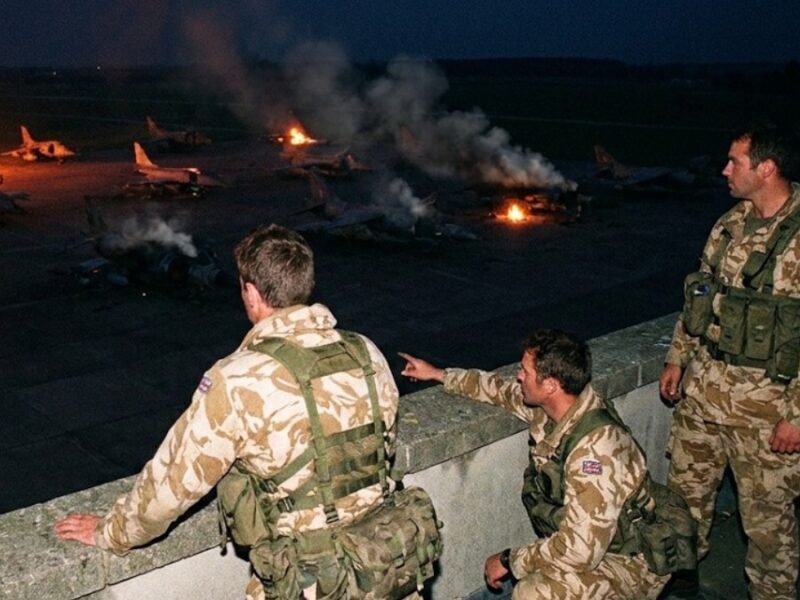
May 15th, 1982. 0700 hours local, Pebble Island, West Falkland. A line of 11 Argentine aircraft, Pucara ground attack planes, Aermacchi jets, a single Short Skyvan transport, were burning from one end of the grass strip to the other. The fires had been burning for 36 minutes. The aircraft had been intact 36 minutes before that.
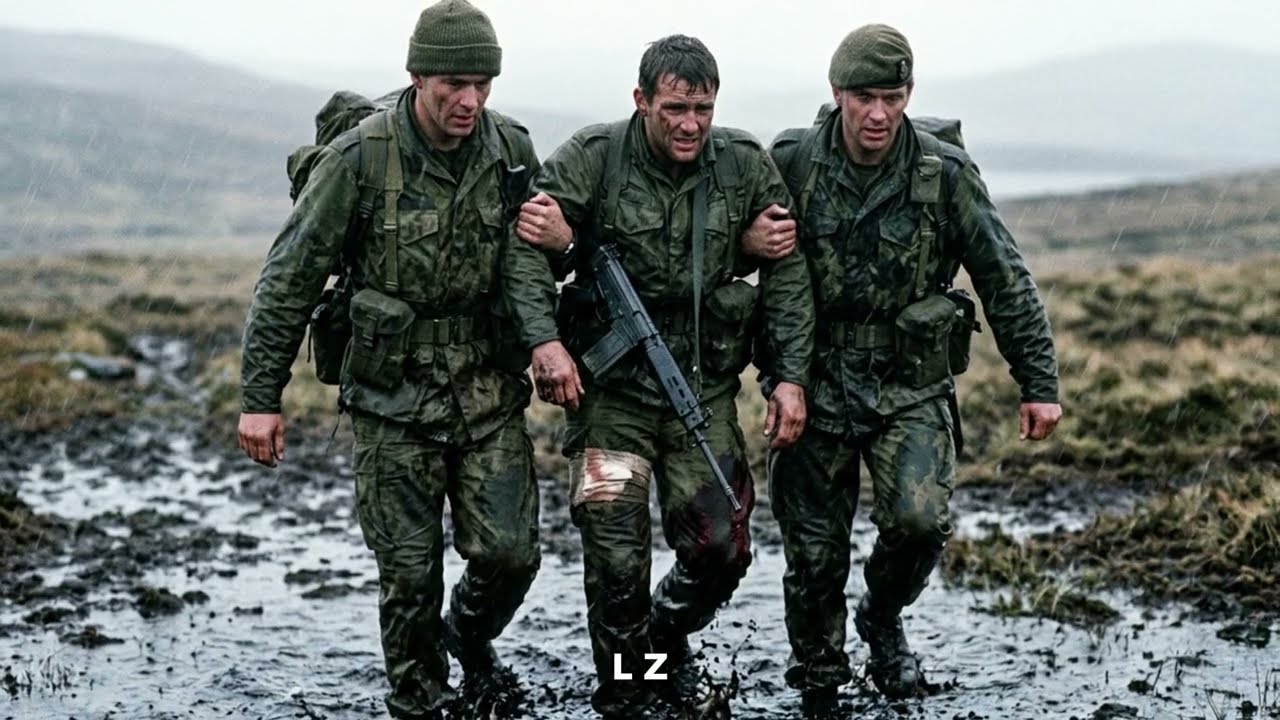
45 SAS men were walking back across open peat bog in the gray Falklands pre-dawn, moving west toward the extraction LZ, HMS Glamorgan’s 4.5-in gun still firing behind them to hold the Argentine garrison off the perimeter. One man was being helped by two others, shrapnel in both legs, walking under his own power. They had 20 minutes to reach the LZ before Argentine reinforcements could close it.
In the Argentine garrison headquarters, 400 m east of the burning strip, a captain was trying to compose a signal to Buenos Aires that explained how this had happened. He did not have an explanation. He would not have one that morning. Somewhere in an MOD planning file, a technical assessment dated 2 weeks earlier explained in precise language why the Pebble Island airstrip could not be bombed.
Every approach vector ran through a Roland surface-to-air missile system with an 8-km engagement envelope. Every strike profile put the attacking aircraft in jeopardy. The fleet had 20 Sea Harriers and no replacements. The strip would have to be left alone. That planning file was now technically correct and operationally irrelevant.
11 aircraft, one night, a planning file that said it couldn’t be bombed, and 45 men walking west through the peat. The Pebble Island airstrip first appeared as a serious problem in the task force operations rooms in early May 1982. The intelligence picture was clear enough. Argentine forces had established an airfield on the island’s northern settlement capable of operating fixed-wing aircraft, and those aircraft included the IA 58 Pucará, a twin-turboprop ground-attack aircraft specifically designed for low-altitude operations against infantry and light
vehicles. The strip sat at the edge of the operational envelope for the planned British amphibious landing at San Carlos Water. The landings were set for May 21st. If the Pucarás were still on the strip when the landing force crossed the beach, they would be able to attack the beachhead from a westerly approach vector that the Sea Harrier combat air patrol was not positioned to cover effectively.
Admiral Woodward and the task force air warfare staff ran through the strike options. The Sea Harrier was the primary asset, fast, capable of delivering unguided bombs, and armed with Sidewinder missiles. Against a conventional target, it was effective. Against Pebble Island, the approach geometry was the problem.
The strip sat in a shallow depression with rising ground on three sides. Every feasible attack vector required the Sea Harrier to fly a predictable approach line, and at the head of every approach line sat the Argentine Roland surface-to-air missile system. The Roland had a range of 8 km and was effective against all approach profiles allowed any precision over the target.
A fast level attack, the only profile that gave the pilot time to aim, ran directly through the Roland engagement envelope. A high-angle diving attack from above the Roland ceiling was theoretically possible, but produced accuracy so poor that a 600-m grass strip would almost certainly survive the bombs intact and its aircraft undamaged.
The air warfare officer reviewed the approach charts, worked through each vector in sequence, and put down his pencil. There was no route in that did not go through the Roland. The Roland had been positioned at Pebble Island by Argentine planners who knew exactly what they were doing.
It existed not to shoot down aircraft, but to make the airstrip unstrikeable by air, and it was doing its job perfectly by existing. With only 20 Sea Harriers in theater and no replacement aircraft available from the United Kingdom within the operational window, the arithmetic of attrition risk made the air option unacceptable regardless of which strike profile was chosen.
Woodward considered naval bombardment. The shore geometry and the shallow water approaches around Pebble Island made fleet repositioning for a sustained bombardment impractical without exposing capital ships to Argentine air attack from the mainland. The fleet had already lost ships to that threat.
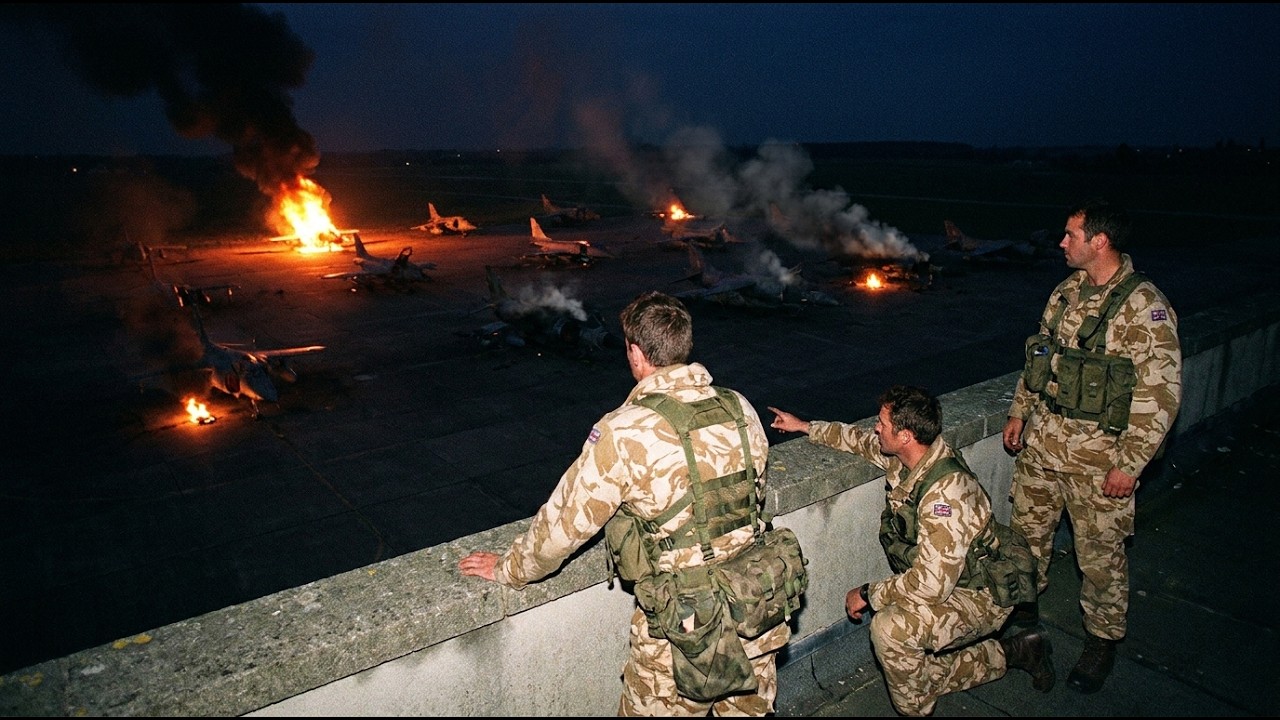
Repositioning more of them within range of Argentine aircraft to destroy a grass strip on a secondary island was not an acceptable trade. The options were narrowing toward one. >> [music] >> Someone had to go around the planning file. The IA-58 Pucará was not designed to fight the Royal Navy. It was designed to fight insurgents in the mountains and jungles of South America, to operate at low altitude over difficult terrain, absorbing ground fire, delivering cannon, rockets, and napalm against dispersed infantry.
In the context of the Falklands conflict, that design brief was precisely what made it dangerous. At the San Carlos beachhead, the British would be landing thousands of men and hundreds of tons of equipment on open beaches in the open air with limited cover and a defensive perimeter that would take hours to establish.
The Pucará’s twin turboprop configuration gave it a top speed of around 500 km an hour, but its operational envelope was at 50 to 300 m, the altitude band where it was most effective against the kind of soft target that a beach landing represented. Two 20 mm cannons, four 7.6 2 mm machine guns, rocket pods on the underwing hardpoints, napalm if the mission called for it.
A Pucará hitting the San Carlos landing from the northwest low and fast would be attacking from a direction where the Sea Harrier combat air patrol was not stationed and where the fleet’s anti-aircraft systems had limited coverage. The Sea Harrier was a capable interceptor. But a British intelligence analyst reviewing the Pucará’s performance specifications noted a specific problem.
A Sea Harrier pilot who saw a Pucará behind him in a turning engagement at low altitude had a problem. The Pucará was slower overall but more maneuverable at the altitudes it preferred. It was not designed to fight peer force air combat. In the Falklands, it was being used against a peer force’s amphibious landing and in that role it was effective.
The four Aermacchi MB-339 light attack jets on the Pebble Island strip added a second threat category, faster than the Pucará, capable of anti-shipping attack with rockets and guns. The single Short Skyvan transport was less concerning militarily, but its presence confirmed the strip was operationally active and regularly supplied. Together, the 11 aircraft on the strip represented a combined attack capability against the San Carlos beachhead from a direction that the British air defense plan had no clean answer to.
They had to be destroyed before the morning of May 21st. The air option had already been ruled out. The ground option was the only one remaining. The tasking reached D Squadron through the Falklands task force command chain in the second week of May. Major Cedric Delves, commanding D Squadron, received the operational directive from Brigadier Thompson’s headquarters.
Plan and execute a ground raid to destroy all aircraft on the Pebble Island strip before the San Carlos landing with an attached requirement for a reconnaissance patrol to precede the raid and confirm the target. The SAS operated under its own special forces command structure within the broader land forces organization.
The Pebble Island tasking crossed command boundaries. Thompson commanded land forces, but D Squadron answered to its own chain. The practical result was that Delves had the authority to plan the operation in his own terms with naval gunfire support from Glamorgan and helicopter lift from the carriers as the primary external enablers.
The recce was the critical path. Without confirmed intelligence on the aircraft count, types, positions, and the garrison layout, the raid plan could not be finalized. Aerial photography from Nimrod maritime patrol aircraft had been attempted. The imagery was not detailed enough to confirm aircraft types or exact positions on the strip.
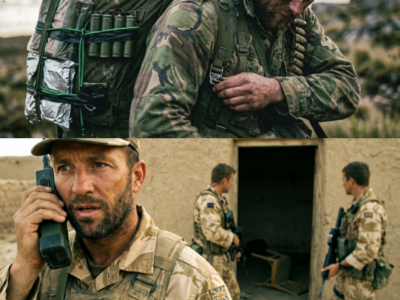
The only way to get accurate, reliable intelligence on the Pebble Island strip before May 21st was to put a human being on the island. Captain John Hamilton of Mountain Troop was chosen for the recce. Hamilton had been with D Squadron since selection and had established a reputation for the particular kind of cold-blooded operational patience that two nights alone on an enemy-held island in Falklands autumn required.
He was precise, uncomplaining about discomfort, and exactly the kind of officer who could spend 32 hours lying in wet peat watching through binoculars without doing anything that would compromise the patrol’s position. Delves received the task, looked at the map for a long time, and confirmed what was already obvious.
We’ll need a wrecky first. Woodward, how long? Delves, two nights. Hamilton and a four-man mountain troop patrol would insert by rigid raider on the island’s north coast, spend two nights in observation of the strip and the garrison, and return with the intelligence that the raid plan required. The entire operation depended on what Hamilton found.
Captain John Hamilton’s four-man patrol landed on the north coast of Pebble Island before midnight on May 11th. The rigid raider that carried them from HMS Glamorgan was crewed by SBS and returned to the ship before first light. Hamilton’s patrol moved inland from the coast in darkness over Falklands peat bog that absorbed every step and returned nothing, a terrain that penalized noise and speed equally.
They were in position above the airstrip before dawn on the first day. Two nights lying in the peat, watching the strip through binoculars, and recording everything that moved or was stationary below them. The initial intelligence estimate had assessed the strip as holding approximately six aircraft.
Hamilton’s observation on the first night confirmed 11, six IA-58 Pucará, four Aermacchi MB-339, one Short Skyvan. Two additional aircraft that had been assessed as present had been repositioned to the Argentine mainland before his arrival. His count of 11 was the accurate operational picture. The garrison Hamilton observed was approximately 150 troops, not the 100 the initial estimate had suggested.
The anti-aircraft positions were confirmed, two twin 20-mm cannon emplacements on the northern and eastern perimeter of the strip, and the Roland SAM system sighted on high ground to the south, Hamilton also noted the ammunition dump, a stored materials area 40 m northeast of the strip’s northern end, containing mortar ammunition, small arms rounds, and aviation fuel in drums stacked near the northern taxiway.
The patrol lay in the peat for 16 hours on the first day without moving more than was necessary to maintain circulation in the cold. On the second night, Hamilton made a closer approach to confirm the aircraft positions and the spacing between them. He returned to the coast before dawn on May 14th, extracted by rigid raider to Glamorgan, and presented his intelligence to Delves that afternoon.
Hamilton’s wrecky report was the most detailed single intelligence product produced for any operation in the Falklands campaign by a ground patrol. Every aircraft position had been fixed relative to the strip’s physical features, so that the demolition teams could approach in the dark using his sketch map and find their targets without reference to the burning aircraft of the teams ahead of them.
11, not six, and the garrison is 150, not 100. Delves looked at the map and the timeline and asked, “30 minutes still?” Hamilton, “If we’re fast.” Delves accepted that. The revised plan began immediately. Hamilton’s map had become the entire operation. Before we dive in, drop a comment and let us know where you are watching from.
If you haven’t already, make sure you hit the subscribe button to not miss any story, and check out our Patreon in the description. We post full uncensored stories there, every graphic detail, every brutal moment, nothing redacted. Stories YouTube won’t allow. Now, let’s get into it.
Chapter 2, the revised plan allocated demolition teams against specific aircraft and ran the detonation sequence so that all 11 charges would be set and initiated within the 30-minute window Hamilton had confirmed as achievable with accurate intelligence. Three teams of two men each were assigned to groups of three to four aircraft with individual aircraft positions matched to the team positions Hamilton had confirmed in his wrecky.
L2 A3 demolition charges and PE4 plastic explosive were allocated per aircraft with additional charges for the most fuel heavy aircraft, the Skyvan and two of the Pucarás whose tanks Hamilton had observed as recently fueled. Detonation was by time fuse with fuse set for near simultaneous initiation to create overlapping fires and secondary explosions.
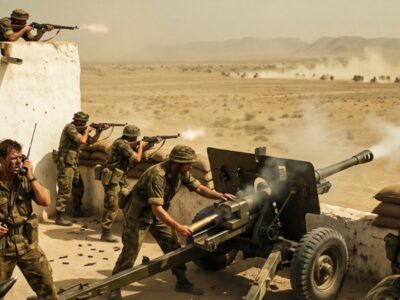
D Squadron’s GPMG teams were allocated to fire support positions covering the garrison perimeter throughout the raid. The naval gunfire support arrangement with HMS Glamorgan was confirmed. The ship’s 4.5-in gun would be on call throughout the operation targeting the garrison position from the moment H hour began.
A Royal Artillery NGS officer would accompany the main body to call the gun. The first attempt to launch on the night of May 14th to 15th was aborted when the weather fell below the minimum for seeking helicopter operations. The squadron stood down and waited. One trooper fully kitted with his demolition load lay down on the helicopter deck and was asleep in 5 minutes.
He had done everything preparation required. There was nothing left to do except wait for the weather. Delves used the delay to run one more planning iteration on the demolition team allocations. The brief he delivered the following night was 15 minutes shorter than the original and more precisely indexed to Hamilton’s confirmed aircraft positions.
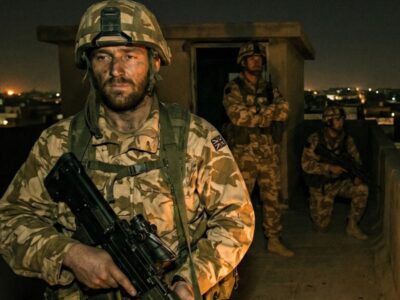
He later described the weather aboard as the best accident of the planning phase. The extra time had made the plan tighter. On the evening of May 15th, the weather was overcast but within limits. Three Sea Kings lifted from HMS Hermes at 2300 hours. The landing zone was 4 miles west of the strip on open peat bog on the island’s western approach, far enough from the Argentine garrison and the strip to allow the patrol to move into position without detection.
45 men loaded with demolition charges, GPMG’s, ammunition, and personal equipment, each carrying between 70 and 90 pounds, stepped off the Sea Kings and immediately sank into Falklands peat. The 4-mile approach on foot was planned at 60 to 70 minutes. It took 90. The peat was ankle deep in places, knee deep in the low-lying ground between the ridgelines.
Every step forward required pulling the previous foot up and forward against the suction. Men loaded with 80 pounds were calf deep by the halfway point. Progress was measured not in strides but in the aggregate effort of 45 men moving through terrain that resisted every footfall. The silence discipline was maintained throughout.
No voices, no unnecessary radio traffic. A corporal whose boot had been filling with water from the first stream crossing tied it again at the halfway point without breaking pace and said nothing to the man behind him. Hamilton’s mountain troop led the advance element. The main body followed in a loose extended column, each man tracking the man in front by sound as much as sight in the overcast pre-dawn.
Approximately 300 m from the Argentine settlement on the island’s northern edge, the patrol road passed within range of a sentry patrol that was moving along the perimeter at that moment. The D Squadron column passed the sentry’s blind side by 180 m and 4 minutes. The Argentine sentry completed his patrol circuit and returned to his post unaware that anything had passed him in the dark.
The D Squadron column reached the start line at the western edge of the strip at 06:48 hours, 8 minutes later than planned. The 30-minute window had become 22 minutes. Delves reviewed the situation in 4 seconds and authorized the raid to proceed. The revised demolition sequence that the weather delay had produced was tighter. It could run in 22 minutes if the teams moved at the pace Hamilton had calculated from his on-ground confirmation of the aircraft spacing.
In the gray pre-dawn, 11 Argentine aircraft were visible on the strip from the start line position. They had been there undisturbed since before midnight. They were about to stop being aircraft. Mountain Troop moved onto the strip at 06:48. The demolition team split immediately to their allocated positions.
Moving to their assigned aircraft at a fast walk, the GPMG teams deployed to their fire support positions along the northern edge of the strip covering the 400-m gap between the aircraft and the Argentine garrison buildings. The NGS officer raised HMS Glamorgan on the naval gunfire net and called H hour. Glamorgan opened fire at 06:48.
The first shells landed on the garrison perimeter. The noise of the 4.5-in gun a heavy naval gun firing at a range of approximately 11 km was enormous against the quiet of the Falklands pre-dawn and suppressed the garrison’s ability to react coherently in the first critical minutes. The demolition teams reached their first aircraft within 2 minutes of stepping onto the strip.
The Pucarás were in a line on the northern side. The Aermacchis were clustered at the southern end. The Skyvan was parked separately near the eastern terminus. Each team moved to their first aircraft, placed their charges against the fuel tanks, set the time fuses, and moved to the next aircraft in their allocation. In the first 8 minutes, six aircraft had charges placed and detonating.
At 14 minutes, the ammunition dump to the northeast of the strip detonated. No one had planned to destroy the ammunition dump. A secondary fire from a burning Pucará had cooked off the mortar rounds stored too close to the strip’s edge. The explosion was large. It threw up a fireball that lit the strip in orange light and suppressed the Argentine garrison for 3 minutes as the blast hit the garrison perimeter.
D Squadron was now visible on a lit strip, which was not ideal. It was also operating under less fire than it would have faced without the explosion, which was an acceptable trade-off. The first Argentine small arms fire had started at approximately 4 minutes after H hour. The GPMG teams were working their assigned arcs.
Glamorgan continued firing. The demolition teams continued to their remaining aircraft without breaking the sequence. The last five aircraft were at the northern and eastern ends of the strip. The teams working them were doing so under increasing small arms fire from two Argentine machine gun positions that had established effective arcs across the strip’s northern half.
The fire was not accurate. The GPMG teams and Glamorgan’s continued shelling were degrading the garrison’s ability to aim and maintain sustained fire. But it was present and getting closer as the Argentine defenders orientated on the fires and the visible movement of the demolition teams. The illumination from the burning aircraft and the ammunition dump explosion worked both ways.
It helped the demolition team see their targets, and it helped the Argentine machine gunners see the demolition teams. At 26 minutes from H hour, a trooper working on the final Pucará in the northern group took shrapnel fragments from a burning aircraft secondary explosion 20 m away, both legs. The fragments were small and the wounds were painful and bleeding, but not incapacitating.
He told his partner he could walk and continued with the charge placement on his assigned aircraft. All 11 aircraft received charges. All 11 detonated. The Skyvan at the eastern end of the strip was last. The two-man team assigned to it had the longest run from the start line and were working at the far end of the strip under the least Glamorgan fire support, but they had reached it on Hamilton’s revised timing and set the charge and fuse and cleared.
The troop commander’s confirmation reached Elves at 34 minutes from H hour. All 11 complete. 4 minutes over the revised 30-minute plan. The LZ call went out to the Sea Kings immediately. Behind the D Squadron teams as they consolidated and moved west toward the LZ. 11 aircraft and one ammunition dump were burning simultaneously across the full length of the grass strip.
The Argentine machine gun positions were still firing into the area where the movement had been, but the movement was already gone and the garrison could not see through its own fires and secondary explosions to identify where the force had gone. The WIA trooper’s partner asked if he could walk the full distance to the LZ. He said, “Faster than you.
” He walked every meter of the distance without assistance and did not slow the element. The three Sea Kings arrived at the extraction LZ at 07:29, 4 minutes after the LZ call. D Squadron had been consolidating at the LZ position for 3 minutes when the helicopters arrived. The loading sequence took under 3 minutes.
45 men, one wounded trooper, all weapons and demolition equipment. No man left behind. No equipment abandoned. The LZ received sporadic small arms fire during the loading. Two RPG rounds were fired in the direction of the helicopters, both detonating wide, 130 m from the nearest Sea King as it was lifting. The helicopter took no damage and continued its lift, clearing the settlement roofline heading south and east toward Hermes.
The Argentine 120 mm mortar team that could have been the most dangerous single threat to the extraction had fired its first round at 37 minutes after H hour, 3 minutes after the last demolition charge detonated. They had the correct range. They were 3 minutes too late, and the force they were targeting was in the air and gone.
The Hereford debrief noted this timing as one of the operation’s critical near misses. Had the mortar team acquired their position and opened fire at the 26-minute mark instead of the 37, the extraction sequence would have been conducted under accurate mortar fire with the LZ exposed. They fired when the ammunition dump’s secondary explosion had already confirmed to them where the movement had been centered.
They were 3 minutes too late because it had taken them 3 minutes to identify the correct LZ position through the noise and the fires. The three Sea Kings flew south and east from Pebble Island across the Falkland Sound toward HMS Hermes in the pre-dawn gray. Total elapsed time from H hour to last man airborne, 41 minutes.
Delves in the lead helicopter made his head count confirmation before the flight settled into cruise. All 45 men accounted for. One WIA ambulatory. He said nothing further for the full flight back to Hermes. HMS Glamorgan had fired 115 rounds of 4.5-in naval gunfire and turned south and east to reposition. D Squadron landed on Hermes as the eastern sky began to lighten.
In the operations room, Woodward was waiting. 41 minutes, 11 aircraft, 45 men, one WIA, walking on the way back. A Sea Harrier reconnaissance flight over Pebble Island at dawn on May 15th confirmed what D Squadron already knew. The pilot radioed his battle damage assessment. 11 aircraft all destroyed by fire and explosion.
Airstrip operationally non-functional. Secondary fires still burning at a location northeast of the strip consistent with an ammunition storage area. Glamorgan shell impact craters visible on the perimeter of the settlement. Woodward reviewed the reconnaissance photographs when they came through. The images showed 11 separate fires across the length of the grass strip, the largest being the two fuel-heavy Pucaras that had produced secondary explosions from their fuel tanks, and the ammunition dump fire still producing
occasional secondary detonations as late as 0900. The craters in the strip surface were from demolition charges, not from bombs. The characteristic shape and spacing of ground charges rather than aerial munitions. Woodward wrote a single line in the operations record. No further threat from Pebble Island.
In Buenos Aires, the Argentine command structure received the garrison’s initial report and processed it with difficulty. The initial Argentine signal reported the airfield destroyed by British ground forces, estimated strength 100 to 150 men. A subsequent correction revised the estimate down to 40 to 50. The final assessment concluded special forces supported by naval gunfire, no British dead, no abandoned weapons, no prisoner, no evidence of how the force had inserted or extracted.
Argentine command adjusted its threat assessment for all island garrisons across the Falklands. If a British ground force of this size could land at Pebble Island with no warning, it could land anywhere in the island group. The overestimate of British force strength. The Argentine estimate stayed at 100 to 150 men in their intelligence picture for weeks, never correcting to the actual figure of 45, tied down garrison reinforcements at secondary positions across the islands rather than concentrating them at Stanley where they might have mattered most.
45 men produced a threat multiplier that corresponded to an estimated force more than three times their actual strength. Every Argentine planning assumption about what was coming adjusted accordingly. On the morning of May 15th, the Argentine garrison commander at Pebble Island walked the length of the strip.
He stopped at the largest crater, the blast site of the charge on the fuel-heavy Pucara at the northern end where the secondary explosion from the aircraft’s fuel tanks had produced the deepest damage. He looked at the crater’s shape and the blast pattern around it. He had seen bomb craters in training.
He had seen what an air-delivered munition did to the ground below it. This was not that. These craters were smaller, more precise, and distributed evenly across the length of the aircraft positions rather than clustered in the overlapping pattern that reflected a bombing run. He turned to his adjutant. This was done by hand. The adjutant agreed. Yes, sir.
The garrison commander looked down the strip at the 11 separate fire sites still producing smoke in the morning wind and asked how many men that would have required. No one had a reliable answer. The initial count had come from an attempt to count movement tracks in the peat around the strip perimeter where visibility had been poor in the pre-dawn and the GPMG teams fire positions had left evidence of multiple individuals.
The garrison had no framework in its contingency planning for a 45-man ground assault on a defended airstrip supported by a naval gun. That combination, special forces insertion by night, ground demolition of all aircraft in sequence, naval fire support suppressing the garrison throughout, organized helicopter extraction, was not in the threat assessment the garrison had been given when they deployed to Pebble Island.
The garrison’s prepared defenses had been oriented against air attack and naval bombardment. Nobody had briefed them on a ground force arriving on foot in the dark and laying demolition charges on every aircraft before the garrison could respond effectively. The Argentine high command’s response was to raise alert states across the island garrisons.
Manpower that had been concentrated at or moving toward Stanley was diverted to secondary positions. The overestimate of the raiding force amplified the strategic effect considerably. Argentine planning assumptions about the scale of what was coming adjusted accordingly. The done-by-hand observation stayed with the garrison commander.
How many? Nobody knew the right answer. That was exactly the point. Six days after the Pebble Island raid, Operation Sutton began at San Carlos Water in the pre-dawn of May 21st. The British amphibious landing force crossed the San Carlos beaches on schedule contested by Argentine air attack from mainland-based aircraft flying north over West Falkland and east over the sound.
The Argentine Air Force’s attack profiles were directed from the north and northeast, the directions from which mainland based Skyhawks and Daggers and Mirages could reach San Carlos and still get home with a margin of fuel. From the northwest where the Pebble Island Pucaras had been based, there were no attacks.
A Welsh Guards officer watching the landings from his ship noted the pattern of the Argentine air attacks coming from the north every time. He did not know why the northwest vector was empty. He would not find out for months. The Argentine Air Force did hit ships at San Carlos. Several British vessels were damaged and some were sunk.
The fighting for the beachhead was intense and the Argentine pilots flew with skill and courage through heavy anti-aircraft fire to press their attacks, but the beachhead was established. The landing force got ashore. Post-war analysis of the Argentine air attack on May 21st assessed that the Pucara force at Pebble Island, if intact, would have added an estimated 20 to 40% more attack sorties against the beachhead from a direction where British air cover was thinnest.
The analysis was careful about framing this as a counterfactual. It was impossible to calculate exactly what six Pucaras and four Aermacchis operating from Pebble Island would have achieved against a beach landing that was already heavily contested, but the northwest vector was empty because 45 men had walked 4 miles through peat in the dark and spent 34 minutes on a grass strip 11 days earlier.
The Pucaras that would have attacked from the west were 11 separate fires on reconnaissance photographs taken at dawn on May 15th. The landing went in. The northwest was quiet. The Pebble Island raid entered two separate institutional analyses in the months after the Falklands conflict ended.
At Hereford, the D Squadron debrief produced a detailed operational review. Approach timing, demolition sequencing, the effect of the weather delay on the revised plan, the ammunition dump’s secondary explosion that had not been planned but had contributed to garrison suppression, the WIA extraction, the LZ timing. The review identified the Hamilton recce as the single most critical planning enabler.
The difference between a plan built on an initial estimate of six aircraft and the revised plan built on confirmed intelligence of 11 was the difference between an incomplete raid and a complete one. Without Hamilton’s two nights in the peat, the demolition team allocation would have been wrong and at least two aircraft would likely have survived.
At the RAF Staff College, the post-Falklands air power analysis reviewed the Pebble Island target in its own terms. The review confirmed what the task force operations room had concluded in May. A strike on the strip was not operationally feasible under the conditions that existed in the Falklands in May 1982.
The Roland system, the approach geometry, the Sea Harrier attrition risk, the accuracy limitations of unguided bombs delivered at speed against a small grass strip. All of those factors combined to make the air option unacceptable. The review also noted, without embarrassment, that the ground option had achieved what air power could not.
The recommendation that followed was institutional. Closer integration between special forces and air planning in future maritime operations so that when air power identified a target it could not strike, the ground option was part of the same planning conversation from the start rather than an afterthought when the air option failed.
The Hereford debrief’s final note on the Pebble Island operation was a single sentence. The strip was assessed unbombable. We destroyed it anyway, different tool. The RAF review reached the same conclusion from the opposite direction. The strip was unbombable. It had been destroyed regardless. The tool that destroyed it had been walking through peat and setting charges by hand and was already gone before the garrison understood what had happened.
Two debrief files, same conclusion, different tool. The strip has been grass ever since.