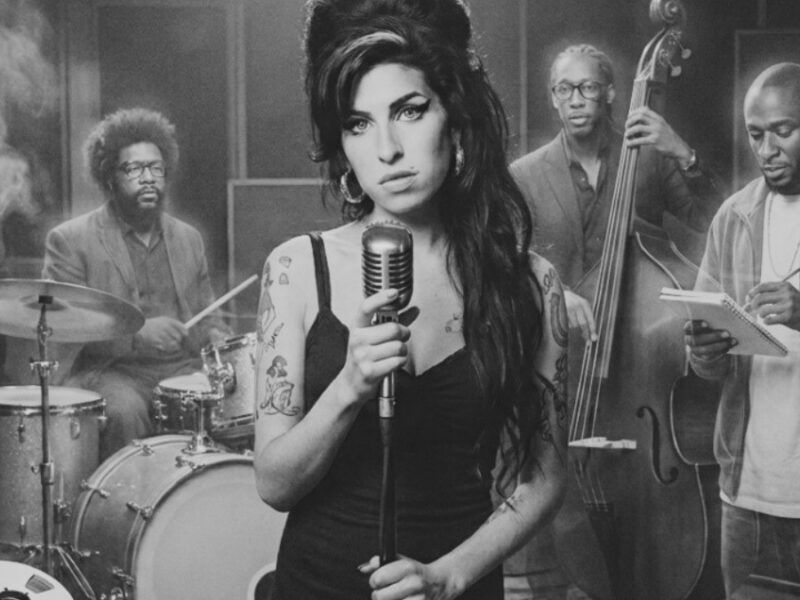
A music executive destroyed Amy Winehouse’s third album in 2015. He called it moral.
In 2015, the CEO of Universal Music stood up and announced that he had personally destroyed every demo Amy Winehouse recorded for her third album. He called it a moral decision. Salaam Remi, who produced those recordings, had already told the world there were 14 finished songs, and he said every single one of them was right there.
But to understand what was lost when David Joseph made that decision, you need to understand what Amy Winehouse was building in the last years of her life. Because the story of the third album is not simply the story of an unfinished record. It is the story of an artist who had figured out exactly what she wanted to do next, who had moved through the wreckage of the years between Back to Black and 2011, and arrived on the other side with a clearer sense of direction than she had possessed since she sat in a chair at Island Records and sang one
song and stopped a room. Back to Black had been made from heartbreak. It had been written in the specific and devastating period after Blake Fielder-Civil left for the first time, when Amy had nothing to do with the feeling except turn it into music. The album was the truest thing she had made precisely because she had not been trying to make anything.
She had been trying to survive something, and the songs were what came out. That was what 30 million people had heard and recognized. Not craft, exactly, though the craft was there. Something raw than craft, the direct transmission of experience into sound. The third album was going to be different.
Success, when it arrives on the scale that Back to Black arrived, does two things to an artist simultaneously. It gives them resources, money, time, the ability to make choices that poverty and obscurity had previously foreclosed, and it gives them permission, the specific and rare permission to follow their instincts without having to justify those instincts to people whose primary interest is in replicating the success they already understand.
Amy had that permission now. She had five Grammys and 30 million records sold and a critical reputation that put her alongside the canonical names of 20th century music. Nobody was going to tell her what the third album should sound like. She could make it sound like whatever she wanted. She wanted it to sound like where she had actually come from.
In the years after Back to Black, Amy had been thinking about where the music could go. She had always been a jazz singer first, the big band records her father played in that house in Southgate, the jazz standards she had been performing in North London clubs since she was a teenager, the harmonic language that ran underneath even the soul and R&B of Back to Black like a current.
She had two albums behind her now. She had five Grammys. She had the credibility and the freedom to do something that the music industry would not have permitted from an unknown, to make a record that was genuinely, uncompromisingly jazz. But not only jazz, because Amy had also spent years listening to hip-hop with the same seriousness she brought to everything else.
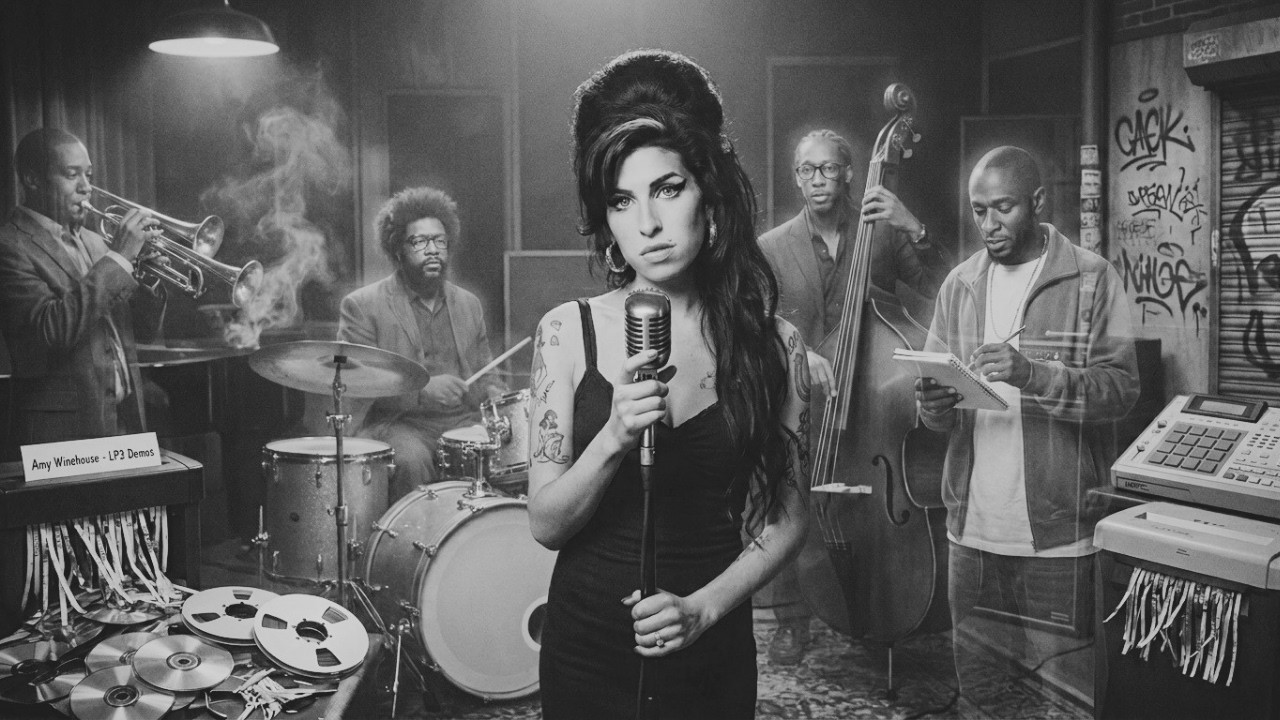
And the idea that had been forming in the years before her death was something that had not quite existed before. A record that moved between those two traditions with the fluency of someone who had grown up inside both of them. Jazz and hip-hop, the blues feeling and the urban rhythm, two American musical traditions that had more in common than people usually acknowledged, brought together by a woman from Southgate who had been carrying both of them since she was a child.
She had a plan for who she wanted to make it with. Before she died, Amy had been in conversation with Questlove, the drummer and producer for The Roots, one of the most musically serious figures in hip-hop, a man whose understanding of the relationship between jazz and hip-hop ran as deep as anyone’s in contemporary music.
She had also been talking to Raphael Saadiq, the soul and R&B producer whose work had the same kind of historical awareness that hers did, the sense of making music that knew where it came and Mos Def, the rapper and actor whose musical intelligence had always operated at a level that transcended genre. The plan was a supergroup, not a collaboration, not a feature, not the kind of project where a famous name appears on someone else’s record for a song or two, a genuine creative partnership, four people making
something together that none of them could make alone. It never happened. The conversations remained conversations. The schedules never aligned. The particular alchemy that produces a genuine collaboration, where the right people are available at the right time in the right frame of mind, did not occur before the time ran out.
But what those conversations represented was significant, independent of whether they ever produced music. They represented Amy’s understanding of where her work was pointing. She was not trying to consolidate Back to Black or make a record that would replicate its success. She was trying to go somewhere new, somewhere that would have surprised people who thought they knew what Amy Winehouse was.
The timing never aligned in the way that was needed, and then there was no more time. But the intention was real, and the people who were part of those conversations spoke about them afterward with the specific grief of someone who has been close to something extraordinary and has watched it not quite happen.
What did happen in the period between Back to Black and her death was the writing. Salaam Remi had been Amy’s producer and collaborator since before Frank, since the Miami sessions in early 2002, when they had ridden around in a rented convertible and found between them the outlines of what the music could be.
He had produced most of Frank and significant portions of Back to Black. He understood how Amy worked, understood what her writing process looked like, understood the difference between a sketch and something finished. When he spoke about the third album after her death, he did not speak the way people speak about fragments or promising beginnings.
He spoke the way people speak about something complete. He said she probably finished the writing process a few weeks before she passed. He said as far as he could see, they had 14 songs. He said whatever needed to happen, it was right there. 14 songs, written, ready. [clears throat] The third album that would have followed Back to Black, that would have introduced a version of Amy Winehouse that the world had not yet heard, the jazz singer and the hip-hop collaborator and the artist who had survived the worst years and come through them with
something new to say, was in the weeks before her death, essentially complete. Then Amy died and four years later, David Joseph destroyed the recordings. Joseph was the chairman and CEO of Universal Music UK, the parent of Island Records, the label that had signed Amy in 2002 and released both of her albums.
He announced his decision in 2015 in connection with the release of Asif Kapadia’s documentary. He was asked about the possibility of posthumous releases, about the demos and recordings that existed, about whether the world would ever hear what Amy had been working on, and he said, “No.” He said he had personally destroyed every demo recording to prevent anyone from releasing them posthumously.
He said it was a moral thing. He said taking a stem or a vocal was not something that would ever happen on his watch and that it now could not happen on anyone else’s. >> The music industry has a long and complicated relationship with the posthumous releases of dead artists. Tupac Shakur had released seven studio albums since his death in 1996.
Michael Jackson’s estate had continued to release new material for years after his death in 2009. The commercial logic was understood by everyone and so was the artistic problem. The question of whether the artist would have wanted these recordings released, whether they met the standard the artist had set for themselves, whether they represented the person who made them or merely exploited the name.
Joseph’s position was that Amy would not have wanted it, that the recordings were unfinished, that releasing them would be exploitative, that the right thing was to let Back to Black and Frank stand as the complete record of what she had chosen to give the world. The response to Joseph’s announcement was immediate and divided along lines that mapped roughly onto the two different ways of understanding what music is for.
On one side were the people who agreed with him, who believed that an artist’s unfinished work was private, that releasing it without the artist’s consent was a form of violation, that the integrity of Back to Black depended on it remaining the last word. On the other side were the people who believed that music belongs to the people who loved, that an artist of Amy’s significance had a cultural legacy that extended beyond the decisions of a record company executive, that the 14 songs Remy described were not unfinished fragments, but completed
work that the world had a right to hear. The counter-argument was made by the people who had actually been in the room. Remi said it made no sense for songs to be sitting on a hard drive withering away. He said a lot of people through the other things that were happening with Amy personally had not understood that she was at the top of what she did.
He said coming to Miami had always been her escape and her writing process had documented her life, the pain, the loneliness, the humor. He was not describing fragments. He was describing a body of work. Mitch Winehouse, who had initially told journalists it was idiotic to destroy the recordings, later shifted his position during the marketing campaign for Lioness: Hidden Treasures, the posthumous compilation of B-sides and older material that Island had released in December 2011.
Lioness had sold 2.4 million copies and had served the function that Joseph presumably intended. It gave the public something, drew a line under the posthumous release question, and preserved the integrity of Back to Black as the final statement. But Lioness was explicitly not the third album.
Island’s co-president Ted Cockle had said so directly when it was released, that it was not in any way the planned follow-up to Back to Black. It was a collection of things Amy had made. It was not the thing Amy had been making. And then, 3 years after Joseph announced that everything had been destroyed, something surfaced. A composer named Gil Cang posted a track to YouTube called My Own Way.
Cang had co-written it with a collaborator named James McMillan featuring Amy as the vocalist when she was in her late teens, before Frank, before the record deal, before any of it. He said he had recently rediscovered the recording and wanted the world to hear it. He posted it and suddenly the question of what had actually been destroyed and what had merely been declared destroyed became considerably more complicated.
The track was not one of the 14 songs from the third album. It was older, pre-label, from the years when Amy was 19 and being kept as a recording industry secret. But it was Amy’s voice, recognizable immediately, doing what her voice had always done, going somewhere honest, saying something true. People listened to it and experienced the same thing they experienced when they heard Back to Black for the first time.
The specific shock of a voice that sounds like nobody else, that is doing what voices are supposed to do, and that most voices never manage. And its existence raised the question that David Joseph’s announcement had been designed to foreclose. It was older than that, a piece of the prehistory from the years when Amy was being kept as a recording industry secret and performing in backroom pub sets, and nobody outside of a small circle knew her name.
But its existence raised the obvious question: If this had survived, what else had survived? If one composer had kept his copy, what had other producers and collaborators kept? The answer in the years since has been a gradual and intermittent surfacing. Songs on YouTube, recordings shared by people who had been in studios with Amy and had kept what they made together.
A scattered and unofficial archive of a voice that was supposed to have been silenced by a corporate decision made four years after its owner died. Whether the 14 songs from the third album still exists somewhere on a hard drive in Miami, in the possession of someone who was in the room and kept a copy, in a format that could still be listened to, nobody outside of a very small circle knows for certain.
>> [snorts] >> Remi has occasionally posted brief audio clips to social media that suggest the recordings are not entirely gone. He has said nothing definitive. He has said enough to keep the question alive. What is certain is this. In the weeks before Amy Winehouse died, she had written 14 songs for a third album.
She had booked studio time with Salaam Remi and Mark Ronson. She had been planning a supergroup with some of the most musically serious people in contemporary music. She was, by the account of the producer who was closest to the work, right there. The album that would have followed Back to Black, the record made by a woman who had survived the worst years and come through them with something new, who had found her way back to the jazz tradition she had grown up inside and was ready to take it somewhere nobody expected, is
the great missing object of 21st century music. It exists as a shape, an outline, a set of descriptions from people who were near it. It does not exist as something you can hear. There is a particular kind of grief that attaches to things that almost existed. Not the grief of loss exactly. The grief of loss requires something to have been present first.
This is the grief of the almost, which is in some ways harder. The third Amy Winehouse album was written. The songs existed. The people who were going to record them were available and ready. The studio time was booked. It was not a plan or a hope or a sketch. It was, by the account of the person who was closest to it, right there. And now it is not.
The biopic released in 2024 introduced a new generation to Amy’s story, to the beehive and the voice and the impossible talent and the years that consumed it. It brought millions of people to Back to Black for the first time, sent the album back up the charts, reminded the world what it had.
What it could not do was give those new listeners the album that should have followed, the album that would have shown them where she was going rather than where she had been. David Joseph called it the moral thing to do. Salaam Remi called it music that made no sense to leave withering on a hard drive. Somewhere between those two positions is the actual record, 14 songs written a few weeks before the end, every one of them right there.