Amy Winehouse left hospital against doctors’ orders. She had a concert to play for Mandela.
3 days before Amy Winehouse walked onto a stage in Hyde Park in front of 46,000 people, she was in a hospital bed. Her doctors had just told her that if she continued the way she was going, she would need an oxygen mask to breathe. She signed herself out, and what happened on that stage left everyone who was there speechless.
But to understand what that night meant, you need to understand the year that had led to it. Because by the summer of 2008, Amy Winehouse had become two things simultaneously. The most celebrated British musician of her generation and the person that the British press had collectively decided was going to die soon.
Both of those things were true at the same time, and the tension between them had become the defining fact of her public existence. The five Grammys had happened in February. the satellite performance from the London studio, the five envelopes opened in Los Angeles, the moment Tony Bennett had read her name for record of the year while she watched from 3,000 mi away.
All of that had happened 4 months earlier and had established her formally and permanently as one of the most significant artists of her era. Back to Black was still selling. Rehab was still on the radio. The recording academy had made its judgment and the judgment was unambiguous. And simultaneously, her father was telling journalists that her lungs were operating at 70% capacity, that she had an irregular heartbeat, that the chain smoking of crack cocaine.
He said it directly in interviews with the blunt honesty of a man who had decided that softening the language was not helping anyone, had caused damage, that the doctors were now managing rather than reversing, that if she continued, she would eventually need an oxygen mask to breathe, that it would kill her. The European tour had collapsed in November 2007.
The Birmingham concert, the canceled dates, the retreat from public life, all of that was still recent. Amy had entered a period of supervised treatment in early 2008, emerging in the specific way that people emerge from such periods cautiously, incompletely, with the sense that the work was ongoing and the outcome uncertain.
Her management and her father had been trying to keep her schedule manageable. The plan, in so far as there was a plan, was to limit her exposure to the conditions that had made the previous year so destructive. Then came the rock in Rio Lisboa Festival in May. Amy performed despite her father’s attempts to dissuade her. The set was complicated, a late arrival, problems with her voice, but the crowd warmed to her, and she finished, and she was present in a way that had not always been guaranteed.
It was not the performance of someone who had fully recovered. It was the performance of someone who was still fighting and had chosen for that evening to fight on stage rather than off it. A month later, on June 23rd, her publicist issued a correction. Mitch Winehouse had told the press that his daughter had been diagnosed with early stage emphyma.
The publicist said this was not precisely accurate, that she had signs of what could lead to early stage emphyma. The distinction mattered medically and perhaps not at all practically. The signs were there. The damage was documented. The British Lung Foundation, asked to comment, said the condition could be managed with treatment, which was a careful and technically accurate thing to say that did not fully convey what the treatment would require or the alternative looked like.
On June 25th, Amy was admitted to the London Clinic. To understand why that concert mattered in the specific way it mattered, you need to understand something about Nelson Mandela in 2008. He was not simply a famous person celebrating a birthday. He was the living embodiment of something that the 20th century had tried to destroy and failed to destroy.
The idea that a human being could be imprisoned, isolated, deprived of everything except their own convictions and could emerge from that imprisonment not diminished but enlarged. He had been released from Robin Island in 1990 after 27 years. He had become the first democratically elected president of South Africa in 1994.
He had spent the decades since working on the HIV and AIDS crisis that was devastating the continent, on poverty, on the incomplete work of the reconciliation he had spent his imprisonment, believing was possible. He was 90 years old. He had earned every day of it. The 46664 concert, named for Nelson Mandela’s prison number at Robin Island, the number he had carried for 27 years of imprisonment, had been planned for months.
It was to be held in Hyde Park on June 27th, 2 days after her admission. The concert was a benefit for Mandela’s HIV and AIDS awareness organization and it had assembled a lineup that included Annie Lennin, Leona Lewis, Queen, Joan Bayz, Josh Groin, and Will Smith as host. It was the kind of event that existed at the intersection of music and history, an occasion where the person being honored had a moral weight that reframed everything happening around him.
Amy was scheduled to perform. Her management, her father, and her medical team all told her not to go. The arguments were not complicated. She had been admitted to hospital 2 days earlier. Her lungs were compromised. She had been told clearly and recently what the trajectory looked like if she did not change course.
The responsible decision, the decision that everyone around her was making on her behalf if she would allow them to, was to rest, to remain in the clinic, to let the concert happen without her and issue a statement and get better. The London Clinic was not a rehabilitation facility. It was a hospital, the kind of private medical institution where serious conditions got taken seriously, where the clinical picture of what was happening to Amy’s lungs could be assessed with precision and where the findings could be communicated without the softening that
sometimes happened in other contexts. What the doctors found and what they told her during those two days has never been fully disclosed. What is known is that emphyma, even early stage emphyma, even signs of what could become early stage emphyma, is not a condition that reverses itself. It is progressive.
The lungs do not regenerate. What is damaged stays damaged. The 70% capacity that Mitch had spoken about publicly was the starting point for a trajectory that went in one direction. She knew all of this. She was not a person who did not understand what was being told to her. She signed herself out of the London clinic on June 26th.
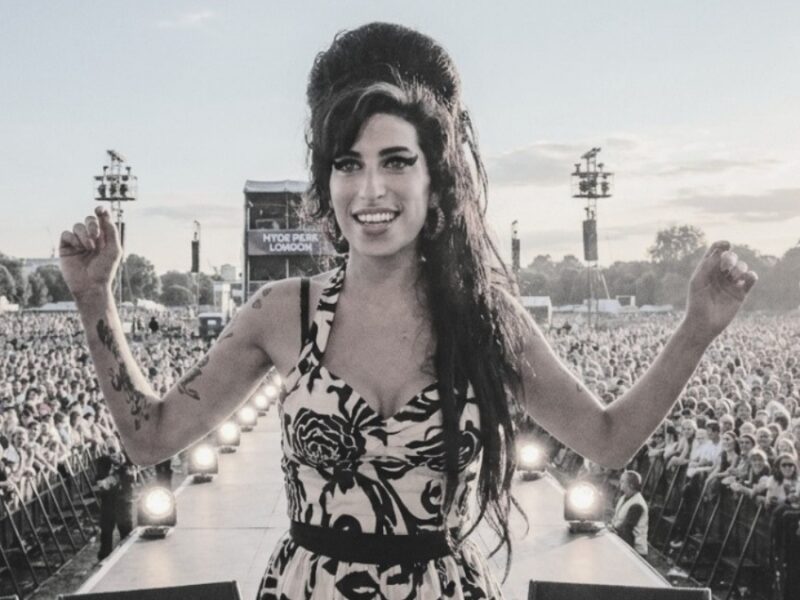
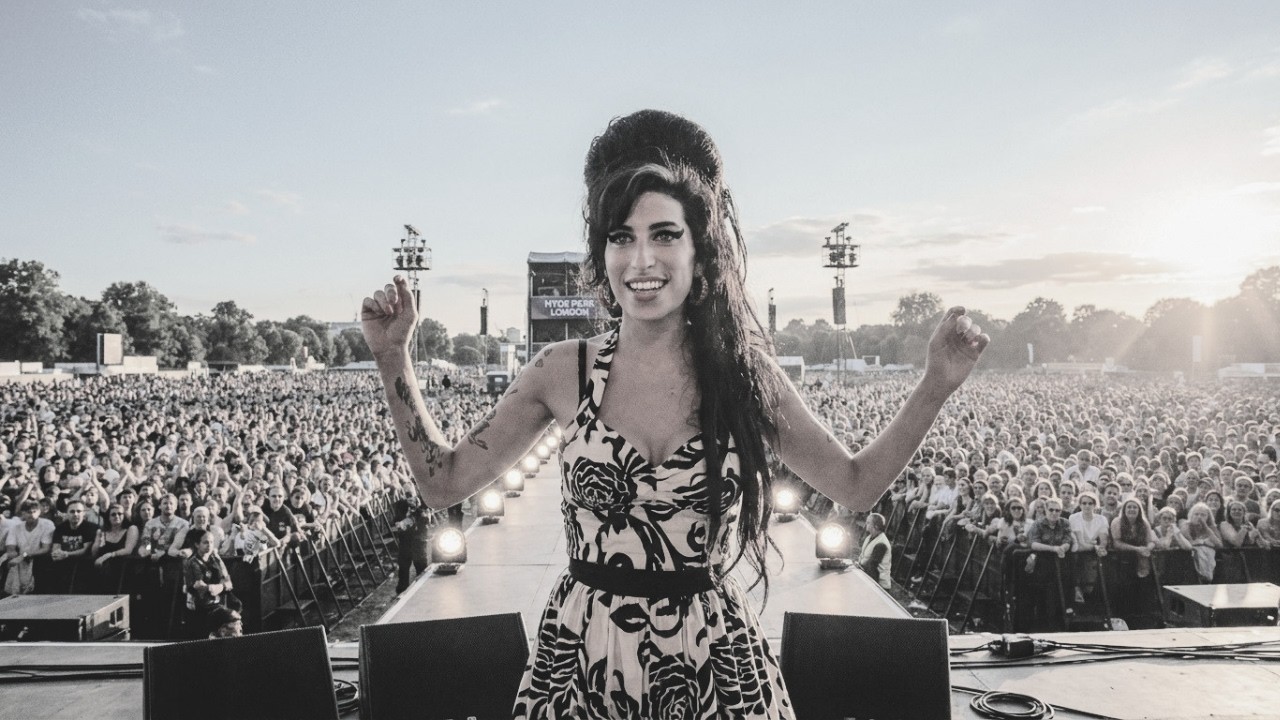
She went home and she prepared. And on the evening of June 27th, 2008, Amy Winehouse walked onto the Hyde Park stage in a black and cream dress with her beehive perfect and her eyeliner precise and sang to 46,000 people. The crowd did not know what it had cost her to get there. They did not know about the hospital admission or the doctor’s warnings or the oxygen mask that had been raised as a possibility.
What they knew was that she had been absent, that her appearances had become unreliable, that the woman who had made back to black seemed to be disappearing inside her own story. And then she walked out and opened her mouth. And the voice was there, not diminished, not compromised, not the voice of someone performing through illness, the voice that had made critics reach for Billy Holiday as the nearest comparison.
That voice she performed rehab first. There is something specifically painful about watching that footage now. A song written about refusing to go to rehabilitation performed by a woman who had just checked herself out of a clinic to be there in front of 46,000 people who were cheering the refusal. The irony was not simple. It never had been.
Rehab was not a celebration of self-destruction. It was an honest account of what it felt like to be told you had a problem and to believe in the moment that the problem was not as serious as the people around you were making it. Amy had written it from inside that feeling. She was still living inside it.
Valerie followed the Mark Ronson collaboration that had become one of the most joyful things in her catalog. the song that seemed to contain a different version of her than the one the tabloids photographed when she sang Valerie. She was not the woman in crisis. She was the woman who had taught herself guitar at 13 and performed in jazz clubs before she was old enough to drink in them and made people feel something every time she opened her mouth.
That woman was fully present in Hyde Park on the night of June 27th. In the crowd were people who’d bought their tickets months earlier and had spent the intervening period reading newspaper reports about Amy Winehouse that made her attendance uncertain. Gordon Brown, the prime minister, was there.
Kate Middleton was there in the years before she became what she would become. There were dignitaries and celebrities and 50,000 ordinary people on picnic blankets in one of London’s great parks on a summer evening, and many of them had looked at the lineup and wondered privately whether Amy Winehouse would actually show up. She had shown up.
She had come from a hospital bed and she had shown up. And for the people who had wondered that fact alone, before the first note, before rehab, before anything was something. And then at the end, something happened that had not been planned. Amy walked back onto the stage. She had already done her set. The show was moving on. And she came back out and stood at the microphone and looked at the crowd and at the man she had come here to honor, Nelson Mandela. 90 years old in 3 weeks.
The person who had spent 27 years in a prison cell on Robin Island and had emerged not with bitterness but with the specific and extraordinary conviction that reconciliation was possible. And she sang Free Nelson Mandela. The song had been written in 1984 by Jerry Dammers of the Specials as a protest anthem at a time when Mandela was still imprisoned and his release was not guaranteed.
It had been one of the soundtracks of a movement. And now here was Amy Winehouse standing 10 ft from the man the song had been written for, singing it back to him with 46,000 people joining her and Mandela himself standing on that stage and the particular electricity of a moment that nobody had scripted and that could not have been planned because the conditions that produced it, the history, the man, the woman, the song, the night had only ever existed. existed once.
The crowd lost their minds. Not in the way that crowds lose their minds at rock concerts with the anarctic energy of collective excitement. In a different way, in the way that happens when something is happening that everyone present understands to be real and significant and unlikely to be repeated. People were crying.
People who had come to hear live music on a Friday night in a park were standing in 46,000 people crying because a 24year-old woman with emphyma had checked herself out of a hospital to stand on a stage and sing a freedom song to the man it had been written for. Mandela spoke briefly from the stage. He said that tonight we stand before you free.
He said their work was far from complete. He was 90 years old and he had spent more than a quarter of his life in a cell and he was standing in Hyde Park in the summer evening being serenated by tens of thousands of people who had come because of what he represented because of what it was possible for a human being to endure and survive and remain on the other side intact.
Amy watched him from the wings. People who were there that night described her expression as something they had difficulty putting into words. Not joy exactly, not the performance of emotion for the benefit of the cameras, something quieter than that. The expression of someone who was for a moment outside the story she had been trapped inside, outside the tabloids and the canceled tours and the doctor’s warnings, and was simply present for something that mattered.
She went back to the London clinic the next morning. She was discharged as an outpatient and continued receiving treatment through the summer. The Glastonbury set the following day she had performed there too the morning after Hyde Park back on a stage less than 12 hours later was by various accounts looser and more variable than the Hyde Park performance.
But Hyde Park had been what it had been. Mitch Winehouse, who had tried to stop her from going, who had spent months watching his daughter navigate the distance between what she was capable of and what she was doing to herself, said something afterward that stayed with the people who heard it.
He said he had been angry when she signed herself out. He said he had told her not to go. And then he said that when she walked out on that stage, he had understood why she had gone anyway. Because this was what Amy Winehouse was, not the tabloid story, not the cancelled concerts, not the woman disappearing inside her own damage. She was the voice.
She was the thing that happened when she opened her mouth in front of people who needed to hear something true. She was someone who had been told her lungs were at 70% capacity and had looked at a date in her diary that said Nelson Mandela’s 90th birthday and had made the only calculation she was capable of making. There is a photograph from that night that circulates among Amy Winehouse fans with a frequency that suggests it captures something true.
She is on stage mid song, the Hide Park crowd stretching behind her into the summer evening, her dress catching the stage light, her beehive intact, and her eyes open and her mouth at the microphone. She looks in that photograph exactly like herself. Not the tabloid version, not the person the newspapers had been documenting with such relentless and often cruel attention, but the person who had taught herself guitar at 13, and sung jazz standards in Camden bars, and written back to black from the truest place she had, and been Tony Bennett’s idea of
what singing was supposed to be. She had been in a hospital 2 days before that photograph was taken. She would be back in the hospital the day after. The doctors told her she might need an oxygen mask to breathe. She signed herself out of the clinic. She put on a black and cream dress and did her hair and walked out in front of 46,000 people and sang like nothing in the world was wrong.
And for those few minutes on that stage, nothing