Amy Winehouse was shaking in the studio. Tony Bennett said 4 words — and everything changed.
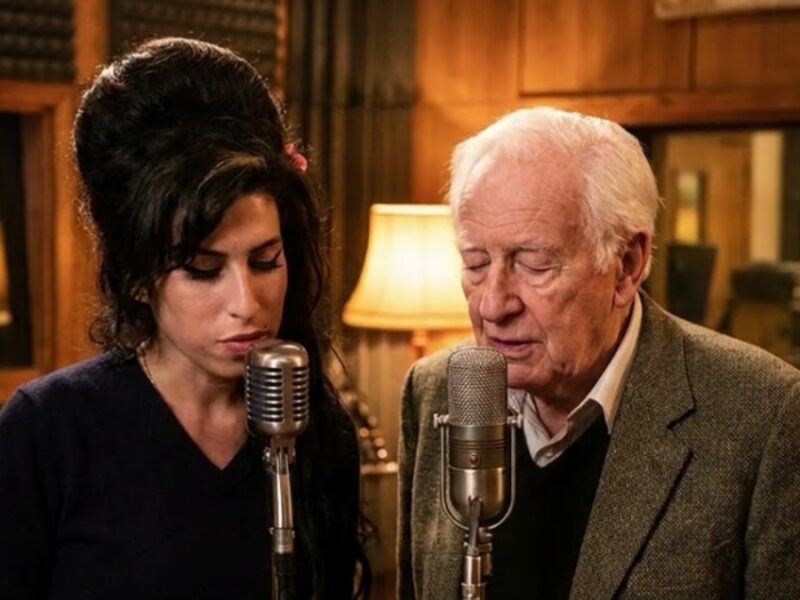
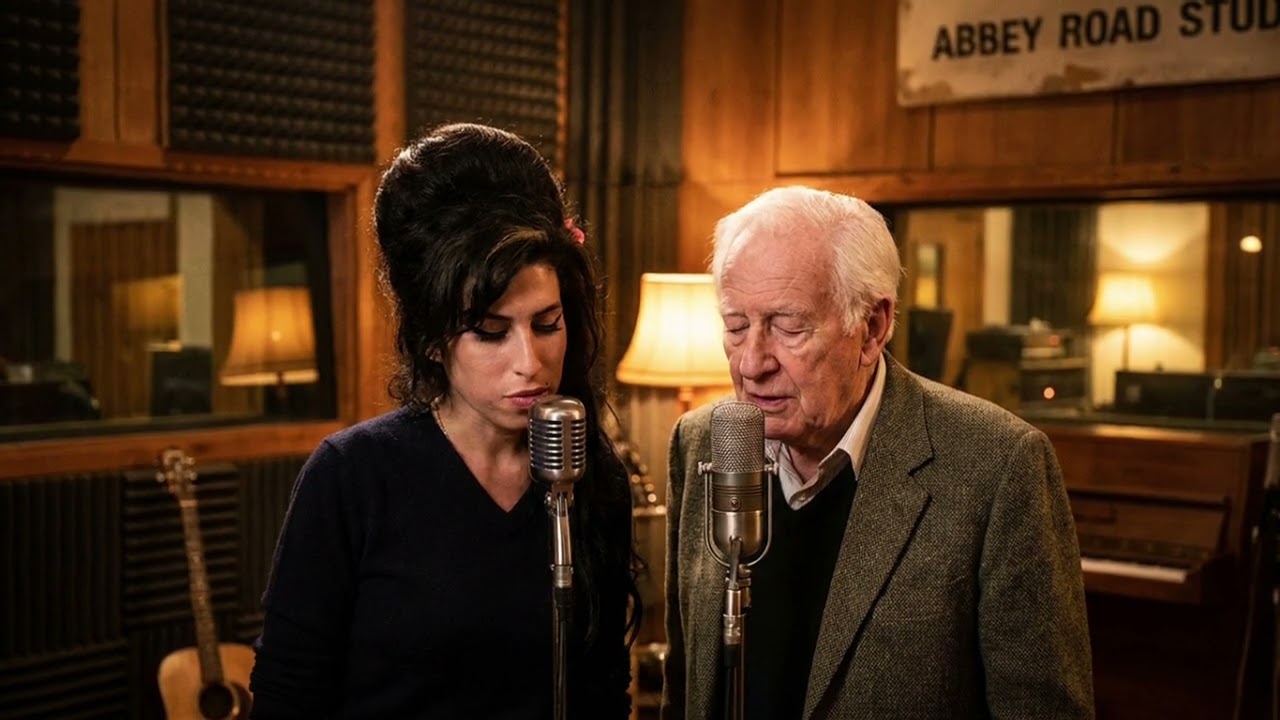
Amy Winehouse walked into Abbey Road Studios shaking. She was so nervous she kept apologizing and asking if she was wasting his time. Then Tony Bennett said four words and her whole life changed. It was the last recording session she ever had. But to understand what happened in that studio in March 2011, you need to understand what Abbey Road meant to Amy Winehouse.
Not as a landmark, not as the place where The Beatles had made their most famous albums, but as something more personal than that. Abbey Road was where serious music got made. It was where the records that had shaped her childhood had been recorded, where the tradition she had grown up inside, the jazz and the soul and the big band standards her father had played in that house in Southgate, had found its most permanent form.
Walking into Abbey Road was not for Amy like walking into a famous building. It was like walking into the place where everything she had ever loved about music had originally happened. And she was walking in to meet Tony Bennett. Tony Bennett in 2011 was 85 years old and had been one of the defining voices of American music for six decades.
He had recorded with everyone. He had survived everything. The shifting tides of popular taste, the years when the music industry had tried to make him someone he was not, the personal struggles that he had eventually found his way through. He was, by the time Amy Winehouse was born, already a living monument.
His voice was what remained when everything inessential had been stripped away. No affectation, no performance, just the direct transmission of feeling from one human being to another. That was what Tony Bennett did. That was what he had always done. It was also precisely what Amy Winehouse did. This is a fact that got buried under the larger story, under the beehive and the tabloids and the five Grammys and the canceled tours.
Amy Winehouse was, before she was any of those things, a jazz singer. Not someone who had been trained in jazz or who had adopted it as an aesthetic. Someone for whom jazz was the native language, the grammar she had absorbed before she had words for it, in her father’s house in Southgate, listening to Sinatra and Tony Bennett and the big band records that Mitch played as though they were still new.
Frank, her debut album, had been named for Frank Sinatra. It was rooted in the minor seventh chords and chromatic voicings of 1930s and 1940s jazz in a way that had startled critics who had not expected that from a 20-year-old from North London. Back to Black had moved further towards soul and R&B, toward the Motown and girl group sounds of the early 1960s, but the jazz was still underneath it, still the thing that gave her phrasing its particular quality.
Before she died, she had been planning a jazz supergroup. The third album, had it ever been made, was going to go somewhere nobody expected. She had known this about herself for a long time. She had known from the jazz clubs she had started performing in as a teenager, from the records she had taught herself to play along with, from the way her own voice felt when it was doing what it was supposed to do, that she was not a pop singer who had wandered into jazz.
She was a jazz singer who had somehow become a pop star. The two albums, the five Grammys, the 30 million records sold, all of it had happened because Back to Black had found the exact intersection between her specific musical inheritance and the emotional landscape of her own life. But the music she loved most, the music she would have made if the world had intervened and turned her into something else was the music that Tony Bennett had been making before she was born.
She had told people this. She had said it in interviews, said it to her father, said it in the quiet direct way that she said things that were true. In 2008, when Tony Bennett had stood at the Grammy podium in Los Angeles and read her name from an envelope, she was not in the room to receive. Something had happened in the London studio where she was watching that went beyond the ordinary excitement of winning an award.
She had turned to the people around her and said she had not been excited about the Grammy. She had been excited about Tony Bennett announcing it. He heard about that comment years later. It surprised him, genuinely surprised him, in the way that things surprise people who have spent so long inside their own stature that they have partly forgotten the effect it has on others.
The connection between them had a specific history. In 2008, when Amy had won five Grammys in a single night and had been unable to travel to Los Angeles, it had been Tony Bennett who had stood at the podium and read her name for record of the year. She had watched from a studio in London at 2:00 in the morning and cried, not just because of the award, but because of who was saying it.
She told him this backstage at the Royal Albert Hall when he came to London and she arrived with her father and her boyfriend. She said she had not been excited about the Grammy. She had been excited about Tony Bennett announcing it. He said he was surprised because she was so young. He did not yet fully understand what he meant to her, what that tradition, that lineage, that specific and serious way of treating music meant to someone who had grown up inside it.
He had been aware of Amy Winehouse, had been aware of Back to Black and what it represented, had recognized in her the quality that he had spent 60 years trying to describe to people who asked him what great singing was. He called it the right way. Not showing off, not using technology to compensate for things the voice could not do on its own, not performing emotion, but actually feeling it and letting that feeling go directly into the microphone.
When he heard Amy Winehouse, he thought, “This one has got it.” In March 2011, he invited her to Abbey Road. He was recording Duets II, an album of collaborations with artists he admired, the sequel to a project that had reconnected him with a new generation of listeners who had grown up without knowing who Tony Bennett was.
The song he wanted to record with Amy was Body and Soul, a jazz standard from 1930 that had been recorded by virtually every significant voice in the history of the music, from Billie Holiday to Coleman Hawkins to Louis Armstrong. It was one of Amy’s favorite songs. It is a song about loving someone completely and without condition, about giving everything you have to a feeling that may not be returned, about the specific vulnerability of someone who has decided to stop protecting themselves.
The lyrics, written in 1930, sound like they could have been written by someone who had just listened to Back to Black. “My life, a hell you’re making. I can’t give more than this. Is there something I am taking? Why can’t I have the kiss?” It was not a coincidence that Bennett chose it.
He knew what the song was about. He knew what Amy’s music was about. He chose it because it was the song that would arouse her to be most completely herself. In March 2011, he invited her to Abbey Road. Amy arrived at Abbey Road in a state that nobody present that day had quite anticipated. She was sober. She was professional. She was also, by the account of everyone who was there, visibly terrified.
The stories about her in those years, the canceled tours, the tabloid photographs, the Belgrade concert 4 months earlier, had created an expectation in many people’s minds of someone who arrived at professional engagements in chaos. The Amy Winehouse who walked into Abbey Road that morning was not that person. She was a 27-year-old woman who was about to sing alongside one of her genuine heroes, and the fear she felt was not the fear of someone who did not know what they were doing.
It was the fear of someone who cared enormously about doing it right. She kept apologizing between takes, between verses, when a run did not come out the way she wanted it to, she would stop and say she was sorry. She asked Bennett if she was wasting his time. She said she had not recorded for a long time, which was her only reference, the one small acknowledgement of everything the years had contained, offered not as an excuse, but as an explanation.
She wanted him to understand why it was taking her longer than it should have. Bennett understood something different. He had been in enough studios with enough singers to know the difference between someone who was struggling and someone who was reaching. Amy was reaching. The nervousness was not incompetence.
It was the nervousness of someone who was not willing to settle for a take that was merely good when the song deserved something better. It was the same nervousness he recognized that he had felt himself in studios 60 years earlier, when the music had still been capable of frightening him because it still mattered enough to be frightening.
He watched her, and he thought about what to say. And then he said it. Not four complicated words, not a piece of professional advice or a technical observation about her technique. He looked at her, and he said, “You sound like Dinah Washington.” Dinah Washington had been one of the great voices of the mid-20th century, a singer whose range moved between jazz and blues and gospel with a fluency that made the category seem beside the point, whose emotional directness was so complete that every song she sang sounded like the only honest account of
the feeling it described. She had died in 1963 at the age of 39. She was one of the singers Amy had loved for as long as she could remember, one of the voices that had come to her through her father’s records and taken root somewhere permanent. Tony Bennett said four words, and Amy Winehouse’s whole body changed.
She did a Dinah Washington run, a specific, deliberate, joyful tribute, the kind of thing you only do when someone has just told you that you are who you have always believed yourself to be. And from that moment, the nervousness went somewhere else. She was not a troubled young woman trying not to waste a legend’s time.
She was a jazz singer in a studio with another jazz singer, and they were making music the right way, and she knew it. The footage of that session exists. It was filmed by Oscar-winning cinematographer Dion Beebe as part of a documentary on Bennett, and clips of it have been circulating since Amy’s death. If you have seen it, you know what it looks like when someone finds their way back to themselves.
Her eyes change, her body settles. The voice that comes out in the final takes of Body and Soul is not the voice of someone who is struggling to get through a session. It is the voice of Amy Winehouse at the absolute center of what she was capable of, present, honest, completely herself. At the end of the final take, Bennett hugged her.
He said later that he had not wanted the session to end, that she had reminded him in those few hours at Abbey Road of everything he had believed about music for 60 years. That being in a room with a voice like that was not something that happened often. And that when it happened, you recognized it immediately, and you held on to it for as long as you could.
She played the final take back in the control room and stood there listening to her own voice alongside his. 85 and 27. Six decades apart, the same music, the same tradition, the same refusal to be anything other than what you actually were. She said afterward that she was happy with it.
Not relieved, not grateful that it was over. Happy. The specific happiness of someone who has done something the right way and knows it. Four months later, she was gone. Bennett found out the way most people found out, through the news, on a July morning in 2011, in the brutal way that the news delivers things that cannot be softened. He was devastated in the specific way that people are devastated when they have just spent time with someone and believed on the basis of that time that things were going to be different.
The Amy he had been with in Abbey Road was the Amy he chose to remember. Nervous and then luminous, apologetic and then completely at ease. A 27-year-old woman who had just been told she sounded like Dinah Washington and had responded by sounding exactly like herself. She wrote about the session in his 2016 memoir, and in that memoir, he included something that he had not included in the interviews immediately after her death.
Something that he had been carrying for 5 years that he had finally decided needed to be said. He wrote that he regretted not speaking to her about her struggles. He knew about them. Everyone knew about them. He had chosen not to say anything because it was not his place, because he did not want to intrude, because the professional context of the recording session did not feel like the right space for that conversation.
He had stayed silent and the silence had stayed with him. He wrote the words he wished he had said. He asked in print whether it would have made a difference if someone she considered an idol had looked at her and said, “You are a once-in-a-lifetime talent. Please don’t take that from the world.” He did not know the answer.
He said he would never know, but he needed to ask the question because not asking it was no longer something he could live with. Body and Soul was released on September 14th, 2011, what would have been Amy’s 28th birthday. The proceeds went to the Amy Winehouse Foundation. The song reached the Billboard 100. At the 2012 Grammy Awards, it won Best Traditional Pop Vocal Album, the first Grammy Amy Winehouse received after her death, awarded for the last song she ever recorded, the song she had made with the man whose name on the Grammy
envelope had meant more to her than the Grammy itself. In Abbey Road in March 2011, Tony Bennett said four words and Amy Winehouse’s whole life changed. Not her actual life, that was already moving towards something none of them could stop. But for a few hours in a studio in London with a jazz standard and the man she had loved since she was a child and the voice that had always been the truest thing about her, she was completely who she had always been.
That is what the footage shows. That is what Tony Bennett carried with him for the rest of his life. And that is what Body and Soul sounds like if you listen to it knowing what you now know. It sounds like someone who was found briefly before she was lost.