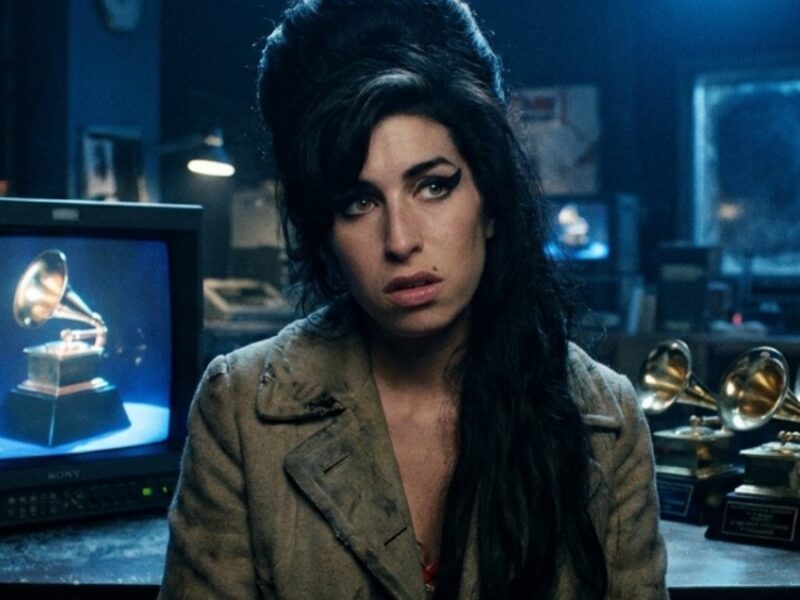
Amy Winehouse won 5 Grammys. One presenter said she shouldn’t have won any of them.
On the night Amy Winehouse won five Grammys, one of the presenters walked off stage and told reporters she should not have won any of them. Her name was Natalie Cole. She had won best new artist herself 33 years earlier while battling the same addiction she was now using to disqualify Amy. The room heard what she said and nobody forgot it.
But to understand what happened on the night of February 10th, 2008, you need to understand the particular atmosphere that surrounded Amy Winehouse before the ceremony even began. Because this was not a normal Grammy night, not a night where the biggest question was which album had performed best and which artist had earned the most recognition.
This was a night where the biggest question was whether the most nominated artist would be allowed into the country at all. This was the 50th anniversary of the Grammy Awards, a milestone that the Recording Academy had been planning around for months, assembling a ceremony that would honor not just the best music of the year, but the institution’s own history.
The show opened with Alicia Keys performing Learn in the Blues alongside black and white footage of Frank Sinatra, a deliberate invocation of the tradition, the lineage, the idea that what the Grammys were doing in 2008 was connected to what popular music had been doing for the half century before. It was the kind of opening that placed everything that followed inside a frame of significance.
This was not just a ceremony. It was a celebration of what the form had been and what it had become. Amy had six nominations. Back to Black had been out for over a year and had done what it had done. Number one in the United Kingdom, a transformative debut in the United States. 30 million records on their way to being sold. Critics exhausting their superlatives and reaching for historical comparisons that only the greatest recordings invited.
The Recording Academy had looked at all of it and decided that Back to Black was the best album of the year. That Rehab was the best record and the best song. That Amy Winehouse was the best new artist. Six nominations across the most prestigious categories in music. An almost unprecedented level of recognition for a British artist.
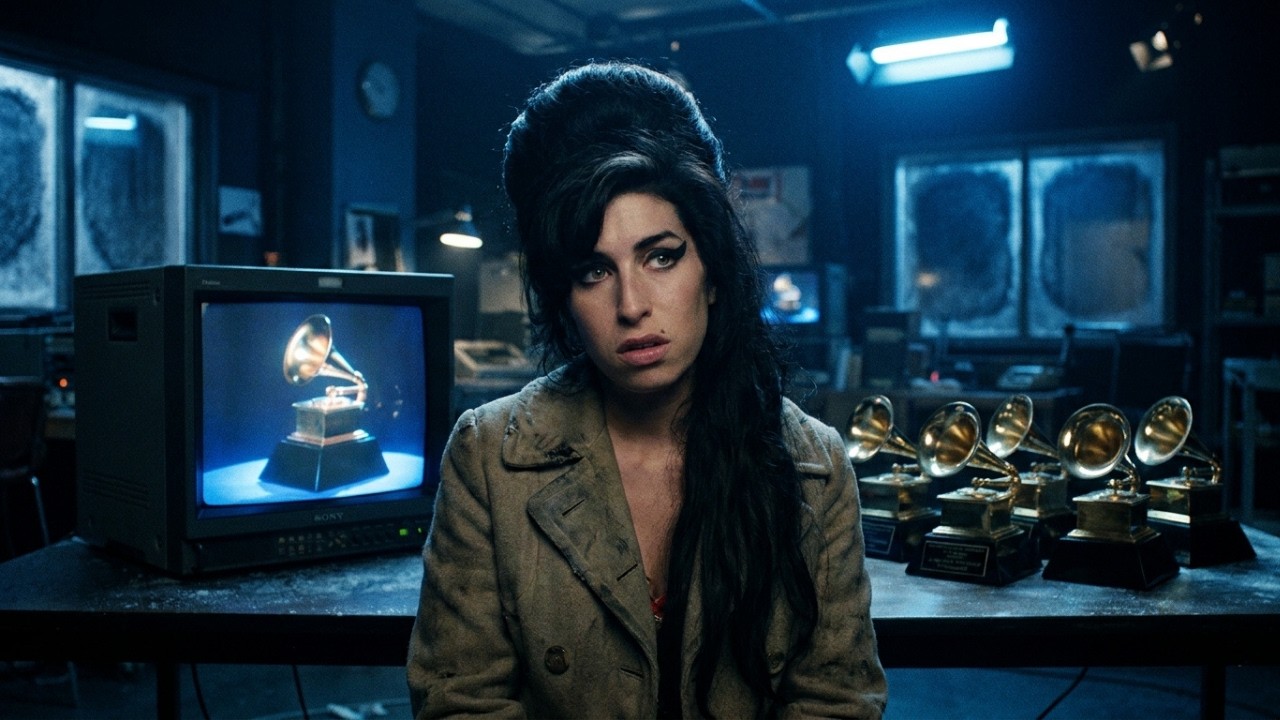
The problem was that the British artist in question had a documented history of drug use, an ongoing relationship with substances that had been photographed and reported and discussed in exhaustive detail by every tabloid in the country, and a Norwegian drug arrest from the previous year that was sitting in her file at the American Embassy in London.
The United States does not issue work visas to people with drug convictions with significant complication. The complication in Amy’s case turned out to be insurmountable. Her visa application was rejected on Thursday, February 7th, 3 days before the ceremony. The timing was specific enough to be cruel, late enough that the rejection felt targeted, early enough that there was technically time to appeal, not enough time to make the appeal work.
Amy’s spokesman issued a statement. She had been progressing well since entering rehabilitation two weeks earlier. She was disappointed but had accepted the ruling. She was concentrating on her recovery. Grammy producers moved immediately. Ken Erlick who had been producing the ceremony for years announced that Amy would perform via satellite from London.
You will see Amy Winehouse on the Grammys. He said he was very happy about it. The satellite arrangement was the backup plan. imperfect, technically complicated, emotionally strange, but viable. Amy would be present without being present. She would perform from Riverside Studios in West London at 3:00 in the morning UK time, beamed across thousands of miles to an arena in Los Angeles where she had never been and was not permitted to go.
Then on Friday, the US government reversed itself. The visa was approved. 24 hours after the rejection, the American Embassy in London had reconsidered, reprocessed, and issued the document that would have allowed Amy Winehouse to board a plane to Los Angeles and accept her awards in person. The reversal was announced without explanation, as the rejection had been announced without explanation.
The machinery of bureaucracy had turned and produced a different result. It was too late. The ceremony was in 2 days. The logistics of a transatlantic journey, the flight time, the jet lag, the rehearsals, the preparation could not be compressed into 48 hours for someone who had been in rehabilitation for 2 weeks and whose physical condition was the subject of ongoing medical management.
The visa existed. Amy did not travel. So, the most nominated artist at the 50th Grammy Awards watched the ceremony from a cold studio in West London at 3:00 in the morning, performed twice via satellite, and accepted five awards through a screen. Inside the Staple Center, The Night had its own separate dramas.
Kanye West had arrived with eight nominations and the weight of a particular grief that the music industry had been watching him carry since November. His mother, Da, had died unexpectedly after elective surgery, and Kanye had been performing since then with the specific intensity of someone for whom the stage had become the only place where the feeling had somewhere to go. He won four Grammys that night.
His performance of Stronger segueed into Hey Mama, the song he had written for his mother years earlier that had since become something different, something heavier. and he stood on that stage in black with mama cut into his hair and sang to a woman who was not there. And the arena went very quiet in the way that arenas go quiet when something real is happening.
In any other year, Kanye would have been the story. Eight nominations, dead mother, electric performance, four Grammys, the kind of night that defined careers. Instead, the story was the person who was not in the room. Amy had been due to perform with Kanye. The visa rejection had made that impossible. Kanye performed alone. The duet that did not happen became one of those hypotheticals music fans would discuss for years.
What those two voices together might have produced, whether the chemistry between the British soul singer and the Chicago rapper might have generated something worth the night it would have required. Beyonce was there. She was nominated for record of the year for Irreplaceable, one of the defining pop songs of the year, a song that had been everywhere for months and that represented exactly the kind of mainstream dominance that the Grammy voters usually rewarded. She performed.
She was present in the arena. She had done everything that the industry required of her. The award went to someone who was performing from a studio in London at 3:00 in the morning. This was the context in which Natalie Cole made her remarks. Cole had been asked to introduce Amy’s satellite performance, a significant role, the kind of task given to someone whose credibility and history with the academy placed them in a position to contextualize what the audience was about to see.
She had introduced Amy with appropriate professionalism, and then after the ceremony, she had spoken to reporters with a directness that her publicist would probably have preferred she saved for a private conversation. She said she felt that Amy should not have won. She was more specific than that. She said the awards should have gone to someone who was in better health, implying that the recognition of an artist who was visibly struggling with addiction sent the wrong message about what the music industry valued. She had won best new
artist herself in 1975. She noted while she was battling her own substance abuse problems, and she suggested that having that recognition handed to her at that particular moment had not helped her, that it had perhaps made the recovery harder rather than easier by suggesting that the industry did not particularly require her to get better.
The argument had a logic to it. Natalie Cole had earned the right to make it through her own experience. She was not a person without standing on the subject of addiction and music and the complicated relationship between the two. And there was a genuine question embedded in what she was saying.
A question about what it meant for an industry to celebrate someone’s work while that person’s life was visibly in crisis. About whether the celebration was a form of care or a form of complicity. What the argument missed, what the response to it pointed out with varying degrees of gentleness was the distinction between Amy Winehouse the person and Back to Black the album.
The album had been made. It existed. It was by the assessment of the people who were paid to assess such things one of the greatest recordings of the decade. The question of whether Amy deserved recognition for it was not a question about her health or her behavior or the state of her liver. It was a question about whether the work was good.
The work was good. The recording academy had answered the question. What Cole’s remarks produced in the days that followed was a conversation that the music industry was not entirely prepared to have about the relationship between personal conduct and artistic merit, about whether an artist’s life choices should affect the recognition of their work, about who gets to decide when someone is too damaged to be celebrated.
It was a conversation without a clean answer. It remains without a clean answer. What it also produced was something more immediate and more personal. Amy’s father, Mitch, who had been in that London studio watching his daughter win five Grammys at 3:00 in the morning, heard what Cole had said and responded with the directness that characterized the Winehouse family’s engagement with public criticism.
He was not gentle about it. The Camden Fire deserves its own moment in this story because of what it meant to Amy specifically. Camden Market had been part of her landscape since childhood. Not a tourist attraction, not a commercial destination, but the furniture of the neighborhood she had grown up in and never left.
She had shopped there, hung around there, existed there in the ordinary way that people exist in the places that form them. When the fire broke out on February 9th, the night before the Grammys, and destroyed a significant portion of the market’s stables and lockup units, it was not an abstract news event.
It was her neighborhood on fire. She was watching from a satellite studio in West London, preparing to perform for an awards ceremony in a country that had initially refused to let her in, and her neighborhood was burning. This is why the line landed the way it landed. This is for London because Camden Town ain’t burning down. It was funny in the way that Amy’s humor was always funny.
Simultaneously a joke and not a joke. A way of saying something true about a specific situation while making it bearable with the wit that had always been one of her most consistent qualities. The neighborhood had burned. It was still there. It was still hers. and so was she. Amy herself did not respond publicly. She was in rehabilitation.
She had five Grammy awards and a Camden neighborhood that had, in fact, burned. The Camden Market fire had broken out 2 days before the ceremony, destroying a significant portion of the market that Amy had grown up shopping in, and that had formed part of the texture of the neighborhood she had never wanted to leave.
When she accepted record of the year and ended her speech with, “This is for London because Camden Town ain’t burning down.” She was making a joke that was also not a joke. The neighborhood was literally on fire and she was thousands of miles away via satellite, unable to go home, watching her awards night from a studio in West London at 3 in the morning.
The satellite performance had been extraordinary. She had sung You Know I’m No Good and Rehab to a packed arena in Los Angeles from a studio in London. And the voice had been present in the way it was always present when she was performing rather than falling apart. The voice that made Tony Bennett think of Dina Washington that had stopped the Island Records boardroom in 2002 that had produced the songs that the five envelopes contained.
Whatever was happening in her life, the voice remained the truest thing about her. There was one more layer to that night that did not receive the attention it deserved at the time. Island Records had been quietly debating in the weeks before the ceremony whether to release Amy from her contract. The president of the label, Nick Gatfield, had told people privately that he was considering it, not as a punishment, not as a commercial decision, but out of something closer to concern, the sense that the industry’s continued investment
in Amy was not helping her and might be making things worse. The Grammys had resolved that question with a definitiveness that no executive meeting could have matched. Five awards, three of the big four categories, a Guinness World Record for most Grammys won by a British female artist in a single night. All of it received from a studio in West London at 3:00 in the morning in her pajamas effectively, while Natalie Cole was telling reporters in Los Angeles that she should not have won any of it.
Amy Winehouse said nothing about Natalie Cole’s remarks. She had five Grammys and a neighborhood that was burning and a visa that had been approved 48 hours too late. She had more important things to think about. Camden Town was not burning down. It had burned and it was still there. And so was she.