Amy Winehouse won 5 Grammys that night — but she wasn’t allowed in the building
In the documentary Amy, there is a few seconds of footage that stops everyone who sees it. Two little girls in a living room in North London performing a rap they wrote themselves, completely committed, completely fearless, completely unaware of what one of them is going to become. One of those girls is Juliet Ashby.
The other one is Amy Winehouse at 10 years old. And once you see it, you understand everything. But to understand what that footage means, you need to start four years earlier. You need to go back to a nursery school in Southgate in 1987 where a 4-year-old girl with dark eyes and a personality that already took up more space than her body did walked in on the first day and found another four-year-old girl who was exactly the same.
Juliet Ashby and Amy Winehouse met at nursery school and recognized each other immediately in the way that certain children recognized certain other children. Not consciously, not with any language for what they are doing, but with the instinct that says, “This one is like me.” They became best friends before either of them knew what a best friend was.
They stayed best friends for the rest of Amy’s life. Juliet’s family was musical in a different way than Amy’s. Her father played electric violin, piano, and guitar. Her mother had taken her to a Stevie Wonder concert when she was 6 weeks old, which is either a beautiful origin story or an explanation for everything that followed, depending on how you look at it.
Music was the furniture of both their childhoods. Not something they went to, but something they lived inside. When they were together, which was most of the time, it was what they talked about and what they did and what they were. There was something else happening in Amy’s house in those years that the music could not entirely cover.
When Amy was nine, her parents divorced. Mitch Winehouse moved out, and the family that had been whole became something different. A mother and two children in a house that was quieter than it had been, and a father who was present, but no longer constant. Amy processed this the way she processed everything.
By feeling it completely, by not pretending it was fine when it was not fine, and by finding in music and in Juliet a place where the feeling could go. The divorce would eventually find its way into her songwriting in the way that everything found its way into her songwriting, not as a subject, but as a texture, a quality of longing and abandonment that ran underneath even the funny songs.
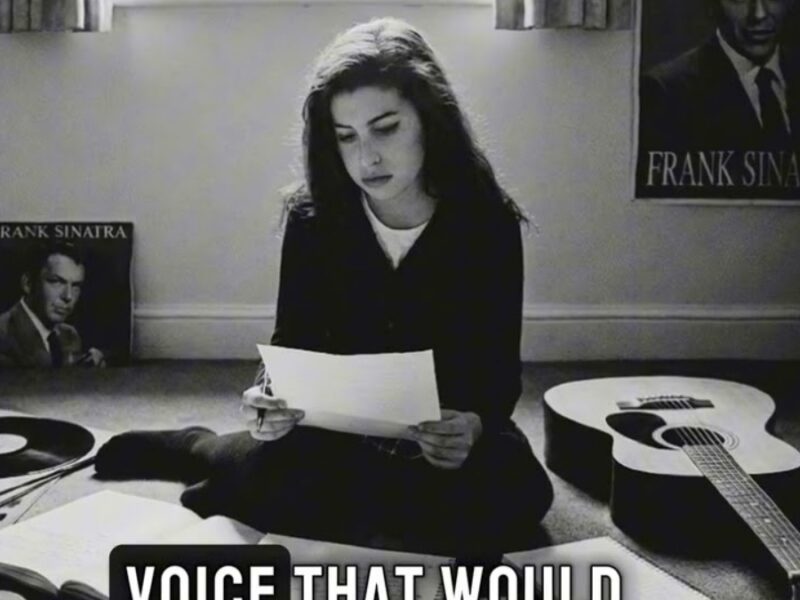
like a current that the listener feels without always being able to name. Amy’s House had Mitch’s jazz records, Sinatra, Tony Bennett, the big band standards that would eventually find their way into Amy’s voice in ways nobody could have planned. But Amy and Juliet were children of the early 1990s, as well as of their parents’ record collections.
And the early 1990s had Salt and Peppa. Salt and Peppa were everything that two 10-year-old girls in North London could want from music. They were funny and confident and completely themselves, and they did not ask permission for any of it. They wrapped about what they wanted to rap about and dressed the way they wanted to dress and occupied their space in the music industry with a cheerful and absolute refusal to be anything other than what they were.
For Amy and Juliet, watching them was not just entertainment. It was instruction. It was a demonstration of something they had not seen demonstrated quite that way before. That you could be a girl and be loud and be unapologetic and make music and it could be extraordinary. So they formed a rap duo. They called it sweet and sour.
Juliet was sweet, Amy was sour, a casting decision that everyone who ever knew Amy Winehouse will recognize as perfectly accurate. They were 10 years old and they were completely serious about it in the way that 10-year-olds are serious about things that matter to them, which is to say more serious than most adults are about most things without any of the self-consciousness that comes later and makes people hold back.
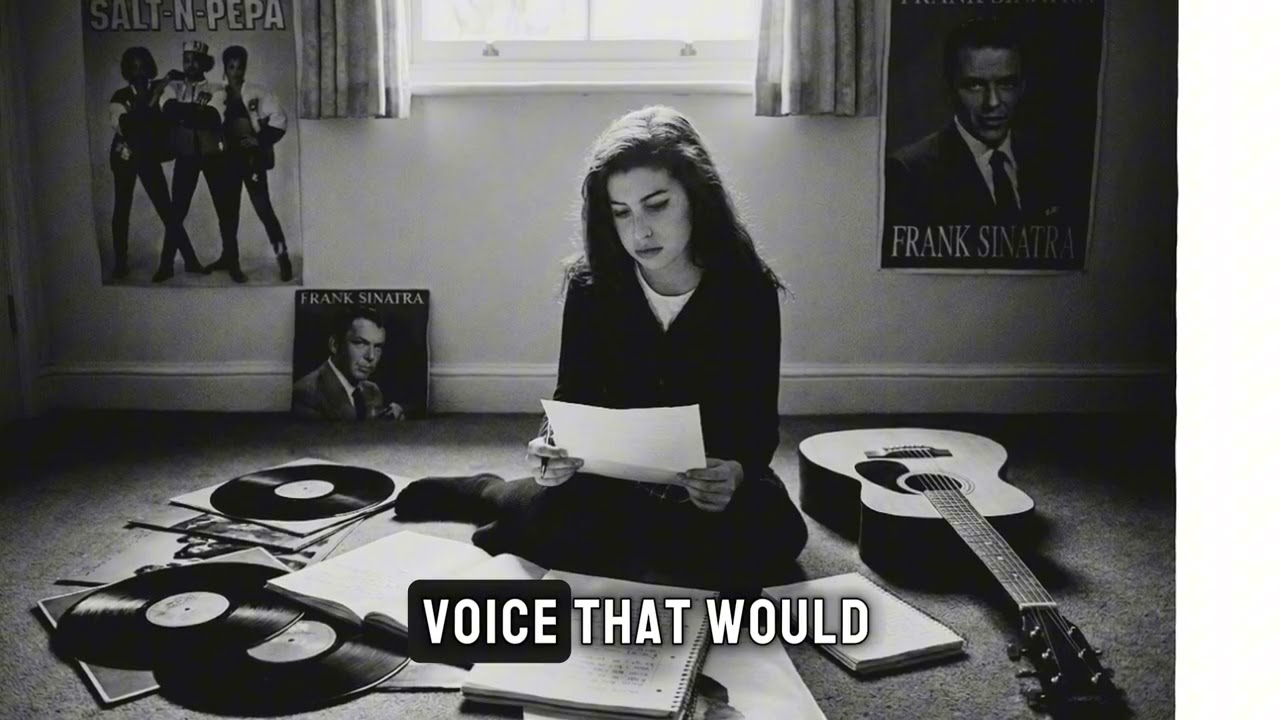
They wrote their own verses. They constructed their own vocal melodies. They practiced in each other’s bedrooms and living rooms and anywhere else that would have them. Amy, who would later describe sweet and sour as the little white Jewish salt and pepper, said it without irony and without embarrassment. She meant it as a compliment to both parties.
And then something happened that neither of them had expected. They were allowed to record. Juliet’s connections led them to Alan Glass, a producer who had worked with Kenny G, Artha Franklin, and Earth, Wind, and Fire, and who was now being asked to work with two 10-year-old girls from Southgate, who had written their own rap songs and were by all accounts absolutely certain they were ready for the studio. Glass could have said no.
He could have smiled and redirected them towards something more age appropriate. Instead, he let them in. The footage of that recording session and of Sweden sour performing in living rooms and small spaces in those years is what appears in the documentary Amy, the film that director Aif Kapadia made in 2015 using archive material and interviews with the people who had actually known her.
Kapadia said later that the sweet and sour footage was one of the most important things in the film. Not because of what it showed about Amy’s musical development, though it showed that too. Because of what it showed about who she was before the world got to her. She is 10 years old in that footage. She has a child’s voice. Not yet the voice that would stop rooms and win five Grammys in a single night and make critics reach for Billy Holiday as the nearest comparison.
But the voice is there in embryo. And more importantly, the commitment is there. She is not performing for the camera. She is not being cute or self-aware or doing the thing that children sometimes do when they know they are being watched. She is doing it. She is wrapping the words she wrote with the absolute seriousness of someone for whom this is not a game.
Juliet said later that from the very beginning, from the nursery school days and the salt and pepper years and the sweet and sour recordings, Amy had an intelligence that was far beyond her years. But she also had, Juliet said, the attention span of a fish. One minute she would be listening to an album, then she would be knitting something, then she would be designing a top, then she would start sewing a sequin on.
The energy that would eventually produce back to black was already there at 10. The same restlessness, the same refusal to stay still, the same need to be making something at all times. What Juliet also said, and what gets lost in the larger story, is that Amy never wanted to be famous. When they were young teenagers, Amy talked about being a roller waitress or a writer or a comedian.
She was, by every account of everyone who knew her, genuinely and consistently funny. The kind of funny that comes from intelligence rather than performance that catches you offguard and stays with you. Fame was not the goal. Music was not even quite the goal in the sense of career or ambition. Music was just what she was. It was as natural and as necessary as breathing.
And the idea of turning it into something else, into a product, into a brand, into the Amy Winehouse that the tabloids would eventually construct and tear apart, was not something the 10-year-old in that living room had any interest in or understanding of. Between Sweet and Sour and The Flat in Camden, there were the school years, the years that shaped Amy in ways that Salt and Peppa and Mitch’s Records and Juliet’s Living Room could not.
She enrolled at the Sylvia Young Theater School, one of the most prestigious performing arts schools in Britain and lasted there until she was 15. The school would later say she simply transferred. Others said she was asked to leave for the nose piercing, for the missing classes, for the general impression she gave of being someone who had her own ideas about how things should be done, and did not see why other people’s rules should take precedence.
What is certain is that by 15 she had taught herself guitar, had been performing in venues around London, and had passed a demo tape to someone who knew someone who knew someone at a record label. She was not trying to become famous. She was just doing what she had always done, what she had been doing since the nursery school where she met Juliet.
Making music because it was what she was, because it was as natural as breathing. Because not making it was not something she could imagine. When Amy and Juliet turned 18, they moved out of their childhood homes and got a flat together. For a while they had what Juliet would later describe as a normal life. The particular normality of two young women in London who were musical and funny and close and figuring things out. They went out. They talked.
They were in the way they had always been each other’s people. And then the circus came to town. That is Juliet’s phrase. The circus came to town. The record deal, the album, the recognition, the machinery that assembles itself around a person when the world decides they are significant. All of it arrived at once and fast.
New faces surrounded Amy. Camden became the center of a different kind of life than the one they had been living. People came who wanted things. The music that had been as natural as breathing became a product to be packaged and sold and discussed and photographed. and Juliet, who had been there since the nursery school, who had been sweet to Amy Sour, who had wrapped in living rooms and recorded with producers, and shared a flat and known Amy before any of it.
Juliet found herself on the outside of something she could not find a way back into. There is something particularly painful about watching someone you love be consumed by something you cannot reach into and pull them out of. Juliet had been doing it since the Camden years began, watching from the edge of a life that had accelerated past the speed at which ordinary friendship can operate, trying to find moments of access, trying to be the person Amy had always known her as rather than one more figure in the circus. She watched faces appear
around Amy that she did not recognize and could not account for. She watched the music that had been as natural as breathing become something else. Something that required management and PR and a carefully curated public image that bore an increasingly uncertain relationship to the actual person Juliet had met at nursery school.
She never stopped trying. In 2007, when a seizure in the night brought Amy to the edge of something terrible, it was Juliet that Blake Fielder Civil called. She arrived in the middle of the night and stayed for 24 hours and did not leave until she was certain Amy was going to be all right. That was who Juliet was.
The person you called at 2:00 in the morning when everything had gone wrong. The person who showed up. But she could not be with Amy in the ways that mattered most, in the daily and ordinary ways that friendship requires. The life Amy was living in those years did not have room for the kind of presence Juliet offered, steady, honest, the presence of someone who had known her before she was anything and would know her the same way regardless.
Amy’s world in the Camden years was a world of motion and chaos and people who were there for the motion and the chaos. Juliet was there for Amy. It was a different thing and the difference was impossible to bridge. She tried anyway. when Back to Black was being written in that dark and painful period when Amy was living with the grief of Blake’s first departure and transforming it into something that would eventually sell 30 million copies.
Juliet managed to reach her. They moved with their boyfriends into a house in Muzell Hill, back to something like the life they had had before, the normal life, the one that involved going to the gym and doing the food shopping and being in the same place at the same time. I managed to have her for a second, Juliet said later.
I managed to get her back to some sort of normality, but then it had to stop because people were recognizing her on the street. Juliet Ashby gave an interview after Amy died that is one of the most honest accounts of her that exists. She talked about the girl she had met at four and wrapped with at 10 and lived with at 18.
She said Amy’s intelligence was far beyond her years. She said she was wickedly funny. She said she was obsessed with cats. She said she wanted to be a roller waitress, a writer, a comedian. She said fame wasn’t an incentive. Music was. It was just part of who she was. And then she said that’s why we were best friends.
We both completely understood each other. The Amy Winehouse Foundation established after her death carries forward something that the 10-year-old in that living room would perhaps have recognized more readily than the Grammyinning icon she eventually became. The idea that music belongs to everyone, that it is not a product or a career path, but a way of being alive in the world.
The foundation funds music programs in schools across the United Kingdom. It puts instruments in the hands of children who would not otherwise have access to them. It is in its quiet way a recognition that what saved Amy in the years before the circus arrived in the Southgate bedroom and the Juliet’s living room and the Saturday mornings at the Susi Nshaw Theater School was the music itself, the making of it, not the selling of it.
In the documentary footage, two little girls are rapping in a living room in North London. They wrote the words themselves. They are completely committed and completely fearless and completely certain that what they are doing matters. One of them will go on to make two albums, win five Grammys, sell 30 million records, and die at 27 in a flat in Camden with her favorite scarf around her neck.
The other one will spend the rest of her life carrying the memory of who that person was before any of that happened. The circus came to town and changed everything. But before it came, there were two girls in Southgate who called themselves sweet and sour and took themselves completely seriously and understood each other completely.
That is where Amy Winehouse began. And in some ways it is the truest version of her that exists.