Amy Winehouse’s favorite song asked one question. The answer was her whole life.
On July 26th, 2011, in a small synagogue in North London, a room full of people who had loved Amy Winehouse stood up and sang together. Not one of her songs, a song she had never recorded, a song she had sung with her father in the kitchen since she was a little girl. And if you know which song it was and why she loved it, it tells you everything about who Amy Winehouse really was.
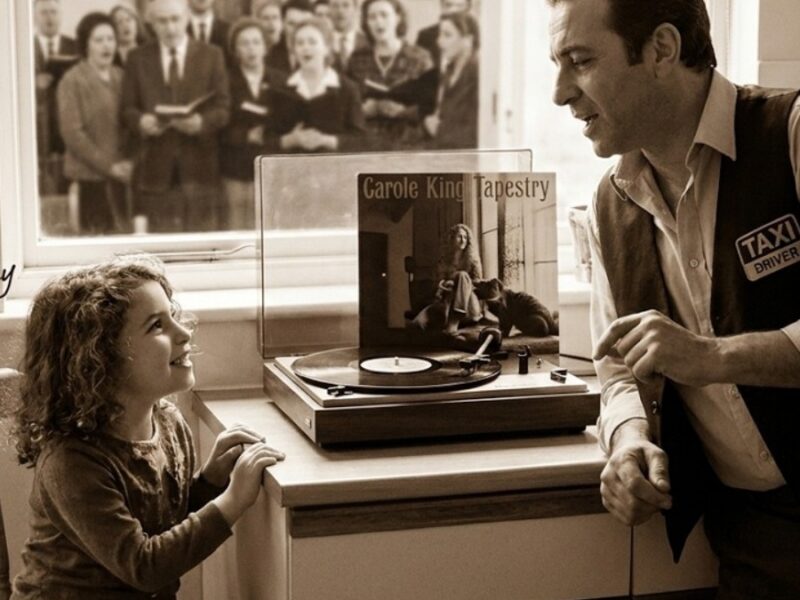
But to understand what that moment meant, you need to start much earlier. You need to start in Southgate in the mid 1980s in a small house in North London where a man named Mitch Winehouse used to come home from driving his taxi and fill the rooms with music. Mitch was not a professional musician, but he was someone for whom music was a serious matter.
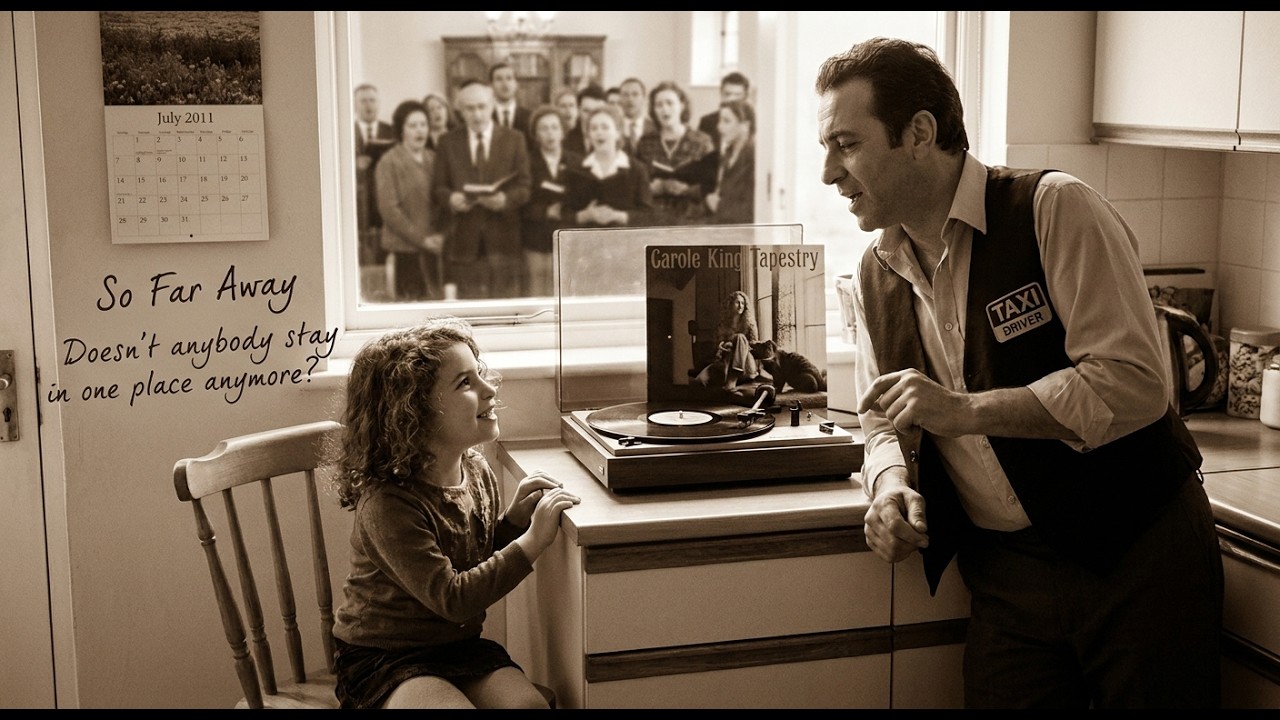
The big band standards of the 40s, the classic American song book, Sinatra, Tony Bennett, the records that had been made before his daughter was born, but that he played as though they were still new. And alongside those records, occasionally, Tapestry. Carol King had recorded Tapestry in January 1971 in a studio in Los Angeles in three weeks for $22,000.
She was 29 years old at the time, a songwriter who had been writing hit records for other people since she was a teenager, who had married young and had children young, and had only recently begun to believe that her own voice was worth putting on a record. She had come to California after a marriage that ended painfully.
She had rebuilt herself in the hills of Laurel Canyon, surrounded by other musicians who were doing the same thing in their own ways. And Tapestry was what came out of that rebuilding, honest, unhurried, completely herself. It was the record of a woman who had found her way back to something real after the wreckage of what came before.
The album had gone on to sell 25 million copies and spend nearly six years on the American charts, a record that stood for nearly a decade. It had won four Grammy awards. It had introduced the singer songwriter genre to an audience that had not known it was waiting for one. Critics had run out of superlatives for it almost immediately and had simply started listing the ways it felt true.
It was an album that people did not just listen to. They kept it. They returned to it. They played it in the specific way that you play something that has become part of the furniture of your interior life. Not for discovery, but for company. One of the songs on Tapestry was called So Far Away.
It was not the most famous song on the album. That was probably You’ve Got a Friend, which James Taylor had already turned into a number one hit before King released her own version. So Far Away was quieter than that. It was built around a simple piano figure and a question that King posed in the opening lines and never quite resolved. A question about distance, about longing, about the particular ache of wanting someone near who is always somewhere else.
The music critic who produced the album later said it was his favorite song on Tapestry. He said he used the central phrase a lot. Doesn’t anybody stay in one place anymore? He said it felt like an anthem of its time, of people moving, of connections stretching and sometimes breaking under the weight of geography and circumstance and the general restlessness of modern life.
Amy Winehouse heard it first as a small child in her father’s house. She could not have been more than five or six. She heard it the way children hear things that become important later. Not analytically, not with any conscious recognition of what the song was doing, but somewhere underneath language in the place where music settles when it finds the right listener.
and it settled in her as she grew older and the musical education that Mitch had provided without particularly planning to deepened and expanded through the jazz club she started performing in as a teenager through the records she taught herself to play along with through the two albums she would eventually make and the producers and musicians she would work with so far Away stayed with her.
It was not the kind of song she was making. Her music was raw, more contemporary, built from soul and R&B and the specific emotional landscape of her own life rather than the California of 1971. But the song had been there before any of that. It had been in her before she knew what music was going to mean to her, and it stayed.
She sang it with Mitch, not in any formal sense, not rehearsed, not performed, in the kitchen, in the car, on the telephone during the late night calls that the two of them exchanged in the years when Amy was touring and her father was following her career with a particular mixture of pride and terror that only a parent can fully understand.
It was the song they shared, the one that belonged to both of them in the way that certain things belong to two people who have been close for a long time. Not because either of them planned it, but because it kept coming up, kept finding its way back into the space between them. Mitch was the dominant musical influence of Amy’s life.
This is something that people who knew her said consistently and that she herself acknowledged. the jazz sensibility that ran through her work, the phrasing, the timing, the understanding that a song was not a series of notes, but a piece of emotional communication that required a singer to mean what they were singing, came directly from what she had absorbed in that house in Southgate, listening to her father’s records.
He had not taught her in any formal sense. He had simply loved music in her presence, and she had learned. And somewhere in that education, quietly, without anyone deciding it would become important, Carol King’s so far away, had found a permanent place. What the song is about on its surface is simple. It is about someone who loves someone who is not there.
It is about the specific grief of distance, the way that people you want near you are so often somewhere else, and the way that want does not diminish just because geography makes it impractical. The line that the album’s producer said he used so often, “Doesn’t anybody stay in one place anymore?” is both the song’s emotional center and its most expansive idea.
It is not just about romantic love. It is about the general condition of wanting to stay still in a world that keeps moving, of loving people who are always somewhere else, of the distance that accumulates between people who began close and drifted. There is a detail about Amy Winehouse that gets lost in the larger story, but that people who knew her mention consistently.
She was a homebody. Not in any superficial sense. She was not someone who stayed in because she was shy or because she lacked confidence or because the world frightened her. She stayed in because she genuinely liked being at home. She liked Camden. She liked the market and the canal and the particular atmosphere of a neighborhood that had its own identity and did not particularly care about hers.
She liked cooking for people. She liked having friends over. She liked the ordinary textures of a life that her level of fame made increasingly difficult to access without planning and security and the general apparatus of celebrity which she tolerated rather than embraced. For Amy Winehouse, who had spent most of her adult life in a state of motion, tours, appearances, recording sessions, rehabilitation programs, Caribbean retreats, the constant displacement of a person whose life had been claimed by an industry that required her to be
somewhere different every few weeks. The question in that song must have carried a particular weight. She had grown up in Southgate and had never really wanted to leave. Camden, where she eventually settled, was a few miles from where she had been born. She had stayed as close to the place she came from as the life she had built would allow.
And in the years, when the life had become most chaotic, when the addiction and the tabloids and the collapsed tours had turned existing into something that required enormous effort, the thing she kept saying she wanted to friends, to journalists, to her father, and those three times daily phone calls was simple. She wanted to be at home.
She wanted to stay in one place. Doesn’t anybody stay in one place anymore? The Jewish service at Edgewear Berry Lane Cemetery on July 26th was private. The guest list was small. Family, close friends, the people who had known Amy rather than the ones who had known about her.
Mark Ronson was there, the producer who had worked with her on Back to Black and understood better than most what she had been capable of at her best. Kelly Osborne was there, a friend who had loved her without conditions through the worst of it. Reg Travis was there, the man who had planned to marry her and who told reporters afterwards simply, “I have lost my darling who I loved very much.
” Blake Fielder Civil, her ex-husband, was not released from prison to attend. Rabbi Frank Helner led the service in English and Hebrew. Mitch Winehouse delivered the eulogy. His final words to his daughter spoken in a synagogue in the neighborhood where she had grown up were, “Good night, my angel. Sleep tight. Mommy and daddy love you ever so much.
” A family spokesman said he told stories from her childhood. Stories about how headstrong she was. He spoke, the spokesman said, about how happy she had been. He paid tribute to the people in her life. He did what fathers do when they have lost something they cannot replace. He tried to give the people in the room a version of her that was more complete than the one the newspapers had printed.
A version that included the girl from Southgate who sang in the kitchen and made people laugh and loved her family with a fierceness that never wavered even when everything else did. And then at the end the room stood up and they sang so far away. Not a professional performance, not a tribute act, not a backing track, not a carefully arranged memorial rendition.
just the people who had loved Amy Winehouse standing in a synagogue in North London singing a 40-year-old Carol King song because it had been her favorite and because it was the right ending and because sometimes the only honest response to loss is to sing the song the person loved together and let that be enough. The parallel between Carol King and Amy Winehouse is one that neither of them drew publicly, but that is difficult to ignore once you see it.
Both were Jewish women from cities where they had deep roots. King from Brooklyn, Amy from Southgate. Both had made their most significant work out of the wreckage of a painful relationship. Both had poured a degree of personal honesty into their music that left critics reaching for the same adjectives. Raw, unguarded, true.
Tapestry had been made by a woman who was reassembling herself after a broken marriage in a rented house in California, playing piano and singing the truth of her own life into a microphone with as little production as the record would allow. Back to Black had been made by a woman who was doing something similar a generation later in a different city, in a different musical language, but from the same essential place.
Two women, two albums that told the truth 40 years apart. Carol King herself, when she heard that the song had been played at Amy’s funeral, said she was deeply honored and deeply moved. She spoke about Amy’s talent with the reverence that one serious musician offers another when the seriousness was real on both sides. She understood perhaps better than most what it meant that Amy had chosen that particular song, not the showstopper, not the famous one, not the one that would have been expected, the quiet one, the one about longing and distance and
staying in one place. There is something in that choice that tells you about the Amy Winehouse that existed underneath the Amy Winehouse that the world had decided to see. Not the beehive, not the tabloid photographs, not the cancelled concerts and the public collapses. The girl who had grown up listening to her father’s records and absorbed something from them that never left.
The woman who called home three times a day and wanted to look at old photographs and talked about having children. The person who, when asked what she wanted most from the life she was living, kept giving an answer that sounded almost impossibly simple for someone of her fame and complexity. She wanted to stay in one place.
She wanted the people she loved to be near. She wanted the thing the song had been asking about since 1971, the thing Carol King had put into a piano figure and a question. and 40ome years later was still the most honest thing Amy Winehouse had ever identified with. Doesn’t anybody stay in one place anymore? On September 16th, 2012, more than a year after her death, Amy’s ashes were buried alongside those of her grandmother, Cynthia, at Edgewear Berry Lane Cemetery, the same North London ground where the people who loved her had stood and sung. Cynthia had died of
lung cancer in 2006, and Amy had been devastated by it in the private way that she was devastated by things that mattered. Quietly, without public statement, carrying it. She had spoken about her grandmother with a tenderness that people who knew her recognized as the real register of her feeling. Burying Amy’s ashes next to Cynthia’s was the family’s way of saying something that did not need to be said out loud.
She was home. She was where she belonged. She was in one place. She did not get to stay. She was 27 years old. And she had been writing and singing since she was a teenager and given the world two albums and 30 million records sold and five Grammy awards in a single night. And a voice that critics had compared to Billy Holiday and an honesty so complete that people are still listening to it more than a decade after her death.
And her favorite song was not one she wrote. It was not from her era. It was a quiet song from 1971 about wanting to be near someone, about the ache of distance, about the wish to stay in one place in a world that keeps insisting on movement. At her funeral, the people who loved her stood up and sang it together. And in that small synagogue in North London, for the length of one Carol King song, they gave her the only version of that wish they still could. They stayed. They sang.
They did not move.